Speakers Review
Denon AVR-X3900H Review: Atmos, 8K and HEOS
The Denon AVR-X3900H delivers 105 watts per channel, Dolby Atmos and DTS:X surround formats, 8K ready video with Dolby Vision, and Audyssey MultEQ XT32 room correction. HEOS handles whole home streaming, though total channel count, HDMI port count and dimensions are not published in the listing.
Our Verdict
Research Score 87/100The Denon AVR-X3900H reads as a well rounded premium receiver, with a stated power figure, a strong surround format list, genuinely current video support, and a named room correction system with an upgrade path to Dirac Live. HEOS ties the whole home audio story together for buyers already invested in that ecosystem. The gaps that remain, mainly total channel count, HDMI port count, dimensions and remote hardware, are the kind of detail a buyer would normally confirm from a manual or retailer spec sheet rather than the core feature pitch. For a home theater build centered on Atmos, 8K video and HEOS, this receiver covers the essentials convincingly.
Editorial research score based on published specifications and documented features, not a customer rating or lab test.

Denon
Denon AVR-X3900H
Best for: Home theater owners who want immersive surround formats, 8K ready video, and whole home HEOS streaming in one receiver.
Skip it if: Avoid it if a turntable with a built in phono stage is a requirement, since none is described for this model.
Check Price on AmazonWe may earn a commission at no extra cost to you.
Listing verified: October 2026
Who Should Buy It
Buy it if
- Home theater builders planning a 7.1.4 or 5.1.6 Dolby Atmos setup
- Buyers who already use HEOS components for multiroom audio
- Gamers who want 4K at 120Hz with VRR and ALLM on a receiver
- Households upgrading to an 8K capable television
Skip it if
- You need a built in phono stage for a turntable
- You require a confirmed total HDMI port count before buying
- You want published dimensions and weight ahead of purchase
Key Specifications
| Drive type | Not published in listing |
| Cartridge | Not published in listing |
| Platter | Not published in listing |
| Tonearm | Not published in listing |
| Speeds | Not published in listing |
| Built-in preamp | Not published in listing |
| Bluetooth and USB | Not published in listing |
| Outputs | Not published in listing |
| Dimensions and weight | Not published in listing |
| Included accessories | Not published in listing |
| Type | Premium home theater AV receiver for stereo, multichannel and immersive audio systems |
| Power output | 105 watts per channel, per the listing |
| Channels | The listing does not state a single total channel count. It describes support for surround configurations up to 7.1.4 or 5.1.6, which implies a nine channel amplifier section built in |
| Inputs and outputs | Connects a television, gaming consoles and streaming devices through what the listing calls a 4K and 8K ready HDMI hub. The listing does not give a port by port count of HDMI, analog or digital inputs |
| HDMI and video | Supports 4K and 8K video with Dolby Vision for color and contrast, plus built in upscaling for older sources. Variable Refresh Rate, Auto Low Latency Mode and AMD FreeSync support 4K at 120Hz gaming |
| Wireless and streaming | Wi-Fi, Bluetooth and AirPlay 2 for wireless playback, with whole home audio through HEOS covering music, TV audio, sports and podcasts across HEOS enabled components |
| Phono input | Not published in listing. No phono stage is described for this model |
| Remote and app | Controlled through the HEOS app for streaming and multiroom functions, with web based control also described. No specific remote control hardware is detailed |
Overview
The Denon AVR-X3900H is positioned as a premium home theater AV receiver, built to drive stereo, multichannel and immersive surround setups from one chassis. Denon frames it around room filling sound, 8K ready video, and a whole home audio layer through HEOS, which together cover most of what a dedicated home theater room needs.
At a premium price point, the listing leans on specifics that matter to buyers planning a real build, including a stated 105 watt per channel figure, named surround formats, and current generation video support rather than vague marketing language.
Several usual spec sheet basics, such as a single total channel count, exact HDMI port numbers, and physical dimensions, are not part of the given feature bullets, so this review treats those as open questions rather than assumptions. Taken together, the feature list reads less like a bare spec sheet and more like a system pitch, covering sound, picture, gaming and multiroom audio as one connected story rather than four separate checkboxes to tick off independently.
Power and Sound Quality
Denon states 105 watts per channel for this receiver, aimed at clearer dialogue and dynamic impact across movies, games and streaming audio. That figure gives buyers a real number to compare against other receivers in the same price range rather than a vague power claim.
Dolby Atmos support brings overhead and multidimensional effects into the mix, which the listing describes as adding spatial detail to both movie soundtracks and music. Combined with the stated wattage, this points to a receiver built for a dedicated surround speaker layout rather than a simple stereo pair.
Audyssey MultEQ XT32 room correction, with Sub EQ HT, Dynamic EQ, Volume and LFC included, is meant to tune the system's sound to the specific room it sits in, and an optional Dirac Live suite is available for buyers who want a more involved calibration process later.
Connectivity and Inputs
Connectivity centers on what the listing calls a 4K and 8K ready HDMI hub, intended to connect a television, gaming consoles and streaming devices through one receiver. This is the kind of hub based design common in modern home theater receivers, consolidating source switching into the AV receiver itself.
Wireless connectivity covers Wi-Fi, Bluetooth and AirPlay 2, giving several paths for streaming audio from a phone or other device without a wired connection. HEOS extends that into whole home playback across other HEOS enabled components in the house.
The listing does not break down the exact number of HDMI inputs and outputs, nor does it list analog or digital audio inputs individually, so buyers with a large number of separate sources should verify exact port counts before finalizing a cabling plan.
Formats, Processing and Room Correction
Format support is one of the stronger parts of this listing, covering Dolby Atmos, DTS:X, Auro-3D and IMAX Enhanced, which together span most of the surround formats found on current movie and streaming content. That breadth matters for buyers who mix sources, since not every format shows up on every title.
Audyssey MultEQ XT32 is named directly rather than just described generically, and the inclusion of Sub EQ HT, Dynamic EQ, Volume and LFC suggests a fairly complete calibration suite out of the box. The option to add Dirac Live later gives buyers a path to upgrade room correction without replacing the receiver.
On video, 8K and 4K at 120Hz are both supported with Dolby Vision, and built in upscaling is meant to make older, lower resolution sources look sharper on a current television, which is a genuinely useful feature for households with a mixed library of old and new content.
- Dolby Atmos and DTS:X immersive surround formats
- Auro-3D and IMAX Enhanced support
- Audyssey MultEQ XT32 with Sub EQ HT, Dynamic EQ, Volume and LFC
- Optional Dirac Live suite upgrade for room correction
- 4K and 8K video with Dolby Vision and built in upscaling
- Variable Refresh Rate, Auto Low Latency Mode and AMD FreeSync for gaming
Features, Streaming and Apps
Gaming support is a real feature here, not just a footnote, with Variable Refresh Rate, Auto Low Latency Mode and AMD FreeSync all named for reducing lag and screen tearing at 4K and 120Hz. That is a meaningful inclusion for buyers who route a gaming console through the receiver rather than straight into a television.
HEOS is the backbone of the streaming and multiroom story, letting music, TV audio, sports and podcasts move around the house through other HEOS enabled components, all managed through the HEOS app alongside web based system control.
Voice assistant support and specific third party streaming service names are not part of the given feature bullets, so while the wireless foundation, Wi-Fi, Bluetooth and AirPlay 2, is confirmed, the exact list of supported services is not fully spelled out.
Build, Design and Controls
No dimensions or weight figures are published, which makes it hard to judge how much shelf or rack space this receiver needs, or how substantial the chassis feels compared to similarly priced models.
The listing does not describe the front panel layout, display, or physical control scheme, so details like button placement or display readability are left to buyer reports and unboxing coverage rather than the feature list itself.
What is clear from the listing is the level of internal engineering invested in audio and video processing, which suggests the build priority sits with the amplifier and video boards rather than purely cosmetic chassis details. Buyers who care about rack mounting, ventilation clearance, or matching a specific component stack visually will want to pull exact measurements from elsewhere, since the feature bullets this review is built from focus entirely on performance rather than physical fit.
Setup and Daily Use
A typical setup routes a television, game consoles and streaming devices into the HDMI hub, then runs Audyssey MultEQ XT32 calibration to tune the surround speakers to the room before daily listening begins.
Multi-zone playback and web based control, both named in the listing, suggest the receiver can be managed for more than one listening area, with configuration handled through a browser rather than only the HEOS app.
Day to day, HEOS covers the multiroom and streaming side, while the gaming features, VRR, ALLM and AMD FreeSync, should engage automatically once a compatible console is connected, reducing the need for manual adjustment during play. Switching between a game console, a streaming box and a disc player should stay simple through the HDMI hub design, since the receiver is positioned as the single switching point for all connected video sources rather than relying on the television to do that job.
Who Should Buy It
Buyers planning a full Dolby Atmos surround build, up to 7.1.4 or 5.1.6, with an 8K ready television are the clearest fit for this receiver, given the stated power, format support and video specifications.
It also suits households already using HEOS components elsewhere in the home, since whole home audio is a named strength rather than a minor add-on, and gamers who specifically want VRR and ALLM support on their AV receiver.
Buyers moving from an older, lower channel receiver into a full Atmos height speaker layout will also find the jump justified here, since the format list and stated power are both strong enough to carry a genuine step up rather than a marginal one. On the other hand, anyone who mainly listens to two channel music without surround ambitions is paying for a lot of video and format capability they may never use, and a simpler stereo focused unit would likely serve that listener better.
Alternatives Worth Considering
Buyers who specifically need a phono input built into the receiver should look elsewhere, since none is described here. A model from the same Denon line with phono support, or a separate phono preamp added to this unit, would close that gap.
For a simpler, lower cost home theater starting point without the same video and gaming feature depth, a model like a Denon AVR-S760H sits well below this unit in scope, trading away 8K support and the gaming specific features for a lower price.
Buyers focused purely on stereo listening without any surround ambitions may find a dedicated stereo receiver, rather than a full featured AV receiver like this one, a better match for their actual use case. Shoppers comparing several premium AV receivers side by side should line up the same categories across each listing, power per channel, named surround formats, room correction system, and video resolution support, since that is where real differences between competing models tend to show up most clearly.
Verdict
On the strength of a stated power figure, a broad surround format list, named room correction, and current generation video and gaming support, the Denon AVR-X3900H presents a convincing case for a premium home theater build.
The remaining gaps, total channel count, HDMI port numbers, dimensions and remote hardware, are details most buyers can live without at the point of purchase, but they are worth confirming separately if a specific home theater layout depends on them.
Strengths and Limitations
Strengths
- 105 watts per channel stated directly in the listing
- Dolby Atmos, DTS:X, Auro-3D and IMAX Enhanced support
- Audyssey MultEQ XT32 room correction with an optional Dirac Live upgrade path
- 4K and 8K video with Dolby Vision plus VRR, ALLM and AMD FreeSync for gaming
- HEOS whole home audio for multiroom music and system control
Limitations
- No stated total channel count or HDMI port count
- No phono input is described
- No dimensions or weight published
- No specific remote control hardware detailed
How We Scored It
Scores reflect published specifications, documented features and value against the alternatives below. They are editorial research scores, not laboratory measurements.
Alternatives to Consider

Yamaha R-N1000A
Buyers who want vinyl playback and high resolution digital sources handled by one stereo box with a flagship grade DAC.
Read the Yamaha R-N1000A review →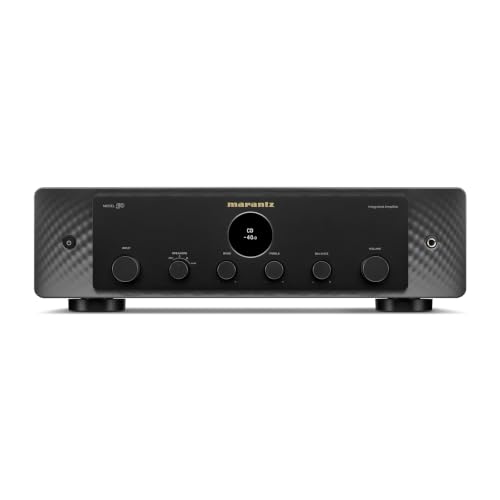
Marantz 50
Listeners with an external DAC or streamer and a moving magnet turntable who want a purely analog Marantz amplifier with full expansion options.
Read the Marantz 50 review →
Denon AVR-X3800H 9.4-Ch 8K UHD AVR
Home theater builders who want a phono input, 8K ready HDMI switching and a broad surround format list in one 9.4 channel receiver.
Read the Denon AVR-X3800H 9.4-Ch 8K UHD AVR review →Questions Buyers Ask
Denon AVR-X3900H
See the current listing, price and included accessories.
About This Review
Mandrillis Team
The Mandrillis editorial team researches and compares audio and music gear using manufacturer documentation, verified specs and real buyer feedback, so you can make a confident purchase without wading through marketing claims.
Read our full research methodology.