Speakers Review
Denon AVR-X6800H Review: Gaming Flagship Receiver
The Denon AVR-X6800H delivers 140 watts per channel across 11.4 channels, 8K HDMI with full HDR pass-through, next generation gaming support and Audyssey MultEQ XT32 and SubEQ HT calibration included. A phono input, dimensions and weight are not published in the listing.
Our Verdict
Research Score 89/100On paper, the Denon AVR-X6800H is a strong flagship receiver for buyers who prioritize gaming performance and immersive audio processing alongside solid published power figures. The stated 140 watts per channel across 11.4 channels, with processing support up to 13.4 channels, gives genuine headroom for a growing system. Buyers report that Dolby Atmos Height Virtualization Technology is a meaningful feature for rooms that cannot accommodate physical height speakers, and the included Audyssey MultEQ XT32 and SubEQ HT calibration adds real value without an extra purchase. The missing phono input and unpublished dimensions are the clearest gaps in this listing, but the gaming features, HDMI section and calibration suite make the AVR-X6800H a well rounded choice at its premium tier.
Editorial research score based on published specifications and documented features, not a customer rating or lab test.

Denon
Denon AVR-X6800H
Best for: Buyers who want an 11.4 channel Denon flagship with strong gaming features, Dolby Atmos Height Virtualization and Audyssey calibration included as standard.
Skip it if: Avoid this model if you need a built in phono input or want confirmed dimensions and weight before purchasing.
Check Price on AmazonWe may earn a commission at no extra cost to you.
Listing verified: October 2026
Who Should Buy It
Buy it if
- Home theater buyers who want 140 watts per channel across 11.4 channels with room to process up to 13.4 channels
- Gamers who want 8K at 60 hertz, VRR, QFT and ALLM support
- Buyers who want Dolby Atmos Height Virtualization without installing extra height speakers
- Households that want Audyssey MultEQ XT32 and SubEQ HT calibration included at no extra cost
Skip it if
- You need a dedicated phono input built into the receiver
- You require published dimensions and weight before purchase
- You want a channel count beyond 13.4 at the processing level
Key Specifications
| Drive type | Not published in listing |
| Cartridge | Not published in listing |
| Platter | Not published in listing |
| Tonearm | Not published in listing |
| Speeds | Not published in listing |
| Built-in preamp | Not published in listing |
| Bluetooth and USB | Bluetooth listed; USB not published in listing |
| Outputs | Not published in listing |
| Dimensions and weight | Not published in listing |
| Included accessories | Not published in listing |
| Type | 11.4 channel home theater AV receiver with built in power amplification, with processing capability up to 13.4 channels |
| Power output | 140 watts per channel across 11 channels, as stated in the listing. Impedance and distortion measurement conditions are not published |
| Channels | 11.4 channels as configured, with processing support for up to 13.4 channels |
| Inputs and outputs | 7 HDMI inputs and 2 to 3 HDMI outputs, as stated in the listing |
| HDMI and video | 8K HDMI video with Dolby Vision, HDR, Hybrid Log Gamma, HDR10 plus and Dynamic HDR pass-through, plus 8K upscaling across all 7 inputs |
| Wireless and streaming | Built in HEOS, Wi-Fi and Bluetooth streaming |
| Phono input | Not published in listing |
| Remote and app | On screen setup guide for initial configuration. Audyssey MultEQ XT32 and SubEQ HT calibration included, with app control implied but not explicitly named |
Overview
The Denon AVR-X6800H is an 11.4 channel home theater receiver with built in power amplification, carrying processing support for up to 13.4 channels for buyers who later want to expand their speaker layout. The listing states 140 watts per channel across the 11 configured channels, alongside 8K video handling and a strong set of HDR formats.
What distinguishes this listing within the X series lineup is its explicit focus on gaming features, naming Variable Refresh Rate, Quick Frame Transport and Auto Low Latency Mode support at 8K and 60 hertz. Combined with Dolby Atmos Height Virtualization Technology, which creates virtual height effects without requiring dedicated height speakers, the AVR-X6800H is positioned for buyers who want flexibility in both movie and gaming use cases.
Audyssey MultEQ XT32 and SubEQ HT are both listed as included calibration tools, giving this receiver a documented room correction suite without requiring a separate paid upgrade, unlike some of the pre-amplifier and processor models covered elsewhere in this comparison. Taken together, the AVR-X6800H reads as a receiver built for a household that wants one box covering movies, music streaming and gaming, rather than a specialist unit optimized narrowly for any single use case. That breadth is a meaningful part of its appeal within the X series lineup.
Power and Sound Quality
The listing states 140 watts per channel across 11 channels, a figure broadly in line with other flagship receivers covered in this comparison. As with those other listings, the specific impedance and distortion percentage behind that number are not published, so it should be read as a headline specification rather than a fully documented engineering claim.
Dolby Atmos Height Virtualization Technology is specifically named as a feature that creates virtual height effects for listeners who cannot install dedicated ceiling or upward firing height speakers. This can meaningfully improve the sense of overhead sound in rooms where physical height channels are impractical, though the actual effect depends on room shape and speaker placement.
With processing support extending up to 13.4 channels, buyers have a documented upgrade path if they later add more speakers, even though the receiver's own built in amplification covers 11.4 channels directly. Additional channels beyond that would require external amplification for the extra positions. Buyers report that a 140 watt per channel figure at this channel count is generally sufficient for mid to large rooms with typical home theater speakers, though actual listening volume and headroom still depend heavily on speaker sensitivity and room size, neither of which the listing can account for.
Connectivity and Inputs
The listing states 7 HDMI inputs with 2 to 3 outputs, giving reasonable flexibility for connecting a disc player, multiple consoles, a cable box and a streaming device while still having output capacity for one or two displays. 8K upscaling is specifically mentioned as applying across all 7 inputs, which is a useful detail for buyers mixing older and newer source devices.
No phono input is mentioned anywhere in the listing, consistent with several other Denon and Marantz models reviewed in this comparison that also omit a dedicated phono stage. Vinyl listeners will need an external phono preamp to use a turntable with this receiver.
Dimensions, weight and included accessories are not published, so buyers planning rack space or expecting specific bundled items should confirm those details with the seller before finalizing a purchase. The split 2 to 3 output figure for HDMI suggests some configuration flexibility, possibly dependent on firmware settings or a specific port behaving as either an output or a secondary zone connection. The listing does not clarify the exact distinction, so buyers needing a guaranteed third output should confirm this detail directly.
Formats, Processing and Room Correction
Surround format support includes Dolby Atmos, DTS:X, IMAX Enhanced and Auro 3D, plus Dolby Surround, DTS Neural:X and Auro-Matic upmixing for content that was not originally mixed in a full object based format. This gives the AVR-X6800H flexibility across both native immersive soundtracks and older stereo or basic surround content.
On the video side, Dolby Vision, HDR, Hybrid Log Gamma, HDR10 plus and Dynamic HDR pass-through are all listed, covering essentially every current HDR standard a buyer is likely to encounter from a streaming device or disc player. 8K upscaling across all 7 inputs further extends the receiver's usefulness with older, lower resolution sources.
Audyssey MultEQ XT32 and SubEQ HT are both included for room correction, with the on screen setup guide walking buyers through the calibration process. Having both the main speaker calibration tool and the dedicated subwoofer equalization tool included, rather than one or the other, is a genuine value point for this receiver.
- Dolby Atmos, DTS:X, IMAX Enhanced and Auro 3D
- Dolby Surround, DTS Neural:X and Auro-Matic upmixing
- Dolby Atmos Height Virtualization Technology
- Audyssey MultEQ XT32 and SubEQ HT included
- VRR, QFT and ALLM gaming support at 8K and 60 hertz
Features, Streaming and Apps
Built in HEOS gives the AVR-X6800H wireless multi-room streaming over Wi-Fi and Bluetooth, consistent with other Denon receivers in this comparison. The listing does not name specific compatible streaming services for this model, though HEOS generally supports a range of popular platforms across the Denon and Marantz lineup.
Gaming features are a clear focus of this listing, with Variable Refresh Rate, Quick Frame Transport and Auto Low Latency Mode all named alongside 8K at 60 hertz pass-through. These features work together to reduce input lag and frame tearing for current generation consoles, making this receiver a strong fit for a combined movie and gaming room.
The on screen setup guide is described as walking users through TV connection instructions step by step, which should make initial configuration more approachable given the number of HDMI sources and surround channels this receiver can support.
Build, Design and Controls
No specific chassis materials, finish options or front panel layout details are given in the listing. The description focuses almost entirely on performance and gaming features rather than physical design, which leaves aesthetic and construction questions largely unanswered for this review.
Dimensions and weight are not published, which is consistent with most other listings in this comparison. Given the 7 HDMI inputs, 11.4 channel amplification and gaming feature set, buyers should expect a substantial chassis and plan shelf or rack space with some margin.
No specific remote model or app name is given beyond the on screen setup guide, so buyers who care about the physical remote's build quality or a dedicated control app's feature set should look up that information separately.
Setup and Daily Use
The on screen setup guide is the primary path to initial configuration, walking new owners through TV and source connections. Audyssey MultEQ XT32 and SubEQ HT then handle speaker and subwoofer calibration automatically, which should streamline the process of balancing an 11.4 channel layout without extensive manual adjustment.
Day to day, HEOS covers streaming over Wi-Fi and Bluetooth, while the gaming features operate automatically once a compatible console is connected to one of the 7 HDMI inputs. Dolby Atmos Height Virtualization Technology requires no additional setup beyond selecting the appropriate listening mode, since it works with the existing speaker layout rather than needing new hardware.
For households splitting time between movies and gaming, switching between these use cases should be straightforward, since the gaming features and surround processing both operate through the same HDMI inputs and receiver settings without requiring separate configuration profiles.
Who Should Buy It
The Denon AVR-X6800H suits buyers who want a flagship level receiver with a strong published power figure, a complete HDR and gaming feature set, and included Audyssey calibration covering both speakers and subwoofers. The 11.4 channel built in amplification with 13.4 channel processing headroom gives room to grow a system over time.
This is a particularly strong fit for households that mix serious movie watching with next generation console gaming, given the explicit VRR, QFT and ALLM support. Vinyl listeners and buyers who need confirmed dimensions before purchase should weigh those specific gaps before committing to this model.
Alternatives Worth Considering
Buyers who specifically want a phono input might look at the Marantz Cinema 30, which lists a dedicated phono connection alongside a similar 140 watt per channel rating, though with fewer processing channels available than the AVR-X6800H's 13.4 channel ceiling.
For buyers who want even more built in amplifier channels right away rather than relying on processing headroom, the Denon AVR-A10H offers 13.4 channels of direct amplification with similar gaming features, at a higher position within the same brand lineup.
Verdict
On paper, the Denon AVR-X6800H is a strong flagship receiver for buyers who prioritize gaming performance and immersive audio processing alongside solid published power figures. The stated 140 watts per channel across 11.4 channels, with processing support up to 13.4 channels, gives genuine headroom for a growing system.
Buyers report that Dolby Atmos Height Virtualization Technology is a meaningful feature for rooms that cannot accommodate physical height speakers, and the included Audyssey MultEQ XT32 and SubEQ HT calibration adds real value without an extra purchase. The missing phono input and unpublished dimensions are the clearest gaps in this listing, but the gaming features, HDMI section and calibration suite make the AVR-X6800H a well rounded choice at its premium tier.
Strengths and Limitations
Strengths
- 140 watts per channel across 11.4 channels, with processing up to 13.4 channels
- 7 HDMI inputs and 2 to 3 outputs with full 8K video and HDR pass-through
- Dolby Atmos Height Virtualization Technology for virtual height effects without extra speakers
- Next generation gaming support including VRR, QFT and ALLM at 8K and 60 hertz
- Audyssey MultEQ XT32 and SubEQ HT calibration included as standard
- Built in HEOS, Wi-Fi and Bluetooth streaming
Limitations
- No phono input is listed for turntable connection
- Dimensions and weight are not published
- Included accessories are not stated
- Impedance and distortion measurement conditions behind the 140 watt rating are not given
How We Scored It
Scores reflect published specifications, documented features and value against the alternatives below. They are editorial research scores, not laboratory measurements.
Alternatives to Consider

Marantz Cinema 40
Buyers who want a reference series 9.4 channel Marantz receiver with a distinctive finish and are comfortable with a sparsely detailed listing.
Read the Marantz Cinema 40 review →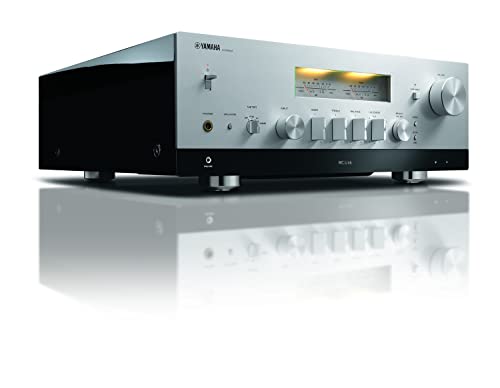
Yamaha R-N2000A
Buyers who want a flagship two channel network receiver built around a high end DAC and clean power supply for critical stereo listening.
Read the Yamaha R-N2000A review →
Denon AVR-X4800H
Buyers who want a 9.4 channel receiver with strong HDMI headroom, broad surround format decoding and a built in phono input for a large home theater room.
Read the Denon AVR-X4800H review →Questions Buyers Ask
Denon AVR-X6800H
See the current listing, price and included accessories.
About This Review
Mandrillis Team
The Mandrillis editorial team researches and compares audio and music gear using manufacturer documentation, verified specs and real buyer feedback, so you can make a confident purchase without wading through marketing claims.
Read our full research methodology.