Speakers Review
Edifier M60 Review: Compact Desktop Hi-Res Speaker
The Edifier M60 is a compact powered desktop speaker pair with a 66W RMS output, Bluetooth 5.3 with LDAC, and bundled angled aluminum stands. The listing highlights USB-C and AUX inputs, a silk dome tweeter, and an aluminum mid-low driver, but leaves frequency response and weight unpublished.
Our Verdict
Research Score 82/100The Edifier M60 reads as a focused desktop speaker that packs a lot of modern connectivity into a compact footprint. The published 66W RMS output and four-channel amplification suggest enough headroom for near-field listening, while the bundled angled stands and small per-speaker dimensions make it easy to place under a monitor. Bluetooth 5.3 with LDAC is the clear highlight, and the USB-C and AUX inputs provide sensible wired fallbacks. The main unknowns are acoustic performance details such as frequency response, sensitivity, and total weight, which the listing does not publish. For buyers who want a tidy powered stereo pair with hi-res wireless streaming and do not need sub-bass depth, the M60 is a sensible budget option. Those wanting room-shaking low end or TV-friendly digital inputs should look elsewhere.
Editorial research score based on published specifications and documented features, not a customer rating or lab test.

Edifier
Edifier M60
Best for: Near-field desktop listening where a compact powered stereo pair with Bluetooth LDAC and USB-C connectivity matters most.
Skip it if: You need deep low bass without adding a subwoofer or you prefer published frequency response and sensitivity specifications before buying.
Check Price on AmazonWe may earn a commission at no extra cost to you.
Listing verified: October 2026
Who Should Buy It
Buy it if
- Desktop listeners who want a self-powered stereo pair without a separate amplifier
- Android users who want LDAC hi-res wireless streaming from a small speaker
- Small office or bedroom setups that need a compact footprint with angled stands
- Buyers who want USB-C and AUX fallback inputs alongside Bluetooth
Skip it if
- You want room-filling deep bass or sub-bass impact from a single pair
- You require HDMI ARC or optical inputs for TV integration
- You prefer physical buttons and knobs over touch-sensitive controls
Key Specifications
| Type | Powered desktop multimedia speaker pair |
| Drivers | 1-inch silk dome tweeter and 3-inch long-throw aluminum diaphragm mid-low driver per speaker |
| Power or sensitivity | 66W RMS total; 18W+18W mid-low and 15W+15W treble; sensitivity not published |
| Frequency response | Not published in listing |
| Inputs and connectivity | USB-C, 3.5mm AUX, Bluetooth 5.3 |
| Bluetooth and streaming | Bluetooth 5.3 with LDAC, up to 24-bit/96kHz and 990 kbps |
| Dimensions | 100mm W x 168mm H x 147mm D per speaker |
| Weight | Not published in listing |
| Finish | Black |
| Included accessories | Pair of aluminum 15-degree desktop stands |
Overview
The Edifier M60 is a powered desktop speaker pair aimed at computer and small-room listening. The listing positions it as a compact solution with a 66W RMS total output, Bluetooth 5.3, LDAC support, and USB-C and AUX wired inputs. Each speaker measures 100mm wide, 168mm high, and 147mm deep, which is close to the footprint of a large smartphone standing upright. A pair of aluminum stands with a 15-degree angle is included to lift the baffle toward the listener.
The published driver complement includes a 1-inch silk dome tweeter and a 3-inch long-throw aluminum diaphragm mid-low driver per cabinet. The amplifier is described as a high-efficiency closed-loop Class-D design with separate power figures for the mid-low and treble channels. Edifier mentions full digital processing, active two-way crossover, dynamic range control, and Hi-Res Audio certification for wired and wireless playback. This positions the M60 as a step above basic computer speakers on paper.
Because the listing omits frequency response, sensitivity, weight, and cabinet material details, the review can only assess the published features and design intent. The M60 is best understood as a feature-forward desktop speaker rather than a full-range bookshelf or home theater option. Buyers who prioritize hi-res Bluetooth and a tidy desktop setup are the most likely match.
Sound Quality
The M60's sound character is only partially described by the listing, so any acoustic assessment stays at the specification level. The 66W RMS total output is split into 18 watts per side for the mid-low drivers and 15 watts per side for the tweeters, which suggests the amplifier gives the mid-bass region the most headroom. A closed-loop Class-D amplifier and active crossover usually point to tighter control and lower hiss than a passive crossover design, but the actual voicing is not published.
The 3-inch aluminum mid-low driver is small, so low-frequency extension is unlikely to reach deep sub-bass. The listing does not publish a frequency response range, so there is no way to know where the rolloff begins. Buyers should expect clear midrange and present treble from the silk dome tweeter, but not dramatic bass. The angled stands are intended to reduce boundary reflections and direct sound to ear level, which can improve imaging at a desk.
Hi-Res Audio certification and LDAC support may improve resolution with compatible files, but they do not by themselves guarantee a neutral response. On paper, the M60 should work best with acoustic music, vocals, podcasts, and general computer audio rather than bass-heavy genres. The dynamic range control and DSP may help prevent distortion at high output, but without published sensitivity or frequency response, a final judgment on sound quality would require a listening session.
Drivers, Power and Room Fit
The M60 uses a two-way active design with a 1-inch silk dome tweeter and a 3-inch long-throw aluminum diaphragm mid-low driver in each cabinet. The choice of aluminum for the mid-low cone suggests a focus on stiffness and speed over a softer paper or polypropylene presentation. Long-throw construction can improve excursion, but the small 3-inch diameter still limits total air movement compared to a 5-inch bookshelf driver.
Published power is 66W RMS total, with the listing breaking this down into 18W plus 18W for the mid-low channels and 15W plus 15W for the treble channels. This is substantial for a speaker this size and should be more than enough for near-field listening at moderate levels. The closed-loop Class-D amplifier is described as high-efficiency, which usually means less heat and lower idle power draw. However, the listing does not publish a maximum SPL or sensitivity figure.
Room fit is clearly desktop-first. Each speaker is 100mm wide, 168mm high, and 147mm deep, and the bundled 15-degree aluminum stands angle the drivers upward toward the listener. This is a smart inclusion because many compact desktop speakers fire straight ahead into the chest or desk surface. In a larger living room, the M60 will not fill the space with deep bass, but it can still work as a near-field computer or bedside system.
Features and Connectivity
Bluetooth 5.3 is the headline wireless feature, and the listing specifies LDAC support with a maximum transmission bitrate of up to 990 kbps and hi-res audio up to 24-bit/96kHz from Android devices running version 8.0 or later. LDAC is a meaningful step up from standard SBC or AAC for listeners with compatible phones and high-quality files. Bluetooth 5.3 also brings more stable connections and lower latency potential than older versions, though the listing does not specify a low-latency mode.
For wired use, the M60 offers USB-C and 3.5mm AUX inputs. USB-C is especially useful for direct connection to a laptop or desktop without a separate DAC, while AUX keeps compatibility with older sources. There is no optical or HDMI ARC input, and no subwoofer output, which limits expansion and TV integration. The EDIFIER ConneX mobile app is mentioned for extended functions, but the listing does not detail every parameter available.
- Bluetooth 5.3 with LDAC up to 24-bit/96kHz
- USB-C and 3.5mm AUX wired inputs
- Hi-Res Audio certification for wired and wireless
- Capacitive touch panel with proximity backlight
- EDIFIER ConneX app support
Build, Design and Finish
The M60 has a compact, utilitarian look that should blend into most desks. The dimensions, 100mm by 168mm by 147mm, are small enough to sit beside a monitor without dominating the workspace. The listing calls out a black finish and a cap-sensitive touch panel with automatic backlight that activates as a hand approaches and turns off automatically. This proximity-sensing detail is practical in a dark room.
The bundled aluminum speaker stands are a notable design addition. They hold each cabinet at a 15-degree angle, which aims the drivers toward the listener's ears and can reduce reflections from the desk surface. The listing does not specify the cabinet material, so the overall weight and resonance behavior remain unpublished. The use of aluminum for the stands and driver cones suggests a metal-forward design language, but the enclosure itself could be polymer or MDF.
Durability is hard to assess without the missing weight and material data. The touch panel's backlight and app support give the M60 a modern feel, but capacitive controls can attract fingerprints and may be less reliable with wet hands than physical buttons. For a budget desktop speaker, the design appears to emphasize placement flexibility and desk aesthetics rather than heavy-cabinet construction.
Setup and Placement
Setup should be straightforward. The M60 is a powered pair, so no external amplifier is required. The listing describes USB-C and AUX inputs for wired sources, and Bluetooth 5.3 for wireless pairing. For a desktop configuration, users would place one speaker on each side of a monitor, attach the angled stands, and connect power and source cables. The exact speaker-to-speaker connection cable is not detailed in the listing.
The 15-degree angled stands are an important placement aid. By tilting the baffle upward, they direct sound toward ear level, which can improve tonal balance and reduce early reflections from the desk. Users may still need to adjust toe-in or speaker distance depending on desk depth and monitor width. The compact 100mm width keeps the M60 from crowding the mouse and keyboard area.
The automatic backlight on the touch panel should make control adjustments easy in low light, and the app may offer additional setup options such as EQ or input switching. Because the listing does not specify cable lengths or whether a USB cable is included, buyers should plan for their own power and source cables if the box contents are limited to the speakers and stands.
Daily Use
In day-to-day use, the M60 should function as a set-and-forget desktop speaker. Bluetooth 5.3 with LDAC means a phone or tablet can stream hi-res audio without being physically tethered, while USB-C and AUX handle a laptop, desktop, or other source. The touch panel with proximity-sensing backlight reduces the need to search for controls in a dark room, though intense users may prefer the app for more granular settings.
Power output of 66W RMS is more than adequate for near-field listening, so the M60 is unlikely to be strained at a desk. However, the small drivers mean that deep bass will remain modest, and users who listen to bass-heavy music may want a subwoofer, which the M60 does not support through a dedicated output. The dynamic range control and DSP may help keep playback composed when volume is pushed.
The lack of published frequency response makes it hard to predict how the M60 will behave in a specific room or with particular content. Buyers should expect clear and composed sound for work, study, and casual listening, but not the kind of low-frequency impact associated with larger bookshelf or floorstanding speakers. The compact size and angled stands are the daily-use advantages that most buyers will notice first.
Who Should Buy It
The Edifier M60 is best suited to desktop users who want a self-powered stereo pair without the complexity of a separate amplifier or DAC. Computer users with a USB-C port can connect directly, while Android users can take advantage of LDAC for higher-quality Bluetooth. The included angled stands solve a common desktop placement problem and make the M60 more practical than many small speakers.
Small-office workers, students, and bedroom listeners will appreciate the compact footprint and modern wireless connectivity. The M60 is also a sensible choice for anyone who wants hi-res audio support but does not want to build a component system. The 66W RMS output provides enough volume for a desk or bedside, and the touch panel and app add convenience.
This speaker is not a good match for home theater users or bass enthusiasts. Without a published frequency response and with no subwoofer output, the M60 will not deliver the low-frequency punch that movies and electronic music often demand. Buyers who need HDMI ARC, optical input, or room-filling dynamics should look at larger powered bookshelf speakers or a soundbar with a subwoofer.
Alternatives Worth Considering
The Edifier R1280DB is a common reference in this price range. It offers a larger bookshelf cabinet and a remote control, though it does not have the same LDAC and USB-C emphasis. The M60 is smaller and more desk-focused, while the R1280DB has a more traditional wooden or vinyl finish and may produce more low-end presence due to its larger driver.
The JBL Flip 6 and Bose SoundLink Flex are portable Bluetooth speakers that are easier to carry but are not stereo desktop systems. They cannot match the M60's separate left and right imaging or its angled desktop stands. A pair of powered bookshelf speakers like the ELAC Debut ConneX or Klipsch R-51PM might offer more dynamic range, but usually at a higher price tier and with larger cabinets that take up more desk space.
For buyers who want deeper bass without a full bookshelf setup, a compact subwoofer such as the SVS SB-1000 Pro could be added to a passive system, but the M60 has no subwoofer output. The Polk Audio T50 is a floorstanding passive speaker that requires an amplifier and is not a desktop product. The M60's advantage is that it bundles amplification, wireless LDAC, USB-C, and stands into one small package.
Verdict
The Edifier M60 is a well-conceived desktop speaker that emphasizes modern connectivity and compact placement. The published 66W RMS output, Bluetooth 5.3 with LDAC, USB-C input, and included angled aluminum stands are genuine strengths for a budget product. The use of a silk dome tweeter and aluminum mid-low driver suggests attention to driver design, even if the cabinet material and acoustic measurements are not published.
The main limitations are the missing frequency response and sensitivity figures, the lack of a subwoofer output, and the absence of optical or HDMI inputs. These are not fatal for a desktop speaker, but they do narrow the audience. Buyers who want a simple, hi-res-capable speaker for a laptop or small workspace will find the M60 appealing, while those seeking home theater dynamics should consider larger alternatives.
Overall, the M60 reads as a sensible budget to lower mid-range option with strong feature density for its size. It should be evaluated as a near-field desktop solution rather than a full-range music or home theater speaker. The score reflects the solid feature set and placement-friendly design, tempered by the unpublished acoustic specifications and limited bass extension.
Strengths and Limitations
Strengths
- Compact footprint with angled aluminum stands for desktop use
- 66W RMS total output across four amplifier channels
- Bluetooth 5.3 with LDAC and Hi-Res Audio certification
- USB-C and AUX wired inputs alongside wireless streaming
- Capacitive touch panel with proximity-sensing backlight
- EDIFIER ConneX app for extended control
Limitations
- Frequency response and sensitivity are not published
- No subwoofer output for low-frequency expansion
- No optical or HDMI ARC digital input
- Capacitive touch controls may be easy to trigger accidentally
- Finish material and total weight are not specified
How We Scored It
Scores reflect published specifications, documented features and value against the alternatives below. They are editorial research scores, not laboratory measurements.
Alternatives to Consider
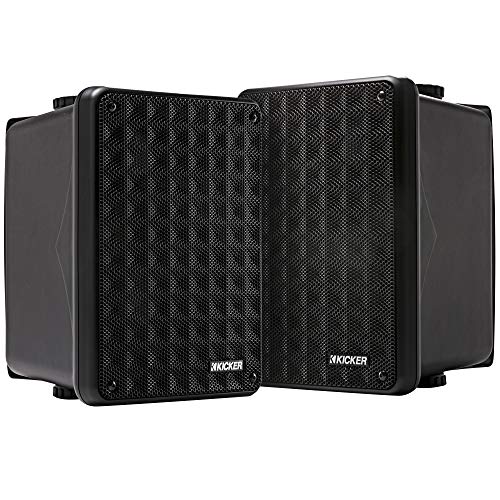
Kicker KB6B 2-Way
Budget-minded buyers who want a passive indoor/outdoor speaker pair to mount in a patio, garage, or poolside area.
Read the Kicker KB6B 2-Way review →
Focal 690AC 6” x 9”
Budget minded buyers who need a passive 6 x 9 coaxial speaker for factory replacement or custom installation with an external amplifier.
Read the Focal 690AC 6” x 9” review →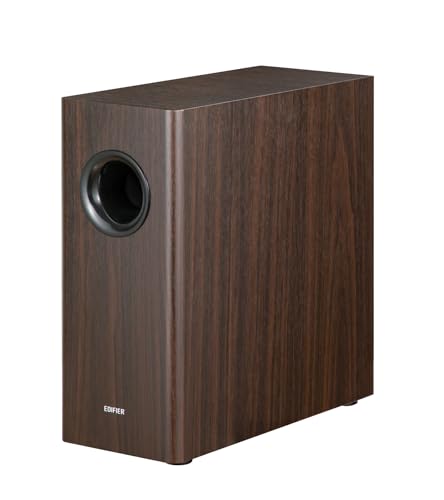
Edifier T5s
Listeners who want to add budget friendly bass to a small stereo or desktop setup, especially with Edifier powered speakers.
Read the Edifier T5s review →Questions Buyers Ask
Edifier M60
See the current listing, price and included accessories.
About This Review
Mandrillis Team
The Mandrillis editorial team researches and compares audio and music gear using manufacturer documentation, verified specs and real buyer feedback, so you can make a confident purchase without wading through marketing claims.
Read our full research methodology.