Speakers Review
Edifier R1280T Review: Simple Powered Desktop Sound
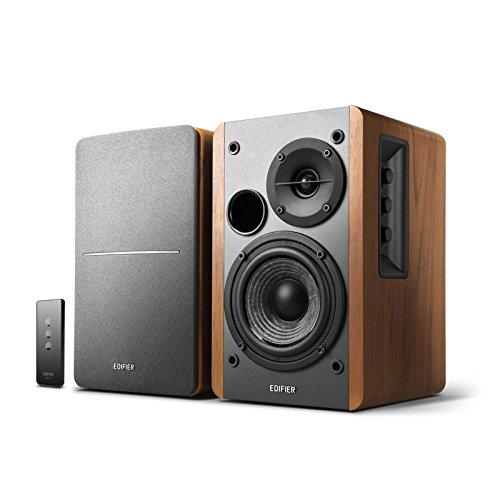
The Edifier R1280T is a budget powered bookshelf speaker pair focused on analog sources. It offers two AUX inputs, a silk dome tweeter, a 4 inch full range driver, side panel tone controls, and a remote. The listing does not publish frequency response or dimensions, and there is no Bluetooth or digital input.
Our Verdict
Research Score 72/100The Edifier R1280T is a practical budget powered bookshelf speaker for analog only desks and small rooms. Its two AUX inputs, silk dome tweeter, side panel bass and treble controls, and remote cover the essentials for near field listening. The 42 watt RMS rating and 4 inch driver suggest modest output and limited deep bass, which suits the intended use. The listing omits frequency response, sensitivity, dimensions, and weight, so some judgments remain cautious. Still, for buyers who want a simple wired 2.0 setup with a classic wood look, the R1280T is a focused and low risk choice.
Editorial research score based on published specifications and documented features, not a customer rating or lab test.
Edifier
Edifier R1280T
Best for: Near field desktop or small room listening where a simple wired powered speaker with tone controls and remote is enough.
Skip it if: Avoid if you need Bluetooth, digital inputs, or deep bass without adding a subwoofer.
Check Price on AmazonWe may earn a commission at no extra cost to you.
Listing verified: October 2026
Who Should Buy It
Buy it if
- Desktop listeners who want powered speakers for a computer or laptop
- Users with analog sources like a TV headphone jack, turntable with built-in preamp, or game console
- Small room listeners who prefer physical tone controls over apps
- Budget conscious buyers who do not need wireless or digital audio
Skip it if
- You need Bluetooth or Wi-Fi streaming from a phone or tablet
- You want strong sub bass or high volume output without adding a subwoofer
- You require optical, coaxial, or USB digital inputs for a TV or computer
Key Specifications
| Type | Powered bookshelf speaker, 2.0 active near field monitor |
| Power | 42W RMS |
| Inputs | RCA + 3.5mm AUX |
| Bluetooth | No |
| Drivers | 13mm silk dome tweeter and 4 inch full range unit per speaker |
| Power or sensitivity | 42 watts RMS total system power; sensitivity not published in listing |
| Frequency response | Not published in listing |
| Inputs and connectivity | Two AUX inputs, supporting devices with 3.5mm or dual RCA outputs; simultaneous connection described |
| Bluetooth and streaming | No Bluetooth or streaming; wired analog only |
| Dimensions | Not published in listing |
| Weight | Not published in listing |
| Finish | MDF wood cabinet with wood effect vinyl |
| Included accessories | Remote control; other cables not published in listing |
Overview
The Edifier R1280T is a powered 2.0 near field bookshelf speaker pair positioned as a budget active studio monitor for desks and small rooms. The product listing emphasizes a natural sound reproduction target, a simple analog input scheme, and classic wood vinyl styling. It is not a streaming speaker and does not include digital audio inputs, which the listing makes clear by focusing on two AUX connections.
Edifier describes the R1280T as a powered speaker, meaning the amplifier is built into one cabinet and drives both speakers. This reduces the need for a separate receiver or amplifier. The listing highlights 42 watts RMS of total system power and a two driver design per speaker using a silk dome tweeter and a 4 inch full range unit. Buyers considering the R1280T should see it as a practical wired desktop setup rather than a high output party speaker.
The published materials do not include frequency response, sensitivity, dimensions, or weight. That absence is common at the budget tier, but it means interested buyers have fewer on paper tools to judge room fit. Based on the specified driver size and power, the intended use is clearly near field listening at moderate volume rather than filling a large room.
Sound Quality
With a 13mm silk dome tweeter and a 4 inch full range unit per speaker, the R1280T is designed to deliver a balanced near field presentation. The silk dome tweeter suggests a smoother high frequency character than some hard dome or metal tweeters at a similar price. The listing uses the phrase studio sound quality but that is a marketing description, not a measured claim. On paper, the small full range driver will limit low frequency extension and output.
Edifier's published description emphasizes natural sound reproduction, which in this context usually means a relatively flat or neutral tonal balance. The side panel bass and treble controls give some flexibility to adjust the sound to taste or to compensate for desk placement. Without frequency response data, it is hard to say how deep the bass goes or how flat the mids are, but the design points toward clear vocals and present treble rather than heavy bass.
Users who place these near a wall or on a desk may notice a slight bass lift from boundary gain, and the bass knob can help tame that. The remote volume control is a convenience but does not change the sound signature. For dialogue, acoustic music, and moderate gaming, the R1280T should be adequate on paper. Buyers seeking sub bass or high volume dynamics should look elsewhere, as the listing does not claim any subwoofer support or high sustained output.
Drivers, Power and Room Fit
The R1280T uses a 13mm silk dome tweeter paired with a 4 inch full range unit in each cabinet. The listing does not specify a crossover frequency, cabinet tuning, or whether the full range unit operates in a ported or sealed enclosure. Many powered bookshelf speakers at this size use a ported cabinet, but Edifier does not publish that detail in this product page. What is clear is that the small driver diameter limits the amount of air moved, which tends to reduce deep bass output.
The amplifier is rated at 42 watts RMS total system power. The listing does not break this down into watts per channel or state the impedance. For a desktop or small bedroom, 42 watts RMS is generally enough for clear sound at moderate levels, but it will not produce high sound pressure levels without strain. The near field designation fits this power level: the speaker is designed to be listened to from a few feet away.
Room fit is best for desks, bookshelves, or small offices. The compact driver size and unspecified dimensions suggest a cabinet that is larger than a portable speaker but small enough for a desk. Without published dimensions, buyers should check the physical size before ordering if space is tight. The listing only emphasizes the wood finish and side controls, not the enclosure volume or stand mounting options.
Features and Connectivity
Connectivity on the R1280T is strictly analog. The listing describes two AUX inputs, with support for a 3.5mm headphone output and dual RCA output sources. This means you can connect a phone, tablet, TV headphone jack, computer, or turntable with a built in preamp using the appropriate cable. There is no USB, optical, coaxial, or HDMI input described.
One practical feature is that both AUX inputs can remain connected at the same time, so you do not need to unplug and replug cables when switching between a computer and a game console or TV. The listing does not specify a front mounted input, and the side panel controls are on the powered speaker. Remote control allows volume adjustment from a distance, but the remote only controls volume, not the bass or treble knobs.
There is no Bluetooth or Wi-Fi streaming in this model. The listing makes no mention of app control, voice assistants, or multiroom audio. That keeps the R1280T simple and direct, but it also means the speaker is limited to source devices with analog outputs. A phone without a headphone jack would need a dongle or adapter, which is not included or mentioned.
- Two AUX inputs, one 3.5mm and one dual RCA, both can be connected at once
- Included remote control for volume
- Side panel bass and treble EQ controls
- No Bluetooth, USB, optical, or subwoofer output described in the listing
Build, Design and Finish
The R1280T cabinet is described as high quality MDF wood with a wood effect vinyl finish. MDF is a common material for speakers because it is dense and resistant to unwanted resonance compared with thin plastic. The vinyl wrap gives a classic wooden appearance at a budget price. The listing does not specify the exact thickness of the MDF or the internal bracing.
The front of each speaker likely has removable or non removable grilles, but the listing does not mention them. The side panel controls are located on the active or powered speaker, which houses the amplifier. The passive speaker connects to the powered speaker with speaker wire, though the listing does not describe the length or type of included cable.
Finish options are not published beyond the wood effect vinyl. The textured vinyl may hide fingerprints and minor scratches better than a high gloss surface. The overall design leans traditional and should blend into home decor without drawing attention. Buyers looking for matte paint, real wood veneer, or metal accents will not find those details confirmed in the listing.
Setup and Placement
Setup is straightforward for a powered 2.0 system. One speaker contains the amplifier and inputs, and the other connects to it as a passive satellite. The listing does not specify whether the included speaker wire is fixed or detachable, nor its length. For most desks, the included wire is usually long enough, but that is not confirmed in the published details.
Placement flexibility is limited by the wired connection between the two speakers and the lack of wireless. The near field design suggests placing the pair on a desk or shelf, with the tweeters roughly at ear height and the speakers angled toward the listener. The listing does not mention isolation pads, wall mounting, or threaded inserts.
Because there are no digital audio connections, source placement is also a consideration. A computer or phone with a 3.5mm output can sit nearby. The two AUX inputs reduce cable swapping, but you will still need the appropriate analog cables for each source. The remote volume control is useful if the powered speaker is placed slightly out of reach.
Daily Use
In day to day use, the R1280T behaves like a simple powered speaker. You leave the powered speaker plugged in, keep both AUX sources connected if needed, and change volume from the remote or side knob. The bass and treble controls let you make quick tonal adjustments without an app or menu. That simplicity is a strength for people who want a set and forget audio system.
The lack of automatic on and off, standby, or input priority is not specified in the listing, so buyers should not assume advanced power management. If both AUX sources are playing at once, the speaker may mix or simply play whichever signal is active, but the listing does not explain how it handles two simultaneous signals. In practice, most users will pause one source before using the other.
The remote control adds convenience for volume, but it is not clear whether it uses IR or RF. IR would require line of sight to the speaker. Since the listing does not publish the remote type, buyers should plan to point the remote at the powered speaker. The side panel knobs are mechanical and may be easier to adjust when seated close to the speaker.
Who Should Buy It
The R1280T suits desktop listeners, students, and anyone who wants a compact powered speaker for a computer, small TV, or turntable with analog output. Its two AUX inputs make it practical for a desk where a laptop and a monitor or game console share the same speakers. The included remote is helpful for adjusting volume from across a small room.
Buyers who like the classic wood vinyl look and do not need wireless or digital inputs will appreciate the simple design. The side panel tone controls allow a bit of tuning without software, which is useful for older devices or nontechnical users. The budget price tier makes it a low risk entry into powered bookshelf audio.
The R1280T is not ideal for users who primarily listen over Bluetooth or who need an optical connection to a TV without an analog output. It also is not the best choice for bass heavy music at high volume, because the 4 inch driver has physical limits. The listing positions it as a near field monitor, so desk use should be the main scenario.
Alternatives Worth Considering
The Edifier R1280DB is a sibling model that adds Bluetooth and digital inputs, so it may be a better fit for wireless listeners. The R1280T keeps the same basic core but strips connectivity back to analog only, which can save money for those who do not need the extra features. Buyers should compare the two if they want future flexibility.
For a different household reference, the Klipsch R-51M is a passive bookshelf speaker that requires an amplifier, so it is not a direct all in one alternative. The ELAC Debut 2.0 B5.2 also demands external amplification but is known for a different tonal balance. The R1280T stands out because the amplifier is built in and the package is ready to play with just an analog source.
Portable Bluetooth speakers such as the JBL Flip 6 or Bose SoundLink Flex offer wireless convenience and battery power, but they do not provide the same stereo separation or dedicated desktop placement. A small subwoofer like the SVS SB-1000 Pro could be added to an audio system, but the R1280T does not have a subwoofer output, so that path would require workarounds. For pure analog desktop simplicity, the R1280T remains a focused option.
Verdict
The Edifier R1280T is an honest budget powered bookshelf speaker. It does not promise wireless streaming or deep bass, but its two AUX inputs, silk dome tweeter, side tone controls, and remote cover the basics for a desk or small room. The listing clearly targets buyers who want a simple wired 2.0 setup rather than a connected lifestyle speaker.
Without published frequency response, sensitivity, dimensions, or weight, some judgments must remain cautious. The 42 watts RMS rating and 4 inch driver suggest modest output and limited low end, which matches the near field monitor intent. Buyers who understand those limitations and need a tidy desktop pair with a classic wood look should find the R1280T practical. The overall score reflects solid value for the analog only niche, with points lost for missing digital and wireless connectivity and for the incomplete specification sheet.
Strengths and Limitations
Strengths
- Two wired AUX inputs allow two sources to stay connected at once
- Silk dome tweeter for smoother highs at budget tier
- 42 watts RMS total for near field use
- Included remote control for volume
- Side panel bass and treble EQ controls
- MDF wood effect vinyl finish looks clean
Limitations
- No Bluetooth or digital inputs
- Frequency response and sensitivity not published
- No subwoofer output described
- Bass limited by 4 inch driver
How We Scored It
Scores reflect published specifications, documented features and value against the alternatives below. They are editorial research scores, not laboratory measurements.
Alternatives to Consider

Jamo S 803
Buyers who want an affordable passive bookshelf speaker pair with a warm wood finish and Dolby Atmos ready home theater potential.
Read the Jamo S 803 review →
Kali Audio MV-BT
A desktop or small studio user who wants to add Bluetooth streaming to existing powered monitor speakers with XLR or TRS inputs.
Read the Kali Audio MV-BT review →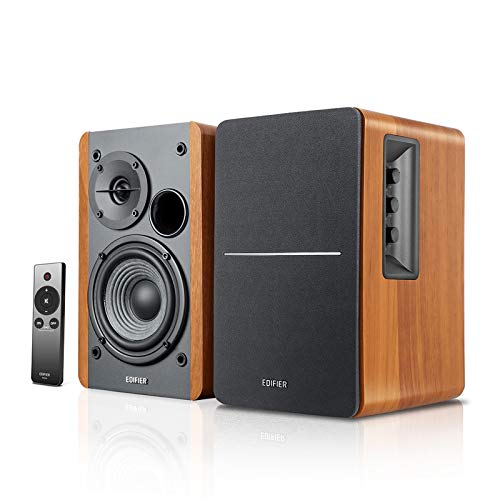
Edifier R1280Ts
A wired desktop or small room stereo setup that may later add an active subwoofer.
Read the Edifier R1280Ts review →Questions Buyers Ask
Edifier R1280T
See the current listing, price and included accessories.
About This Review
Mandrillis Team
The Mandrillis editorial team researches and compares audio and music gear using manufacturer documentation, verified specs and real buyer feedback, so you can make a confident purchase without wading through marketing claims.
Read our full research methodology.