Speakers Review
Kanto ORA4 Review: Compact Powered Reference Speakers
The Kanto ORA4 is a lower mid-range powered speaker pair with USB-C, Bluetooth 5.0, an RCA input, and a subwoofer output that activates an 80 Hz crossover. Its compact size and 140 watt bi-amplified DSP tuning target desktop, gaming, and small room use, though the listing omits some key specifications.
Our Verdict
Research Score 80/100The Kanto ORA4 is a thoughtful compact powered speaker for desktop and small room use. The listing highlights 140 watts of DSP tuned bi-amplified power, USB-C, Bluetooth 5.0, RCA, and an automatic subwoofer crossover that improves headroom when a sub is added. Magnetic shielding and mounting inserts add practical value for retro and space conscious setups. However, the absence of published frequency response, tweeter details, dimensions, and weight means buyers cannot fully verify performance on paper. For a lower mid-range active speaker that bridges studio neutrality and everyday listening, the ORA4 earns a solid recommendation as long as the unlisted specifications are not deal breakers.
Editorial research score based on published specifications and documented features, not a customer rating or lab test.

Kanto
Kanto ORA4
Best for: Desk, computer, gaming, and compact music setups that need neutral powered sound with a subwoofer path.
Skip it if: You need a full-size passive bookshelf speaker with published anechoic measurements and passive crossover flexibility.
Check Price on AmazonWe may earn a commission at no extra cost to you.
Listing verified: October 2026
Who Should Buy It
Buy it if
- Desktop users who want compact powered speakers for a PC or Mac over USB-C
- Listeners who want a neutral, DSP corrected presentation for nearfield music or video editing
- Small room setups that may add a subwoofer later and want automatic bass management
- Retro or CRT gaming setups that need magnetic shielding
Skip it if
- You require published frequency response and driver material specifications before buying
- You want HDMI ARC, optical, or Wi-Fi streaming built in
- You are building a passive two-channel hi-fi system with a separate amplifier
Key Specifications
| Type | Powered reference speakers (pair) |
| Drivers | 4 inch woofers; tweeter details not published in listing |
| Power or sensitivity | 140 W total system power, bi-amplified Class-D with DSP tuning |
| Frequency response | Not published in listing |
| Inputs and connectivity | USB-C, RCA, subwoofer output with automatic 80 Hz crossover |
| Bluetooth and streaming | Bluetooth 5.0; no other streaming details published |
| Dimensions | Not published in listing |
| Weight | Not published in listing |
| Finish | White |
| Included accessories | Not published in listing |
Overview
The Kanto ORA4 is a pair of powered reference speakers positioned as a compact desktop or stand mounted solution. The listing emphasizes neutral, DSP tuned sound with bi-amplified Class-D power totaling 140 watts, aimed at creators, gamers, musicians, and audiophiles. The white finish and small footprint make it adaptable to desks, shelves, or wall mounts with the right hardware. This is a lower mid-range product that tries to bridge studio monitoring and everyday listening.
Kanto describes the ORA4 as not quite a bookshelf speaker, not quite a studio monitor, and not quite a computer speaker, but a flexible option for many scenarios. The product listing highlights modern connectivity with USB-C, Bluetooth 5.0, and RCA, plus automatic subwoofer crossover behavior. Several specifications such as frequency response, dimensions, and weight are not included in the listing, so any evaluation here relies on the published feature set and general expectations for this category.
Sound Quality
The listing describes studio-grade sound through DSP tuning and bi-amplified Class-D amplification. The 4 inch woofers are said to deliver deep, authoritative bass for their size, while the neutral voicing is meant to reveal the artist's intent. On paper this suggests a flat response suitable for nearfield mixing, though without a published frequency range or measurement data, the exact tonal balance cannot be confirmed from the listing alone.
Kanto claims the ORA4 is accurate enough to work as a studio monitor but refined enough for hi-fi use. The DSP tuned amplifier likely manages woofer excursion and thermal limits, which can help a small driver play lower and cleaner than a passive equivalent. Buyers report that the speaker works well for desktop listening and video editing, with a controlled presentation that avoids obvious boominess. The lack of a specified tweeter or crossover point leaves some questions about top octave dispersion and treble character, but the general impression is of a neutral, detailed compact speaker.
The automatic subwoofer crossover is a meaningful sound quality feature. When a sub is connected, the ORA4 concentrates on vocals and high frequencies, which can reduce distortion and increase headroom. This offloading of bass is said to allow louder playback before strain, improving clarity in the midrange. For a small desktop speaker, that is a smart approach to dynamic range.
Drivers, Power and Room Fit
Each speaker uses a 4 inch woofer, though the listing does not identify tweeter design or size. The total system power is listed as 140 W, delivered through bi-amplified Class-D channels with DSP tuning. Bi-amplification means the woofer and high frequency driver each receive their own amplifier channel, which can improve control and reduce intermodulation compared with a single full range amp. The 4 inch driver is small enough for desktop use but not a substitute for larger woofers in a big room.
Frequency response is not published, so objective claims about bass extension cannot be made. The listing mentions deep bass extension but avoids a specific low frequency figure. The automatic 80 Hz crossover when a subwoofer is connected suggests the speaker is designed to be used with a sub for full range music and gaming. Without a sub, the 4 inch drivers will have physical limits in the lowest octave, but nearfield use can mitigate room loading issues.
Room fit is flexible thanks to the compact size and mounting options. Kanto publishes no exact cabinet dimensions, but the product is described as perfectly sized for stand or desktop setups. The two quarter inch twenty threaded inserts at the rear and bottom allow wall mounting or bracket use, which can free up desk space. For small rooms, studios, or computer desks, the ORA4 should provide enough output for listening levels typical of nearfield use.
Features and Connectivity
The ORA4 offers three main inputs: USB-C, Bluetooth 5.0, and RCA. USB-C is positioned as the clean digital path from a PC or Mac, which is useful for desktop setups without an external DAC. Bluetooth 5.0 handles wireless playback from phones and smart home devices, although the listing does not specify supported codecs beyond the core Bluetooth standard. RCA covers older analog sources, including retro consoles and turntables with a built in phono preamp.
One standout feature is the subwoofer output with automatic crossover. When a sub is connected, a crossover network activates automatically at 80 Hz, letting the ORA4 focus on vocals and high frequencies. This is practical for users who want to add low end later without complex bass management. Magnetic shielding is another thoughtful detail for CRT or PVM owners, because it prevents picture distortion when the speakers sit close to a tube display.
- USB-C input for direct digital audio from a PC or Mac
- Bluetooth 5.0 for wireless streaming from a phone or smart device
- RCA input for analog sources such as retro game consoles or preamps
- Subwoofer output with automatic 80 Hz crossover
- Two quarter inch twenty threaded inserts on the rear and bottom for mounting
- Magnetic shielding for safe placement near CRT or PVM displays
Build, Design and Finish
The Kanto ORA4 is sold as a pair in a white finish. The listing does not specify cabinet material, thickness, or internal bracing, so build quality can only be inferred from the brand's general reputation and the presence of features like magnetic shielding and mounting inserts. The compact rectangular design is functional and should blend into modern desks or shelves. The white color is clean but may show scuffs more than a darker finish.
The magnetic shielding indicates attention to older display technology and suggests the drivers have shielded magnet assemblies, which add some weight but protect nearby electronics. The threaded inserts are a practical build detail, because they allow secure mounting without clamping or adhesive. Kanto mentions optional stands such as the S4, SE4, SP9, SH6HD, SP26PL, and SP32PL, which implies the cabinet has a flat bottom suitable for desktop or stand placement. However, without published dimensions and weight, it is hard to assess portability or shelf load.
Setup and Placement
Setup appears straightforward for a powered speaker pair. One speaker likely houses the amplifier and inputs, though the listing does not specify which side or how the speakers connect to each other. Typically this type of powered pair uses a speaker wire link from the active speaker to the passive one, but the listing does not confirm that detail. Users should plan for a power outlet near the active speaker and a USB-C or RCA source nearby.
Placement flexibility is a strong point. The compact cabinet can sit on a desk, shelf, or stand, and the threaded inserts allow wall or bracket mounting. Kanto stresses ear level alignment and minimizing surface reflections, which are sensible setup goals for any nearfield speaker. If placed on a desk, desktop stands or isolation pads can help reduce boundary effects, though the listing does not include these accessories.
Daily Use
In everyday use, the Kanto ORA4 should serve well for computer audio, streaming, and casual music playback. The USB-C input makes it easy to switch between a laptop and a desktop without an external interface, and Bluetooth allows quick pairing with a phone. The three input options cover most common sources, though users who rely on optical from a TV or HDMI ARC will need an adapter or separate DAC.
The subwoofer crossover is likely the most useful daily feature. If a subwoofer is added, the automatic high pass filter cleans up the midrange and allows higher playback levels without obvious strain. The listing does not mention a remote or app control, so volume and input switching likely happen on the speaker itself. Buyers should note that daily ergonomics are not fully described in the published material.
Who Should Buy It
The Kanto ORA4 is best for desktop users, gamers, and creators who want a compact powered speaker with neutral voicing and modern inputs. It suits small rooms and nearfield setups where a full sized bookshelf speaker would dominate the space. The automatic subwoofer crossover makes it a sensible choice for someone who plans to add a subwoofer later.
Retro enthusiasts with CRT or PVM displays will appreciate the magnetic shielding and analog RCA input. Musicians or video editors who need an accurate monitor for a desk without investing in larger studio monitors may also find the ORA4 practical. It is not a passive speaker for traditional amplifier rolling, but as an all in one active system it covers a lot of desktop audio needs.
Alternatives Worth Considering
Shoppers comparing the Kanto ORA4 to common powered bookshelf options should consider how much they need published measurements. Some speakers in this category offer optical inputs or a remote, which the ORA4 listing does not mention. The lower mid-range class includes many active speakers with 4 to 5 inch woofers, USB or Bluetooth, and similar amplifier power. Without specific frequency response data, the ORA4 relies on Kanto's tuning claims rather than objective graphs.
Those who want a subwoofer output with automatic crossover will find the ORA4's bass management compelling, but not unique. Other powered speakers offer sub outputs, though the automatic high pass behavior is less common at this price. Buyers focused on a pure analog chain may prefer passive bookshelf speakers like typical entry level hi-fi models, but they then need a separate amplifier. For desktop use with a PC and occasional Bluetooth, the ORA4's USB-C and RCA combination is convenient.
Verdict
The Kanto ORA4 earns a solid score for its feature set and design intent. The listing presents a compact powered speaker that should work well for desktop, gaming, and small room listening. The USB-C input, Bluetooth 5.0, RCA, magnetic shielding, and automatic subwoofer crossover are practical advantages that make it easy to integrate into a modern or retro setup.
The main limitation is the incomplete specification sheet. Without frequency response, tweeter details, dimensions, and weight, buyers cannot fully compare performance or confirm placement fit before purchase. For a lower mid-range product, that is a notable gap, but the Kanto brand and the described features suggest a capable all in one speaker pair.
Strengths and Limitations
Strengths
- Studio-minded DSP tuned sound with bi-amplified Class-D power
- Useful USB-C, Bluetooth 5.0, and RCA input set
- Subwoofer output with automatic 80 Hz crossover
- Magnetic shielding for use near CRT displays
- Mounting inserts for placement flexibility
Limitations
- Listing omits frequency response, tweeter details, dimensions, and weight
- No optical or HDMI ARC input for TV use
- No built-in Wi-Fi or app-based streaming
- Bluetooth 5.0 but no higher-tier codecs specified
- White finish may not suit all rooms
How We Scored It
Scores reflect published specifications, documented features and value against the alternatives below. They are editorial research scores, not laboratory measurements.
Alternatives to Consider

Klipsch Reference Premiere RP-600M II
Listeners who want a horn-loaded passive bookshelf speaker with updated drivers and a furniture grade look.
Read the Klipsch Reference Premiere RP-600M II review →
Klipsch R-51PM
Listeners who want a compact powered bookshelf speaker with Bluetooth and a phono input for a turntable.
Read the Klipsch R-51PM review →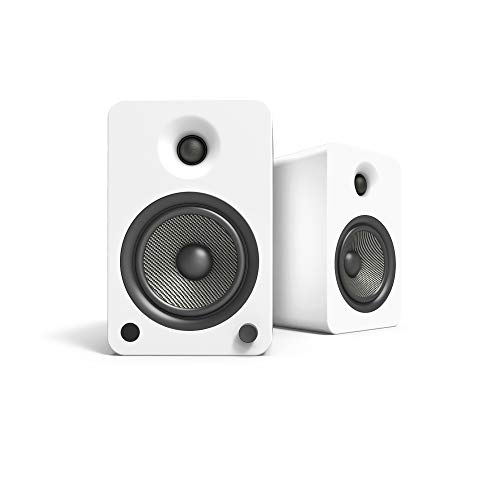
Kanto YU6MW
Listeners who want a simple powered bookshelf system with vinyl and Bluetooth streaming in small to medium rooms.
Read the Kanto YU6MW review →Questions Buyers Ask
Kanto ORA4
See the current listing, price and included accessories.
About This Review
Mandrillis Team
The Mandrillis editorial team researches and compares audio and music gear using manufacturer documentation, verified specs and real buyer feedback, so you can make a confident purchase without wading through marketing claims.
Read our full research methodology.