Speakers Review
Klipsch ProMedia THX Review: Compact THX 2.1 Punch
The Klipsch ProMedia THX is a budget priced 2.1 computer speaker system with a THX certification, a MicroTractrix horn design, a 6.5 inch subwoofer, and 200 watts of peak power. The published spec sheet is strong on output and control but leaves frequency response and Bluetooth out.
Our Verdict
Research Score 78/100The Klipsch ProMedia THX reads as a focused wired 2.1 system for desktops and small rooms. The THX certification, 200 watts of peak power, and side-firing ported subwoofer suggest a lively presentation for games, movies, and music. The control pod puts main volume and subwoofer gain within reach, which is practical for desk use. However, the listing leaves important details unpublished, including frequency response, total weight, and any wireless capability. Without Bluetooth or digital inputs, the system is limited to a single 3.5 mm source at a time. For buyers who prioritize a simple wired THX certified setup at a budget price, the ProMedia THX is a credible choice. Buyers who need wireless streaming or complete published specifications should look elsewhere first.
Editorial research score based on published specifications and documented features, not a customer rating or lab test.

Klipsch
Klipsch ProMedia THX
Best for: Buyers who want a THX certified wired desktop or small room 2.1 speaker system with strong output and simple controls.
Skip it if: You need wireless Bluetooth streaming, multiple wired inputs, or a published frequency response before buying.
Check Price on AmazonWe may earn a commission at no extra cost to you.
Listing verified: October 2026
Who Should Buy It
Buy it if
- Computer and desktop users who want an easy wired 2.1 upgrade
- Gamers and movie watchers who value THX certification and strong peak volume
- Music listeners who want a compact speaker system with a dedicated subwoofer
- Buyers who prefer a physical control pod over remote controls
Skip it if
- You want Bluetooth or network streaming built in
- You need a passive speaker setup with a separate amplifier
- You require a fully published set of acoustic measurements
Key Specifications
| Type | 2.1 powered computer speaker system with subwoofer |
| Drivers | Two-way satellites with 3 inch midrange drivers and Klipsch MicroTractrix horn; 6.5 inch side-firing ported subwoofer |
| Power or sensitivity | 200 watts peak power, 110 dB in room maximum output |
| Frequency response | Not published in listing |
| Inputs and connectivity | 3.5 mm input; control pod with main volume and subwoofer gain control |
| Bluetooth and streaming | Not published in listing; no Bluetooth mentioned |
| Dimensions | Satellite: 8.5 x 4.2 x 5.67 inches (21.59 x 10.67 x 14.4 cm); Subwoofer: 9.5 x 9.8 x 10.2 inches (24.13 x 24.9 x 25.9 cm) |
| Weight | Not published in listing |
| Finish | Black |
| Included accessories | Control pod with main volume and subwoofer gain control; 3.5 mm connectivity described |
Overview
Klipsch positions the ProMedia THX as a compact 2.1 computer speaker system that combines the company's audio design with THX certification. The listing emphasizes legendary sound, room filling output, and a convenient control pod. It is priced in the budget tier, which makes the THX badge notable for a wired desktop setup.
The system consists of two satellite speakers and a dedicated subwoofer. Each satellite uses a 3 inch midrange driver and Klipsch MicroTractrix horn technology. The subwoofer is a 6.5 inch side-firing ported design. The published maximum output is 200 watts peak power and 110 dB in room.
This review is based entirely on the manufacturer listing and published specifications. It does not include in-person testing or measurements. The goal is to evaluate what the listed facts suggest about performance, features, and fit.
Sound Quality
On paper, the Klipsch ProMedia THX leans on two elements for its sound character. The MicroTractrix horn on each satellite is designed to improve clarity and control dispersion, sending sound toward the listener rather than scattering it broadly. The two-way satellite design pairs that horn with a 3 inch midrange driver, which is typical for compact computer speakers.
The 6.5 inch side-firing ported subwoofer is meant to deliver full bandwidth bass response. A ported design often provides more low frequency output for a given power level than a sealed box. The listing does not state a frequency response range, so the exact low end extension and high frequency limit are unknown.
Buyers reading the feature list may expect a forward and energetic presentation, especially with the horn loaded satellites and the 200 watt peak output claim. The THX certification implies that the system meets certain performance criteria for multimedia use, although the listing does not publish the specific THX test parameters. Without in-person listening, the precise tonal balance remains an open point.
Drivers, Power and Room Fit
The two satellite speakers each use a 3 inch midrange driver, and the subwoofer uses a 6.5 inch side-firing ported driver. The listing highlights the MicroTractrix horn as a major contributor to clarity and efficient output. This horn loaded design is intended to produce more sound from every watt while keeping dispersion controlled.
Maximum output is published as 200 watts of peak power and 110 dB in room. For context, the listing compares that level to live rock music, which it says averages 108 to 114 dB. That suggests the system can play loudly in a desktop or small room setting, though sustained high output from compact satellites with 3 inch midranges may show limits.
Room fit is likely best in a nearfield or small to medium space. The satellites are 8.5 inches tall, 4.2 inches wide, and 5.67 inches deep. The subwoofer is 9.5 inches tall, 9.8 inches wide, and 10.2 inches deep. These dimensions allow placement on a desk, under a monitor, or in a small entertainment nook. The side-firing subwoofer needs some clearance to project bass effectively.
Features and Connectivity
The feature set is focused on a single wired connection. The listing specifies a 3.5 mm input, which works with computers, TVs, music players, and gaming consoles that have a headphone or line output. There is no published Bluetooth, Wi-Fi, optical, USB, or RCA input. That limits the system to one source at a time unless an external switcher is used.
A control pod provides main volume and subwoofer gain control. The listing describes the pod as easy to use and convenient. There is no mention of a remote control, tone controls beyond subwoofer gain, or DSP settings. The plug and play nature means no software or network configuration is required.
- 3.5 mm analog input for wired sources
- Control pod with main volume and subwoofer gain
- No Bluetooth or wireless streaming in the listing
- Compatible with TV, computer, music player, and game console
- No remote control or digital inputs mentioned
Build, Design and Finish
The finish is black, which suits a desktop or media setup. The listing does not publish the cabinet material, so the exact build composition cannot be confirmed. The compact dimensions suggest a lightweight and space saving design, but the total weight is not given.
The satellites are small enough to sit on a desk without dominating the workspace. The subwoofer is also compact for a 6.5 inch driver, with a footprint under a foot in each dimension. The side-firing ported layout means the bass output is directed to one side, which can affect how the subwoofer is placed against walls or furniture.
The control pod adds a physical interface that is easier to reach than bending down to a subwoofer. The overall design appears functional rather than high end, with the THX and Klipsch branding as the main visual cues. Durability cannot be assessed from the listing alone.
Setup and Placement
Setup is described as plug and play. The 3.5 mm cable connects a source to the system, and the control pod handles volume and subwoofer gain. There is no room calibration, app, or network pairing process mentioned. That makes the initial install straightforward for most users.
Placement of the satellites should ideally be on either side of a monitor or listening position, aimed toward the ears. The horn loaded tweeter section benefits from being pointed at the listener. The side-firing subwoofer can be placed on the floor under or beside a desk, but the port and driver orientation should have some airspace to avoid muffled bass.
Because there is no wireless connection, the source device must be physically connected to the 3.5 mm cable. That may limit placement flexibility, especially if the source is a TV across the room. A longer 3.5 mm cable can help, but the listing does not state the included cable length.
Daily Use
For everyday computer audio, the Klipsch ProMedia THX should serve as a substantial step up from typical built in monitor speakers. The subwoofer adds low end that small desktop units often lack. The volume and subwoofer gain controls on the pod let users adjust bass without reaching behind the subwoofer.
The single 3.5 mm input means users who switch between a computer, console, and TV may need to physically swap cables or use an external audio switch. The lack of Bluetooth is a clear tradeoff for wireless convenience. The wired connection does provide a stable signal without Bluetooth latency or compression, which can matter for gaming and video.
At high output levels, the compact satellites may not have the same midrange body as larger bookshelf speakers, but the published 110 dB in room figure suggests headroom is available. Without a frequency response spec, users cannot easily judge how deep the subwoofer plays or how smooth the transition is between satellites and subwoofer.
Who Should Buy It
This system fits buyers who want a THX certified, wired 2.1 speaker setup for a computer desk, dorm room, or small home office. It is budget friendly and does not require an amplifier or receiver. Gamers and movie watchers may appreciate the strong peak output and dedicated subwoofer.
The Klipsch ProMedia THX is also a good match for someone who prefers a physical volume knob and subwoofer gain control rather than a remote or app. The simple 3.5 mm connection works with many devices, so it is easy to move between a laptop, desktop, or small TV.
However, the system is not for users who want wireless streaming, multiroom audio, digital inputs, or a fully published acoustic specification. The listing leaves too many details unknown for measurement focused buyers.
Alternatives Worth Considering
For buyers who need Bluetooth, powered bookshelf speakers such as the Edifier R1280DB are a common alternative in the same rough budget tier. They do not have a dedicated subwoofer in the box, but they add wireless convenience and similarly simple setup.
If you are willing to use a separate amplifier, the Klipsch R-51M is a passive bookshelf speaker that can grow with a larger system. It will not include a subwoofer or built in power, so total cost and complexity rise. The ELAC Debut 2.0 B5.2 is another passive option known for a neutral balance, though again an amplifier is required.
For portable use, the JBL Flip 6 or Bose SoundLink Flex offer battery powered Bluetooth sound, but neither can match the stereo imaging and dedicated subwoofer of the ProMedia THX. If the goal is deeper home theater bass, the SVS SB-1000 Pro subwoofer is a significant upgrade in a subwoofer only form factor, but it requires an existing speaker system.
Verdict
The Klipsch ProMedia THX delivers a focused value proposition: a wired 2.1 system with THX certification, a horn loaded satellite design, a ported 6.5 inch subwoofer, and 200 watts of peak power. The listed features suggest strong output and a practical control pod for desktop use. The plug and play setup is a plus for non technical users.
The main drawbacks are the single 3.5 mm input and the absence of Bluetooth or digital connections. The listing also does not publish frequency response, weight, or exact cabinet materials, which makes precise sound and build evaluation difficult. These omissions are notable even at a budget price.
Overall, the Klipsch ProMedia THX is a sensible choice for gamers, movie watchers, and computer users who want an easy wired upgrade with subwoofer bass. The score of 78 reflects a strong but not complete package. If wireless streaming or multiple inputs are required, other options will fit better.
Strengths and Limitations
Strengths
- THX certified 2.1 system with strong peak power output
- MicroTractrix horn design aims for clear and controlled dispersion
- Side-firing ported 6.5 inch subwoofer for full bass
- Plug and play wired setup with simple control pod
- Fits desktop and small room use without large floor footprint
Limitations
- No Bluetooth or wireless streaming mentioned in listing
- Frequency response not published, so exact tonal balance is unknown
- Single 3.5 mm input limits simultaneous source connections
- No remote control included, adjustment happens on the pod
- Weight and exact build materials are not stated
How We Scored It
Scores reflect published specifications, documented features and value against the alternatives below. They are editorial research scores, not laboratory measurements.
Alternatives to Consider

Focal 690AC 6” x 9”
Budget minded buyers who need a passive 6 x 9 coaxial speaker for factory replacement or custom installation with an external amplifier.
Read the Focal 690AC 6” x 9” review →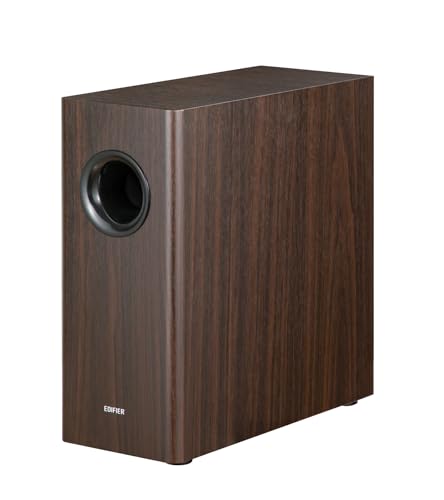
Edifier T5s
Listeners who want to add budget friendly bass to a small stereo or desktop setup, especially with Edifier powered speakers.
Read the Edifier T5s review →
Klipsch R-15M
Buyers who want a compact passive bookshelf speaker with Klipsch horn tweeter character and already own an amplifier.
Read the Klipsch R-15M review →Questions Buyers Ask
Klipsch ProMedia THX
See the current listing, price and included accessories.
About This Review
Mandrillis Team
The Mandrillis editorial team researches and compares audio and music gear using manufacturer documentation, verified specs and real buyer feedback, so you can make a confident purchase without wading through marketing claims.
Read our full research methodology.