Speakers Review
Marantz 50 Review: Pure Analog Integrated With HDAM SA-3
The Marantz 50 is a premium tier integrated stereo amplifier rated at 70 W with a purely analog signal path, HDAM SA-3 modules, a Class A/B high current output stage, a moving magnet phono stage and six analog inputs. This research review examines the published specification and the details the listing omits.
Our Verdict
Research Score 74/100The Marantz 50 is an unapologetically analog integrated amplifier for the premium tier. With no digital circuitry at all, it relies on HDAM SA-3 modules, a high current Class A/B output stage and a JFET based moving magnet phono stage to deliver the warm, spacious Marantz presentation the listing promises. Six analog inputs, stereo pre outs, a subwoofer output, a power amplifier input and speaker A/B switching give it more expansion flexibility than most integrated amplifiers. The 70 W rating comes without conditions, and dimensions, remote and accessories are not published. Buyers with an external DAC or streamer and a moving magnet turntable will find it a very strong choice. Everyone else needs a digital section.
Editorial research score based on published specifications and documented features, not a customer rating or lab test.
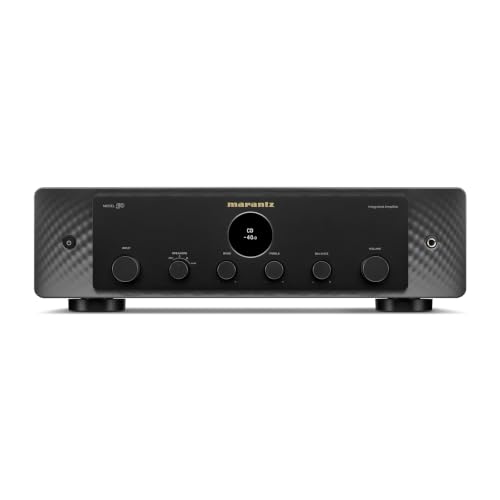
Marantz
Marantz 50
Best for: Listeners with an external DAC or streamer and a moving magnet turntable who want a purely analog Marantz amplifier with full expansion options.
Skip it if: Avoid it if you need digital inputs, streaming, HDMI ARC or a moving coil phono stage built in.
Check Price on AmazonWe may earn a commission at no extra cost to you.
Listing verified: October 2026
Who Should Buy It
Buy it if
- Vinyl listeners with moving magnet cartridges
- Owners of a separate DAC or streamer who want the amplifier kept analog
- Buyers who plan to add a subwoofer or a second pair of speakers
- Those who prefer the Marantz voicing in a traditional stereo system
Skip it if
- Your sources are all digital and you have no external converter
- You want streaming or television sound built into the amplifier
- You need a published wattage with load and distortion conditions
Key Specifications
| Drive type | Not published in listing |
| Cartridge | Not published in listing |
| Platter | Not published in listing |
| Tonearm | Not published in listing |
| Speeds | Not published in listing |
| Built-in preamp | Built-in MM phono stage, not a turntable built-in preamp |
| Bluetooth and USB | Not published in listing |
| Outputs | Stereo pre-amp outputs, subwoofer output, power amp input, speaker A/B terminals |
| Dimensions and weight | Not published in listing |
| Included accessories | Not published in listing |
| Type | Pure analog two channel integrated stereo amplifier with no digital circuitry |
| Power output | 70 W as stated in the listing. Load impedance, frequency range and distortion conditions are not published |
| Channels | Two channel stereo with speaker A/B switching |
| Inputs and outputs | Six analog inputs including dedicated CD and phono connections, stereo pre-amplifier outputs, a subwoofer output and a power amplifier input |
| HDMI and video | Not published in listing. No HDMI or digital connection of any kind is described |
| Wireless and streaming | Not published in listing. The amplifier is purely analog with no streaming, Wi-Fi or Bluetooth described |
| Phono input | Built in moving magnet phono stage combining HDAM technology with JFET input circuitry |
| Remote and app | Not published in listing |
Overview
The Marantz 50 is a two channel integrated amplifier built on a purely analog signal path. The listing describes it as an evolution 70 years in the making, tuned by the Marantz Sound Master and designed with no digital circuitry whatsoever, so that nothing in the chassis can introduce digital interference into the music. It is rated at 70 W and sits in the premium tier.
What it offers instead of digital convenience is a complete analog feature set. Six analog inputs include dedicated CD and phono connections, the phono stage is a moving magnet design built around HDAM technology with JFET inputs, and the rear panel adds stereo pre-amplifier outputs, a subwoofer output, a power amplifier input and speaker A/B switching.
The absence of any DAC, HDMI, Bluetooth or network connection is deliberate, and it defines who this amplifier is for. The listing also leaves out the power rating conditions, dimensions, weight, remote and accessories, which this review flags where they matter.
Power and Sound Quality
The 70 W rating matches the Marantz 40n W, but the listing again gives no impedance, bandwidth or distortion figure, so the number cannot be compared precisely with other amplifiers. The listing does describe a high current Class A/B architecture that drives even the most demanding loudspeaker loads with authority, which signals an output stage designed for current delivery rather than a high headline wattage.
HDAM SA-3 circuitry is the technical centerpiece. These are Marantz's proprietary discrete amplifier modules, and the listing claims they outperform standard integrated op amps in speed, bandwidth and distortion. The SA-3 designation marks the most recent generation of the module, which Marantz reserves for its upper range.
The described result is warm, rich and spacious sound with dynamic, lifelike and transparent character. That matches the long standing Marantz voicing, and buyers report that the brand's analog integrated amplifiers pair especially well with speakers that lean bright or lean. With a pure analog path there is no converter to color the signal, which purists consider the main reason to choose this design.
Connectivity and Inputs
Six analog inputs is generous for a modern integrated amplifier, and the listing specifies dedicated CD and phono connections among them. That leaves four line level inputs for a tuner, a tape deck, an external DAC or streamer and a television with an analog output. Every one of those inputs is analog, so any digital source needs its own converter.
The phono stage handles moving magnet cartridges and is described as combining HDAM technology with JFET input circuitry to simplify the signal path. Moving coil cartridges are not supported directly, so owners of low output cartridges would need a step up transformer or an external MC stage feeding one of the line inputs.
Expansion is where the Marantz 50 stands out. Stereo pre-amplifier outputs allow a separate power amplifier or a pair of powered speakers, the subwoofer output integrates a sub without a splitter, the power amplifier input lets a surround processor use the Marantz for the front channels, and speaker A/B switching serves two pairs of speakers or two rooms.
Formats, Processing and Room Correction
There are no digital formats to list because there is no digital section. The amplifier accepts analog signals only, and whatever resolution a source provides is determined entirely by the external DAC or streamer feeding it. That is the trade for a signal path with no digital circuitry at all.
No room correction, tone control detail or processing is described in the listing. An analog integrated amplifier at this tier normally keeps its path as short as possible, and the published emphasis on a direct, uncompromised signal path suggests the Marantz 50 follows that approach. Buyers who want automatic room equalization should look at a receiver or an external processor.
The only processing of note is the phono equalization, which applies the standard RIAA curve to a moving magnet cartridge. The JFET input stage is chosen for low noise with high impedance sources, which is why it appears in dedicated phono designs.
- Analog inputs only, no DAC or digital formats
- Moving magnet phono equalization with JFET input stage
- No room correction or DSP
- Resolution determined by the external source
Features, Streaming and Apps
The Marantz 50 has no streaming, no network connection, no Bluetooth and no app. The listing is explicit that the design contains no digital circuitry, so this is not an omission in the documentation but a defining characteristic of the product. A separate streamer is required for any online service.
Its features are all analog conveniences: the six inputs, the phono stage, the pre outs, the subwoofer output, the power amplifier input and speaker A/B switching. For a listener building a traditional system from separates, those are exactly the features that matter, and several of them are missing from streaming integrated amplifiers.
The features score is the lowest in this group because the scoring system rewards streaming and apps. That number should be read in context: the amplifier delivers precisely what it promises and nothing it does not.
Build, Design and Controls
The listing describes the Marantz 50 as striking a balance between timeless heritage and modern performance, which in Marantz terms usually means the brand's recognizable front panel with a central display or porthole and curved side panels. No dimensions, weight, chassis material or finish options are published for this model.
Front panel controls are not described. A traditional analog integrated amplifier is expected to carry a volume knob, an input selector and switches for speaker A and B, and the speaker A/B feature confirms at least that switching exists, but the published data does not detail the layout.
A remote control is not mentioned. The build score credits Marantz's established construction quality in its premium range and the thoughtful rear panel, while noting the absence of any published physical specification.
Setup and Daily Use
Setup is as simple as any amplifier gets. A turntable goes to the phono input, a CD player to the CD input, an external DAC or streamer to a line input, speakers to the A or B terminals and a subwoofer to its dedicated output. If a surround processor is in the room, its front channel pre outs connect to the power amplifier input.
Daily use involves selecting an input and setting volume, with no software, firmware or app to manage. For a listener who finds streaming integrated amplifiers fussy, that simplicity is the point, and the analog path means the amplifier never needs an update to keep working with new sources.
The practical consideration is the external source. A streamer or DAC adds a box, a power cable and often a remote, and its quality determines what the Marantz 50 receives. Buyers should budget for a good one, since the amplifier will reveal the difference.
Who Should Buy It
The Marantz 50 is for the vinyl listener with a moving magnet cartridge and the separates enthusiast who already owns a DAC or streamer. Both get an amplifier that keeps the signal path analog, drives demanding speakers with a high current output stage and offers more expansion connections than most integrated amplifiers at any tier.
It also suits a growing system. The pre outs allow a move to a larger power amplifier later, the subwoofer output makes adding bass straightforward, the power amplifier input integrates with a surround processor and speaker A/B switching can serve a second room. Few integrated amplifiers offer all four.
Buyers whose sources are all digital and who have no converter, anyone who wants streaming or HDMI ARC built in, and owners of moving coil cartridges without a step up device should consider the alternatives. The premium tier price buys analog quality, not convenience.
Alternatives Worth Considering
The Marantz 40n W is the obvious sibling, sharing the 70 W rating and HDAM amplification while adding HEOS streaming, HDMI ARC, AirPlay 2, Bluetooth and a built in DAC. It gives up the pure analog path and some of the expansion connections, so the choice between the two depends on whether digital convenience or analog purity matters more.
The Denon PMA-1700NE offers a higher 140 W rating, a built in USB DAC with three digital inputs and a phono stage that supports both moving magnet and moving coil cartridges. It still has no streaming, so it occupies a middle ground for a buyer who wants digital inputs without network features.
At a lower tier, the Cambridge Audio AXA35 provides a simple integrated amplifier with a moving magnet phono stage for smaller rooms. It cannot match the Marantz 50 on output stage design or expansion options, but it covers the same analog use case for a modest budget.
Verdict
The Marantz 50 is a premium tier integrated amplifier that commits fully to an analog design: HDAM SA-3 modules, a high current Class A/B stage, a JFET moving magnet phono stage, six analog inputs and a rear panel built for expansion. The listing is clear about what it is and makes no attempt to be a digital hub.
The low overall score reflects a scoring system that weights connectivity, formats and streaming heavily, and the amplifier simply does not compete in those categories. On sound and build it rates near the top, and the unpublished power conditions, dimensions and remote are the only real documentation gaps.
For a listener with an external DAC or streamer and a moving magnet turntable, it is an easy recommendation. Anyone who needs digital inputs should choose the Marantz 40n W or the Denon PMA-1700NE instead.
Strengths and Limitations
Strengths
- Pure analog signal path with no digital circuitry to introduce interference
- HDAM SA-3 discrete amplifier modules
- High current Class A/B output stage
- Moving magnet phono stage with JFET input
- Six analog inputs plus pre outs, subwoofer output and power amp input
- Speaker A/B switching
Limitations
- No digital inputs, DAC, HDMI or streaming of any kind
- 70 W rating has no published conditions
- Moving coil cartridges are not supported directly
- Dimensions, weight, remote and accessories are not published
- Premium tier cost for an analog only amplifier
How We Scored It
Scores reflect published specifications, documented features and value against the alternatives below. They are editorial research scores, not laboratory measurements.
Alternatives to Consider

Yamaha R-N1000A
Buyers who want vinyl playback and high resolution digital sources handled by one stereo box with a flagship grade DAC.
Read the Yamaha R-N1000A review →
Denon AVR-X3900H
Home theater owners who want immersive surround formats, 8K ready video, and whole home HEOS streaming in one receiver.
Read the Denon AVR-X3900H review →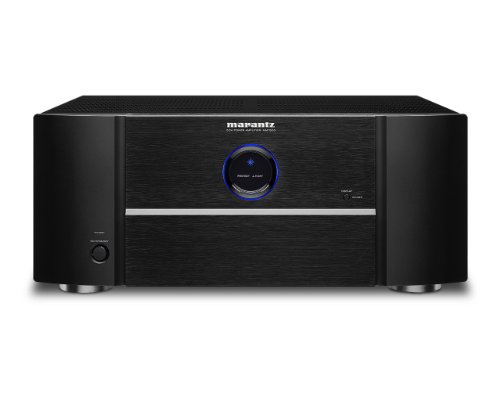
Marantz MM7055
Home theater owners who already have or plan to buy a separate preamp or processor and want a dedicated, well cooled 5-channel power amplifier.
Read the Marantz MM7055 review →Questions Buyers Ask
Marantz 50
See the current listing, price and included accessories.
About This Review
Mandrillis Team
The Mandrillis editorial team researches and compares audio and music gear using manufacturer documentation, verified specs and real buyer feedback, so you can make a confident purchase without wading through marketing claims.
Read our full research methodology.