Speakers Review
Onkyo Muse Y-40 Review: Streaming Amplifier With Style
The Onkyo Muse Y-40 is a compact network streamer and integrated amplifier rated at 150W into 4 ohms from an Axign class D stage. It offers three RCA inputs, an MM phono input, coaxial and HDMI ARC, Ethernet and Wi-Fi, a 5.46-inch VU meter display, and Spotify Connect, TIDAL Connect, Qobuz Connect, AirPlay 2 and Chromecast.
Our Verdict
Research Score 81/100The Onkyo Muse Y-40 is a persuasive all-in-one stereo system on paper. The 150W into 4 ohms Axign class D amplifier, three analog inputs, MM phono stage, coaxial input and HDMI ARC cover vinyl, digital and television sources, while Spotify Connect, TIDAL Connect, Qobuz Connect, AirPlay 2 and Chromecast mean every household has a native streaming route. The fan-free design, patterned ventilated top plate and 5.46-inch VU meter display give it genuine shelf appeal. The listing's omission of Bluetooth, subwoofer output, dimensions and an 8 ohm rating is the main caution. For a living room system built around streaming and records, it is an easy shortlist pick.
Editorial research score based on published specifications and documented features, not a customer rating or lab test.

Onkyo
Onkyo Muse Y-40
Best for: Living room listeners who want one compact box that streams from every major service, plays records and handles television sound with real power.
Skip it if: Avoid it if you need Bluetooth, a subwoofer output or a headphone jack confirmed, or if you want a surround receiver for home theater.
Check Price on AmazonWe may earn a commission at no extra cost to you.
Listing verified: October 2026
Who Should Buy It
Buy it if
- Streaming-first households with Spotify, TIDAL or Qobuz subscriptions
- Vinyl owners who want a built-in MM phono stage
- Apartment dwellers who want a compact system with television audio via HDMI ARC
- Design-conscious buyers who value the VU meter display
Skip it if
- You rely on Bluetooth for guests and quick phone playback
- You need a subwoofer output for a 2.1 setup
- You want multichannel home theater processing
Key Specifications
| Type | Network streamer and integrated amplifier, two channel, silver finish |
| Power output | 150W into 4 ohms, Axign class D with MOSFET output. 8 ohm rating not published in listing |
| Channels | 2 channel stereo |
| Inputs and outputs | Three pairs of analog RCA inputs, one coaxial digital input, MM phono input, HDMI ARC input, audio-grade speaker terminals. Subwoofer, USB and headphone outputs not published in listing |
| HDMI and video | One HDMI ARC input for television and gaming audio |
| Wireless and streaming | Ethernet and Wi-Fi. Spotify Connect, TIDAL Connect, Qobuz Connect, AirPlay 2 and Chromecast. Bluetooth not published in listing |
| Phono input | Yes, MM compatible |
| Dimensions and weight | Not published in listing. Described as compact |
| Remote and app | Onkyo Controller app for control and settings. Physical remote not published in listing |
| Included accessories | Not published in listing |
Overview
The Onkyo Muse Y-40 is an all-in-one network streamer and integrated amplifier in a compact chassis, finished in silver in this listing. It pairs an Axign class D amplifier with a full digital signal path and a 5.46-inch color display, and it folds in Spotify Connect, TIDAL Connect, Qobuz Connect, AirPlay 2 and Chromecast. The Muse series draws on the brand's long Japanese audio heritage.
This is a two-channel system aimed at the living room rather than a surround receiver. Add a pair of passive speakers and the Y-40 is a complete stereo system, with a phono input for a turntable and HDMI ARC for the television. It sits in the upper mid-range price tier.
The listing is reasonably detailed on inputs, amplification and streaming, but leaves dimensions, weight, remote control and included accessories unstated. The 8 ohm power rating is also absent. We work only from the published facts in this review.
Power and Sound Quality
The headline figure is 150W into 4 ohms, delivered by an Axign class D amplifier stage with MOSFET output devices. Axign is a digital amplifier controller design that keeps the signal in the digital domain through to the output stage, and the listing describes the whole circuit as fully digital. The 8 ohm figure and the distortion conditions behind the rating are not published.
Class D amplification of this type runs cool and efficient, which the listing connects to its fan-free design. Temperature-controlled circuitry means no fan noise intrudes on quiet passages, an advantage for a unit sitting in a living room. The brand describes the sound as powerful and detailed with a soundstage that conveys the artist's intent.
On paper, 150W into 4 ohms is ample for most bookshelf and floorstanding speakers in a typical room, and the listing claims the Y-40 can drive any size speaker with authority. Buyers with difficult low impedance speakers should still check the manual for load recommendations. The audio-grade speaker terminals are listed as a quality connection point.
Connectivity and Inputs
Analog inputs are generous for a compact unit: three pairs of RCA line inputs plus a dedicated MM phono input. That covers a turntable, a CD player and two more legacy sources without an external switch box. Digital input is a single coaxial connection according to the listing.
HDMI ARC is the television link, letting the TV send its audio to the Y-40 so that films, gaming and broadcast sound play through proper speakers. The listing specifically mentions gaming sound through this input. An optical input is not mentioned, so televisions without ARC would need another route.
Network connectivity is both wired and wireless, with Ethernet and Wi-Fi confirmed. Bluetooth, USB inputs, subwoofer outputs and headphone outputs are not stated in the listing, which is a notable set of omissions for a lifestyle system. Verify the rear panel if any of those matter to you.
Formats, Processing and Room Correction
The streaming platform support is comprehensive and modern. Spotify Connect, TIDAL Connect and Qobuz Connect each let the native app hand playback to the Y-40 directly, while AirPlay 2 and Chromecast cover Apple and Android casting from almost any app. This mix means almost every household will have a native path to the unit.
The listing does not publish the DAC chip, the maximum sample rate or any high resolution format support, nor does it list codec support for the coaxial input. Room correction is not mentioned, and tone or EQ controls are not described. The Onkyo Controller app is the configuration tool, so expect settings to live there.
A full digital circuit, as the listing describes it, normally means analog sources such as the phono and RCA inputs are converted to digital before the amplifier stage rather than passing through an analog preamp. The resolution of that conversion is not stated. For most listeners the result is consistent handling of every input, although purists who insist on an all analog path for vinyl should be aware of the architecture.
- Spotify Connect, TIDAL Connect and Qobuz Connect
- AirPlay 2 for Apple devices
- Chromecast built in
- Ethernet and Wi-Fi network connection
- MM phono stage built in
- Maximum sample rate and DAC chip not published
Features, Streaming and Apps
The 5.46-inch color LCD is the signature feature of the Muse series. It shows the current track and artwork and offers an analog-style VU meter, which brings a visual element to streaming that most compact amplifiers lack. On a shelf the display doubles as a design feature.
The Onkyo Controller app is named as the way to command the Y-40 and configure its settings. Since the streaming services use their own apps for playback, the controller app handles input switching, network settings and system configuration rather than browsing catalogs. The listing describes it as available on all major app stores.
Multi-room capability through AirPlay 2 and Chromecast is implied by those platforms, although the listing does not describe the brand's own multi-room system. Voice assistant integration is not stated. The feature set is coherent and focused on streaming quality rather than a long list of extras.
Build, Design and Controls
Compactness is a selling point in the listing, which describes the Y-40 as designed to blend into any home environment. The ventilated top plate carries a traditional San Kuzushi pattern, a Japanese geometric motif that reflects the brand's roots while allowing passive cooling. The silver finish in this listing suits lighter furniture.
Because cooling is handled by temperature-controlled circuitry and the ventilated plate, there is no fan, which keeps the chassis quiet and simplifies the internal layout. The listing praises the audio-grade speaker terminals but does not describe the front panel controls, knob material or whether a physical remote is included.
Dimensions and weight are not published, which is a gap for a product sold partly on its compact footprint. The display size suggests a modestly wide chassis, but that is an inference. Confirm the measurements before planning a shelf position.
Setup and Daily Use
Setup is straightforward for a networked amplifier: connect speakers to the terminals, plug in Ethernet or join Wi-Fi, and install the Onkyo Controller app for configuration. Spotify, TIDAL and Qobuz users then see the Y-40 in their apps, and Apple and Android devices find it through AirPlay 2 and Chromecast.
Daily listening mixes streaming with physical sources. Turntable owners plug directly into the MM phono input, and the television routes through HDMI ARC so that remote volume follows the TV. The VU meter display gives a glance-level indication that music is playing even from across the room.
The absence of a stated Bluetooth input means guests cannot pair a phone directly unless they use AirPlay 2 or Chromecast, which require the same Wi-Fi network. A subwoofer output is also unconfirmed, so bass extension depends on the main speakers. Neither is a deal breaker, but both shape how the system is used.
Who Should Buy It
The Y-40 is for the listener who wants a single elegant box that streams from every major service, plays records and handles television sound with real amplifier power. It suits apartments and living rooms where a stack of separates would be unwelcome. The display adds a visual charm that appeals to design-conscious buyers.
It is less suitable for buyers who need Bluetooth, a headphone output or a subwoofer output confirmed, or who want a surround receiver for a home theater. Those who prefer the character of traditional class AB designs may also want to audition before committing.
Buyers upgrading from a soundbar or a pair of small powered speakers will notice the biggest step, because the Y-40 pairs real amplifier headroom with passive speakers of their own choosing. It also appeals to anyone who wants to add a turntable to a streaming setup without buying a separate phono stage. Households that want a darker component should note that this listing covers the silver finish only.
Alternatives Worth Considering
The WiiM Amp is the budget-friendly alternative that also combines streaming and amplification, with casting support and a compact footprint, but without the large display, the breadth of analog inputs or the stated power of the Y-40. It is a sensible pick for a secondary room.
The Yamaha R-N303 is a more traditional network stereo receiver with streaming and an FM tuner, offering a conventional full-width layout. The Cambridge Audio AXA35 provides integrated amplification with a phono input but no streaming, which suits buyers who already own a streamer.
The Denon AVR-S760H is worth a look only for buyers who may later want surround sound, since it trades the Y-40's stereo focus and display for multichannel processing and HDMI switching. For a dedicated two-channel music system with records in the mix, the Y-40's combination of a stated 150W into 4 ohms, an MM phono input and five streaming platforms is hard to match in one compact chassis.
Verdict
On paper the Onkyo Muse Y-40 is one of the more complete all-in-one stereo systems in its tier: strong class D power, a full set of analog inputs including MM phono, HDMI ARC, wired and wireless networking and every major streaming platform. The display and fan-free design add polish.
Bluetooth, subwoofer output, dimensions and the 8 ohm rating are left unstated in the listing, which costs it a few points. For a living room system built around streaming and vinyl, it deserves a place on the shortlist.
Our score reflects strong marks for sound and connectivity, tempered by the unpublished details and the lack of a stated Bluetooth input. If the manufacturer's full specification confirms a subwoofer output and sensible dimensions, the Y-40 becomes an even easier recommendation. As the listing stands, it is a well specified streaming amplifier that pairs modern convenience with a display and chassis that reward being placed in plain view.
Strengths and Limitations
Strengths
- 150W into 4 ohms from an Axign class D amplifier
- Three RCA inputs, MM phono, coaxial and HDMI ARC
- Spotify Connect, TIDAL Connect, Qobuz Connect, AirPlay 2 and Chromecast
- 5.46-inch color display with analog-style VU meter
- Fan-free, temperature-controlled design
- Ethernet and Wi-Fi both included
Limitations
- Bluetooth is not mentioned in the listing
- No subwoofer or headphone output confirmed
- Dimensions and weight not published
- 8 ohm power rating not stated
How We Scored It
Scores reflect published specifications, documented features and value against the alternatives below. They are editorial research scores, not laboratory measurements.
Alternatives to Consider
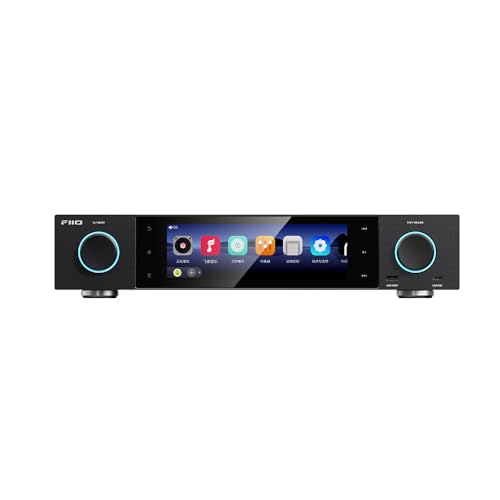
FiiO S15
Listeners who want one full-width component to handle streaming, local files, television audio and digital to analog conversion with a large screen.
Read the FiiO S15 review →
Marantz M1
Buyers who want a compact, HEOS connected streaming amplifier with real power and HDMI eARC television integration, ideally as part of a wider HEOS multi-room setup.
Read the Marantz M1 review →
Onkyo TX-RZ30
Home theater builders who want a 9.2 channel receiver with Dirac Live room correction included out of the box and support for Dolby Atmos, Dolby Vision, and IMAX Enhanced.
Read the Onkyo TX-RZ30 review →Questions Buyers Ask
Onkyo Muse Y-40
See the current listing, price and included accessories.
About This Review
Mandrillis Team
The Mandrillis editorial team researches and compares audio and music gear using manufacturer documentation, verified specs and real buyer feedback, so you can make a confident purchase without wading through marketing claims.
Read our full research methodology.