Speakers Review
Pioneer VSX935 Review: Two Power Ratings, One Honest One
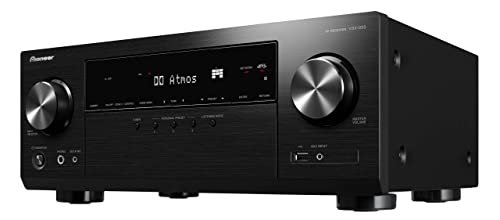
The Pioneer VSX935 is a 7-channel network AV receiver supporting Dolby Atmos and DTS:X with Dolby Atmos Height Virtualizer. The listing discloses both a 170 watt peak figure and a more meaningful 80 watt FTC standard rating, though HDMI, streaming, phono and physical detail are not published.
Our Verdict
Research Score 61/100The Pioneer VSX935 stands out for one specific reason: its listing discloses two separate power figures rather than leading only with the more flattering number. The 170 watt figure at 6 ohms, 1kHz and 10 percent distortion with 1 channel driven is a best case rating, while the 80 watt figure at 8 ohms across the full 20Hz to 20kHz range at 0.08 percent distortion with 2 channels driven under the FTC standard is the far more meaningful number. Combined with confirmed 7-channel Dolby Atmos and DTS:X support plus a Height Virtualizer, the format side of this receiver is solid. The listing is otherwise quiet on HDMI count, wireless streaming, phono support and dimensions, leaving genuine gaps for buyers wanting a fuller spec sheet.
Editorial research score based on published specifications and documented features, not a customer rating or lab test.
Pioneer
Pioneer VSX935
Best for: Buyers who want a 7-channel Dolby Atmos and DTS:X receiver with transparently disclosed power ratings, including the more meaningful FTC standard figure.
Skip it if: Avoid it if you need confirmed HDMI port count, wireless streaming detail, or a phono input before buying.
Check Price on AmazonWe may earn a commission at no extra cost to you.
Listing verified: November 2026
Who Should Buy It
Buy it if
- Buyers who specifically want a 7-channel Dolby Atmos and DTS:X receiver
- Anyone who values seeing both a peak and an FTC standard power rating disclosed together
- Buyers who want Dolby Atmos Height Virtualizer for virtual height effects without installing physical height speakers
- Shoppers comfortable verifying HDMI, streaming and phono detail through other sources before buying
Skip it if
- You need a confirmed HDMI input and output count before buying
- You need confirmed Wi-Fi or Bluetooth streaming detail directly from the listing
- You need a built in phono input for a turntable
Key Specifications
| Type | 7-channel network AV receiver built for Dolby Atmos and DTS:X surround sound. |
| Power output | 170 watts per channel at 6 ohms, 1kHz, 10 percent THD with 1 channel driven, and separately 80 watts per channel at 8 ohms, 20Hz to 20kHz, 0.08 percent THD with 2 channels driven under the FTC measurement standard, both confirmed directly in the listing. |
| Channels | 7 channels confirmed directly in the listing. |
| Inputs and outputs | Not published in listing. No specific count or type of HDMI, optical, coaxial or analog ports is given in the feature bullets. |
| HDMI and video | Not published in listing. No HDMI input or output count, nor any video pass-through resolution, is described in the feature bullets. |
| Wireless and streaming | Not published in listing. No Wi-Fi, Bluetooth or app based streaming is described anywhere in the feature bullets, despite the listing's title describing this as a network receiver. |
| Phono input | Not published in listing. No phono input is mentioned anywhere in the feature bullets. |
| Dimensions and weight | Not published in listing. |
| Remote and app | Not published in listing. No remote control or app is described anywhere in the feature bullets. |
| Included accessories | Not published in listing. |
Overview
The Pioneer VSX935 is described in the listing as a 7.2 channel network AV receiver, and the feature bullets provided focus almost entirely on channel count, power ratings and surround format support, with very little detail on connectivity, streaming, dimensions or included accessories. That makes for a narrower but unusually specific review in the categories the bullets do cover.
What stands out immediately is the power specification itself. Rather than publishing a single flattering wattage figure, the listing gives two separate ratings measured under different conditions, including one measured under the FTC standard, a disclosure practice that deserves real credit for transparency relative to many competing listings.
Beyond power and format support, though, this listing simply does not provide the connectivity, streaming, phono or physical detail that a buyer would normally expect from a receiver review. This review treats those as genuine unknowns rather than assuming typical figures for a network receiver at this level, even where general knowledge about similar Pioneer models might otherwise suggest a plausible answer.
Power and Sound Quality
The listing states 170 watts per channel at 6 ohms, 1kHz, with 10 percent total harmonic distortion and only 1 channel driven. That is what is often called a best case or peak-style rating, since it is measured at a single frequency, with high distortion tolerance, and with only one of the receiver's channels actually under load at the time of measurement.
Separately, the listing also states 80 watts per channel at 8 ohms, across the full 20Hz to 20kHz audible frequency range, at a much stricter 0.08 percent distortion, with 2 channels driven simultaneously, measured under the FTC standard. That FTC figure is widely regarded as a far more realistic indicator of how a receiver will actually perform driving real music and movie soundtracks, since it tests a wider frequency range, tighter distortion tolerance and more than one channel at once.
Publishing both figures side by side, rather than only the larger 170 watt number, is a genuinely trustworthy disclosure practice. Buyers comparing receivers across brands should always look for an FTC style rating specifically, and the fact that the VSX935's listing includes one at all puts it ahead of listings that quote only a single best case figure with no qualifying detail.
Connectivity and Inputs
Connectivity detail is essentially absent from the feature bullets provided for this listing. No HDMI input or output count is given, no optical or coaxial digital input count is listed, and no analog input detail is described anywhere in the bullets.
That is a significant gap for a receiver whose own listing title describes it as a network AV receiver, since buyers would reasonably expect at least some confirmation of how many source devices can be connected simultaneously. This review cannot state a specific number and will not guess at one based on typical receivers in this class.
No phono input is mentioned either, so turntable owners should not assume analog vinyl support is included. Buyers who need any of this connectivity detail confirmed before purchase should look for it through other channels rather than relying on the bullets reviewed here, since guessing at a plausible port count would not meet this review's standard for a confirmed fact.
Formats, Processing and Room Correction
Format support is the clear strength of this listing, with Dolby Atmos and DTS:X both confirmed for three-dimensional surround decoding. A Dolby Surround Upmixer and a DTS Neural:X Upmixer are also confirmed, extending non-Atmos and non-DTS:X sources across the available channels.
Dolby Atmos Height Virtualizer is also confirmed, a particularly useful inclusion for buyers who want some sense of overhead sound without installing physical up-firing or in-ceiling height speakers. It will not match a true height channel setup, but it is a genuine processing feature rather than marketing language alone.
No automatic room correction system, such as a microphone based calibration routine, is named anywhere in the bullets. That is a real gap relative to receivers that include one, and buyers who specifically want automated speaker calibration should verify that capability separately before assuming it is included, rather than treating silence in the bullets as evidence either way.
- Dolby Atmos and DTS:X three-dimensional surround decoding
- Dolby Surround Upmixer and DTS Neural:X Upmixer for upmixing non-Atmos sources
- Dolby Atmos Height Virtualizer for virtual height effects
- No automatic room correction system is described in the bullets
Features, Streaming and Apps
No streaming services, Wi-Fi, Bluetooth or voice assistant integration are described anywhere in the feature bullets provided for this listing. That is a notable omission given that the listing's own title describes this as a network AV receiver.
This review strictly uses only what is stated in the bullets rather than inferring capability from the title or general reputation. No wireless or streaming feature can be confirmed here, even though a network receiver of this type would typically include some form of network audio support.
Buyers who specifically need Wi-Fi streaming, an app, or voice assistant compatibility confirmed should verify that directly before purchase. This listing's bullets leave that entire category unaddressed.
Build, Design and Controls
No dimensions, weight, chassis material or control layout detail is published anywhere in the bullets for this receiver. That leaves this review unable to say anything specific about the physical build beyond what can be inferred from its 7-channel amplifier section.
A 7-channel receiver with the power delivery described, including a 170 watt peak figure at 6 ohms, would reasonably be expected to have some physical heft to support adequate cooling. This review will not state a specific weight or dimension without confirmation, though.
Buyers who need exact measurements for a cabinet or rack installation should look beyond this specific listing for that information, since none of it is provided in the feature bullets reviewed here. This review will not estimate a figure simply because other 7-channel receivers in a similar class tend to share a similar footprint.
Setup and Daily Use
No setup guide, on-screen menu or configuration process is described in the bullets for this listing. That limits what this review can say about the out of box experience compared with other receivers in this batch that do describe a guided setup process.
Day to day use would reasonably involve selecting between Dolby Atmos, DTS:X and the respective upmixers depending on source content. Engaging the Dolby Atmos Height Virtualizer for sources without dedicated height channel mixes would be an optional extra step.
Without confirmed streaming, app or remote detail, this review cannot describe daily control beyond the receiver's own likely front panel and physical remote. Those are standard for this category of product, but neither is specifically detailed in the bullets provided.
Who Should Buy It
This receiver suits buyers who specifically want a 7-channel Dolby Atmos and DTS:X setup. It also suits buyers who value transparent power disclosure, including an FTC standard rating rather than only a single best case figure.
It also fits buyers who want Dolby Atmos Height Virtualizer for a sense of overhead sound without installing physical height speakers. Those buyers also need to be comfortable verifying connectivity, streaming and phono detail through other sources before committing.
It is a weaker fit for buyers who need HDMI port count, Wi-Fi or Bluetooth streaming, or a phono input confirmed directly from the listing. None of that is addressed in the feature bullets provided.
Alternatives Worth Considering
Buyers who specifically need confirmed HDMI port count and streaming detail should compare this against the Yamaha RX500A or Denon AVR-X1700H covered elsewhere in this review batch. Both of those receivers publish considerably more connectivity detail in their own listings.
Buyers focused purely on transparent power disclosure as a buying criterion should still verify that any alternative receiver they consider also publishes an FTC standard rating, rather than only a single peak figure. That disclosure is what sets this VSX935 listing apart.
Anyone who wants a built in phono stage alongside surround sound should look at a receiver that explicitly confirms one. The VSX935's own bullets make no such claim.
Verdict
The Pioneer VSX935 earns genuine credit for disclosing both a peak power figure and a more meaningful FTC standard rating side by side, a transparency practice that is less common than it should be across receiver listings generally. Combined with confirmed 7-channel Dolby Atmos and DTS:X support and a Dolby Atmos Height Virtualizer, the format and power disclosure story here is a real strength.
The near total absence of connectivity, streaming, phono and physical detail in the bullets is a significant limitation for a buyer trying to make a fully informed decision from this listing alone. Buyers who value honest power specs over a complete feature list will find real value here, but anyone needing a fuller spec sheet should plan to verify the rest elsewhere.
Strengths and Limitations
Strengths
- 7 channels confirmed for a full surround sound layout
- Dolby Atmos, DTS:X and both respective upmixers are all confirmed for format support
- Dolby Atmos Height Virtualizer gives virtual height effects without physical height speakers
- Two separate, transparently labeled power figures are given, including the more meaningful FTC standard rating
- The FTC rated 80 watt per channel figure at 8 ohms across the full frequency range is a genuinely trustworthy spec practice
Limitations
- No HDMI input or output count is published
- No Wi-Fi, Bluetooth or streaming detail is confirmed despite the listing calling this a network receiver
- No phono input, dimensions, weight, remote or app detail is given
- The higher 170 watt figure is a limited, 1 channel driven rating that should not be compared directly against a full bandwidth spec
How We Scored It
Scores reflect published specifications, documented features and value against the alternatives below. They are editorial research scores, not laboratory measurements.
Alternatives to Consider

Marantz AV 10
Home theater owners who already run, or plan to add, separate multichannel power amplifiers and want a dedicated 15.4 channel processor with modern surround decoding.
Read the Marantz AV 10 review →
Denon AVR-A1H 15.4-Ch
Buyers assembling a large scale, fully immersive home theater who want built in amplification across 15.4 channels without adding separate power amps.
Read the Denon AVR-A1H 15.4-Ch review →
Marantz AV8805A AV
Home theater enthusiasts building a separates based 13.2 channel system who want extensive HDMI and HDR support plus Audyssey calibration in the processor.
Read the Marantz AV8805A AV review →Questions Buyers Ask
Pioneer VSX935
See the current listing, price and included accessories.
About This Review
Mandrillis Team
The Mandrillis editorial team researches and compares audio and music gear using manufacturer documentation, verified specs and real buyer feedback, so you can make a confident purchase without wading through marketing claims.
Read our full research methodology.