Speakers Review
PreSonus Eris HD4BT Review: Budget Wireless ANC Headphones
The PreSonus Eris HD4BT listing describes a closed-back wireless over-ear headphone with active noise cancelling and up to 60 hours of battery life. The published feature set is strong for a budget product, but the listing omits key audio specifications such as driver size, frequency response, sensitivity, dimensions, and weight.
Our Verdict
Research Score 66/100The PreSonus Eris HD4BT is a budget wireless headphone with a compelling feature list. The closed-back design, active noise cancelling, Bluetooth connectivity, and up to 60 hours of battery life are attractive for monitoring and casual listening. However, the listing leaves out crucial specifications, including driver size, frequency response, sensitivity, dimensions, and weight. Without those published numbers, it is hard to judge absolute sound quality on paper. The product is not a speaker, so buyers in a speaker review context should look elsewhere. For a headphone buyer, the Eris HD4BT appears to be a reasonable budget option, but the incomplete specifications and lack of wired input are notable tradeoffs.
Editorial research score based on published specifications and documented features, not a customer rating or lab test.
PreSonus
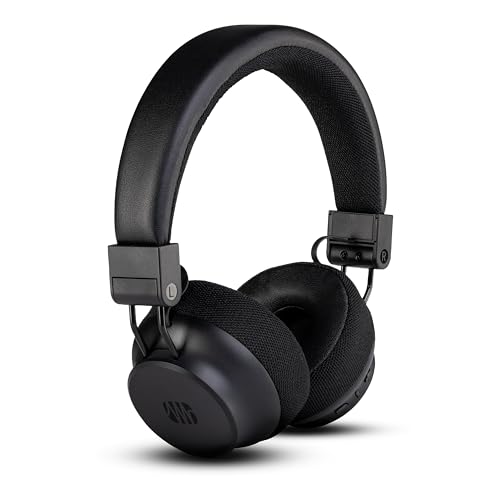
PreSonus Eris HD4BT
Best for: Listeners who want a budget wireless over-ear headphone with ANC and long battery life for monitoring or casual use.
Skip it if: You are looking for a bookshelf, floorstanding, powered, portable, or subwoofer speaker, because this listing is for headphones.
Check Price on AmazonWe may earn a commission at no extra cost to you.
Listing verified: October 2026
Who Should Buy It
Buy it if
- Musicians or producers who need a lightweight closed-back headphone for mobile monitoring
- Listeners who want active noise cancelling at a budget price
- Anyone who values very long battery life in a wireless headphone
- Buyers who prefer a sleek black finish
Skip it if
- You specifically want a speaker for room listening
- You need published driver sizes and frequency response charts
- You require wired connectivity or high-resolution Bluetooth codecs
Key Specifications
| Type | Over-ear closed-back wireless headphones with active noise cancelling |
| Drivers | Not published in listing |
| Power or sensitivity | Not published in listing |
| Frequency response | Not published in listing |
| Inputs and connectivity | Bluetooth wireless technology |
| Bluetooth and streaming | Bluetooth wireless technology |
| Dimensions | Not published in listing |
| Weight | Not published in listing |
| Finish | Eclipse Black |
| Included accessories | Not published in listing |
Overview
The PreSonus Eris HD4BT is a closed-back wireless over-ear headphone described in the product listing as suitable for mixing, monitoring, and recording. The listing highlights a lightweight, professional design in Eclipse Black and emphasizes battery life of up to 60 hours on a single charge. This is a budget tier product, so buyers should expect a focus on core convenience features rather than premium build materials or exhaustive documentation. The marketing copy targets studio users, but the listing omits several specifications that would normally inform a studio purchase.
Unlike the bookshelf, floorstanding, powered, portable, and subwoofer speakers this site usually reviews, the Eris HD4BT is a headphone and does not produce room-filling sound. The listing does not state driver size, frequency response, sensitivity, dimensions, or weight, which limits any detailed on-paper evaluation of acoustic performance. Still, the published feature set includes Bluetooth wireless connectivity and active noise cancelling, two conveniences not found on passive bookshelf or floorstanding speakers. A buyer who needs a speaker should not consider this product, but a headphone buyer may find the claimed battery life appealing.
Sound Quality
Because the listing does not publish frequency response or driver measurements, the sound signature of the PreSonus Eris HD4BT cannot be confirmed from the available data. The marketing copy claims studio quality sound with clear, detailed audio reproduction, but without supporting specifications this is an unverified statement. Buyers should treat the sound quality claim as a general promise rather than a measured result. For a product marketed to mixers and recordists, the absence of a published frequency range is a meaningful gap.
The closed-back over-ear design will likely provide some passive isolation and a more intimate listening experience than open-back headphones. Active noise cancelling should reduce low frequency environmental noise, which can help in untreated rooms or on the go. However, the absence of a published frequency range means it is impossible to say how deep the bass extends or how flat the midrange is for mixing tasks. The listing does not mention any DSP or tuning curve, so even basic tonal balance remains unknown.
Drivers, Power and Room Fit
The listing does not specify the driver type, material, or size. This is a significant gap for anyone evaluating a headphone for studio use, where transducer performance is critical. Power and sensitivity are also not published, so there is no way to compare loudness or amplifier requirements on paper. For a speaker, this section would normally discuss woofer size and amplifier power, but those parameters do not apply directly to a headphone.
Room fit, in the speaker sense, is not relevant to a headphone because the sound is delivered directly into the ears rather than interacting with room boundaries. The closed-back earcups create a personal listening space and do not require speaker placement or acoustic treatment. The up to 60 hours of battery life is the closest published figure related to power endurance, but it does not indicate acoustic output capability. Buyers who need a room-filling speaker should not consider this product, regardless of its battery performance.
Features and Connectivity
The PreSonus Eris HD4BT includes Bluetooth wireless connectivity and active noise cancelling, both useful for mobile and desktop use. The listing does not mention any wired input, such as a 3.5 mm aux jack or USB audio, so the headphone may rely entirely on Bluetooth. This could be a limitation for users who want a zero latency wired connection for recording or critical monitoring. The lack of a wired backup also means the battery must be charged to use the headphones at all.
Battery life is a strong point, with up to 60 hours of playback promised on a single charge. The listing does not state the Bluetooth version or supported codecs, which affects audio quality, latency, and compatibility with high resolution sources. For a budget product, the feature set is generous, but the missing codec information and lack of a wired backup are worth noting. Buyers who need low latency for video editing or software instruments may find Bluetooth alone insufficient.
- Bluetooth wireless connectivity
- Active noise cancelling (ANC)
- Up to 60 hours battery life
- Over-ear closed-back design
- Eclipse Black finish
Build, Design and Finish
The PreSonus Eris HD4BT is offered in an Eclipse Black finish, which the listing describes as sleek and professional. The over-ear closed-back build should provide a snug fit, but the listing does not specify materials, weight, or dimensions. Without that information, durability and long-term comfort cannot be assessed from the data alone. Budget headphones sometimes use lighter plastics, but the listing does not confirm the construction.
For a budget headphone, the design focus appears to be on portability and everyday studio use. The closed-back cups are a practical choice for noise isolation, and the black colorway should resist visible wear in a studio environment. However, buyers who plan to wear headphones for many hours should note that no weight or clamping force data is provided, which are important comfort factors. The listing also does not mention whether the earcups fold or rotate for storage.
Setup and Placement
Setup for the PreSonus Eris HD4BT should be as simple as pairing it over Bluetooth with a phone, computer, or audio interface that supports Bluetooth output. The listing does not describe a companion app or any controls, so users will likely manage power, pairing, and ANC from the headphone itself. No physical placement is required beyond wearing the headphones, which eliminates concerns about speaker stands, wall distance, or room treatment.
Because this is a headphone, there is no need to consider speaker placement or optimize the listening position for a room. The closed-back design also means you do not need a quiet room for critical listening, as long as the ANC is active. The lack of a wired connection may complicate setup for users who need to monitor through a traditional headphone jack, especially if their interface does not support Bluetooth audio.
Daily Use
In daily use, the PreSonus Eris HD4BT promises convenience with long battery life and wireless freedom. The ANC feature should help in noisy environments, making it useful for commuting or working in a shared space. The closed-back design adds passive isolation on top of the active noise reduction. A battery life of up to 60 hours means most users will charge the headphone less than once a week.
The main unknown for daily use is comfort, since weight and earcup material are not published. Battery life of up to 60 hours suggests infrequent charging, which is a practical advantage. However, the lack of a wired input means you are dependent on Bluetooth, which can introduce latency for video editing or real-time monitoring. Users who need to connect to older equipment without Bluetooth may find the headphone limited.
Who Should Buy It
The PreSonus Eris HD4BT is best for a buyer who wants a budget wireless headphone with ANC and very long battery life. It may appeal to musicians, producers, or content creators who need a closed-back headphone for mobile monitoring or casual listening. The listing suggests it is intended for studio use, but the missing specs make it hard to recommend for critical mixing without a trial. A buyer who prioritizes convenience over documented acoustic performance will likely be the target.
Listeners who already own a Bluetooth source and want noise cancelling without spending a lot may find the Eris HD4BT attractive. The Eclipse Black finish is understated and should fit into a home studio or office. However, this is not a speaker, so anyone looking for a bookshelf, floorstanding, or portable speaker should look elsewhere. Those who need a speaker for room listening should not be swayed by the PreSonus brand name alone.
Alternatives Worth Considering
If you are shopping for a speaker rather than a headphone, the Edifier R1280DB is a popular budget powered bookshelf speaker with Bluetooth. The Klipsch R-51M and ELAC Debut 2.0 B5.2 are passive bookshelf options for those who already have an amplifier. For portable use, the JBL Flip 6 and Bose SoundLink Flex are compact Bluetooth speakers that are easier to share in a room. These speaker alternatives fill a room, while the Eris HD4BT is a personal listening device.
Within the headphone category, buyers may also consider other budget wireless ANC headphones from established brands, though this listing does not name specific competitors. Before choosing the Eris HD4BT, compare published driver size, frequency response, weight, and codec support where available. The PreSonus Eris HD4BT stands out mainly for its 60 hour battery claim and PreSonus studio heritage. However, the missing specifications make direct comparisons difficult.
Verdict
The PreSonus Eris HD4BT is a budget wireless over-ear headphone with a practical feature set. The closed-back design, active noise cancelling, Bluetooth connectivity, and up to 60 hours of battery life are the clear highlights. On paper, these features are competitive for the price tier, especially for a product with PreSonus studio branding. The Eclipse Black finish adds a professional touch.
However, the listing omits essential audio specifications including driver size, frequency response, sensitivity, dimensions, and weight. This makes it impossible to verify the studio quality sound claim or judge long term comfort from the data. The product is also not a speaker, so it does not fit the usual bookshelf, floorstanding, or portable speaker categories. For the right headphone buyer, it may be a solid budget option, but the missing details are a significant caveat.
Strengths and Limitations
Strengths
- Closed-back over-ear design for passive noise isolation
- Active noise cancelling (ANC)
- Bluetooth wireless connectivity
- Up to 60 hours of battery life on a single charge
- Budget price tier
- Designed for studio monitoring and mixing use
Limitations
- Driver size and frequency response are not published in the listing
- No wired input or headphone jack mentioned
- No stated Bluetooth codec support
- No dimensions or weight provided
- Not a speaker, despite being listed in a speaker review context
How We Scored It
Scores reflect published specifications, documented features and value against the alternatives below. They are editorial research scores, not laboratory measurements.
Alternatives to Consider

Tribit XSound Go Speaker(2026
Portable music playback in wet or outdoor environments where a lightweight budget speaker is acceptable.
Read the Tribit XSound Go Speaker(2026 review →
NSY Audio Powered Computer
Desktop users who want a compact powered speaker pair with Bluetooth and simple wired connectivity at a budget price.
Read the NSY Audio Powered Computer review →
PreSonus Eris HD6BT
Budget-minded listeners who want wireless over-ear headphones with ANC and very long battery life for casual music and video, not critical studio work.
Read the PreSonus Eris HD6BT review →Questions Buyers Ask
PreSonus Eris HD4BT
See the current listing, price and included accessories.
About This Review
Mandrillis Team
The Mandrillis editorial team researches and compares audio and music gear using manufacturer documentation, verified specs and real buyer feedback, so you can make a confident purchase without wading through marketing claims.
Read our full research methodology.