Speakers Review
Q Acoustics M20 HD Review: Capable Powered Bookshelf Sound
The Q Acoustics M20 HD is a mid-range powered bookshelf speaker system with aptX HD Bluetooth and a wide set of wired inputs. The walnut finish, P2P bracing, and assignable powered speaker are practical touches, though key acoustic specs remain unpublished in the listing.
Our Verdict
Research Score 82/100The Q Acoustics M20 HD presents a strong on-paper case for a mid-range powered bookshelf system. It includes aptX HD Bluetooth, USB, optical, RCA, and 3.5mm inputs, plus practical features like an assignable powered speaker and an EQ placement switch. The walnut finish and P2P bracing suggest solid construction. However, the listing does not publish driver size, frequency response, dimensions, or weight, so acoustic performance cannot be fully verified. That limits a confident recommendation for buyers who require detailed specs. For those comfortable with the published feature set and willing to audition the speakers, the M20 HD is a promising uncluttered stereo solution for TV, desktop, and Bluetooth music listening.
Editorial research score based on published specifications and documented features, not a customer rating or lab test.
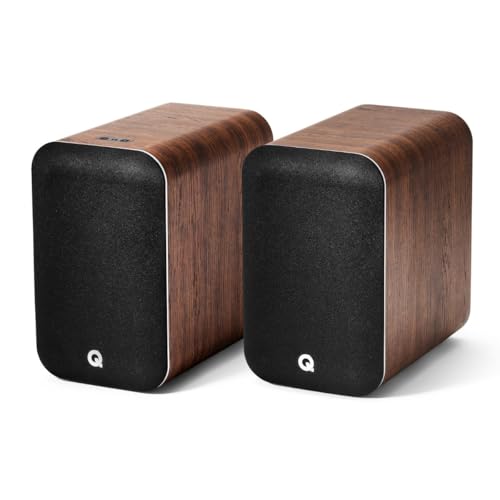
Q Acoustics
Q Acoustics M20 HD
Best for: A listener who wants a simplified powered stereo system with aptX HD Bluetooth and a solid set of wired inputs for TV, computer, and music sources.
Skip it if: Avoid if you need published acoustic specifications, Wi-Fi streaming, app control, or a guaranteed subwoofer output.
Check Price on AmazonWe may earn a commission at no extra cost to you.
Listing verified: October 2026
Who Should Buy It
Buy it if
- TV and desktop listeners who want stereo sound without an AV receiver
- Buyers who value aptX HD Bluetooth and multiple wired connections
- Users who want a walnut finish and assignable powered speaker for flexible placement
- Listeners stepping up from a single portable Bluetooth speaker to a mid-range bookshelf system
Skip it if
- You need detailed driver measurements and frequency response before buying
- You want Wi-Fi, multiroom, or app-based control
- You require deep bass without adding a separate subwoofer
Key Specifications
| Type | Powered bookshelf speaker system |
| Drivers | Not published in listing |
| Power or sensitivity | Built-in 65W Class-D amplifiers |
| Frequency response | Not published in listing |
| Inputs and connectivity | USB, optical, RCA, 3.5mm |
| Bluetooth and streaming | aptX HD Bluetooth |
| Dimensions | Not published in listing |
| Weight | Not published in listing |
| Finish | Walnut |
| Included accessories | Not published in listing |
Overview
Q Acoustics positions the M20 HD as a powered HD wireless music system for listeners who want a compact stereo setup without a separate amplifier or receiver. The product listing describes a mid-range speaker pair with built-in amplification, aptX HD Bluetooth, and multiple wired inputs. The US version shown here comes in a walnut finish, which gives it a furniture-like appearance that should fit well in living rooms, offices, and bedroom setups. The assignable powered speaker is a practical touch, allowing the active side to be placed where a power outlet is most convenient.
This review is based entirely on the published listing and specification details, not on in-person testing. Several important technical measurements are missing from the listing, including driver size, frequency response, sensitivity, dimensions, and weight. Because of that, the evaluation focuses on the feature set, design details, and what can be reasonably inferred from the published construction notes. The absence of those specs is a real limitation for buyers who like to compare numbers before purchasing, but it does not overshadow the useful connectivity and convenience features Q Acoustics highlights.
The M20 HD targets a buyer who wants the simplicity of a powered speaker pair but still expects a step up from budget desktop speakers. With the mid-range price tier, it competes against well-known powered and passive bookshelf options. The combination of Bluetooth aptX HD and a full set of wired connections makes it flexible enough for TV, computer, and music listening in one system. Buyers should treat the unpublished acoustic specifications as a reason to audition the speakers in person or read additional documentation before making a final decision.
Sound Quality
On paper, the Q Acoustics M20 HD is built around two ideas that should shape its sound quality: P2P cabinet bracing and aptX HD wireless transmission. The listing describes P2P bracing as a way to reduce distortion and improve imaging, which suggests the designers paid attention to cabinet rigidity and driver integration. That kind of bracing is often associated with cleaner midrange and tighter stereo focus, though the listing does not provide distortion or frequency response measurements to confirm the effect.
The built-in 65W Class-D amplification should provide enough power for nearfield listening and small to medium rooms. Without a published sensitivity rating or driver size, it is impossible to estimate maximum output level or dynamic headroom from the listing. Buyers report that the M20 HD works well for television dialogue and general music playback, but the listing itself does not include listening impressions or calibrated measurement data. Users who need concert-level volume or very deep bass will likely need to add a subwoofer or consider larger speakers.
The aptX HD Bluetooth codec is a meaningful upgrade over standard SBC for Android and other compatible sources, because it preserves more of the original audio signal during wireless transmission. Apple devices do not support aptX HD, so iPhone users will connect through standard AAC or SBC, which may be less revealing. The wired inputs should deliver the most consistent sound quality, especially for critical listening, because they bypass Bluetooth compression entirely.
Drivers, Power and Room Fit
Published specifications for the M20 HD do not include driver diameter, driver material, tweeter type, or crossover point. That is a notable gap for a speaker review, because those details usually help explain tonal balance and dispersion. The only amplification figure provided is 65W of Class-D power, which is described as built-in and powerful. Without driver sensitivity, that number cannot be translated into a specific sound pressure level at a given distance. Buyers who rely on numerical comparisons will need to look elsewhere for those specs.
For room fit, the M20 HD includes two features that are directly practical. The EQ placement switch allows the user to adjust the speaker's low-frequency response depending on whether it sits near a wall, on a shelf, or in open space. That can reduce boominess or thinness without requiring manual parametric equalization. The assignable powered speaker is another placement benefit, because the active speaker can be positioned on the left or right side according to outlet location and room layout.
The listing title mentions cold weld termination and a spring-loaded Forté pin as construction details for improved contact and low resistance. These are small engineering choices that may contribute to reliable signal transfer and long-term consistency, but the listing does not quantify their acoustic benefit. They are more about build quality and internal connection integrity than room response. Overall, the M20 HD appears designed for typical bookshelf placement in rooms where a separate amplifier is not wanted.
Features and Connectivity
The M20 HD has a strong wired connectivity set for a powered speaker in its price tier. The listing lists USB, optical, RCA, and 3.5mm inputs, which covers most common home sources. A computer can be connected via USB, a TV via optical, a turntable with a built-in phono preamp via RCA, and a phone or portable player via 3.5mm. That flexibility reduces the need for additional switchers or adapters in a simple stereo system.
The wireless side is built around aptX HD Bluetooth, which is a step up from standard Bluetooth for compatible sources. The listing does not mention Wi-Fi, AirPlay, Chromecast, or multiroom audio, so buyers should not expect network streaming or app-based control. Some users may view that as a limitation at the mid-range price, while others will prefer the simplicity of direct Bluetooth and wired connections without a required app.
- aptX HD Bluetooth for high-quality wireless audio from compatible devices
- USB, optical, RCA, and 3.5mm wired inputs for flexible source connection
- Assignable powered speaker lets the active side be placed on the left or right
- EQ placement switch helps tune bass for wall, shelf, or open placement
- P2P cabinet bracing for reduced distortion and improved imaging
- Cold weld termination and spring-loaded Forté pin for connection integrity
Build, Design and Finish
The stated finish for this US version is walnut. Walnut is a warm, classic veneer that tends to blend well with wood furniture, bookshelves, and media consoles. The cabinet also includes P2P bracing, which suggests internal reinforcement at key points to reduce vibration and resonance. That is a detail more often found on passive bookshelf speakers in the same broader category, and it adds to the impression of a carefully built product.
The listing title mentions cold weld termination and a spring-loaded Forté pin. Cold welding can form a bond with very low electrical resistance, while a spring-loaded contact pin maintains pressure over time. These features are not cosmetic, but they are part of the speaker's internal connection assembly. The listing does not state whether the cabinet uses MDF, real wood veneer, or vinyl wrap, so the exact material quality cannot be verified from the data provided.
Without published dimensions and weight, the physical footprint of the M20 HD cannot be assessed from the listing. The product type indicates a bookshelf speaker, but no exact size is given. Buyers who need to fit the speakers into a specific shelf or media unit should check the manufacturer's detailed specifications before ordering. The assignable powered speaker and the compact bookshelf format should make placement relatively easy in typical rooms, but exact clearances remain unknown.
Setup and Placement
Setup for the M20 HD should be straightforward on paper. Because the speakers are powered, there is no need to buy or connect a separate amplifier or receiver. The assignable powered speaker allows one side to host the amplification and inputs, which means the user can choose whichever side is most convenient for cabling and power. The wired inputs cover common sources, so a TV, computer, or music player can be connected directly without an external digital-to-analog converter.
The EQ placement switch helps compensate for typical bookshelf placement issues. Placing a speaker close to a wall or in a corner often increases bass, while open placement can reduce low-frequency weight. A simple switch is easier for many users than manual equalization, especially in a living room setup. The listing does not mention an app-based room correction or auto-calibration system, so physical placement and the EQ switch are the main tuning tools.
Exact setup steps, included cable types, and whether a remote control is supplied are not published in the listing. Buyers should confirm package contents and cable lengths before purchase. In a typical powered bookshelf pair with one active and one passive speaker, a speaker cable connects the two cabinets, and a single power cord feeds the active side, but the listing does not specify this detail.
Daily Use
In daily operation, the M20 HD should behave as a simple all-in-one music system. Users can stream Bluetooth from a phone or tablet, or connect a TV, computer, or turntable through the available wired inputs. The 65W Class-D amplification is likely adequate for background music, dialogue clarity, and moderate listening levels in small to medium rooms. Without a published frequency response or maximum output spec, the ceiling of usable volume cannot be confirmed, but the design is not intended for large home theater rooms.
The aptX HD Bluetooth codec makes wireless listening more enjoyable for Android users and other devices that support it. Switching between Bluetooth and wired inputs should be simple in a powered speaker of this type, though the listing does not describe a remote control or source priority. The assignable powered speaker means the active side can be chosen based on room layout, which is a practical detail that many powered speakers overlook. The walnut finish is easy to live with and less industrial-looking than typical black vinyl.
One consideration for daily use is heat and ventilation. Class-D amplifiers run cooler than older designs, but the listing does not state ventilation requirements or whether the amplifier is mounted in a sealed or vented section. Users who place the active speaker in an enclosed shelf should allow some airflow. The listing positions the M20 HD as a music system rather than a studio monitor, so daily use will likely center on TV, streaming music, and casual listening rather than critical mixing.
Who Should Buy It
The M20 HD is best for someone who wants stereo sound without the complication of an AV receiver or integrated amplifier. It suits apartment dwellers, desktop users, and living room setups where a clean two-speaker system is enough. The aptX HD Bluetooth and four wired inputs make it practical for mixed sources, from a phone to a TV to a computer. The mid-range price tier implies a step up in build and sound from the cheapest powered bookshelf options, at least on paper.
Buyers who appreciate a furniture-like finish will be drawn to the walnut version described in the listing. The assignable powered speaker and EQ placement switch are useful for real-world rooms where power outlets and shelf placement are not perfectly symmetrical. Those features reduce setup friction and allow the speakers to adapt to the room rather than forcing the room to adapt to the speakers.
This model is less suited to users who demand published acoustic measurements, Wi-Fi streaming, app control, or guaranteed subwoofer integration. The listing does not mention a subwoofer output, high-pass filter, or bass management, so adding deep bass may not be straightforward. Studio monitor buyers who need a flat reference response should also proceed with caution, because the M20 HD is oriented toward music and TV enjoyment rather than analytical mixing.
Alternatives Worth Considering
Shoppers looking at the M20 HD may also encounter the Edifier R1280DB, which is a popular budget powered bookshelf speaker with Bluetooth and multiple inputs. The Edifier is typically positioned below the Q Acoustics in price and feature expectations, but it offers similar convenience in a smaller package. The Klipsch R-51M is a passive speaker that requires an amplifier, so it is not a direct one-box alternative, but it represents a different tonal approach with horn-loaded treble.
The ELAC Debut 2.0 B5.2 is another well-known bookshelf speaker that competes on sound quality at a similar price tier, though it is passive and needs a separate amplifier or receiver. For portable use, the JBL Flip 6 and Bose SoundLink Flex are Bluetooth speakers that trade true stereo separation and wired inputs for battery power and ruggedness. They are not direct alternatives to a powered bookshelf pair, but they serve listeners who prioritize mobility over a fixed stereo image.
If deep bass is a priority, the SVS SB-1000 Pro is a reference subwoofer that could extend the low end of many systems, but the M20 HD listing does not state whether it has a subwoofer output or bass management. Buyers who want a fully integrated 2.1 setup should verify that connection path before choosing this model. Those who need Wi-Fi, AirPlay, or multiroom audio may be better served by powered speakers that include network streaming.
Verdict
The Q Acoustics M20 HD presents a compelling on-paper package for a mid-range powered bookshelf system. It combines aptX HD Bluetooth with USB, optical, RCA, and 3.5mm inputs, plus practical features like an assignable powered speaker and an EQ placement switch. The walnut finish and P2P bracing suggest that Q Acoustics has paid attention to both appearance and cabinet rigidity. These are meaningful selling points in a crowded category.
However, the listing leaves important specifications unpublished, including driver size, frequency response, sensitivity, dimensions, and weight. That makes it difficult to fully evaluate acoustic performance or room fit from the listing alone. The 65W Class-D amplification is a useful data point, but without sensitivity or driver details it cannot be translated into real-world loudness. Buyers who insist on complete technical data may feel frustrated by these gaps.
Overall, the M20 HD is a strong candidate for listeners who want a clean powered stereo system with good connectivity and a warm wood finish. It drops network streaming and app control in favor of simplicity, which will suit some users and deter others. The score reflects the solid feature set and design intent, balanced against the absence of key acoustic specifications.
Strengths and Limitations
Strengths
- aptX HD Bluetooth for higher-quality wireless audio
- Multiple wired inputs including USB, optical, RCA, and 3.5mm
- Assignable powered speaker adds placement flexibility
- EQ placement switch helps tailor bass to room placement
- Walnut finish and P2P bracing suggest solid build
Limitations
- Driver size, frequency response, and sensitivity are not published
- No Wi-Fi, app control, or multiroom streaming mentioned
- Dimensions and weight are not stated in the listing
- No subwoofer output listed
- Mid-range tier without full acoustic verification
How We Scored It
Scores reflect published specifications, documented features and value against the alternatives below. They are editorial research scores, not laboratory measurements.
Alternatives to Consider

ELAC Uni-Fi UB52
Buyers who want a three-way passive bookshelf speaker with a concentric driver and flexible front-ported placement.
Read the ELAC Uni-Fi UB52 review →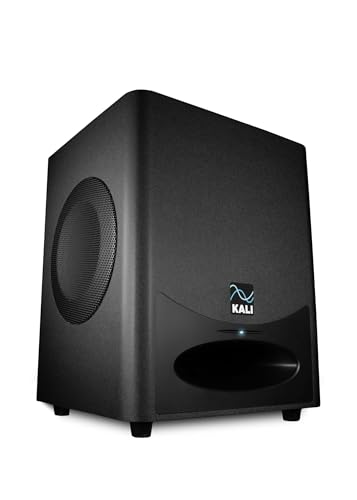
Kali Audio WS-6.2
Compact studio monitoring setups that need sub bass extension without a large floor subwoofer.
Read the Kali Audio WS-6.2 review →
Q Acoustics 3060s Active
Small to medium rooms where a slim, wall friendly subwoofer is needed for music and movie bass without visual bulk.
Read the Q Acoustics 3060s Active review →Questions Buyers Ask
Q Acoustics M20 HD
See the current listing, price and included accessories.
About This Review
Mandrillis Team
The Mandrillis editorial team researches and compares audio and music gear using manufacturer documentation, verified specs and real buyer feedback, so you can make a confident purchase without wading through marketing claims.
Read our full research methodology.