Speakers Review
Sonos Sub 4 Review: Deep, Dynamic Bass
The Sonos Sub 4 is a wireless subwoofer built for Sonos soundbar owners who want deep, dynamic low end without visible clutter. Its dual force-canceling drivers and ported enclosure aim to reduce distortion while boosting bass. WiFi setup and flexible placement make it convenient, but many technical specs remain unpublished.
Our Verdict
Research Score 77/100The Sonos Sub 4 makes a strong case for Sonos soundbar owners who want to add serious low end without running long cables or placing a bulky box in view. The listing highlights dual force-canceling woofers, a ported enclosure, and WiFi integration with Arc, Arc Ultra, and Beam soundbars. Flexible upright or under-sofa placement is a clear convenience. However, the absence of published driver size, power, frequency response, and dimensions makes it hard to compare on paper to traditional subwoofers from brands like SVS or Klipsch. At a mid-range price, the Sub 4 is a sensible upgrade if you are already committed to Sonos. If you need physical inputs or detailed specs, look elsewhere. On paper, it delivers the promised deep bass and easy setup, but the full technical picture remains incomplete.
Editorial research score based on published specifications and documented features, not a customer rating or lab test.

Sonos
Sonos Sub 4
Best for: Sonos soundbar owners who want deep, dynamic bass with minimal visible clutter and easy app-based setup.
Skip it if: You are outside the Sonos ecosystem or need a subwoofer with documented physical inputs, Bluetooth, or published technical measurements.
Check Price on AmazonWe may earn a commission at no extra cost to you.
Listing verified: October 2026
Who Should Buy It
Buy it if
- Owners of a Sonos Arc, Arc Ultra, or Beam soundbar
- Home theater listeners who want hidden subwoofer placement under a sofa
- Users who prefer a single power cable and app-driven setup
- Sonos multi-room audio households looking to deepen low-end response
Skip it if
- You do not already own a compatible Sonos soundbar or speaker
- You need line-level RCA or LFE inputs for a traditional AV receiver
- You prefer subwoofers with published frequency response and power specifications
Key Specifications
| Channels | Not published in listing (wireless subwoofer accessory) |
| Drivers | Dual Sonos-engineered drivers (driver size not published in listing) |
| Power | Not published in listing |
| Subwoofer | This product is a standalone wireless subwoofer |
| Dolby Atmos and DTS | Not published in listing; reinforces bass from paired Sonos soundbar formats including Atmos when used with Arc Ultra or Arc |
| HDMI eARC and inputs | No HDMI ports; connects to Sonos soundbar over WiFi |
| Wireless and streaming | WiFi connection to compatible Sonos soundbar or speaker; Sonos app setup |
| Dimensions | Not published in listing |
| Remote and app | Sonos app for setup and control; no dedicated remote listed |
| Included accessories | Single power cable |
| Type | Wireless subwoofer |
| Power or sensitivity | Not published in listing |
| Frequency response | Not published in listing |
| Inputs and connectivity | WiFi (for Sonos system connection); no physical inputs listed |
| Bluetooth and streaming | Not published in listing; Bluetooth not mentioned |
| Weight | Not published in listing |
| Finish | Black, updated matte finish |
Overview
The Sonos Sub 4 is a wireless subwoofer positioned as a companion for Sonos soundbars, including the Arc Ultra, Arc, and Beam. The product listing describes a mid-range device built around two Sonos-engineered drivers inside a ported enclosure. Its primary pitch is deep, dynamic bass without the need for wired connections to a receiver or amplifier.
Sonos emphasizes force-canceling acoustic architecture, which is intended to reduce distortion, buzz, and rattle even at higher output levels. The subwoofer connects over WiFi to a Sonos soundbar or speaker, and the listing states that setup requires only a single power cable and the Sonos app. This positions the Sub 4 as a simple, lifestyle-oriented bass upgrade.
One notable limitation of the listing is the lack of published technical specifications such as driver size, amplifier power, frequency response, dimensions, and weight. Sonos often withholds these details in favor of user experience claims, but buyers who like to compare numbers on paper will find the Sub 4 spec sheet thin. That does not mean the product underperforms, but it does mean this review can only evaluate the claims and features that are actually published.
Sound Quality
Based solely on the listing, the Sonos Sub 4 promises deep and dynamic bass from dual Sonos-engineered drivers. The phrase "deep, dynamic bass" appears directly in the product title, and the feature bullets reinforce that the drivers are designed to produce substantial low-frequency output. A ported enclosure is said to enhance bass response and low-frequency output, which typically means the subwoofer can play louder and reach lower than a sealed design of similar size.
The force-canceling acoustic architecture is the most specific sound-related claim. By mounting the two drivers in a configuration that cancels mechanical vibration, Sonos aims to virtually eliminate distortion, buzz, and rattle. On paper, this should lead to cleaner bass, especially when the subwoofer is placed on a hard floor or hidden under furniture. The listing does not publish a frequency response range or a sensitivity spec, so there is no way to verify how deep the Sub 4 actually plays or how efficiently it converts power to sound.
In the context of known subwoofer designs, force-canceling dual drivers are a legitimate approach to reducing cabinet vibration. Many high-quality subwoofers use similar opposed-driver arrangements. However, without a published low-frequency extension, buyers cannot compare the Sub 4 directly to well-regarded models like the SVS SB-1000 Pro or Klipsch R-12SW. The listing's language suggests strong home theater bass, but the absence of measured numbers means the sound quality evaluation remains qualitative.
Drivers, Power and Room Fit
The listing confirms that the Sonos Sub 4 uses two Sonos-engineered drivers, but it does not state their diameter. Many subwoofers in this class use drivers between eight and twelve inches, but Sonos has not published that figure here. The drivers are placed in a ported enclosure, which the listing says enhances bass response and low-frequency output. A ported design usually favors higher output and deeper extension over a sealed box, but it can also be larger.
Power output is another key specification that is not published in the listing. The Sub 4 could have a substantial internal amplifier, but there is no wattage figure to evaluate. Sensitivity is also absent. This makes it difficult to predict how well the Sub 4 will fill a large room or pressurize a space with heavy bass. The listing does not state a recommended room size.
Room fit is partially addressed by the flexible placement options. The subwoofer can stand upright or be laid on its side and hidden under a sofa. That suggests the cabinet is compact enough to fit beneath typical furniture, but without published dimensions, this remains an assumption. Force-canceling architecture also implies that the Sub 4 will not vibrate the floor or surrounding furniture as much as a conventional single-driver subwoofer, which is useful for apartments and multi-story homes.
Features and Connectivity
The Sonos Sub 4 is designed to work wirelessly over WiFi with Sonos soundbars and speakers. The listing specifically names the Arc Ultra, Arc, and Beam as compatible soundbar models. It also states that the subwoofer reliably connects to a Sonos soundbar or speaker over WiFi, which allows flexible placement options without running long audio cables from a receiver.
There are no physical input jacks mentioned in the listing. Sonos subwoofers typically do not offer line-level RCA or LFE inputs, and the Sub 4 appears to follow that pattern. Bluetooth is not listed either. The subwoofer relies on the Sonos app for setup and integration, which means it functions as part of a closed wireless ecosystem rather than as a universal powered subwoofer.
The listing also highlights the ability to pair two Sub 4 units with an Arc Ultra or Arc for what it calls next-level immersion in all your entertainment. This dual subwoofer capability is a notable feature for larger rooms or listeners who want more headroom and even bass distribution. Below are the key connectivity and feature points from the listing.
Optional bullets can be placed here.
- WiFi connection to Sonos Arc Ultra, Arc, or Beam soundbars
- Single power cable for power; no audio input cable required
- Sonos app guided setup
- Upright or sideways placement, including under a sofa
- Support for pairing two Sub 4 units with Arc Ultra or Arc
- Force-canceling dual driver architecture to reduce vibration
Build, Design and Finish
Sonos describes the Sub 4 as having an iconic sculptural design with an updated matte finish. The listing specifically says the finish is matte and matches the Sonos system, suggesting a cohesive look alongside other Sonos speakers. The black color is the only finish listed, though Sonos products sometimes come in white as well; that is not mentioned here.
The sculptural shape of a subwoofer is unusual, as most subwoofers are plain rectangular boxes. Sonos has maintained a rounded, almost oval cabinet design for its subwoofers, and the listing implies that the Sub 4 carries this design language forward. The matte finish is likely intended to resist fingerprints and blend more easily into living spaces.
No dimensions or weight are published in the listing, so it is impossible to comment on the Sub 4's exact size or heft. The ability to hide it under a sofa implies a relatively low profile when placed on its side, but the actual clearance required is unknown. Build quality is also not described in terms of materials, so any assessment of sturdiness or cabinet density would be speculation.
Setup and Placement
Setup is described as plug-and-play with a single power cable and the Sonos app. The listing states that the Sub 4 reliably connects to a Sonos soundbar or speaker over WiFi. This means users do not need to run long RCA cables, subwoofer cables, or speaker wire from a receiver to the subwoofer.
The Sonos app is central to the process. The listing does not go into detail about app steps, but the general Sonos ecosystem typically guides users through adding a new device, connecting it to the home WiFi network, and pairing it with a soundbar. Because the Sub 4 has no physical inputs, the app is the only control surface for setup and adjustment.
Placement flexibility is a highlighted feature. The subwoofer can stand upright or be laid on its side and hidden under a sofa. This is useful for rooms where a visible subwoofer is not desirable. However, the listing does not provide dimensions, so buyers should measure the clearance under their own furniture before purchasing. Force-canceling drivers should reduce vibration transfer to the floor and nearby objects, which supports hidden placement.
Daily Use
In daily use, the Sonos Sub 4 should function as a seamless bass extension for a paired Sonos soundbar. The listing says it transforms the home theater experience when paired with Arc Ultra, Arc, or Beam. That implies the subwoofer automatically handles low frequencies while the soundbar manages midrange and treble, though the listing does not describe crossover settings or EQ options.
The single power cable is a practical advantage. Once placed, the subwoofer needs only an AC outlet, and the WiFi connection removes the need for a physical audio cable. This makes it easy to move the Sub 4 between rooms or reposition it for better bass response. The force-canceling design also means it should not rattle nearby furniture or produce audible buzz from the cabinet itself.
One unknown is how much control the Sonos app offers for subwoofer level, phase, or crossover adjustments. The listing does not mention these settings. Sonos has traditionally kept user controls simple, often limited to a sub level slider and automatic tuning with compatible soundbars. Buyers who want advanced manual tuning may find the Sub 4 too closed. Daily use is likely to be very straightforward, but the absence of published control details leaves some questions.
Who Should Buy It
The Sonos Sub 4 is best suited to owners of a Sonos Arc, Arc Ultra, or Beam soundbar who want to add deeper bass for movies, TV, and music. If you already use the Sonos app and have a WiFi network, the Sub 4 fits into that ecosystem with minimal effort. The ability to hide the subwoofer under a sofa makes it particularly appealing for living rooms where a large black box would be visually intrusive.
Home theater listeners who prioritize clean bass without cabinet rattle should also consider the Sub 4. The force-canceling dual driver architecture is a genuine benefit for reducing mechanical vibration, especially on hard floors or in apartments. The option to pair two Sub 4 units with an Arc Ultra or Arc makes it a scalable choice for larger rooms or more demanding listeners.
If you are not already invested in the Sonos ecosystem, the Sub 4 is a harder sell. It cannot connect to a traditional AV receiver through RCA or LFE inputs, and it does not list Bluetooth. The mid-range price also means you are paying for the Sonos integration and design rather than raw subwoofer specifications. For the right user, however, it should deliver the deep, dynamic bass promised in the listing.
Alternatives Worth Considering
For buyers who want a subwoofer with published frequency response and power ratings, traditional powered subwoofers from brands like SVS, Klipsch, and Polk Audio are worth a look. Models such as the SVS SB-1000 Pro or Klipsch R-12SW offer line-level RCA inputs and often include detailed specifications. These subwoofers are not tied to a proprietary wireless ecosystem, so they work with any AV receiver or stereo amplifier.
If you want a wireless subwoofer that can pair with a soundbar but are not committed to Sonos, there are other soundbar subwoofer systems available. Many of those have the subwoofer included with the soundbar, so the total cost may be lower than buying a Sonos soundbar and Sub 4 separately. However, those alternatives may not offer the same force-canceling design or under-sofa placement flexibility.
The listing does not provide enough specs to do a true apples-to-apples comparison. The Sonos Sub 4 is really a lifestyle product for Sonos households, while the alternatives mentioned above are more conventional audio components. If you value simplicity, hidden placement, and app integration, the Sub 4 is hard to beat within its ecosystem. If you value measurable performance and connectability, a traditional subwoofer is the better path.
Verdict
The Sonos Sub 4 makes a strong case for Sonos soundbar owners who want deep, dynamic bass without visible clutter. The listing repeatedly emphasizes dual force-canceling woofers, a ported enclosure, and WiFi connection to Arc, Arc Ultra, and Beam soundbars. Flexible upright or under-sofa placement is a real convenience for living spaces, and the single power cable keeps setup simple.
The most significant drawback is the lack of published technical specifications. Driver size, power output, frequency response, dimensions, and weight are all absent. For a mid-range subwoofer, this makes it difficult to evaluate outright performance or compare to competitors like the SVS SB-1000 Pro. The closed Sonos ecosystem also means it will not work as a standalone subwoofer for non-Sonos audio systems.
On paper, the Sub 4 delivers exactly what Sonos promises: deep, dynamic bass with reduced distortion and easy app-based setup. The score reflects strong sound-related claims and excellent setup convenience, tempered by unknown technical details and limited connectivity. If you already own a compatible Sonos soundbar, the Sub 4 is a sensible upgrade. If you need measurements and wired inputs, look elsewhere.
Strengths and Limitations
Strengths
- Dual force-canceling woofers reduce distortion and rattle
- Ported enclosure enhances low-frequency output
- Flexible placement upright or on its side under furniture
- Simple WiFi setup with the Sonos app
- Pairs with Sonos Arc, Arc Ultra, and Beam soundbars
- Can use two subwoofers for greater immersion
Limitations
- Mid-range price tier may be high for non-Sonos users
- Requires a Sonos soundbar or speaker ecosystem
- Key specifications like driver size and frequency response are not published
- No Bluetooth or physical wired inputs listed
- No power rating or sensitivity figure provided
How We Scored It
Scores reflect published specifications, documented features and value against the alternatives below. They are editorial research scores, not laboratory measurements.
Alternatives to Consider
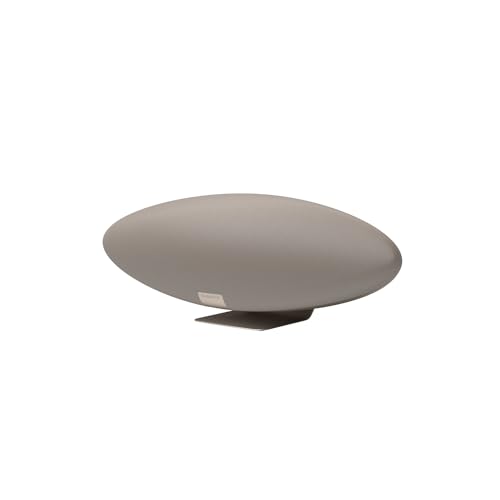
Bowers & Wilkins Zeppelin Pro Speaker
Buyers who want a single piece wireless music system with a built in subwoofer and simple streaming in a styled living space.
Read the Bowers & Wilkins Zeppelin Pro Speaker review →
Polk Audio Signature Elite ES12
Home theater and music listeners who want powerful low frequency output in a large room from a mid-range ported subwoofer.
Read the Polk Audio Signature Elite ES12 review →
Sonos Era 300
Sonos users wanting a Dolby Atmos stereo pair or rear surrounds for a compatible soundbar.
Read the Sonos Era 300 review →Head-to-Head Comparisons
- Polk Audio MagniFi Max AX SR 7.1.2 vs Sonos Sub 4 Compare →
Questions Buyers Ask
Sonos Sub 4
See the current listing, price and included accessories.
About This Review
Mandrillis Team
The Mandrillis editorial team researches and compares audio and music gear using manufacturer documentation, verified specs and real buyer feedback, so you can make a confident purchase without wading through marketing claims.
Read our full research methodology.