Speakers Review
Yamaha RX-A6A Review: Nine Channels With Eleven Channel Processing
The Yamaha RX-A6A is a premium tier AVENTAGE receiver with nine amplified channels, 11.2 channel processing, seven full bandwidth HDMI 2.1 inputs, YPAO R.S.C. calibration and MusicCast streaming. This research review examines the published specification and flags the missing power rating and physical details.
Our Verdict
Research Score 88/100The Yamaha RX-A6A is the sensible step down from the AVENTAGE flagship for rooms that do not need eleven amplified channels today. Nine channels run a 5.2.4 layout outright, and the 11.2 channel processing means an external stereo amplifier later unlocks 7.2.4 without replacing the receiver. The HDMI section is the same as the flagship, with 8K60 and 4K120 on every input, three outputs with eARC and the full HDR list. YPAO R.S.C., Surround:AI, Auro-3D, four zones and a streaming list that includes Roon, Qobuz and AirPlay 2 complete the picture. The listing publishes no wattage, dimensions or accessories, so those must be confirmed. For most premium rooms it is the better value of the two.
Editorial research score based on published specifications and documented features, not a customer rating or lab test.

Yamaha
Yamaha RX-A6A
Best for: Buyers who want a 5.2.4 or 7.2.2 system today with the processing headroom to add an external amplifier for 7.2.4 later, plus multiple zones and deep streaming support.
Skip it if: Avoid it if you need a published power rating, four subwoofer outputs or a receiver that will only ever run a simple 5.1 layout.
Check Price on AmazonWe may earn a commission at no extra cost to you.
Listing verified: October 2026
Who Should Buy It
Buy it if
- Owners planning a 5.2.4 layout with a path to 7.2.4 via an external amplifier
- Multi zone households that want up to four zones from one receiver
- Gamers with more than one HDMI 2.1 console
- Roon, Qobuz and TIDAL listeners who also want a theater hub
Skip it if
- You want the power rating stated with conditions in the listing
- Your room requires more than two subwoofer outputs
- A 5.1.2 receiver at a lower tier would cover your layout
Key Specifications
| Drive type | Not applicable to an AV receiver |
| Cartridge | Not published in listing |
| Platter | Not applicable to an AV receiver |
| Tonearm | Not applicable to an AV receiver |
| Speeds | Not applicable to an AV receiver |
| Built-in preamp | Phono input listed; built-in phono preamp not specified |
| Bluetooth and USB | Bluetooth listed; USB not published in listing |
| Outputs | HDMI 7 in / 3 out with eARC; other outputs not published |
| Dimensions and weight | Not published in listing |
| Included accessories | Not published in listing |
| Type | 9.2 channel AVENTAGE AV receiver with 11.2 channel processing and MusicCast built in |
| Power output | Not published in listing |
| Channels | 9.2 amplified channels with 11.2 channel processing and Zone 2, Zone 3 and Zone 4 support |
| Inputs and outputs | Seven HDMI inputs and three HDMI outputs, plus a phono input. Other analog and digital input counts are not published |
| HDMI and video | HDCP 2.3 and eARC, all HDMI inputs supporting 8K60 and 4K120 at 40 Gbps, ALLM, VRR, Dolby Vision, HDR10+, HLG and BT.2020 |
| Wireless and streaming | Wi-Fi, Bluetooth, AirPlay 2, Spotify Connect and MusicCast with Spotify, Apple Music via AirPlay 2, SiriusXM, TIDAL, Pandora, Deezer and Qobuz, Roon Tested |
| Phono input | Phono input listed, cartridge type not specified |
| Remote and app | MusicCast app with voice control through Alexa, Siri via AirPlay 2 and Google Assistant. A physical remote is not described |
Overview
The Yamaha RX-A6A sits one step below the flagship in the AVENTAGE range, with nine amplified channels and, notably, 11.2 channel processing. That distinction means the receiver can decode and calibrate an eleven speaker layout as long as two of the channels are driven by an external amplifier through its pre outs. Zone 2, Zone 3 and Zone 4 outputs are also included.
In most other respects the published specification mirrors the flagship. Seven HDMI inputs all support 8K60 and 4K120 at 40 Gbps, three outputs include eARC with HDCP 2.3, and the HDR list covers Dolby Vision, HDR10+, HLG and BT.2020. Decoding spans Dolby Atmos, DTS:X and Auro-3D, calibration is YPAO R.S.C. and Surround:AI processes scenes in real time.
As with its larger sibling, the listing omits any wattage figure, which is a significant gap for a premium tier receiver. Dimensions, weight and accessories are also missing, so this review treats them as not published and notes where that matters.
Power and Sound Quality
No power rating appears in the listing, so this review cannot compare amplifier capability against the Denon AVR-X4800H or the Marantz Cinema 50, both of which quote figures. The AVENTAGE positioning suggests a substantial power supply, and buyers report that Yamaha's upper range has been competitive on output, but a buyer should obtain the rated figure and its conditions before purchase.
The nine amplified channels are enough for 5.2.4 or 7.2.2 without help. The 11.2 channel processing is the more interesting detail, because it means the receiver can run a full 7.2.4 layout with an added two channel amplifier rather than forcing an upgrade to a bigger receiver. That expansion path adds long term value to the sound side.
Surround:AI is listed as optimizing sound and effects in real time by analyzing each scene. In practice that means the receiver adjusts dialogue clarity, ambience and effect placement without manual mode changes, which buyers generally describe as helpful for mixed content and less useful for pure music listening.
Connectivity and Inputs
The HDMI section is identical on paper to the flagship: seven inputs and three outputs, HDCP 2.3, eARC, and 8K60 with 4K120 at 40 Gbps on every input. That last point is a genuine differentiator, since several competing receivers limit full bandwidth to a few ports and force owners of multiple consoles to plan around them.
ALLM and VRR are supported for gaming, and the three outputs cover a television, a projector and a second zone display. The phono input keeps a turntable in the system without an external preamp, though the cartridge type is not specified.
The listing does not count analog line inputs, digital inputs, pre outs or trigger connections. Two subwoofer outputs are implied by the 9.2 designation, which is fewer than the four on some rivals, and the pre outs needed to expand to eleven channels are implied by the processing claim but not explicitly described.
Formats, Processing and Room Correction
Decoding covers Dolby Atmos, DTS:X and Auro-3D, giving the Yamaha RX-A6A format parity with Denon and Marantz at this tier. IMAX Enhanced and DTS:X Pro are not named in the listing. With eleven channel processing, a 7.2.4 layout is fully decodable once the extra amplification is in place.
YPAO R.S.C. is the calibration system, specified with 3D measurement, multipoint measurement, precision EQ and a low frequency mode. The reflected sound control element addresses early reflections from walls and ceilings, which conventional frequency based correction does not, and the multipoint capability balances the result across several seats.
Video support lists Dolby Vision, HDR10+, HLG and BT.2020, which covers every mainstream HDR standard and the wide color gamut specification. Combined with full bandwidth HDMI on every input, the video section should outlast most displays bought alongside the receiver.
- Dolby Atmos, DTS:X and Auro-3D
- 11.2 channel processing on a nine channel chassis
- YPAO R.S.C. with 3D and multipoint measurement
- Low frequency mode for subwoofer calibration
- Surround:AI real time optimization
- Dolby Vision, HDR10+, HLG and BT.2020
Features, Streaming and Apps
Streaming is comprehensive. Wi-Fi, Bluetooth, AirPlay 2, Spotify Connect and MusicCast are built in, with the listing naming Spotify, Apple Music via AirPlay 2, SiriusXM, TIDAL, Pandora, Deezer and Qobuz as supported services. Roon Tested status means Roon software recognizes the receiver as an endpoint.
MusicCast ties the receiver to Yamaha's multi-room speakers and amplifiers, and Zone 2 through Zone 4 allow independent sources in other rooms directly from the receiver. Works with Sonos is listed with the note that a Sonos Port is required and sold separately.
Voice control spans Alexa, Siri via AirPlay 2 and Google Assistant. The features score reaches the maximum because the published feature set includes multi-room, multiple zones, all three assistants, Roon and a deep service list, which is as complete as any receiver at this tier.
Build, Design and Controls
The listing describes the AVENTAGE line as featuring premium build quality, and the series has historically used reinforced chassis and anti vibration measures. No dimensions, weight, finish or chassis details are published for the RX-A6A itself, so the physical specification must come from the manufacturer.
Front panel controls, display and the remote are not described in the listing. A receiver at this tier would normally include a full remote and a front display, and the MusicCast app provides phone control, but this review does not assert details that are not published.
The build score is slightly below the flagship to reflect the step down in the range. The same caveat applies, since the listing provides no measurable physical detail to confirm the premium build claim, and rack planning will depend on figures obtained elsewhere.
Setup and Daily Use
Setup begins by assigning the nine amplified channels to the chosen layout, with the option to designate pre outs for an external amplifier if a 7.2.4 arrangement is planned. YPAO R.S.C. then runs its multipoint measurement with the supplied microphone, sets levels and distances and applies the precision EQ and low frequency correction.
In daily use the full bandwidth HDMI section removes the usual guesswork about which input to use for a console. eARC returns television audio for decoding, and Surround:AI can stay on to handle mode selection automatically. Music comes through MusicCast, AirPlay 2, Spotify Connect or Roon, and the zone outputs feed other rooms with their own sources while the main room watches a film.
The expansion path is the receiver's quiet strength in daily ownership. A household that starts with 5.2.4 can add two height speakers and a small stereo amplifier years later without touching the rest of the system, which is not possible on a receiver limited to nine channel processing.
Who Should Buy It
The Yamaha RX-A6A suits a buyer who wants flagship video, calibration and streaming features without paying for two amplifier channels they may never use. A 5.2.4 or 7.2.2 room is the natural fit, and the eleven channel processing keeps the door open to 7.2.4 later.
Multi zone households benefit from Zone 2 through Zone 4, and streaming focused listeners get Roon, Qobuz, TIDAL and AirPlay 2 in the same box as the theater. Gamers with multiple consoles appreciate 4K120 on every input.
Buyers who need a published wattage, four subwoofer outputs or eleven amplified channels from the start should look at the RX-A8A, the Denon AVR-X4800H or the Sony ES receivers. A small 5.1 room should look lower in the range.
Alternatives Worth Considering
The Yamaha RX-A8A is the obvious step up, with eleven amplified channels and the same HDMI, calibration and streaming features. It makes sense only for rooms that will run 7.2.4 from day one, since the RX-A6A reaches the same layout with a modest external amplifier.
The Denon AVR-X4800H offers nine channels with a published 125 W rating, four subwoofer outputs on RCA and XLR and three HDMI outputs. It is the stronger choice for a multi subwoofer room and for buyers who want wattage stated in the listing.
The Marantz Cinema 50 brings nine channels, Audyssey MultEQ XT32, a Dirac Live upgrade path and the Marantz voicing. Buyers who prefer that house sound or want the Dirac option may lean toward it, while the Yamaha wins on HDMI bandwidth across all inputs and on zone count.
Verdict
The Yamaha RX-A6A offers nearly everything the AVENTAGE flagship does on paper, with nine amplified channels instead of eleven and the same eleven channel processing. Full bandwidth HDMI on every input, Auro-3D, YPAO R.S.C., four zones and a long streaming list make it one of the most complete premium tier receivers in its class.
The missing power rating, dimensions and accessories keep the score from rising further, and two subwoofer outputs trail some rivals. Those are documentation gaps and layout limits rather than reported faults.
For a 5.2.4 room with ambitions to grow, or a multi zone home that streams heavily, it is a strong recommendation. Buyers should simply confirm the wattage before ordering.
Strengths and Limitations
Strengths
- 11.2 channel processing on a nine channel chassis for future expansion
- Every HDMI input handles 8K60 and 4K120 at 40 Gbps
- Dolby Atmos, DTS:X and Auro-3D
- YPAO R.S.C. multipoint 3D calibration with low frequency mode
- Zone 2, 3 and 4 outputs plus MusicCast multi-room
- Roon Tested with a long list of streaming services
Limitations
- No wattage figure anywhere in the listing
- Dimensions, weight and accessories are not published
- Two subwoofer outputs only
- Sonos integration needs a separately sold Sonos Port
How We Scored It
Scores reflect published specifications, documented features and value against the alternatives below. They are editorial research scores, not laboratory measurements.
Alternatives to Consider
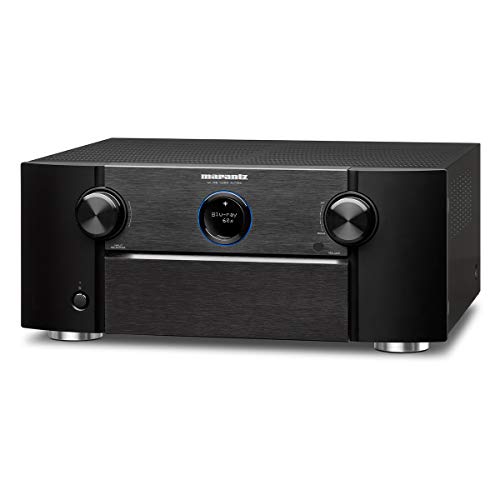
Marantz AV7706 11.2Ch 8K Ultra HD AV
Separates based home theater builders who want an 11.2 channel processor with the full Audyssey suite, complete HDMI 2.1 video support and HEOS streaming to pair with their own power.
Read the Marantz AV7706 11.2Ch 8K Ultra HD AV review →
Marantz 40n W
Music first listeners who want a single premium stereo amplifier that handles streaming, a turntable and television sound without extra boxes.
Read the Marantz 40n W review →
Yamaha RX-A8A
Enthusiasts building a 7.2.4 theater with multiple zones who want a flagship receiver with full bandwidth HDMI on every input and a deep streaming list.
Read the Yamaha RX-A8A review →Questions Buyers Ask
Yamaha RX-A6A
See the current listing, price and included accessories.
About This Review
Mandrillis Team
The Mandrillis editorial team researches and compares audio and music gear using manufacturer documentation, verified specs and real buyer feedback, so you can make a confident purchase without wading through marketing claims.
Read our full research methodology.