Studio Gear Review
AKG WMS40 Mini2 Review: Two Channels of No-Frills Wireless
The AKG WMS40 Mini2 is a budget vocal wireless system that pairs the HT40 Mini handheld transmitter with the SR40 Mini Dual receiver and ships with a universal power supply covering EU, UK, US and AU outlets. The listing gives little else, so this review explains what the design means and where the data runs out.
Our Verdict
Research Score 67/100The AKG WMS40 Mini2 is a budget two-channel wireless system for people who need to put handheld microphones in two sets of hands without spending much or learning anything about frequencies. The SR40 Mini Dual receiver, the HT40 Mini handheld and the universal power supply with EU, UK, US and AU adapters are the only facts the listing provides. Everything else, from polar pattern and frequency band to range and battery life, is unpublished. The fixed-channel design that keeps it simple also leaves no way to dodge interference. For karaoke, classrooms and casual events it is an acceptable lower mid-range option; for stage work it is not.
Editorial research score based on published specifications and documented features, not a customer rating or lab test.

AKG
AKG WMS40 Mini2
Best for: Karaoke hosts, small classrooms and casual performers who need two inexpensive wireless handhelds in one receiver.
Skip it if: You perform in venues with crowded wireless spectrum, need professional sound quality, or want published specifications before buying.
Check Price on AmazonWe may earn a commission at no extra cost to you.
Listing verified: October 2026
Who Should Buy It
Buy it if
- Karaoke and party hosts who need two handhelds for duets
- Teachers and trainers in small rooms with a basic PA
- Community groups on a tight budget for occasional events
- Buyers who want multi-region power adapters for travel
Skip it if
- You need frequency agility to avoid interference
- You are a serious vocalist who wants a stage-grade capsule
- You need published range, battery and frequency data
Key Specifications
| Type | Vocal wireless system with HT40 Mini handheld transmitter and SR40 Mini Dual stationary receiver; transmitter count not published in listing |
| Polar pattern | Not published in listing |
| Frequency response | Not published in listing |
| Connection | Wireless; operating frequencies not published in listing beyond the US25A/C designation; receiver outputs not published |
| Phantom power | Not required; transmitter battery type and runtime not published in listing |
| Max SPL or sensitivity | Not published in listing |
| Controls | Not published in listing |
| Mount and stand | Not published in listing |
| Weight | Not published in listing |
| Included accessories | Universal power supply with EU, UK, US and AU adapters |
Overview
The AKG WMS40 Mini2 is a vocal wireless microphone system sold under the US25A/C designation, which refers to the fixed channel pair this version uses. The listing names three components: the HT40 Mini wireless handheld transmitter, the SR40 Mini Dual wireless stationary receiver, and a universal power supply with EU, UK, US and AU adapters. It belongs to the lower mid-range tier and sits at the budget end of AKG's wireless range.
The Mini2 name and the Dual receiver point to a two-channel package intended for two handhelds, but the listing does not spell out how many HT40 Mini transmitters ship in the box. Buyers should confirm the transmitter count before assuming two microphones arrive. The dual receiver itself is the defining feature, since two channels in one small unit is unusual at this price.
AKG, now part of the Harman group, has a long professional heritage, and the WMS40 Mini line is its simplest offering: fixed frequencies, minimal controls and a compact footprint. The appeal is price and simplicity rather than features. Nearly every specification is missing from the listing, and this review marks each one as not published.
Sound Quality
No frequency response, sensitivity or capsule type is published in the listing for the HT40 Mini handheld, so sound quality cannot be described from data. Budget wireless handhelds in this class use a dynamic capsule tuned for speech and casual singing, and buyers report the HT40 Mini as serviceable for karaoke, announcements and classrooms rather than refined for musical performance. On paper there is no claim of stage-grade sound and the listing does not make one.
The wireless link in the WMS40 Mini series is analog, and budget analog systems typically add some noise and compression compared with a wired microphone. For a party or a training room played through a small PA, that difference is rarely noticed. A trained singer in a quiet room would hear it.
Compared with the Shure SM58 or the Sennheiser evolution capsules found in systems one or two tiers up, the HT40 Mini should be expected to sound thinner and less controlled on loud vocals. That is the trade-off for a two-channel system at this price, and buyers who understand it will not be disappointed.
Pickup Pattern and Noise Handling
The polar pattern of the HT40 Mini is not published in the listing. Handheld vocal transmitters are almost universally directional to control feedback, and AKG's documentation would confirm the exact pattern, but this review cannot state it from the data. Treat it as a directional handheld and position speakers in front of the performer rather than behind.
Handling noise is a known concern with lightweight budget handhelds, where a thin plastic body transmits grip noise to the capsule. The listing makes no claim about handling noise or shock mounting, and buyers report that the HT40 Mini is best held steady rather than passed around vigorously. Maximum SPL and sensitivity are not published.
Radio interference is the bigger issue for a fixed-channel system. Because the frequencies are set at the factory, there is no scan function and no way to move if a television broadcast or another system occupies the same channel. The listing does not publish the actual frequencies or an operating range, which makes it hard to assess compatibility with other wireless gear in the same room.
Build Quality
The listing publishes no materials, weight or dimensions for the handheld or receiver. The Mini naming reflects the compact plastic construction that buyers describe for both components, with a small receiver suited to a shelf next to a mixer or powered speaker. It is not rack gear and does not pretend to be.
AKG's brand reputation is built on professional microphones and headphones, and the WMS40 Mini line benefits from that engineering culture even at a budget tier. Buyers generally report the system as reliable for casual use over several years when it stays in one room. Frequent transport in a gig bag is harder on light plastic housings.
The universal power supply is the one accessory the listing details, with adapters for EU, UK, US and AU outlets. That makes the receiver usable across regions, though the radio frequencies themselves may not be legal in every country. Battery type and runtime for the handheld are not published.
- HT40 Mini handheld transmitter; count per box not published in listing
- SR40 Mini Dual stationary receiver with two channels
- Universal power supply with EU, UK, US and AU adapters
- Housing material and weight not published in listing
- Battery type and runtime not published in listing
Connectivity and Setup
Setup on a fixed-frequency system is as simple as wireless gets: power the receiver, switch on the handheld, and the pair is linked with nothing to scan or sync. For a karaoke host or a teacher that is a genuine advantage, because there is no procedure to remember and no menu to navigate. The listing does not describe any controls beyond the implied power switches.
The SR40 Mini Dual receiver handles two channels, so two handhelds can feed a mixer or powered speaker from one unit with one power supply. Output connectors on the receiver are not published in the listing, and buyers should confirm whether an XLR or quarter-inch cable is needed. No phantom power is involved anywhere in the chain.
The US25A/C designation indicates the two factory channels, but the actual frequencies and the operating range in feet or meters are not published. Because the channels cannot be changed, two WMS40 Mini2 systems in the same room would need different channel designations to coexist. Buyers planning more than two microphones should look at frequency-agile systems instead.
Features, Controls and Extras
The feature list is intentionally minimal. There is no automatic frequency scan, no diversity reception described, no display and no software, which is how the system reaches its price. For users who only need two working handhelds in a small room, the absence of features is a kind of feature.
The dual receiver is the one piece of real value engineering. Many budget systems sell a single channel per receiver, so running two microphones means two receivers, two power supplies and two cables. Consolidating both channels into the SR40 Mini Dual saves space and clutter.
The multi-region power supply is the only extra the listing confirms. Microphone clips, a case, batteries and cables are not mentioned, so buyers should assume they may need to supply some of those themselves. Checking the box contents on arrival is sensible.
Use Cases: Vocals, Streaming, Podcasting and Instruments
Casual vocals are the realistic use case: karaoke duets, party hosting, school assemblies, fitness classes and small training rooms. In those settings two handhelds that simply work matter more than refined tone. The dual receiver suits exactly that scenario, with a host and a guest or two singers sharing one setup.
Serious live music is a stretch. The unpublished capsule, fixed frequencies and budget construction mean a working band would quickly outgrow it, and interference in a venue with other wireless systems has no remedy. A single-channel Shure BLX or Sennheiser XSW system with frequency scanning is the safer step for performers.
Streaming, podcasting and instrument work are not appropriate for this system. A desk creator is better off with any wired dynamic such as the Samson Q2U, and instruments need a bodypack rather than a handheld. The WMS40 Mini2 is for two voices moving around a small room.
Who Should Buy It
Karaoke hosts, party organizers and community groups who need two inexpensive handhelds and want zero setup are the natural buyers. Teachers and trainers with a basic PA in a single room also fit, since fixed channels and a dual receiver cover a lecturer and a guest with one power cable.
Travelers and international users will appreciate the universal power supply with EU, UK, US and AU adapters, although the radio frequencies may not be authorized in every country. Buyers who already own AKG gear and want the brand on a budget wireless pair are another small group.
Serious vocalists, venues with crowded spectrum, and anyone who needs published range, frequency and battery figures should not buy this system. Those buyers are better served by frequency-agile systems from Shure or Sennheiser even if it means one channel instead of two.
Alternatives Worth Considering
The Shure BLX24/PG58 is the sensible step up for a single channel, with QuickScan frequency selection, published 14 hour AA battery life and a known capsule. It costs more per channel but removes the fixed-frequency risk that is the WMS40 Mini2's main weakness.
The Sennheiser XSW 1-825 offers automatic frequency management and diversity reception at a similar single-channel tier. For buyers who specifically need two handhelds and can spend more, dual-channel versions of both the Shure BLX and Sennheiser XSW lines exist with scanning on both channels.
Wired microphones remain the honest alternative for a small room. Two inexpensive dynamic handhelds on cables cost less than any wireless system, never run out of battery and never suffer interference. The WMS40 Mini2 only makes sense when movement is essential.
Verdict
The AKG WMS40 Mini2 answers a narrow brief: two wireless handhelds from a single compact receiver at a low price, with a universal power supply and no setup to learn. For karaoke, classrooms and casual events it does that job, and the AKG name adds some confidence.
The score reflects a listing that publishes almost nothing, from capsule type and polar pattern to frequency band, range and battery life, along with the inherent risk of fixed channels. Buyers who need a stage-worthy wireless system should spend more; buyers who need two microphones for a party will find it adequate.
Strengths and Limitations
Strengths
- Dual receiver supports two channels in one compact unit
- Universal power supply with EU, UK, US and AU adapters
- AKG brand heritage at a budget-friendly tier
- Simple fixed-channel design with nothing to configure
Limitations
- Listing publishes almost no specifications
- Frequency band, range and battery life not stated
- Capsule type and polar pattern unknown
- Fixed channels offer no escape from interference
- Transmitter count is not spelled out
How We Scored It
Scores reflect published specifications, documented features and value against the alternatives below. They are editorial research scores, not laboratory measurements.
Alternatives to Consider

Sennheiser Pro XSW 1-825-A
Singers and presenters who want a Sennheiser stage capsule on a UHF handheld with automatic setup and diversity reception.
Read the Sennheiser Pro XSW 1-825-A review →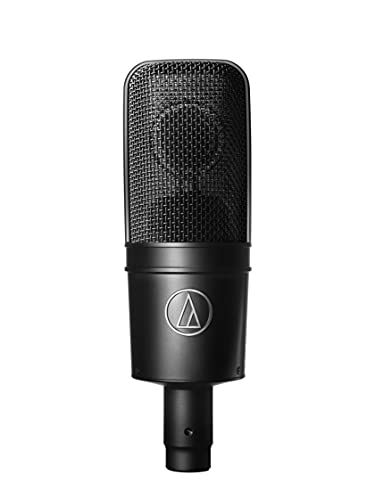
Audio-Technica AT4040
Home and project studios that want one serious large-diaphragm condenser for vocals, acoustic instruments and loud sources alike.
Read the Audio-Technica AT4040 review →
AKG DMS100
Presenters, worship teams, fitness instructors and small bands who want a cable-free vocal microphone with digital clarity and encryption.
Read the AKG DMS100 review →Questions Buyers Ask
AKG WMS40 Mini2
See the current listing, price and included accessories.
About This Review
Mandrillis Team
The Mandrillis editorial team researches and compares audio and music gear using manufacturer documentation, verified specs and real buyer feedback, so you can make a confident purchase without wading through marketing claims.
Read our full research methodology.