Studio Gear Review
Beyerdynamic M 160 Review: Double Ribbon Hypercardioid Classic
The Beyerdynamic M 160 is a double ribbon microphone with a hypercardioid pattern, a rare combination that makes it one of the most directional ribbons available. This review covers what the sparse listing confirms, what it leaves out, and where this classic studio tool fits for instruments, vocals and spoken word.
Our Verdict
Research Score 72/100The Beyerdynamic M 160 is a specialist microphone with a deserved reputation on guitar cabinets, drum overheads, strings and brass. Its double ribbon hypercardioid design delivers a smooth, detailed sound with directional control that most ribbons cannot match. The listing, however, publishes almost nothing beyond the type and a Demo label, leaving connector, phantom power guidance, weight and accessories unconfirmed. That makes it a buy for informed recordists who already know ribbon care and have a preamp with ample clean gain. For speech, streaming or a first studio mic, a rugged dynamic or an affordable condenser is the more practical choice. Treat the demo wording seriously and confirm condition before ordering.
Editorial research score based on published specifications and documented features, not a customer rating or lab test.

Beyerdynamic
Beyerdynamic M 160
Best for: Recording guitar amplifiers, drum overheads, strings and brass with a smooth, directional ribbon character.
Skip it if: You want a rugged, high-output microphone for speech that works on any basic interface without careful handling.
Check Price on AmazonWe may earn a commission at no extra cost to you.
Listing verified: October 2026
Who Should Buy It
Buy it if
- Project studio owners adding a ribbon color to a condenser and dynamic collection
- Guitarists recording amplifiers who find condensers too harsh
- Drummers and engineers wanting smoother overheads with directional control
- String and brass players recording at home with a capable preamp
Skip it if
- You need a first microphone for general home studio use
- Your interface preamp has limited clean gain
- You are not comfortable confirming the condition of a demo unit
Key Specifications
| Type | Double ribbon microphone (listing title: Double Ribbon Microphone) |
| Polar pattern | Hypercardioid (listing bullet reads Hyper Double Ribbon Mic) |
| Frequency response | Not published in listing |
| Connection | Not published in listing |
| Phantom power | Not published in listing |
| Max SPL or sensitivity | Not published in listing |
| Controls | Not published in listing |
| Mount and stand | Not published in listing |
| Weight | Not published in listing |
| Included accessories | Not published in listing |
Overview
The Beyerdynamic M 160 is a double ribbon microphone sold here as a single unit under model number 730165. The listing title identifies it as a Double Ribbon Microphone, and the lone feature bullet reads Demo Hyper Double Ribbon Mic. That is the entire published description, so this review leans on what a double ribbon design means in practice rather than on a long spec sheet.
Ribbon microphones work differently from the moving-coil dynamics and condensers most home studios start with. A thin corrugated metal ribbon suspended in a magnetic field acts as both the diaphragm and the conductor, which gives ribbons their characteristically smooth, natural top end. A double ribbon design stacks two ribbons, a construction Beyerdynamic has used for decades to improve output and consistency.
The word Demo in the bullet deserves attention before anything else. It may indicate a demonstration or display unit rather than new sealed stock, and the listing does not clarify warranty status or condition. Anyone considering this specific offer should confirm those details with the seller, since ribbon elements are fragile and a microphone's history matters more than it does for a rugged stage dynamic.
Sound Quality
On paper the M 160 belongs to a small family of ribbon microphones known for a focused, detailed character rather than the dark, rolled-off sound many people associate with vintage ribbons. Beyerdynamic's double ribbon construction is generally credited with a slightly brighter and more present response than single ribbon designs. The listing does not publish a frequency response chart, so treat any specific curve as unverified here.
Engineers have long reached for this model on guitar cabinets, drum overheads, brass and strings, where a ribbon's smooth handling of harsh upper midrange is an asset. Buyers report that it captures transients with less edge than a bright condenser while still keeping air and definition. Because ribbons respond to the velocity of air rather than pressure, proximity effect is strong and the microphone rewards careful placement.
Output level is the practical caveat. Passive ribbon microphones generally produce a lower signal than condensers, and the listing does not state sensitivity, so plan on a preamp with generous clean gain. Pairing a ribbon with a weak or noisy preamp is the most common reason a new owner is disappointed, and that has nothing to do with the microphone itself.
Pickup Pattern and Noise Handling
Most ribbon microphones are figure-of-eight by nature, picking up equally from front and back while rejecting the sides. The M 160 is unusual because its bullet describes it as a Hyper Double Ribbon Mic, meaning a hypercardioid pattern that picks up mainly from the front with a small rear lobe. That makes it one of the few ribbons that behaves like a directional stage or studio microphone in terms of isolation.
A hypercardioid pattern is a real advantage in a crowded room or on a drum kit, where bleed from neighboring sources is the enemy. It also means the microphone can be aimed away from a reflective wall without capturing the room from behind, something a figure-of-eight ribbon cannot do. Rejection is tightest roughly to the rear sides, so placement of monitors and other instruments should respect that geometry.
Self-noise is not published in the listing, and for a passive ribbon the relevant noise is mostly contributed by the preamp. Handling noise and plosives are a concern because ribbons are sensitive to wind and sudden air blasts. A pop filter and a shock mount are sensible companions, neither of which the listing confirms as included.
Build Quality
Beyerdynamic builds the M 160 in a slim cylindrical body with a small headgrille, a form factor that is easy to position between toms or close to an amp grille. The listing does not state the housing material or the weight, so those remain unconfirmed for this offer. The company's professional microphones have a reputation for long service lives in studios and broadcast facilities.
Ribbon elements are the fragile part of any ribbon microphone. A strong gust of air, a drop, or improper storage can stretch or tear the ribbon, and repair means re-ribboning by a technician. Owners usually keep the microphone in a case, store it upright, and never blow into it to check whether it is live.
Because this listing flags the unit as a demo, the build story has a second layer. A demo microphone may have been handled by many people and may show cosmetic wear or ribbon fatigue that is not visible from the outside. A return window and a listening check on arrival are reasonable precautions.
- Double ribbon transducer, two ribbons in one magnetic assembly
- Hypercardioid pattern per the listing bullet
- Housing material not published in listing
- Weight not published in listing
- Demo status noted in listing, confirm condition and warranty
Connectivity and Setup
The listing does not state the output connector, although professional ribbon microphones in this class are normally supplied with a balanced XLR output. The absence of a stated connector is a gap in the listing rather than a sign of anything unusual. Expect to need a standard microphone cable and a preamp or interface with an XLR input.
Phantom power is a topic ribbon buyers need to understand, and the listing is silent on it. Passive ribbon microphones do not need phantom power, and some vintage designs can be damaged by it if a cable or patch bay is faulty. The safe habit is to switch phantom off on the channel before connecting any passive ribbon, and to check the manual for the specific model's tolerance.
Gain requirements shape the rest of the chain. Many owners pair ribbons with an inline booster or a preamp known for clean high gain so that the noise floor stays low when the source is quiet. Loud sources such as a guitar amplifier or a snare drum are far less demanding and will work on most interface preamps.
Features, Controls and Extras
This is a purist microphone with no published onboard controls. There is no pad, no low-cut switch and no pattern selector mentioned in the listing, which is typical for a ribbon of this type. Tone shaping happens through placement and the preamp rather than through switches on the body.
Included accessories are not published in the listing. Beyerdynamic has shipped this model with a clip and a case in some configurations, but nothing in this listing confirms what arrives in the box. Buyers who need a shock mount or a specific stand adapter should budget for them separately until the seller confirms otherwise.
What the M 160 offers instead of features is a specific sonic tool. Its hypercardioid ribbon character is hard to replicate with equalization on a different microphone, and that singular quality is the reason engineers continue to buy a design that has changed little over many years.
Use Cases: Vocals, Streaming, Podcasting and Instruments
Vocals are a legitimate use for this ribbon, especially for singers with a bright or sibilant voice who sound harsh through a condenser. The smooth top end flatters that kind of voice, though strong proximity effect means the singer needs to work at a consistent distance. A pop filter is essential rather than optional.
For streaming and podcasting, the M 160 is an unusual choice. Its lower output and sensitivity to plosives make it less forgiving than a broadcast dynamic such as the Shure SM7B or an easy USB microphone like the Blue Yeti. A spoken-word user with a strong preamp and a treated room could get a beautiful result, but most should look elsewhere.
Instruments are where this microphone earns its reputation. Guitar cabinets, drum overheads, hi-hat, violin, cello, brass and woodwinds all respond well to a hypercardioid ribbon that can be aimed precisely. Many engineers consider a ribbon the fastest way to tame a fizzy high-gain amp tone without losing body.
Who Should Buy It
Project studio owners who already have a condenser and a dynamic and want a third color should put this on the shortlist. Guitarists recording amplifiers, drummers who want a smoother overhead sound, and string or brass players recording themselves will all find a use for it. The hypercardioid pattern makes it more practical in untreated rooms than a classic figure-of-eight ribbon.
The mid-range price tier makes sense only if you will use the microphone regularly. A first microphone for a general-purpose home studio should be something more versatile and less fragile. If this is your introduction to ribbons, read about care and preamp matching before buying.
Alternatives Worth Considering
The Shure SM7B is the obvious alternative for anyone who wants a smooth, forgiving dynamic for voice. It is far more rugged, handles plosives with its built-in windscreen, and runs on any XLR preamp with enough gain. It will not give the ribbon airiness on instruments, but for speech it is the safer buy.
The Audio-Technica AT2020 and the Rode NT1 represent the large-diaphragm condenser route. Both are more sensitive, need no special gain, and deliver a brighter and more detailed top end. Their drawback is that the same brightness can exaggerate harshness, which is precisely what a ribbon avoids.
Within the ribbon world, figure-of-eight designs from various makers are plentiful at this tier. They often cost less and sound wonderful on acoustic guitar and room duties, but they lack the directional control the M 160 provides. Choose by pattern first and by brand second.
Verdict
The Beyerdynamic M 160 remains a specialist tool with a well-earned reputation, and nothing in this listing changes that. Its double ribbon hypercardioid design offers a sound and a pickup behavior that few other microphones duplicate. For instrument recording in particular it can be the microphone that makes a track sit right.
The listing itself is thin and the Demo wording is a real caution. Connector, phantom power guidance, weight and accessories are all unpublished, and the condition of a demo unit is unknown. Buy with questions asked and a return option in place, and the microphone will likely reward you for years.
Strengths and Limitations
Strengths
- Double ribbon design with a smooth, detailed character
- Hypercardioid pattern is rare for a ribbon and improves isolation
- Excellent on guitar amps, overheads, strings and brass
- Compact body is easy to position close to sources
- Long professional track record
Limitations
- Listing publishes almost no specifications
- Demo wording raises condition and warranty questions
- Low output needs a preamp with plenty of clean gain
- Ribbon element is fragile and sensitive to wind
- No included accessories confirmed
How We Scored It
Scores reflect published specifications, documented features and value against the alternatives below. They are editorial research scores, not laboratory measurements.
Alternatives to Consider

Shure BLX288/SM58 Dual Vocal
Bands, worship teams and event companies that need two dependable wireless SM58 vocal channels in one simple package.
Read the Shure BLX288/SM58 Dual Vocal review →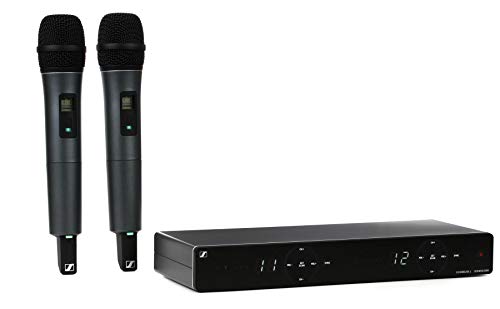
Sennheiser XSW 1-835
Worship teams, schools and gigging duos who want two wireless e835 vocal channels with the simplest possible setup.
Read the Sennheiser XSW 1-835 review →Questions Buyers Ask
Beyerdynamic M 160
See the current listing, price and included accessories.
About This Review
Mandrillis Team
The Mandrillis editorial team researches and compares audio and music gear using manufacturer documentation, verified specs and real buyer feedback, so you can make a confident purchase without wading through marketing claims.
Read our full research methodology.