Studio Gear Review
Pioneer DJ XDJ-RX3 Review: Standalone Club Workflow Without a Laptop
The Pioneer DJ XDJ-RX3 is a two-channel standalone DJ system that plays prepared rekordbox sets from USB drives, pairs a 10.1-inch touchscreen with a CDJ-style layout, and adds Beat FX, Sound Color FX and 16 Performance Pads. It sits in the premium tier, though several technical specs are not published in the listing.
Our Verdict
Research Score 80/100The Pioneer DJ XDJ-RX3 is built for DJs who want the club booth experience without carrying a laptop. On paper, the standalone rekordbox playback from USB, the 10.1-inch touchscreen and the CDJ-style control layout make it a realistic rehearsal tool for anyone heading toward professional booths. The creative toolkit of Beat FX, Sound Color FX and 16 Performance Pads covers most performance needs on a two-channel system. The listing leaves gaps, including output connector types, microphone inputs, converter resolution and monitoring details, so buyers should confirm those before purchase. For mobile, home and small-venue work, the concept is strong, and the premium tier is justified by the standalone design. It scores 80 out of 100 in this research review.
Editorial research score based on published specifications and documented features, not a customer rating or lab test.

Pioneer
Pioneer DJ XDJ-RX3
Best for: DJs who want club-standard standalone playback from USB with a large touchscreen and a familiar two-channel layout.
Skip it if: You need a four-channel mixer, verified XLR and booth output details, or a conventional multitrack audio interface for studio recording.
Check Price on AmazonWe may earn a commission at no extra cost to you.
Listing verified: October 2026
Who Should Buy It
Buy it if
- Mobile and wedding DJs who want to leave the laptop at home
- Home DJs preparing for club booths that run CDJ-style gear
- Serato DJ Pro users who also want a standalone fallback
- Small venues and bars that want one unit instead of separate players and a mixer
Skip it if
- You need four channels for layering loops and acapellas
- You want a dedicated recording interface for a studio session
- You prefer a budget controller that depends on a laptop
Key Specifications
| Type | Standalone 2-channel all-in-one DJ system with integrated mixer and media players |
| Inputs | USB drives for prepared rekordbox sets; computer control for rekordbox and Serato DJ Pro; analog input count and connector types not published in listing |
| Outputs | Described as pro outputs; connector types and count not published in listing |
| Preamps | Not published in listing |
| Resolution | Not published in listing |
| Phantom power | Not published in listing |
| Connection | USB media playback and computer control; port type not published in listing |
| Monitoring | Not published in listing |
| Bundled software | Hardware Unlock for rekordbox Performance mode; Serato DJ Pro control supported, license status not published |
| Included accessories | Not published in listing |
Overview
The Pioneer DJ XDJ-RX3 is a two-channel all-in-one DJ system that combines two media players and a mixer in one chassis. Its defining feature is standalone operation: prepared rekordbox sets load from USB drives, so no laptop is required for a full performance. The listing positions it for home, mobile and small-venue work, which matches the two-channel format.
This is a different animal from a conventional audio interface, and the review structure here reflects that. Where an interface review would focus on microphone preamps and driver latency, the XDJ-RX3 is judged on how well its players, mixer section and performance tools support a DJ set. Specifications that an interface buyer expects, such as sample rate or converter resolution, are not published in the listing.
The unit sits in the premium price tier. That price buys a 10.1-inch touchscreen, a layout that mirrors club booth gear, and two software platforms in one box. Buyers should weigh that against the limits of two channels and the missing connection details the listing does not spell out.
Preamps and Sound Quality
Preamp specifications are not published in the listing, and neither is any converter or signal-to-noise figure. The listing does describe the outputs as pro grade, which in DJ equipment usually means balanced main outputs intended for a venue system, but the connector types are not stated. Anyone who intends to run the XDJ-RX3 into a club installation should confirm the output format before relying on it.
Microphone input count, gain range and talkover features are also not stated. For mobile DJs who make announcements, this is a meaningful gap, because a microphone channel is part of the normal workflow at weddings and corporate events. The absence of a published figure does not mean the feature is missing, only that the listing does not confirm it.
What the listing does make clear is the processing available on the audio path. Beat FX and Sound Color FX are the two effect families, and both act on the mix signal rather than on individual decks only. In practice this means filters, echoes and rhythmic effects can be applied to a channel or the master, which is the standard club approach to transitions.
Inputs, Outputs and Routing
Media comes in through USB drives carrying prepared rekordbox libraries. Track analysis, cue points and playlists are set up in advance on a computer, exported to the drive, and read by the XDJ-RX3 on the gig. This separation of preparation and performance is the core of the standalone workflow and is what lets a DJ leave the laptop at home.
The system also supports computer control on two platforms. The Hardware Unlock enables rekordbox Performance mode when a computer is connected, and Serato DJ Pro control is supported as well. Having both paths means a DJ can run a standalone USB set in one venue and a software-controlled set in another without changing hardware.
On the output side, the listing describes pro outputs but does not detail booth, master or record connections, nor does it state whether a record output exists for capturing sets. The number of analog line inputs for external players is also not published. These are routine questions for a two-channel system, and the manufacturer documentation is the place to confirm them.
Features, Monitoring and Software
The 10.1-inch touchscreen is the centerpiece of the control surface. On a standalone system the screen handles library browsing, waveform display and track information, and a screen of this size allows two decks to be shown without squinting. The CDJ-style layout around it is intended to make the transition to club booth equipment painless.
Performance tools include 16 Performance Pads, which typically trigger hot cues, loops, slicer functions and similar modes across the two decks. Combined with Beat FX and Sound Color FX, this gives a two-channel DJ enough creative options for dynamic sets. The listing does not spell out which pad modes are offered, so buyers who rely on a specific mode should confirm it.
Monitoring details such as headphone output type, cue mix behavior and split cue are not published in the listing. Every DJ system of this class provides headphone cueing, but the specifics are not stated here. Bundled software consists of the Hardware Unlock for rekordbox Performance mode; the Serato DJ Pro support is listed as control compatibility rather than as an included license.
- Standalone playback of prepared rekordbox sets from USB drives
- 10.1-inch touchscreen with a CDJ-style control layout
- Hardware Unlock for rekordbox Performance mode on a connected computer
- Serato DJ Pro computer control supported
- Beat FX and Sound Color FX on the mix path
- 16 Performance Pads for cues, loops and expressive triggering
Build, Design and Controls
The layout follows the club standard, with two player sections flanking a central mixer and the touchscreen above. Pioneer DJ builds its all-in-one units to mirror its booth gear, so jog wheel placement, pitch faders and the channel strips sit where a CDJ user expects them. The listing specifies a black finish and does not publish weight or dimensions.
Control count on a system like this is high, which is a feature rather than a drawback for performance use. Dedicated knobs for EQ, filters and effects mean fewer menu dives during a mix. Materials, fader type and chassis construction are not described in the listing, so judgments about durability under mobile use rest on the brand's reputation rather than on published detail.
For a premium tier product, the lack of published physical specifications is worth noting. Mobile DJs care about weight and footprint because the unit travels in a flight case and lands on tables of varying size. Those figures should be checked in the manufacturer documentation before committing to a case or coffin.
Connectivity, Drivers and Latency
Connectivity centers on USB for media and on a computer link for rekordbox Performance mode and Serato DJ Pro. The listing does not state the port type for the computer connection, the number of USB media slots, or whether two drives can be used for back-to-back sets. These are practical details for handover between DJs and worth confirming.
Driver and latency behavior for computer control is not published. In software-controlled DJ use, latency is usually low enough to be a non-issue because the hardware handles jog wheel and fader response locally, but a published figure would still be useful. The unit's role as a class-compliant audio device for a computer is likewise not stated in the listing.
The connectivity score here reflects what the listing confirms rather than what the product likely offers. A standalone unit that bridges two software platforms is genuinely flexible, but the unpublished port details, missing microphone input confirmation and absent output specifics hold the number down to a cautious 7 out of 10.
Setup and Daily Use
Daily use revolves around library preparation. A DJ analyzes tracks in rekordbox on a computer, sets cue points and builds playlists, then exports to a USB drive. At the venue, the drive is inserted, the library appears on the touchscreen, and the set runs without a computer in the signal chain. This workflow removes the laptop as a point of failure.
For DJs who prefer software control, the alternative path is to connect a computer and use rekordbox Performance mode through the Hardware Unlock, or to run Serato DJ Pro. This is useful for DJs with large Serato libraries who are not ready to migrate. Switching between modes is a setup choice at the start of a gig rather than a mid-set operation.
In a small venue the two-channel format is sufficient for the overwhelming majority of sets. The 16 Performance Pads and two effect families provide enough variety for long nights. Where the system may feel limiting is in four-deck layering, which simply is not part of a two-channel design.
Who Should Buy It
The clearest buyer is the mobile DJ who wants to arrive, plug in and play from USB with no laptop boot time or crash risk. The same logic applies to bars and small venues that want a single installed unit rather than separate players and a mixer. In both cases the premium tier is offset by the hardware it replaces.
Home DJs preparing for club work are the second group. Practicing on a CDJ-style layout with a large screen builds muscle memory that transfers to a professional booth. The Serato DJ Pro support also makes it attractive to DJs who are mid-transition between platforms.
This is not the right purchase for someone who wants a studio audio interface. There are no published preamp or converter figures, and the unit is not designed around multitrack recording. Buyers who need four channels, or who need to verify microphone and booth connections before buying, should look at the manufacturer documentation or consider a larger system.
Alternatives Worth Considering
Within the DJ category, the obvious comparison is between a standalone system like the Pioneer DJ XDJ-RX3 and a laptop-based controller. Controllers are usually cheaper and often offer four channels, but they depend entirely on the computer. The standalone approach trades channel count for reliability and a club-like workflow.
For buyers who landed on this page looking for a recording interface, the reference models in that space are the Focusrite Scarlett 2i2, the Universal Audio Volt 2 and the MOTU M2. Those are compact desktop units built around microphone preamps and low-latency drivers, and they serve a different purpose entirely. A DJ who also records in a home studio may end up owning both types of device.
A compact mixer such as the Yamaha MG10XU is a third option for someone who wants analog inputs, a microphone channel and USB recording for announcements and playback. It does not play DJ sets on its own, but it answers the input and output questions that the XDJ-RX3 listing leaves open.
Verdict
The Pioneer DJ XDJ-RX3 delivers the standalone club workflow in a two-channel format that suits home, mobile and small-venue DJs. The 10.1-inch touchscreen, CDJ-style layout, dual software platform support and full set of performance pads and effects make it a complete system on paper.
The listing's silence on output connectors, microphone inputs, converter resolution and monitoring details is the main reason the score stops at 80. None of those gaps suggests a weakness in the product, but a premium tier purchase deserves confirmed specifications. Buyers who verify those points and who are comfortable with two channels will find a system designed to match the booths they are heading toward.
Strengths and Limitations
Strengths
- Plays prepared rekordbox sets from USB with no laptop required
- 10.1-inch touchscreen and CDJ-style layout mirror club booth gear
- Hardware Unlock for rekordbox Performance mode plus Serato DJ Pro control
- Beat FX, Sound Color FX and 16 Performance Pads on one surface
- Covers home practice, mobile gigs and small venues with one unit
Limitations
- Listing does not publish output connector types or microphone input details
- No sample rate, bit depth or converter specification in the listing
- Two channels only, so four-deck layering is not available in standalone mode
- Premium price tier for a unit whose recording and monitoring specs are unpublished
How We Scored It
Scores reflect published specifications, documented features and value against the alternatives below. They are editorial research scores, not laboratory measurements.
Alternatives to Consider

Yamaha DM3-D 22
Small venues, houses of worship and production companies that want a compact 96 kHz digital console with Dante networking for stage boxes and multitrack recording.
Read the Yamaha DM3-D 22 review →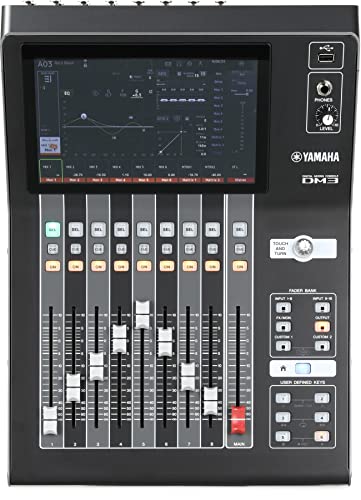
Yamaha DM3
Bands, small venues and project studios that want a compact 96 kHz digital console that doubles as an 18x18 USB recording interface.
Read the Yamaha DM3 review →Questions Buyers Ask
Pioneer DJ XDJ-RX3
See the current listing, price and included accessories.
About This Review
Mandrillis Team
The Mandrillis editorial team researches and compares audio and music gear using manufacturer documentation, verified specs and real buyer feedback, so you can make a confident purchase without wading through marketing claims.
Read our full research methodology.