Studio Gear Review
PreSonus AIR XD Review: 2000 W Powered 15 Inch Subwoofer
The PreSonus AIR XD is a powered 15 inch subwoofer with a 2000 W Class D amplifier, a published 32 Hz to 131 Hz response, an adjustable lowpass filter, cardioid array presets and alignment delay. This review covers the published specification, the connectivity and the gaps the listing leaves for live sound buyers.
Our Verdict
Research Score 84/100The PreSonus AIR XD reads as a complete live sound subwoofer rather than a bare box with an amplifier. The listing publishes a 15 inch woofer with a 3 inch voice coil, 2000 W of Class D power with up to 128 dB of output, a 32 Hz to 131 Hz response and a lowpass filter adjustable from 60 Hz to 150 Hz. Cardioid presets for ground stacked and end-fire arrays and an alignment delay up to 12 m are features normally handled by an outboard processor. The missing dimensions and weight are the main frustration, because a 15 inch powered sub is a commitment in a van or a venue. For a mid-range price tier it looks like a strong value for mobile and installed PA work.
Editorial research score based on published specifications and documented features, not a customer rating or lab test.

PreSonus
PreSonus AIR XD
Best for: Mobile DJs, bands and installers who need a powered 15 inch subwoofer with DSP presets, cardioid array options and generous output under full range tops.
Skip it if: You need a compact studio subwoofer for a desktop nearfield system in a small treated room.
Check Price on AmazonWe may earn a commission at no extra cost to you.
Listing verified: October 2026
Who Should Buy It
Buy it if
- Mobile DJs and event companies running powered tops that need low end reinforcement
- Bands and live sound operators who want cardioid presets without external processing
- Venue installers who need a permanent sub with alignment delay
- Buyers already using full range speakers with an adjustable crossover region
Skip it if
- You are building a desktop studio monitoring system
- You cannot move or store a large 15 inch cabinet
- You need a published weight and footprint before purchase and cannot find them
Key Specifications
| Type | Active extended definition subwoofer for live sound, mobile rigs and permanent installs |
| Woofer | 15 inch woofer with 3 inch voice coil |
| Tweeter | None, this is a subwoofer only |
| Power | 2000 W Class D amplifier, up to 128 dB output |
| Frequency response | 32 Hz to 131 Hz |
| Inputs | Dual XLR and quarter inch combo inputs with direct outputs; built-in Bluetooth with TWS Bridge Mode |
| Room controls | Adjustable lowpass filter from 60 Hz to 150 Hz, DSP presets for ground stacked and end-fire cardioid arrays, alignment delay up to 12 m |
| Dimensions | Not published in listing |
| Weight | Not published in listing |
| Included accessories | Castor kit |
Overview
The PreSonus AIR XD is a powered 15 inch subwoofer aimed at live sound, mobile rigs and permanent installations, according to the product listing. It belongs to the extended definition family of PreSonus loudspeakers, which means it is designed to partner with full range tops rather than to stand alone. The listing frames it as a complete low frequency solution with onboard DSP, not simply a driver in a box.
The published specification is unusually complete for the amplifier and acoustic side. A 2000 W Class D amplifier drives a 15 inch woofer with a 3 inch voice coil, the response is stated as 32 Hz to 131 Hz, and maximum output is quoted at 128 dB. Those are numbers a system designer can work with, which is not always the case with powered PA subs.
Where the listing falls short is the physical data. Dimensions and weight are not published, and for a 15 inch powered cabinet that will be lifted into a van or stacked on a stage those figures matter a great deal. This review takes the listing at its word on the electrical and acoustic claims and flags the physical unknowns clearly.
Accuracy and Sound Signature
A subwoofer's job is to extend the low end of a system without smearing the tops, and the published 32 Hz to 131 Hz response describes a cabinet that reaches well below the fundamental of a five string bass. The upper limit of 131 Hz leaves room for the adjustable lowpass filter to set the hand off point anywhere between 60 Hz and 150 Hz. That flexibility lets the operator match the sub to tops of different sizes rather than living with a fixed crossover.
The 3 inch voice coil is a meaningful detail. Larger coils dissipate heat better and resist compression during long sets at high level, which keeps the bass tight rather than letting it turn soft as the driver warms up. The listing describes the result as deep, defined bass, and on paper the driver and amplifier pairing supports that description.
Cardioid presets change the character of the low end in a room as much as any driver choice does. By configuring two or more cabinets as a ground stacked or end-fire array, the DSP cancels much of the energy that would otherwise wrap around behind the stage. Buyers report that cardioid setups reduce the boom that performers hear on stage and clean up the sound in reflective rooms, and having those presets onboard removes a layer of outboard processing.
Drivers, Amplification and Power
The driver is a 15 inch woofer with a 3 inch voice coil, which places the PreSonus AIR XD in the mainstream size class for portable PA subs. Fifteen inch cones move enough air for bands and DJs in medium rooms, and the listing's 128 dB maximum output figure confirms that this cabinet is meant to be felt as well as heard. The listing does not describe the cone material or the magnet type.
Amplification is a 2000 W Class D module. Class D designs convert power efficiently, which keeps heat and weight down compared with older amplifier classes and is the standard approach in modern powered subs. The listing does not break the 2000 W figure into continuous and peak ratings, so treat it as the manufacturer's headline number rather than a measured continuous value.
The DSP sits between the inputs and the amplifier and does more than filter. It provides the adjustable lowpass, the array presets and the alignment delay, which can be set up to 12 m to time align the sub with tops placed forward or back on the stage. Having delay onboard means a small system can be properly aligned without a drive rack.
Room Fit, Placement and Controls
Placement options are broader than most powered subs offer, because the DSP presets support both ground stacked and end-fire cardioid arrays. A ground stacked cardioid array places cabinets on top of one another with one facing backward, while an end-fire array spaces them front to back along the floor. Both approaches reduce low frequency energy behind the array, which helps on stage and in rooms with hard rear walls.
The lowpass filter is adjustable from 60 Hz to 150 Hz. Small tops with limited low end benefit from a higher crossover point, while larger 12 inch or 15 inch tops can hand off lower, and the published range covers both situations. The listing does not mention a polarity switch or a parametric EQ, so the room correction toolkit is the filter, the presets and the delay.
Ground stacking provisions and castor provisions are built into the cabinet, and the castor kit is included according to the listing. That makes a difference when loading in and out, since a 15 inch powered sub is heavy by nature even if the exact weight is not published. Alignment delay up to 12 m covers typical club and ballroom stage depths.
- Lowpass filter adjustable from 60 Hz to 150 Hz
- Presets for ground stacked and end-fire cardioid arrays
- Alignment delay up to 12 m for time aligning with tops
- Ground stacking provisions and included castor kit
- No parametric EQ or polarity switch mentioned in the listing
Build, Design and Finish
The enclosure is wood with a texture painted finish, and the grille is described as tour grade 1.5 mm steel. Wood cabinets tend to be chosen over molded plastic for large subs because they resist flexing at high excursion, and the textured paint is the usual approach to hiding scuffs from load ins. A 1.5 mm steel grille is thick enough to shrug off a dropped stand or a careless boot.
Ergonomic handles are built in, and the listing stresses that they are comfortable, which matters more than it sounds when two people are carrying a cabinet up a loading ramp. The castor provisions and included castor kit turn the sub into a rolling case for flat floors, and the ground stacking provisions let a top sit securely on the sub without a separate pole mount.
Dimensions and weight are not published in the listing, and that is the most significant gap in an otherwise detailed specification. Anyone planning transport, storage or a permanent install should obtain those figures before ordering.
Connectivity and Inputs
Wired connectivity consists of dual XLR and quarter inch combo inputs with direct outputs. The combo jacks accept balanced XLR cables from a mixer or signal processor as well as quarter inch leads, and the direct outputs pass the signal onward so the tops can be fed from the sub. That full range pass through is the standard way to daisy chain a sub and a pair of tops without a separate splitter.
Bluetooth is built in, with a TWS Bridge Mode for pairing two cabinets as a wireless stereo pair. For background music at a reception or a break between sets, streaming from a phone directly to the sub and tops is convenient. Bluetooth is not a substitute for a wired feed when timing matters, since wireless audio introduces latency that live mixes cannot tolerate.
The listing does not describe network control, a dedicated subwoofer out from the tops, or a sub bypass footswitch. Control is handled on the cabinet itself through the DSP presets and the filter setting.
Setup and Daily Use
A typical deployment runs the mixer into the sub's combo inputs, sets the lowpass to match the tops, then feeds the tops from the direct outputs. Selecting a preset handles the array behavior and the alignment delay tidies up the timing when the tops are placed on poles or forward of the sub. The castor kit means the cabinet rolls to its spot and the stacking provisions let a top sit on it directly.
For a permanent install the same controls apply, but the alignment delay and cardioid presets become one time settings rather than nightly adjustments. The 128 dB output figure gives a venue headroom for louder events without pushing the amplifier into its limiter. Buyers report that onboard presets of this kind shorten setup to a few minutes once the operator learns the menu.
Daily use for mobile operators comes down to weight and footprint, and the listing does not publish either. The ergonomic handles and castors mitigate the issue, but anyone working alone should plan on the realities of moving a 15 inch wood cabinet with a 2000 W amplifier inside.
Who Should Buy It
Mobile DJs and event companies are the obvious audience. A single powered sub with an adjustable crossover, pass through outputs and included castors slots neatly under a pair of powered tops, and the Bluetooth stereo bridge is a bonus for background music. The published 32 Hz to 131 Hz response is low enough for electronic music without needing a second cabinet in small venues.
Bands and live sound operators who work in difficult rooms will value the cardioid presets most. Two of these subs in an end-fire or ground stacked configuration can clean up stage sound dramatically compared with a single omnidirectional box, and the alignment delay keeps the low end coherent with the tops.
Installers specifying a permanent sub for a bar, club or house of worship get a cabinet with a tour grade steel grille and DSP that replaces an external drive unit for a basic system. The mid-range price tier for a 2000 W 15 inch sub with these features is competitive on paper.
Alternatives Worth Considering
Studio buyers who landed here looking for a desktop subwoofer should look at the compact subs sold alongside nearfield monitors such as the Yamaha HS5, the KRK Rokit 5 G5 or the Kali Audio LP-6. Those products are smaller, quieter and designed for accuracy in a treated room rather than output in a hall. The PreSonus AIR XD is not a substitute for them.
Within live sound, the competition is other powered 15 inch subs from the established PA brands. The comparison points should be the same ones the listing publishes here: amplifier power, maximum output, low frequency extension, crossover range and whether cardioid presets and alignment delay are built in. Many rivals require an external processor for the array and delay functions.
Buyers with smaller rooms or lighter transport needs might consider a 12 inch powered sub instead. The trade is less extension and output for a lighter cabinet, and for acoustic acts or speech heavy events that trade often makes sense.
Verdict
The PreSonus AIR XD presents a well documented acoustic and electrical package. A 15 inch woofer with a 3 inch voice coil, 2000 W of Class D power, a published 32 Hz to 131 Hz response and 128 dB of output cover the fundamentals, while the adjustable lowpass, cardioid presets and 12 m alignment delay add processing that lesser subs leave to outboard gear. The wood enclosure, steel grille, handles and included castor kit show that it was designed for the road.
The missing dimensions and weight hold back an otherwise strong score, because mobile operators need those numbers before anything else. If the physical figures check out for your vehicle and venues, this sub offers a lot of capability at a mid-range price tier. It is a live sound tool first and last, and it should be bought as one.
Strengths and Limitations
Strengths
- 2000 W Class D amplification with up to 128 dB of output
- 15 inch woofer with a 3 inch voice coil
- Published 32 Hz to 131 Hz response
- Adjustable lowpass filter from 60 Hz to 150 Hz for clean crossover to tops
- DSP presets for ground stacked and end-fire cardioid arrays plus alignment delay
- Castor kit included for mobile use
Limitations
- Dimensions and weight are not published in the listing
- A 15 inch powered sub is large and heavy for small rooms
- No high frequency driver, so it must be paired with full range tops
- Bluetooth adds latency that live monitoring use cases may not tolerate
How We Scored It
Scores reflect published specifications, documented features and value against the alternatives below. They are editorial research scores, not laboratory measurements.
Alternatives to Consider
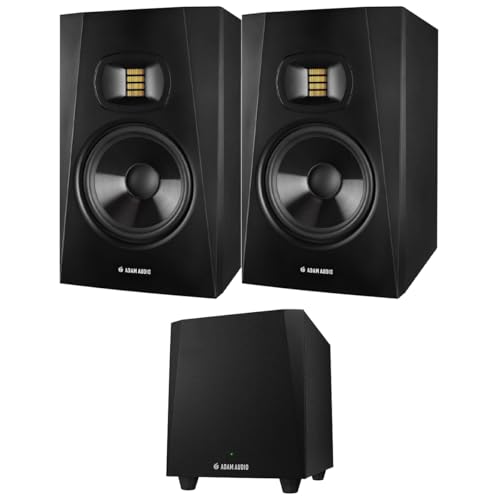
ADAM Audio T-Series T7V 7"
Producers and broadcast editors who want a complete 2.1 nearfield system with a ribbon tweeter and a published response in one box.
Read the ADAM Audio T-Series T7V 7" review →
ADAM Audio A7V
Mix engineers and producers who want a DSP equipped monitor with real room adaptation controls and are willing to confirm the missing specifications elsewhere.
Read the ADAM Audio A7V review →
PreSonus AIR15s Active
Mobile DJs, bands and installers who want a 15 inch powered subwoofer with published response, a variable low pass filter and cardioid array presets.
Read the PreSonus AIR15s Active review →Questions Buyers Ask
PreSonus AIR XD
See the current listing, price and included accessories.
About This Review
Mandrillis Team
The Mandrillis editorial team researches and compares audio and music gear using manufacturer documentation, verified specs and real buyer feedback, so you can make a confident purchase without wading through marketing claims.
Read our full research methodology.