Studio Gear Review
Sennheiser Pro XSW 1-825-A Review: Evolution Capsule, Automatic Frequency Setup
The Sennheiser Pro XSW 1-825-A is a single-channel UHF handheld wireless system built around the 825 evolution series capsule, operating in the A range from 548 to 572 MHz. Antenna-switching diversity reception, automatic frequency management and selectable frequencies with up to 10 simultaneous channels define a lower mid-range system aimed at live vocals.
Our Verdict
Research Score 78/100The Sennheiser Pro XSW 1-825-A pairs a stage-proven evolution series capsule with the radio features that matter most to a working performer: antenna-switching diversity reception to cut dropouts, automatic frequency management and synchronization so setup is quick, and selectable frequencies across the 548 to 572 MHz A range with up to 10 systems running together. That is a strong package for a single-channel UHF handheld in the lower mid-range tier. The listing leaves gaps, with no polar pattern, frequency response, range, battery life or accessories published, and the A range must be legal where it is used. For singers who favor the Sennheiser sound, it is a dependable wireless choice.
Editorial research score based on published specifications and documented features, not a customer rating or lab test.

Sennheiser
Sennheiser Pro XSW 1-825-A
Best for: Singers and presenters who want a Sennheiser stage capsule on a UHF handheld with automatic setup and diversity reception.
Skip it if: You need published range and battery figures, a two-channel receiver, or a desk microphone for streaming.
Check Price on AmazonWe may earn a commission at no extra cost to you.
Listing verified: October 2026
Who Should Buy It
Buy it if
- Vocalists who prefer Sennheiser's evolution series sound to the Shure alternatives
- Venues and churches that want automatic frequency setup for volunteer operators
- Bands running several wireless channels who need up to 10 systems at once
- Event companies that value diversity reception in difficult rooms
Skip it if
- You need two handhelds on a single receiver
- Your region does not authorize 548 to 572 MHz UHF operation
- You want a wired microphone for recording or podcasting
Key Specifications
| Type | Handheld UHF wireless vocal system with 825 evolution series capsule; capsule transducer type not published in listing |
| Polar pattern | Not published in listing |
| Frequency response | Not published in listing |
| Connection | UHF wireless, A range 548 to 572 MHz; receiver output connectors not published in listing |
| Phantom power | Not required; handheld transmitter is battery powered, battery type not published in listing |
| Max SPL or sensitivity | Not published in listing |
| Controls | Automatic frequency management and synchronization; selectable UHF frequencies; control layout not published in listing |
| Mount and stand | Not published in listing |
| Weight | Not published in listing |
| Included accessories | Not published in listing |
Overview
The Sennheiser Pro XSW 1-825-A is a vocal wireless microphone system from Sennheiser's XS Wireless 1 series, the company's entry into UHF handheld systems for live performance. This version operates in the A range, 548 to 572 MHz, and comes in black. It is built around the 825 evolution series capsule, the same microphone family Sennheiser sells as wired stage dynamics.
The listing highlights the radio engineering as much as the capsule: antenna-switching diversity reception with integrated antennas, automatic frequency management and synchronization, selectable UHF frequencies within a large bandwidth, and support for up to 10 simultaneous channels. Those are features that normally separate professional wireless from entry-level kits. The price tier is lower mid-range.
What the product data does not include is almost every physical specification. Polar pattern, frequency response, operating range, battery type and runtime, weight and box contents are all absent. This review describes what the stated features mean and marks each missing specification as not published.
Sound Quality
The listing credits the system with excellent live sound thanks to the 825 evolution series capsule, and that family has a long record on club and church stages. The e 825 is generally regarded by buyers as a clear, forward vocal microphone with good intelligibility and a tone that sits easily in a band mix. Its transducer type and frequency response are not published in this listing, so the description rests on reputation rather than data.
Compared with the Shure SM58 capsule found in competing BLX systems, the Sennheiser evolution capsules are typically described as slightly brighter and more open. Singers who find the Shure sound a little thick in the low midrange often prefer the Sennheiser character. Neither listing publishes figures, so that comparison is one of general reputation.
The wireless link in the XSW 1 series is analog UHF, and the listing does not state audio bandwidth or signal-to-noise. On paper the diversity reception should keep the signal clean enough that the capsule, not the radio, defines the sound in most rooms. Buyers report the XSW systems as transparent for live vocals and speech.
Pickup Pattern and Noise Handling
The polar pattern is not published in the listing. Evolution series vocal capsules are known as directional stage designs, and the e 825 is widely sold as a cardioid, but this review cannot confirm that from the data. Buyers should check Sennheiser's documentation for the exact pattern before planning monitor placement.
A directional handheld on a loud stage rejects sound from behind, which is what allows a singer to work near floor monitors without feedback and keeps drum and amplifier bleed out of the vocal channel. The evolution series has a reputation for good handling noise control, although the listing makes no claim about it. Maximum SPL and sensitivity are also not published.
Radio noise is where the listing is specific. Antenna-switching diversity reception uses two integrated antennas and selects the stronger signal moment to moment, which reduces the dropouts and static that plague single-antenna systems when the performer moves. Automatic frequency management finds a clear channel, and up to 10 systems can coexist in the A range.
Build Quality
No housing material, weight or dimensions are published in the listing for either the handheld or the receiver. Sennheiser's XSW 1 receivers are compact tabletop units with integrated antennas, and buyers report the plastic housing as adequate for fixed installations and light gigging. The handheld follows the evolution series shape with a metal grille over the capsule.
The integrated antennas are a convenience and a limitation. They keep the receiver tidy and remove the risk of a snapped antenna in transport, but they cannot be remoted or swapped for directional antennas the way detachable ones can. For small venues and churches that is rarely an issue.
Durability expectations should match the lower mid-range tier: dependable for weekly use in a venue or house of worship, not built for touring abuse. Battery type and expected runtime for the handheld are not published, so buyers should confirm whether it uses AA cells or a proprietary pack.
- Handheld transmitter with 825 evolution series capsule
- Receiver with two integrated antennas for diversity reception
- Housing material and weight not published in listing
- Battery type and runtime not published in listing
- Included accessories not published in listing
Connectivity and Setup
The system operates in the A range, 548 to 572 MHz, which must be authorized for wireless microphone use in the buyer's region. Sennheiser sells the XSW 1 line in several ranges for that reason, and choosing the wrong one can mean an unusable or illegal system. Operating range in feet or meters is not published in the listing.
Setup is the strongest practical feature. Automatic frequency management scans for a clear channel, and synchronization pairs the handheld to the receiver without manual frequency entry. Buyers describe this as a one-button process, which is ideal for venues where different volunteers run sound each week.
Selectable UHF frequencies within a large bandwidth give the operator room to move if a channel becomes crowded, and up to 10 simultaneous channels allow a band or conference to run several systems together. Receiver output connectors are not published, so buyers should check whether an XLR or quarter-inch cable is required for their mixer. No phantom power is involved.
Features, Controls and Extras
The feature set is centered on reliability rather than extras. Diversity reception, automatic frequency management, synchronization and multi-channel capacity are the four pillars, and together they address the main failure points of budget wireless: dropouts, interference and complicated setup. There is no app control, encryption or rechargeable dock described in the listing.
Ten simultaneous channels is a notable figure at this tier. A worship team with four vocalists, a pastor and a few instruments, or a conference with multiple presenters, can run on one family of systems without frequency conflicts. That capacity often pushes buyers to more expensive lines, so having it here adds value.
Accessories such as a microphone clip, a case or a power supply are not mentioned in the listing, and the control layout on the handheld and receiver is not described. Buyers should expect the essentials but confirm the box contents on arrival.
Use Cases: Vocals, Streaming, Podcasting and Instruments
Live vocals and speech are the entire purpose of this system. Lead and backing singers, worship leaders, presenters and MCs all benefit from a directional stage capsule that is free of cables and backed by diversity reception. Event companies that work in difficult rooms with reflective surfaces will value the dropout resistance most.
Streaming and podcasting at a desk are not sensible uses for a UHF handheld. A wired dynamic such as the Shure MV7, Samson Q2U or Rode PodMic costs less, needs no batteries and connects directly to a computer or interface. The XSW 1-825-A only earns its price when the talent moves.
Instrument use is a secondary possibility; the handheld could be placed in front of a guitar cabinet or used on percussion in an emergency, but a handheld transmitter is awkward to mount. Players who need wireless instrument connections should look at the bodypack versions in the same XSW 1 series.
Who Should Buy It
Singers who prefer the Sennheiser evolution series sound and want to go wireless are the core audience. The automatic frequency setup makes it equally attractive to churches, schools and community venues where the operator changes often and nobody wants to read a frequency table.
Bands and event companies that run several wireless channels will appreciate the 10-channel capacity and the diversity reception. Anyone who has suffered dropouts from a cheaper single-antenna system will understand why those two features are worth paying for.
Buyers who need two handhelds on one receiver, who require published range and battery figures before committing, or who work in regions where 548 to 572 MHz is not authorized should look elsewhere. Desk-based creators need a wired microphone, not a UHF system.
Alternatives Worth Considering
The Shure BLX24/SM58 and BLX24/PG58 are the direct competitors: single-channel UHF handhelds with QuickScan setup and published 14 hour AA battery life. The Shure listings publish range and battery figures that this Sennheiser listing does not, which may sway buyers who want numbers.
The AKG WMS40 Mini2 is a lower-cost option that offers two channels in a simpler package without diversity reception or automatic frequency management. For buyers who need more than 10 channels or rack-mount receivers, Sennheiser's own evolution wireless series is the step up.
A wired Sennheiser e 835 or e 845 on a cable remains the economical choice for a singer who stays at the stand. It delivers the same family sound for a fraction of the price with no batteries or band concerns.
Verdict
The Sennheiser Pro XSW 1-825-A delivers the radio features that make wireless dependable, diversity reception, automatic frequency management and 10-channel capacity, around a capsule that stage singers already trust. For a lower mid-range single-channel handheld, that is a persuasive combination.
Its score is tempered by a listing that publishes almost no physical specifications, from polar pattern to battery life, and by the regional limits of the A range. Buyers who know the evolution series and verify the band for their region will find it a solid wireless partner.
Strengths and Limitations
Strengths
- Evolution series 825 capsule from Sennheiser's stage line
- Antenna-switching diversity reception for fewer dropouts
- Automatic frequency management and synchronization
- Selectable UHF frequencies across a large bandwidth
- Up to 10 simultaneous channels per the listing
Limitations
- Polar pattern, frequency response and SPL not published in listing
- Range, battery life and included accessories not stated
- A range of 548 to 572 MHz is region dependent
- Single channel per receiver
How We Scored It
Scores reflect published specifications, documented features and value against the alternatives below. They are editorial research scores, not laboratory measurements.
Alternatives to Consider
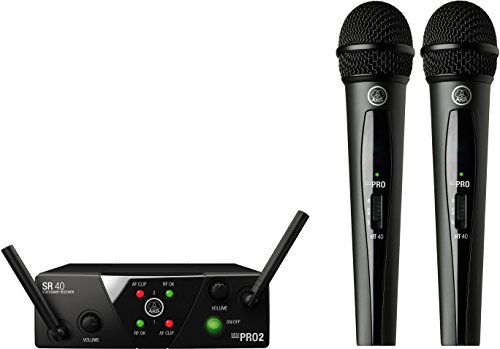
AKG WMS40 Mini2
Karaoke hosts, small classrooms and casual performers who need two inexpensive wireless handhelds in one receiver.
Read the AKG WMS40 Mini2 review →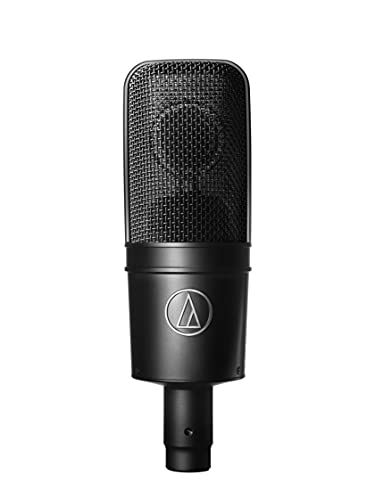
Audio-Technica AT4040
Home and project studios that want one serious large-diaphragm condenser for vocals, acoustic instruments and loud sources alike.
Read the Audio-Technica AT4040 review →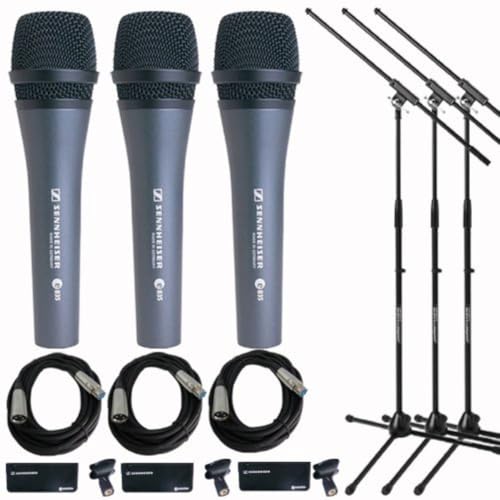
Sennheiser 835
Bands, worship teams and small venues that need three matching dynamic vocal microphones with stands and cables in a single purchase.
Read the Sennheiser 835 review →Questions Buyers Ask
Sennheiser Pro XSW 1-825-A
See the current listing, price and included accessories.
About This Review
Mandrillis Team
The Mandrillis editorial team researches and compares audio and music gear using manufacturer documentation, verified specs and real buyer feedback, so you can make a confident purchase without wading through marketing claims.
Read our full research methodology.