Studio Gear Review
Shure BLX24/PG58 Review: Entry-Level Shure Wireless Done Right
The Shure BLX24/PG58 is the most affordable handheld in the BLX wireless family, matching a BLX4 single-channel receiver with a BLX2 transmitter that carries a PG58 cardioid dynamic capsule. The H9 band version covers 512 to 542 MHz, with up to 14 hours on two AA batteries and about 300 feet of range.
Our Verdict
Research Score 77/100The Shure BLX24/PG58 is the sensible entry point into Shure UHF wireless for anyone whose priority is speech and casual vocals rather than a signature singing microphone. The PG58 capsule is tuned for clear stage vocals and speech with cardioid noise rejection, and the radio side matches the pricier SM58 version: about 300 feet of range, 14 hours on two AA cells, QuickScan setup and up to 12 systems per band. The listing omits frequency response, SPL, weight and receiver connector details, and the H9 band must be legal where you are. For presenters, worship teams and budget-minded performers, it is a reliable lower mid-range choice.
Editorial research score based on published specifications and documented features, not a customer rating or lab test.

Shure
Shure BLX24/PG58
Best for: Speakers, worship teams and casual performers who want dependable Shure wireless at the lowest tier without needing the SM58 capsule.
Skip it if: You are a lead vocalist who wants the SM58 sound, need two handhelds on one receiver, or cannot legally use the 512 to 542 MHz band.
Check Price on AmazonWe may earn a commission at no extra cost to you.
Listing verified: October 2026
Who Should Buy It
Buy it if
- Presenters, teachers and officiants who mostly speak rather than sing
- Small churches and community halls on a strict equipment budget
- Fitness instructors and event hosts who need a simple handheld
- Bands that want a spare wireless handheld for guests and announcements
Skip it if
- You want the SM58 capsule and can stretch to the BLX24/SM58
- You need rechargeable transmitters or digital encryption
- Your region does not authorize UHF operation on the H9 band
Key Specifications
| Type | Single-channel UHF wireless handheld system with integrated PG58 dynamic capsule |
| Polar pattern | Cardioid |
| Frequency response | Not published in listing |
| Connection | Analog UHF wireless, H9 band (512 to 542 MHz); receiver outputs not published in listing |
| Phantom power | Not required (dynamic capsule, battery-powered transmitter) |
| Max SPL or sensitivity | Not published in listing |
| Controls | QuickScan frequency selection on the BLX4 receiver; transmitter controls not published in listing |
| Mount and stand | Microphone clip included; stand not included |
| Weight | Not published in listing |
| Included accessories | BLX4 single-channel receiver, BLX2 handheld transmitter, microphone clip, power supply, two AA batteries, user guide |
Overview
The Shure BLX24/PG58 is the least expensive handheld configuration in Shure's BLX wireless family. It combines a BLX4 single-channel receiver with a BLX2 handheld transmitter whose integrated capsule is the PG58, a cardioid dynamic from Shure's PG line. This listing covers the H9 band version, which operates between 512 and 542 MHz.
Everything needed to run one wireless handheld is in the box: receiver, transmitter, microphone clip, power supply, two AA batteries and a user guide. Shure describes the package as ideal for live performance, with the capsule designed for clear stage vocals and speech during performances and events. The price tier is lower mid-range, below the SM58-equipped sibling.
The decision for most buyers comes down to the capsule. The PG58 is Shure's value vocal capsule, and choosing it over the SM58 saves money while keeping the identical radio platform, battery life and setup process. For speech-heavy applications that trade is often the right one.
Sound Quality
Shure's description of the PG58 capsule is modest and accurate: a cardioid pickup pattern designed for clear stage vocals and speech, helping reduce background noise during performances and events. No frequency response figure is published in the listing. Buyers report a clear, slightly less polished tone than the SM58, with a presence region that helps intelligibility for speakers and a low end that is a little less controlled for close singing.
The PG58 is tuned for live use rather than recording, so its strengths are projection and intelligibility through a PA. For announcements, sermons, lessons and casual singing it does the job without drawing attention to itself. Singers with a strong, trained voice may notice that the SM58 handles dynamics and sibilance with more grace.
The analog UHF link is the same as the rest of the BLX family, and the listing does not publish audio bandwidth or signal-to-noise figures. In normal venue conditions buyers describe the radio as transparent enough that the capsule, not the transmission, determines the sound. That makes the capsule choice the real sonic decision.
Pickup Pattern and Noise Handling
The PG58 is cardioid, picking up from the front and rejecting sound from behind. For a handheld on a stage or at a lectern that is exactly what is needed: the speaker's voice stays prominent while the PA, the audience and nearby monitors are reduced. Shure's listing credits this pattern with helping reduce background noise, which is the practical benefit.
Dynamic capsules tolerate close talking and the occasional bump without distortion, and the PG58 is no exception. Maximum SPL and sensitivity are not published in the listing, but a vocal dynamic of this type is not going to overload from a loud speaker or singer. Handling noise is managed reasonably for the price tier, though buyers report the SM58 version as slightly quieter in the hand.
On the radio side, interference is handled by QuickScan, which searches the H9 band for a clear frequency, and by the system's capacity for up to 12 compatible units per band. That lets a venue run several BLX handhelds without them stepping on each other. Outside interference from television broadcasts in the UHF band is the reason the listing stresses checking local compliance.
Build Quality
The listing describes the BLX family as built on Shure's trusted UHF wireless design but does not state the housing materials or the weight of the transmitter or receiver. The BLX2 handheld is the component that sees daily wear, and its reliance on two AA batteries means a worn battery door is the most likely long-term issue rather than a failing cell pack. Buyers generally describe the handheld as solid for the tier.
The BLX4 receiver is a compact unit with internal antennas and a plastic shell, intended to sit near the mixer rather than in a rack. It is adequate for fixed installs and light transport, and it lacks the metal chassis and detachable antennas of Shure's higher lines. For a system that will travel in a gig bag every week, a small padded case is a wise addition.
The PG58 capsule grille is a standard steel mesh that can be replaced if dented. Durability overall is in line with the lower mid-range tier: dependable for schools, churches and small venues, but not built for the abuse of a touring production.
- BLX2 handheld transmitter with integrated PG58 cardioid dynamic capsule
- BLX4 single-channel receiver with internal antennas
- Two AA batteries, up to 14 hours per the listing
- Microphone clip, power supply and user guide included
- Housing materials and weight not published in listing
Connectivity and Setup
The H9 band spans 512 to 542 MHz, and the listing instructs buyers to verify local compliance before ordering since UHF allocations vary by country and region. Range is quoted as approximately 300 feet, or 100 meters, line of sight, with real-world distance reduced by walls, crowds and metal structures. Placing the receiver where it can see the transmitter gives the most consistent results.
QuickScan handles the frequency selection: press the scan button on the receiver, let it find a clear channel, and match the transmitter. Buyers describe the process as quick enough for a volunteer to manage without training, which is a real advantage in churches and schools where the operator changes weekly.
The receiver's output connectors are not published in the listing, so buyers should confirm whether they need an XLR or quarter-inch cable to reach the mixer or powered speaker. There is no phantom power anywhere in the system, and the receiver runs from the included power supply.
Features, Controls and Extras
This is a single-channel analog system with a short feature list by design. The notable conveniences are the 14 hour battery life from two AA cells, QuickScan frequency selection, and the ability to run up to 12 compatible systems per band. There is no rechargeable dock, no encryption and no software control, which keeps both the price and the learning curve low.
Long AA runtime is the feature that matters most day to day. A full day of events on one pair of cells, with spares costing little and available anywhere, is simpler for volunteers than managing proprietary rechargeable packs. The transmitter's switch layout is not detailed in the listing.
The microphone clip is the only accessory beyond the essentials, so a stand must be purchased separately if the handheld will be used at a lectern or on a stage. No case or pouch is mentioned in the listing.
Use Cases: Vocals, Streaming, Podcasting and Instruments
Speech is the PG58's natural home: presenters, teachers, officiants, fitness instructors and MCs who need to move while talking. The capsule's intelligibility and cardioid rejection suit lecterns, auditoriums and event halls. Casual singing, such as a worship team or a karaoke night, is well within its range.
For lead vocalists who sing every week, the SM58 version is the better investment, since the capsule difference shows most on sustained, dynamic singing. The PG58 remains a capable backup handheld for guest singers or announcements in a band's kit.
Streaming, podcasting and instrument work are not what this system is for. A desk-based creator will be better served by a wired dynamic such as the Samson Q2U or Shure MV7, which avoids batteries and radio frequencies entirely, and instruments need a bodypack system rather than a handheld. The BLX24/PG58 is for voices on the move.
Who Should Buy It
Churches, schools, community halls and small businesses that need one reliable wireless handheld for speaking and light singing are the core audience. The combination of easy setup, AA batteries and a lower mid-range price makes it practical for volunteer-run spaces.
Event hosts, fitness instructors and tour guides who talk more than they sing will find the PG58 capsule perfectly adequate and the savings over the SM58 version worthwhile. Bands that want a spare wireless handheld for guest appearances and crowd interaction get the same radio reliability as the pricier model.
Serious vocalists should step up to the BLX24/SM58, and anyone who needs two handhelds on one receiver should look at the dual-channel BLX88 systems. Buyers outside regions where the 512 to 542 MHz H9 band is authorized need a different band code, as the listing warns.
Alternatives Worth Considering
The Shure BLX24/SM58 is the direct upgrade, identical in every respect except the capsule, and it is the right choice for a lead singer. The Sennheiser XSW 1-825 competes at a similar tier with an evolution series capsule, automatic frequency management and antenna-switching diversity reception.
The AKG WMS40 Mini2 is a lower-cost two-channel alternative for buyers who need two handhelds and can accept a simpler fixed-frequency design. For a wired fallback, a Shure PG58 or SM58 on a long cable costs a fraction of any wireless system and removes the battery and band concerns altogether.
Buyers interested in digital wireless with rechargeable packs should look at compact 2.4 GHz systems such as the Rode Wireless GO, though those are clip-on designs aimed at video rather than handheld stage use. The BLX24/PG58 holds its place as the simplest dependable handheld at its price.
Verdict
The Shure BLX24/PG58 gives buyers the full BLX radio platform, 14 hour AA battery life, 300 foot range and QuickScan setup, with a capsule that is tuned for speech and casual vocals rather than the famous SM58 sound. For presenters, worship teams and volunteer-run venues it is a smart way to spend less without sacrificing reliability.
The score reflects the unpublished specifications, the single-channel analog limit and the band restriction, plus a capsule that trained singers will outgrow. Within its intended audience it is an easy lower mid-range recommendation.
Strengths and Limitations
Strengths
- Lowest-cost route into Shure UHF wireless with a handheld
- 14 hour runtime on two AA batteries per the listing
- Roughly 300 ft line-of-sight range
- QuickScan finds a clear frequency with one press
- Up to 12 systems per band for multi-mic setups
Limitations
- PG58 capsule is a step below the SM58 in refinement
- H9 band availability depends on local regulations
- No published frequency response, SPL or weight
- Single channel and analog only, with no rechargeable option
How We Scored It
Scores reflect published specifications, documented features and value against the alternatives below. They are editorial research scores, not laboratory measurements.
Alternatives to Consider
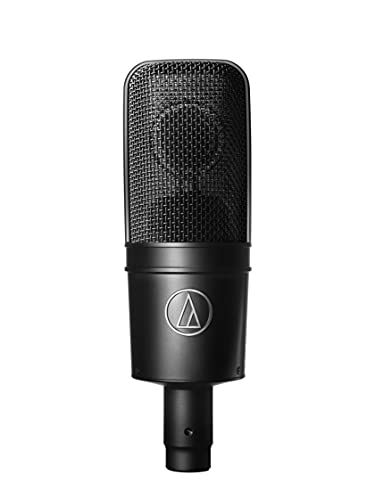
Audio-Technica AT4040
Home and project studios that want one serious large-diaphragm condenser for vocals, acoustic instruments and loud sources alike.
Read the Audio-Technica AT4040 review →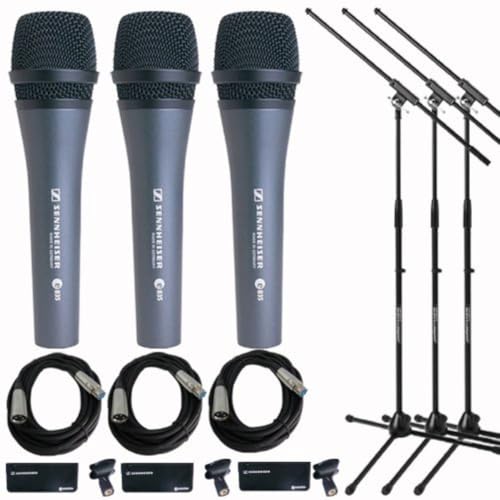
Sennheiser 835
Bands, worship teams and small venues that need three matching dynamic vocal microphones with stands and cables in a single purchase.
Read the Sennheiser 835 review →
Shure Nexadyne 8/S
Touring and club vocalists who want a modern supercardioid dynamic that cuts through a loud mix without heavy processing.
Read the Shure Nexadyne 8/S review →Questions Buyers Ask
Shure BLX24/PG58
See the current listing, price and included accessories.
About This Review
Mandrillis Team
The Mandrillis editorial team researches and compares audio and music gear using manufacturer documentation, verified specs and real buyer feedback, so you can make a confident purchase without wading through marketing claims.
Read our full research methodology.