Studio Gear Review
Yamaha DXR10MKII Review: Compact 1100 W Powered Speaker
The Yamaha DXR10MKII is a 10-inch powered loudspeaker with an 1100 W Class-D amplifier, a 1.75-inch neodymium compression driver, a published 132 dB maximum SPL and a 56 Hz to 20 kHz frequency range. Its 48-bit DSP with D-Contour aims it at bands, DJs and venues in the mid-range tier.
Our Verdict
Research Score 76/100The Yamaha DXR10MKII is a powered loudspeaker rather than an interface or mixer, and it is judged here on an interface-oriented scale with that caveat stated plainly. As a speaker it publishes the numbers that matter: 1100 W of Class-D power, 132 dB maximum SPL, a 10-inch woofer paired with a 1.75-inch neodymium compression driver, a 56 Hz to 20 kHz response and 48-bit DSP with D-Contour dynamic control. That is a strong specification for a compact cabinet in the mid-range tier. The listing omits input connectors, any onboard mixer functions, outputs, weight and dimensions, so buyers must confirm those separately. For anyone who already owns a mixer and needs a loud, portable main or monitor, it is a well-specified choice. It scores 76 out of 100.
Editorial research score based on published specifications and documented features, not a customer rating or lab test.

Yamaha
Yamaha DXR10MKII
Best for: Bands, DJs and venues that want a compact powered speaker with high output and onboard DSP, used as a main or a monitor with a separate mixer.
Skip it if: You need a mixer, an audio interface or microphone preamps, because the Yamaha DXR10MKII is a loudspeaker and the listing does not describe any mixing features.
Check Price on AmazonWe may earn a commission at no extra cost to you.
Listing verified: October 2026
Who Should Buy It
Buy it if
- Bands and solo performers who need a loud, portable main speaker
- DJs playing small and medium rooms who want 132 dB from a 10-inch box
- Venues and worship rooms adding monitors or fill speakers
- Owners of a mixer such as the Yamaha MG10XU who need matching powered speakers
Skip it if
- You are shopping for a recording interface or USB mixer
- You need a published input panel and connector list before buying
- Deep bass below 56 Hz is required without a subwoofer
Key Specifications
| Type | 10-inch two-way powered loudspeaker with 1100 W Class-D amplifier and 48-bit DSP |
| Inputs | Not published in listing |
| Outputs | Not published in listing |
| Preamps | Not published in listing |
| Resolution | 48-bit DSP processing; converter sample rate not published in listing |
| Phantom power | Not published in listing |
| Connection | Not published in listing |
| Monitoring | Not published in listing |
| Bundled software | Not published in listing |
| Included accessories | Not published in listing |
Overview
The Yamaha DXR10MKII is a 10-inch two-way powered loudspeaker with an 1100 W Class-D amplifier built into the cabinet. It is the second generation of Yamaha's DXR10, updated according to the listing with a 1.75-inch neodymium compression driver and a high-output 10-inch low-frequency unit. The finish is matte black.
This product is a speaker, not an audio interface or mixer. It does not record to a computer and the listing does not describe microphone preamps or mixing features, so several categories in this review format are assessed on what the speaker offers rather than on functions it was never designed to provide. Where a category does not apply, the text says so.
The DXR10MKII lands in the mid-range tier. Within that bracket it competes with other compact powered speakers from established professional brands, and its case is built on high output, onboard DSP and Yamaha's record in live sound.
Preamps and Sound Quality
Preamp specifications are not published in the listing, and for a powered speaker the relevant measure is instead the acoustic performance. The listing rates maximum SPL at 132 dB, which is very high for a 10-inch cabinet and places the DXR10MKII among the louder compact speakers in its class. Frequency response is published as 56 Hz to 20 kHz.
The driver complement consists of a high-output 10-inch low-frequency unit and a 1.75-inch neodymium high-frequency compression driver. A 1.75-inch diaphragm is larger than the 1-inch units found in many compact boxes, and in general terms a larger compression driver crosses over lower and handles vocal midrange with less strain. The neodymium magnet keeps weight down.
Processing is handled by what the listing calls ultra-precise 48-bit DSP, which manages the crossover, protection and equalization. The built-in D-Contour intelligent dynamic control adjusts the tonal balance according to output level, so the speaker keeps a consistent character whether it is running quietly as a monitor or at full output as a main.
Inputs, Outputs and Routing
Input connectors, input count and any onboard mixing are not published in the listing. Powered speakers in this class usually accept a line-level feed from a mixer and sometimes offer a microphone input, but the DXR10MKII listing confirms none of this. Buyers should check the rear panel in the manufacturer documentation.
Outputs are not described either, which means a link or through connection for daisy-chaining a second speaker is unconfirmed. For a stereo pair fed from a mixer with two outputs this is not critical, but for mono systems that chain several boxes it matters.
Routing in the sense of a mixer does not apply. The signal path is a single input to the DSP, the amplifier and the two drivers. The D-Contour processing and any speaker modes are internal routing choices rather than user-configurable buses.
Features, Monitoring and Software
The 48-bit DSP is the feature headline. Beyond the crossover and protection it enables D-Contour, which Yamaha describes as intelligent dynamic control. In practice this is a loudness-aware equalization that lifts low and high frequencies at modest volume and flattens the curve as output rises, keeping the speaker balanced across its range.
The listing presents the DXR10MKII as suitable for a wide range of applications, which for a 10-inch box typically means front of house in small rooms, stage monitoring and fill duty in larger systems. The compact construction and high SPL rating support that versatility, and the matte black finish helps a cabinet disappear on a dark stage or against a wall in a fixed installation.
Monitoring, bundled software and included accessories are not described. There is no mention of a computer connection or configuration app, and no cover or stand adapter is listed. Any such extras would need to be confirmed or purchased separately.
- 1100 W Class-D amplifier
- 132 dB maximum SPL
- 10-inch LF unit and 1.75-inch neodymium compression driver
- 56 Hz to 20 kHz frequency response
- 48-bit DSP with D-Contour intelligent dynamic control
Build, Design and Controls
The listing describes the DXR10MKII as compact and portable yet capable of high SPL, which summarizes the design goal. The neodymium compression driver contributes to a lighter cabinet than a comparable ferrite design, although the actual weight and the dimensions are not published.
Cabinet material, handle placement, pole socket and the presence of monitor angles are not stated. These features determine how the speaker lives on stage and on a stand, and Yamaha's DXR line is generally regarded as road-ready, but the listing provides no specific construction details. Buyers who need a particular pole mount or wall bracket should confirm compatibility in the manufacturer documentation.
Controls on the rear panel, including level, D-Contour mode selection and any EQ switches, are not described. The matte black finish is the only cosmetic detail published, and it suits both stage use and discreet installation.
Connectivity, Drivers and Latency
Connectivity details are absent from the listing. Input connector types, a through output and any network or remote control options are unconfirmed, which keeps the connectivity score modest despite the strength of the speaker's acoustic specification.
There are no computer drivers to consider because the DXR10MKII is not a computer audio device. The 48-bit DSP runs internally, and the only latency question is the small processing delay through the speaker, which is not published. For single-speaker or stereo-pair use this is not a practical concern.
Buyers integrating the speaker into a larger system with delays or subwoofers should obtain the processing latency from the manufacturer so that alignment can be set correctly. For a band or DJ running a simple pair, plugging in a mixer output is the extent of the connectivity task.
Setup and Daily Use
In daily use the DXR10MKII is set on a stand or a stage, fed from a mixer output and powered on. The D-Contour processing handles tonal balance automatically as the operator raises or lowers the level, and the 132 dB rating means the speaker rarely runs near its limit in small and medium rooms.
For bands the speaker can serve as a main for a trio or quartet in a bar, or as a floor monitor at a larger show where the mains are bigger boxes. DJs get a compact pair that goes loud enough for a house party or a small club night, with the 56 Hz low end covering most music without a subwoofer in modest spaces.
Transport is simplified by the compact construction and the neodymium driver. Without a published weight it is hard to be specific, but the design brief clearly prioritizes portability alongside output.
Who Should Buy It
Bands and solo performers who need a loud, portable main speaker are the primary audience. The high SPL and the 1.75-inch compression driver make it suitable for vocal-heavy acts where clarity at volume matters. Solo acoustic performers can also run a single cabinet as a compact mono system with a small mixer.
DJs in small and medium rooms, and venues or worship spaces adding monitors or fills, are also well matched. Owners of a compact mixer such as the Yamaha MG10XU who need powered speakers to complete a PA will find the DXR10MKII a natural partner.
Anyone searching for an audio interface, a USB mixer or microphone preamps should look elsewhere, because the DXR10MKII provides none of those. Buyers who need deep bass below 56 Hz for electronic music at high volume should budget for a subwoofer.
Alternatives Worth Considering
Yamaha's own DBR12 is a step up in cone size, with a 12-inch woofer, 1000 W and a 131 dB rating according to the bundle listings that include it. It extends lower in the bass and suits larger rooms, while the DXR10MKII is more compact and rates slightly higher in maximum SPL.
A passive speaker driven by a dedicated amplifier such as the Yamaha PX10 is the traditional alternative. That approach separates the amplifier from the cabinet, which some installers prefer, but it adds a rack and cabling that a powered speaker eliminates.
For buyers whose real goal is recording or mixing, the Focusrite Scarlett 2i2 and Universal Audio Volt 2 cover desktop interface duty, and the Yamaha MG10XU covers compact analog mixing with USB. Those products complement a powered speaker rather than replace it.
Verdict
The Yamaha DXR10MKII is a well-specified compact powered speaker: 1100 W of Class-D power, 132 dB maximum SPL, a 10-inch woofer with a 1.75-inch neodymium compression driver, a 56 Hz to 20 kHz response and 48-bit DSP with D-Contour. In the mid-range tier those figures are competitive and the Yamaha pedigree adds confidence.
On an interface-oriented scale it scores 76 out of 100, with points lost for the categories a speaker was never meant to fill and for the listing's silence on connectors, weight and accessories. Judged as a speaker for bands, DJs and venues with a separate mixer, it is an easy recommendation pending confirmation of the rear panel details.
Strengths and Limitations
Strengths
- 1100 W Class-D amplification in a compact 10-inch cabinet
- 132 dB maximum SPL rated in the listing
- 1.75-inch neodymium compression driver and high-output 10-inch woofer
- Published frequency response of 56 Hz to 20 kHz
- 48-bit DSP with D-Contour intelligent dynamic control
- Matte black finish for discreet stage or install use
Limitations
- Listing does not publish input connectors, mixer functions or outputs
- Not an audio interface or mixer, so recording criteria do not apply
- Weight and dimensions are not stated
- No accessories, covers or software listed
How We Scored It
Scores reflect published specifications, documented features and value against the alternatives below. They are editorial research scores, not laboratory measurements.
Alternatives to Consider
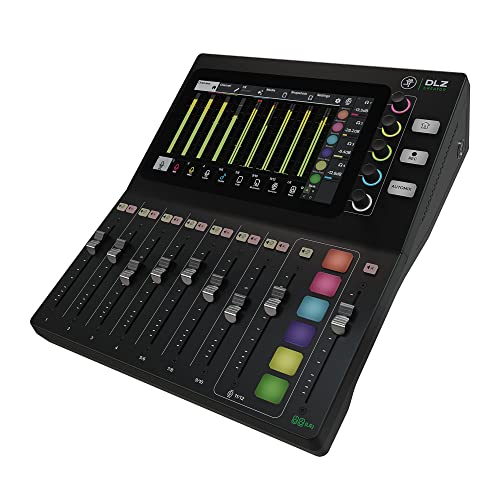
Mackie DLZ
Podcasters and streamers of any experience level who want a touchscreen mixer that manages levels automatically for up to four voices and records to SD card or USB-C.
Read the Mackie DLZ review →
Mackie ProFX22v3 22-Channel
Bands, venues and streamers who need many high-gain preamps in an analog desk with 192 kHz USB recording and dual return mixes.
Read the Mackie ProFX22v3 22-Channel review →
Yamaha EMX5 12-input
Community groups, schools, worship teams and solo performers who want one box that mixes 12 inputs and powers a pair of passive speakers without a separate amplifier rack.
Read the Yamaha EMX5 12-input review →Questions Buyers Ask
Yamaha DXR10MKII
See the current listing, price and included accessories.
About This Review
Mandrillis Team
The Mandrillis editorial team researches and compares audio and music gear using manufacturer documentation, verified specs and real buyer feedback, so you can make a confident purchase without wading through marketing claims.
Read our full research methodology.