Studio Gear Review
Yamaha MG20XU 20-Input 6-Bus Review: Big Analog Desk With USB
The Yamaha MG20XU 20-Input 6-Bus is a large analog mixing console with a USB audio interface and SPX digital effects. The listing highlights discrete Class-A D-PRE preamps with an inverted Darlington circuit, 3-band EQ with high-pass filters, 1-knob compressors and a rugged powder-coated metal chassis, positioning it in the upper mid-range tier for bands and venues.
Our Verdict
Research Score 80/100The Yamaha MG20XU 20-Input 6-Bus is the full-size analog answer for bands and venues that have outgrown compact mixers. Twenty inputs and six buses provide room for a complete band plus monitor mixes, the D-PRE preamps with their inverted Darlington circuit are well regarded, and the 1-knob compressors, 3-band EQ with high-pass filters and SPX effects handle most live needs without outboard gear. The powder-coated metal chassis is built for transport. The listing is light on specifics, leaving preamp count, phantom power, USB resolution and outputs unstated, which holds the score down. Buyers who confirm those details with the manufacturer will find a dependable analog workhorse in the upper mid-range tier. It scores 80 out of 100.
Editorial research score based on published specifications and documented features, not a customer rating or lab test.

Yamaha
Yamaha MG20XU 20-Input 6-Bus
Best for: Bands, rehearsal studios and small venues that want a large analog console with quality preamps, compressors and onboard effects, plus USB for recording or streaming the mix.
Skip it if: You need scene recall, multitrack USB recording or confirmed specifications for preamp count and resolution before buying.
Check Price on AmazonWe may earn a commission at no extra cost to you.
Listing verified: October 2026
Who Should Buy It
Buy it if
- Full bands with drums, guitars, keys and several vocals
- Rehearsal spaces and community venues that prefer analog controls
- Worship teams that need six buses for monitors and overflow feeds
- Streamers running many sources who want hardware compression and EQ
Skip it if
- You need to recall settings between different events
- You record each channel to a separate track over USB
- Your input count is small enough for a 10 or 12 channel mixer
Key Specifications
| Type | 20-input, 6-bus analog mixing console with USB audio interface and SPX digital effects |
| Inputs | 20 inputs; microphone preamp count and connector breakdown not published in listing |
| Outputs | 6 buses; output connector types and count not published in listing |
| Preamps | Discrete Class-A D-PRE preamps with inverted Darlington circuit; number not published in listing |
| Resolution | Not published in listing |
| Phantom power | Not published in listing |
| Connection | USB audio interface; resolution, channel count and driver details not published in listing |
| Monitoring | Not published in listing |
| Bundled software | Not published in listing |
| Included accessories | Not published in listing |
Overview
The Yamaha MG20XU 20-Input 6-Bus is the largest console in Yamaha's MG analog line to carry both a USB audio interface and SPX digital effects. Twenty inputs and six buses make it a full-band desk rather than a desktop mixer, suited to rehearsal rooms, small venues and worship spaces where the input list runs past what a 10 or 12 channel console can handle.
On paper, the listing focuses on the sound-shaping tools that define the MG series: discrete Class-A D-PRE preamps with an inverted Darlington circuit, 3-band EQ with high-pass filters, 1-knob compressors and the SPX effects engine. It also emphasizes the rugged powder-coated metal chassis. Beyond those points the listing is sparse, and many practical specifications are left unstated.
The console sits in the upper mid-range tier. That places it against entry-level digital consoles, which offer scene recall and multitrack USB but demand a different workflow. The MG20XU's case rests on analog immediacy and Yamaha's preamp reputation.
Preamps and Sound Quality
The D-PRE preamps are the centerpiece of the MG20XU. The listing describes them as studio-grade discrete Class-A designs using an inverted Darlington circuit, and credits them with fat, natural bass and smooth highs. Marketing language aside, the D-PRE topology is a consistent strength across the MG family and is widely regarded as cleaner than typical analog mixer preamps.
The number of microphone preamps is not published in the listing. On a 20-input console some inputs are stereo line pairs, so the mic preamp count is lower than twenty, and buyers planning a large microphone list should confirm the exact figure in the manufacturer documentation. Gain range and noise specifications are likewise unstated here.
Dynamics and tone shaping are well covered. The 1-knob compressors simplify vocal and bass control, and the listing credits them with livelier guitars, punchier bass, a tighter snare and cleaner vocals. The 3-band EQ and high-pass filters on channels allow low-end rumble to be removed before it muddies the mix.
Inputs, Outputs and Routing
Twenty inputs give the MG20XU enough capacity for a drum kit with several microphones, bass, two guitars, keyboards and multiple vocals. The split between mono microphone channels and stereo line channels is not stated in the listing, which matters for planning, so the channel layout should be verified before purchase.
Six buses are the second defining number. In practice these are used as group buses for submixing drums or vocals, or as auxiliary sends for monitor wedges and effects. For a worship room or small venue, six buses allow a main mix plus several monitor mixes and a feed to a recorder or overflow room.
The USB audio interface sends a mix to a computer and returns playback. Its resolution and channel count are not published in the listing, and output connectors for the main and bus outputs are not described either. Buyers who need specific connector types for an installed system should consult the full specification sheet.
Features, Monitoring and Software
SPX digital effects are built into the console, offering reverbs, delays and similar processing on an internal send. Having effects onboard means a band or venue does not need an external processor for vocal reverb, which simplifies the rack and the cabling at every gig. The specific program count is not stated in this listing.
The 1-knob compressors and 3-band EQ with high-pass filters constitute the per-channel feature set. The listing credits the compressors with cleaning up guitars, bass, snare and vocals in one move, which is the intended use case for volunteer or self-mixing operators who do not want to manage threshold and ratio separately.
Monitoring facilities such as a headphone output, control room outputs or a solo bus are not published in the listing, nor is any bundled software. Yamaha often includes a DAW download with its USB mixers, but this listing does not confirm it. The MG20XU is a manual console, so there is no scene memory or recall.
- 20 inputs and 6 buses for full band mixing
- Discrete Class-A D-PRE preamps with inverted Darlington circuit
- 3-band EQ and high-pass filters
- 1-knob compressors
- SPX digital effects
- USB audio interface for recording and playback
Build, Design and Controls
Yamaha specifies a rugged, impact-resistant, powder-coated metal chassis in the listing, which is a notable commitment for a console in this tier. A metal frame protects against the knocks of regular loading and resists the flexing that plastic mixers suffer when covered in cables. Weight and dimensions are not published in the listing.
Control is entirely analog and physical, with one knob per function across twenty channels. This produces a large surface, and the console needs a table or case of corresponding size. The advantage is that nothing is hidden in a menu, which suits environments where different operators handle the desk.
Fader type, knob quality and panel labeling are not described in the listing. Yamaha's MG consoles are generally considered well finished for their class, but buyers who intend to tour the desk should assess the surface in person or through detailed manufacturer images.
Connectivity, Drivers and Latency
USB is the only computer connection described, and the listing provides no detail on its resolution, channel count, connector type or driver requirements. Based on the broader MG series it is reasonable to expect a stereo interface rather than multitrack, but that is an inference rather than a published fact for this listing.
Latency figures are not stated. For live use this is immaterial because the console operates entirely in the analog domain and the USB path only carries a recording feed or playback. Operators who want to stream a service or a show will typically route the USB output into their streaming software.
The connectivity score of 7 reflects the presence of USB and six buses balanced against the number of unpublished details. A console at this tier deserves a documented interface specification, and buyers should obtain it before planning a recording or streaming workflow around the desk.
Setup and Daily Use
Setting up the MG20XU means patching microphones and instruments across the twenty inputs, engaging high-pass filters on vocal and guitar channels, and assigning channels to buses for monitors or subgroups. Once the layout is labeled, it tends to stay fixed in a rehearsal room or installed venue.
During a performance the operator mixes with faders and knobs in direct view, reaching for the 1-knob compressor when a vocalist gets loud and the SPX send for reverb. Because there is no recall, a different band or event requires a manual reset, which is the main workflow cost compared with a digital console.
For recording or streaming, a computer on USB captures the mix. Rehearsal rooms often leave a laptop permanently connected for this purpose. The metal chassis means the desk tolerates being left in place under constant use.
Who Should Buy It
Full bands with a drum kit, bass, guitars, keyboards and several vocalists will use the twenty inputs and six buses to good effect. Rehearsal spaces and community venues that host different acts benefit from a layout anyone can understand at a glance.
Worship teams that need multiple monitor mixes and an overflow feed are well served by six buses. Streamers with many hardware sources who want real EQ and compression on each channel, rather than software plug-ins, are another fit.
Anyone who needs scene recall between events, or who wants each channel recorded to its own track, should look at a digital console in the same tier. Buyers with a short input list will pay for channels they never use and should consider a 10 or 12 channel MG mixer instead.
Alternatives Worth Considering
The Yamaha MG10XU shares the D-PRE preamps, 1-knob compressors and SPX effects in a 10-channel format and costs far less. It is the right choice when four microphone channels and a few stereo inputs are enough, and its listing publishes a 24-bit/192 kHz USB specification.
A compact digital console such as the Yamaha DM3 offers 16 preamps, scene recall and an 18x18 USB interface in a much smaller footprint at a similar or slightly higher tier. It trades the one-knob-per-function surface for a touchscreen, which some operators prefer and others do not.
For a buyer whose real need is recording rather than live mixing, a multichannel interface or a desktop unit such as the Focusrite Scarlett 2i2 or MOTU M2 captures separate tracks with low-latency drivers. Those devices do not mix a live room, so the choice depends on which job matters more.
Verdict
The Yamaha MG20XU 20-Input 6-Bus is a traditional analog workhorse with Yamaha's respected D-PRE preamps, practical 1-knob compressors, onboard SPX effects and a metal chassis built for years of service. For bands and venues that prefer physical control and have a long input list, it does the job without fuss.
The listing's missing preamp count, phantom power, USB resolution and output details prevent a higher score, and the lack of recall is an inherent limit of the analog format. Buyers who confirm the specifications with the manufacturer will find a solid console in the upper mid-range tier. It scores 80 out of 100 in this research review.
Strengths and Limitations
Strengths
- 20 inputs and 6 buses cover a full band with monitor mixes
- Discrete Class-A D-PRE preamps with inverted Darlington circuit
- 3-band EQ and high-pass filters on channels
- 1-knob compressors for fast dynamics control
- SPX digital effects built in
- Rugged impact-resistant powder-coated metal chassis
Limitations
- Listing does not state preamp count, phantom power or output connectors
- USB resolution and channel count are not published
- No bundled software or accessories listed
- Large analog desk needs more space than a digital console of similar capacity
- Upper mid-range tier without scene recall
How We Scored It
Scores reflect published specifications, documented features and value against the alternatives below. They are editorial research scores, not laboratory measurements.
Alternatives to Consider

Rode RODECaster Pro II
Podcast teams of up to four who want high-gain preamps with hardware processing and a ready supply of microphones at a lower outlay than premium mic bundles.
Read the Rode RODECaster Pro II review →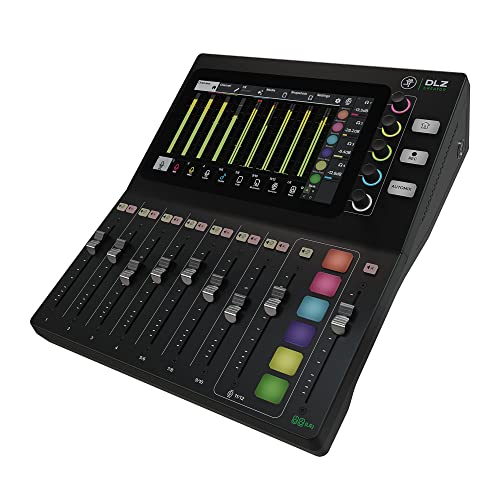
Mackie DLZ
Podcasters and streamers of any experience level who want a touchscreen mixer that manages levels automatically for up to four voices and records to SD card or USB-C.
Read the Mackie DLZ review →
Yamaha DXR10MKII
Bands, DJs and venues that want a compact powered speaker with high output and onboard DSP, used as a main or a monitor with a separate mixer.
Read the Yamaha DXR10MKII review →Questions Buyers Ask
Yamaha MG20XU 20-Input 6-Bus
See the current listing, price and included accessories.
About This Review
Mandrillis Team
The Mandrillis editorial team researches and compares audio and music gear using manufacturer documentation, verified specs and real buyer feedback, so you can make a confident purchase without wading through marketing claims.
Read our full research methodology.