Epiphone Embassy Bass vs Jackson JS3P Concert Bass
Quick Verdict
The Epiphone Embassy Bass scores 76 to the Jackson JS3P Concert Bass's 73. Choose the Epiphone if you want a known 34 inch mahogany neck and a simple master volume, tone, and blend control layout. Its body wood and pickups are not published. Choose the Jackson if you want a known poplar body with burl top, maple neck, amaranth fingerboard, and two humbucking pickups. Its scale length and controls are not published. Both omit bridge, tuners, and included accessories. The Epiphone gives you more certainty about scale and control layout; the Jackson gives you more certainty about body and pickups. Decide which missing details matter less to you.

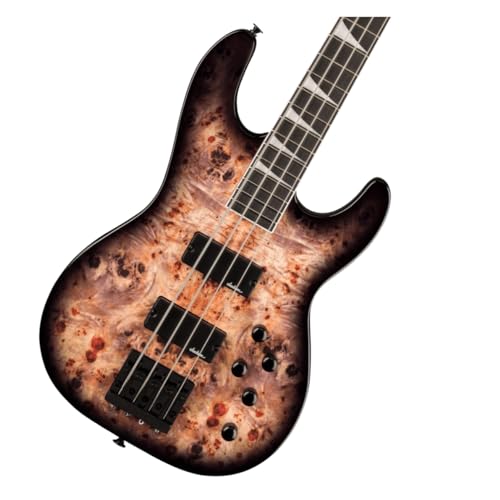
| Spec | Epiphone Embassy Bass | Jackson JS3P Concert Bass |
|---|---|---|
| Body | Not published in listing | Poplar with poplar burl top |
| Neck and fingerboard | 34-inch scale mahogany neck; fingerboard material not published in listing | Maple neck, amaranth fingerboard |
| Scale length | 34 inches | Not published in listing |
| Strings | Not published in listing | 4-string |
| Pickups | Not published in listing | 2 humbucking pickups |
| Controls | Master volume, tone control, pickup blend knob | Not published in listing |
| Bridge | Not published in listing | Not published in listing |
| Tuners | Not published in listing | Not published in listing |
| Finish | Wanderlust Green Metallic | Transparent Black Burst |
| Included accessories | Not published in listing | Not published in listing |
Body, Neck and Playability
The Epiphone Embassy Bass has a listed 34 inch scale mahogany neck, but the fingerboard material is not published. The body wood is also not stated in the listing. The Jackson JS3P Concert Bass lists a maple neck and amaranth fingerboard with a poplar body and poplar burl top, but its scale length is not published. On playability, Epiphone scores 24 out of 30 while Jackson scores 22 out of 30.
The known 34 inch scale on the Epiphone is a familiar full scale length for bass players. The listing also mentions 20 medium jumbo frets, but the Jackson listing does not state fret count or size. Without a scale length for the Jackson, players cannot compare string tension or fret spacing directly. The Epiphone therefore offers more published information about neck dimensions for playability.
Jackson's maple neck and amaranth fingerboard are both specified, which gives some idea of neck feel, but the unknown scale length is a significant gap. The Epiphone's mahogany neck is a known tonewood and standard spec. Buyers who want to know the scale before buying will find the Epiphone easier to evaluate.
Pickups and Tone
The Epiphone Embassy Bass does not publish its pickup type, so no direct tonal comparison is possible from the listing. The Jackson JS3P Concert Bass lists two humbucking pickups. In the tone and pickups subscore, both basses score 18 out of 25, suggesting the scoring system treats them as equal despite the differing amount of published pickup information.
The Epiphone has a master volume, a tone control, and a pickup blend knob. A blend knob usually implies more than one pickup, but the listing does not confirm the pickup type or configuration. The Jackson does not publish its control layout, so users cannot compare EQ options or switching. The Jackson verdict from the listing indicates a punchy tone suitable for rock and metal, but this is not verified by in-person testing.
For tone-conscious buyers, Jackson gives a clear pickup type, while Epiphone gives a clear control set. Neither listing provides enough detail to make a confident prediction about actual tone. If you need to know you are getting humbuckers, the Jackson is the only one that states that. If you need to know the exact knobs before buying, the Epiphone is the only one with published controls.
Hardware and Electronics
Both basses have incomplete hardware information. The Epiphone Embassy Bass does not state bridge or tuner details. The Jackson JS3P Concert Bass also omits bridge and tuner details. On electronics, the Epiphone lists master volume, tone, and pickup blend controls. The Jackson does not publish its control layout.
In the hardware and electronics subscore, Epiphone scores 7 out of 10 and Jackson scores 6 out of 10. This small difference likely reflects the Epiphone's published control set compared to the Jackson's completely unknown electronics. Neither bass gives bridge or tuner materials, brands, or designs.
Included accessories are not stated for either model. Buyers cannot evaluate tuning stability or bridge adjustability from the listings. The missing hardware details are a shared weakness. If having at least a known control layout matters to you, the Epiphone has a slight edge.
Build Quality and Finish
The Epiphone Embassy Bass has a Wanderlust Green Metallic finish. Its body wood is not published. The Jackson JS3P Concert Bass has a Transparent Black Burst finish over a poplar body with a poplar burl top. Both finishes are visually distinctive and likely appeal to different aesthetic tastes.
The build and materials subscore is 12 out of 15 for both basses. Jackson gives more body material information by listing poplar and a burl top. Epiphone gives neck material but keeps the body wood unspecified. Neither listing mentions binding, fret material, or other finish quality details.
The Jackson's transparent burst and burl top are a known visual feature. The Epiphone's metallic green is described as eye-catching in its pros. For buyers who want to know what the body is made of, the Jackson is the only one that states it. For buyers who prefer a solid metallic color over a wood grain burst, the Epiphone offers that option.
Setup Out of the Box
Neither the Epiphone Embassy Bass nor the Jackson JS3P Concert Bass lists any setup details. No factory setup procedure is described in either listing. The Epiphone does not state included accessories, and the Jackson does not state included accessories. Buyers should not assume either instrument arrives ready to play without adjustment.
The Jackson product summary advises avoiding this bass if you prefer a guaranteed setup. The Epiphone listing does not mention setup either, but its higher overall score does not account for setup quality. Both basses may require a professional setup after purchase to reach optimal playability.
Because the listings omit setup and accessory information, buyers should plan for potential additional costs like a gig bag or case and a setup by a technician. Neither bass is documented as arriving with any included tools or adjustment wrenches. This is a common gap for instruments in this lower mid range category.
Daily Use and Practice
For daily use, the Epiphone Embassy Bass has a known 34 inch scale and a simple three knob control layout. The master volume, tone, and blend controls are easy to understand and adjust quickly during practice. The 20 medium jumbo frets are a familiar spec for many players. The Jackson's control layout is not published, making it harder to predict how quick adjustments will work.
The Jackson does list its body, neck, and fingerboard materials, which can affect comfort during long practice sessions. The poplar body is often associated with lighter weight, but the listing does not state the instrument's actual weight. The Epiphone's body wood is not published, so weight and balance are unknown. Neither bass lists included practice accessories such as a strap, cable, or bag.
Both basses score 8 out of 10 for value, so they are similarly priced for what they offer. The Epiphone's known scale length makes it slightly more predictable for daily practice if you are used to a standard long scale bass. The Jackson's missing scale length may require more adjustment from players who know their preferred string feel.
Versatility and Styles
The Epiphone Embassy Bass has a pickup blend knob, which suggests it can blend between two pickups, but the pickup type is not published. The Jackson JS3P Concert Bass has two humbucking pickups, which are commonly associated with thicker, higher output tones suitable for rock, metal, and heavier styles. Both basses score 7 out of 10 for versatility.
The Jackson is specified as a 4 string bass. The Epiphone does not state its string count in the listing. A 4 string bass is standard for many genres, but the Epiphone's string configuration remains unknown. The Jackson's Transparent Black Burst finish and burl top give it a modern, stage ready look for rock players. The Epiphone's Wanderlust Green Metallic may appeal more to alternative, indie, or visually bold players.
Without pickup specifications for the Epiphone, its stylistic range is hard to assess. The blend control could allow for tonal variation, but that remains speculative without knowing the pickups. The Jackson's dual humbuckers are a known foundation for punchy tones. For players who want a bass that looks like a modern rock instrument, the Jackson has a more defined visual identity. For those who want a simpler look and control set, the Epiphone fits better.
The Deciding Question
The deciding question is which missing details matter less. The Epiphone Embassy Bass gives you a known 34 inch scale, mahogany neck, fret count, and control layout. It does not give body wood, pickup type, bridge, tuners, or included accessories. The Jackson JS3P Concert Bass gives you a known poplar body, burl top, maple neck, amaranth fingerboard, and two humbucking pickups. It does not give scale length, control layout, bridge, tuners, or included accessories.
If knowing the scale length and control set is more important to your buying decision, the Epiphone is the better choice. It also has a slightly higher overall score of 76 versus the Jackson's 73. If knowing the body wood and pickup type is more important, the Jackson is the clearer choice. Both share the same missing hardware details, so neither wins on bridge or tuners.
The two basses are close in overall score and price point. The Epiphone's advantage is in published playability and electronics controls. The Jackson's advantage is in published body and neck materials plus pickup type. Decide which set of unknown specs you are more willing to overlook before making the purchase.
Who Should Buy Which
Buy the Epiphone Embassy Bass if you want a familiar 34 inch scale mahogany neck and a simple master volume, tone, and pickup blend knob. This bass suits players who prefer a bold Wanderlust Green Metallic finish and do not mind that the body wood and pickups are not published. It is a good fit for those who want straightforward controls and a known fret count of 20 medium jumbo frets.
Buy the Jackson JS3P Concert Bass if you want a known poplar body with poplar burl top, a maple neck with amaranth fingerboard, and two humbucking pickups. This bass suits budget conscious players who like the Transparent Black Burst finish and can accept the unknown scale length and control layout. It is a good fit for rock and metal oriented players who want a 4 string with a dual humbucker foundation.
Avoid the Epiphone if you require full published pickup and body specs or an included accessory bundle. Avoid the Jackson if you need full published specs on scale length, controls, bridge, and tuners, or a guaranteed setup. Both basses score within three points of each other, so the final choice comes down to which known features align with your priorities and which missing details you can tolerate.
Epiphone Embassy Bass
Pros
- 34-inch scale mahogany neck is a familiar and comfortable spec
- Straightforward control layout with master volume, tone, and blend knob
- Eye-catching Wanderlust Green Metallic finish
- Lower mid-range price tier makes it accessible
- Epiphone brand heritage and reputation for value
- 20 medium jumbo frets offer versatile playability
Cons
- Listing omits pickup type and body wood, limiting pre-purchase detail
- Limited control set may not satisfy players needing onboard EQ
- Not published info on bridge and tuners raises hardware uncertainty
- Lack of included accessories means case or bag likely separate
- Tone character is unknown without pickup specifications
Jackson JS3P Concert Bass
Pros
- Two humbucking pickups
- Poplar burl top with transparent black burst
- Maple neck with amaranth fingerboard
- Lower mid range price
- Recognizable Jackson brand
Cons
- Scale length not published
- Control layout not published
- Bridge and tuner details omitted
- Included accessories not stated
Who Should Buy Each
Epiphone Embassy Bass
- Beginner to intermediate players who want a straightforward bass
- Fans of Epiphone designs who like the Embassy silhouette
- Players who prefer a master volume, tone, and blend layout
- Musicians who prioritize finish and simple operation over advanced EQ
Jackson JS3P Concert Bass
- Players moving up from a starter bass who want a known brand
- Rock and metal bassists seeking a dual humbucker four string
- Buyers who prioritize a striking transparent black burst finish
- Budget conscious players who can handle a basic setup
Quick Decision Guide
| If you want a published 34 inch scale length and a simple three knob control set | Choose Epiphone Embassy Bass |
| If you prefer a known body wood and dual humbucking pickups | Choose Jackson JS3P Concert Bass |
| If you value visual finish with a poplar burl top and transparent black burst | Choose Jackson JS3P Concert Bass |
| If having a master volume, tone, and pickup blend knob is more important than knowing pickup type | Choose Epiphone Embassy Bass |
| If you are comfortable with unknown scale length but want listed maple neck and amaranth fingerboard | Choose Jackson JS3P Concert Bass |
FAQ
About This Comparison
Mandrillis Team
The Mandrillis editorial team researches and compares audio and music gear using manufacturer documentation, verified specs and real buyer feedback, so you can make a confident purchase without wading through marketing claims.
Read our full research methodology.
We may earn a commission at no extra cost to you.