Guild DS-240 vs Martin LX1E
Quick Verdict
The Guild DS-240 scores slightly higher at 78 versus the Martin LX1E at 75. Choose the Guild if you want a full size sloped shoulder dreadnought with a solid Sitka top, mahogany back and sides, a C-shaped neck, and no electronics. It is best for intermediate strummers who value a traditional look and purely acoustic tone. Choose the Martin LX1E if you need a compact, travel-friendly guitar with a solid spruce top and the possibility of acoustic electric use, though the pickup details are not published. The Martin includes a gig bag and suits casual practice and travel. Neither listing publishes full specs, so confirm nut width, scale length, and electronics before buying if those matter.

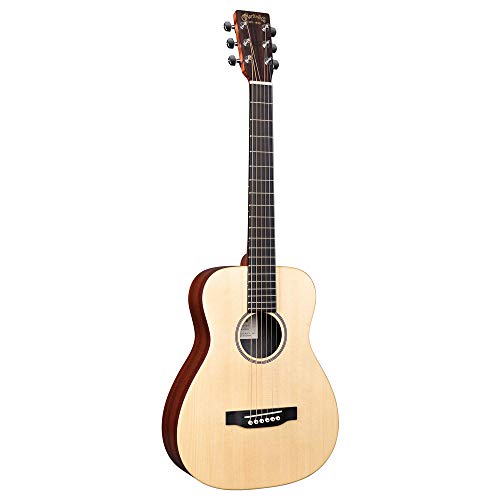
| Spec | Guild DS-240 | Martin LX1E |
|---|---|---|
| Body shape | Sloped Shoulder Dreadnought | Not published in listing |
| Top | Solid Sitka Spruce | Solid Sitka spruce |
| Back and sides | Mahogany | Mahogany high-pressure laminate (HPL) |
| Neck and fingerboard | C-shaped profile, rosewood fingerboard and bridge | Not published in listing |
| Scale length | Not published in listing | Not published in listing |
| Nut width | Not published in listing | Not published in listing |
| Electronics | Not published in listing | Not published in listing |
| Tuners | Not published in listing | Not published in listing |
| Finish | Wine Red | Warm satin finish |
| Included accessories | Not published in listing | Gig bag |
Body, Neck and Playability
The Guild DS-240 has a sloped shoulder dreadnought body, a C-shaped neck, and a rosewood fingerboard. The listing does not state the nut width or scale length for this model. These unknown measurements make exact string spacing and reach difficult to compare. The larger dreadnought size may also affect comfort for smaller players.
The Martin LX1E does not publish its body shape, neck profile, fingerboard material, nut width, or scale length. Its pros list includes a compact travel-friendly size, which suggests a smaller body that may feel easier for some players to hold. The playability scores are 22 out of 30 for Guild and 23 out of 30 for Martin. That one point difference is not large enough to be decisive from the listing alone.
The Guild's listed cons note that the larger dreadnought size may not suit small players. In contrast, the Martin's compact size may offset the unknown neck details for players who find full size dreadnoughts uncomfortable. Without published nut width and scale length, a buyer cannot verify which guitar will fit their hands better from the product listing.
Tone and Projection
Both guitars have a solid Sitka spruce top, which is the most important tonewood for acoustic sound. The Guild pairs that top with mahogany back and sides, while the Martin uses mahogany high-pressure laminate. The Guild's pros mention that the mahogany adds warm midrange, and Martin's cons state that HPL back and sides lack solid wood resonance.
Both models score 20 out of 25 for tone, so the listings treat their tonal potential as equal. The sloped shoulder dreadnought body of the Guild is likely to offer more acoustic volume and low end projection than the Martin's smaller body. Martin's cons note that the small body may limit projection, but the exact body dimensions are not published.
The Guild's mahogany back and sides are not explicitly listed as solid, so the tonal benefit remains somewhat uncertain. Still, the combination of a solid spruce top and mahogany back and sides is a proven design for warm, balanced tone. Players who prioritize projection and low end may lean toward the Guild based on its body shape. The Martin's HPL construction may trade resonance for durability, as its own cons suggest.
Hardware and Electronics
The Guild DS-240 has no onboard electronics or pickup, according to its cons list. The listing does not publish the tuner brand or type, nor does it state what accessories are included in the box. Its hardware and electronics score is 7 out of 10.
The Martin LX1E is described as an acoustic electric in its best_for statement, but the specific pickup system is not published in the listing. The cons for Martin say that pickup and electronics details are unknown, and its hardware and electronics score is 5 out of 10. That lower score may reflect the uncertainty around the electronics.
The Martin's included gig bag is a concrete accessory advantage, while the Guild's included accessories are not published. For players who need to plug in, the Guild clearly will not work without aftermarket modifications. The Martin may work, but a buyer cannot know what kind of preamp or controls are included without further research.
Build Quality and Finish
The Guild DS-240 has a solid Sitka spruce top and a Wine Red finish with cream binding and pickguard. The back and sides are mahogany, but the listing does not state if they are solid or laminated. Its build and materials score is 13 out of 15.
The Martin LX1E has a solid Sitka spruce top and a warm satin finish. Its back and sides are mahogany high-pressure laminate, which Martin lists as a pro for durability. The Martin's build and materials score is 12 out of 15, one point lower than the Guild.
The use of HPL on the Martin back and sides is a deliberate design choice for durability and resistance to humidity changes. The Guild's mahogany back and sides may be more resonant but less durable if they are solid, though the listing does not specify. Both guitars have solid spruce tops, which is a positive for sound quality and structural integrity over time. The finish differences are clear: Wine Red with cream binding versus warm satin.
Setup Out of the Box
Neither listing provides any information about a factory setup, action height, string gauge, or neck relief. The Guild DS-240 listing does not state what strings are installed or whether the guitar is inspected before shipping. The Martin LX1E listing also does not describe a setup process or any quality control details.
The included gig bag for the Martin suggests some protection during shipping, but that does not indicate a setup. The playability scores, 22 for Guild and 23 for Martin, may reflect general playability expected from the design, but they are not based on a specific setup. Most acoustic guitars benefit from a professional setup after purchase, and both models may need adjustment to suit an individual player's preference.
The Guild's C-shaped neck and rosewood fingerboard are known factors, but action and relief depend on the setup. The Martin's unknown neck details make it even harder to estimate out-of-box comfort. Buyers should plan for a possible setup cost or time investment for either instrument. The listings do not state whether any setup is performed before shipping.
Daily Use and Practice
For daily practice, the Martin LX1E has clear advantages in portability. Its pros list a compact travel-friendly size and an included gig bag, making it easy to take to lessons, travel, or practice on the couch. The Guild DS-240 is a sloped shoulder dreadnought, which is a larger body shape.
The Guild's cons note that larger dreadnought size may not suit small players. If a player has room and likes a full size acoustic, the Guild can serve daily use without the need for an amplifier or batteries since it has no electronics. The Martin's acoustic electric nature may allow amplified practice or quiet headphone practice if the electronics include that feature, but that is not published.
The Martin's compact size and gig bag make it more convenient for carrying to a friend's house or on a trip. The Guild's purely acoustic design means it is always ready to play acoustically, with no control knobs or battery to maintain. Both guitars have solid Sitka spruce tops, which respond well to regular playing. For a player who mostly practices at home without travel, the Guild's larger body may be more satisfying acoustically.
Versatility and Styles
Both guitars score 8 out of 10 for versatility. The Guild DS-240, with its dreadnought body and solid spruce top, is well suited to strumming and flatpicking styles that benefit from volume and a strong low end. The listing does not mention any limitations for fingerstyle, but dreadnoughts can be less comfortable for some fingerstyle players due to the larger body.
The Martin LX1E's compact size may be more accommodating for fingerstyle or light picking, though the listing does not specify body shape. Martin's acoustic electric description means it can be used on stage or in amplified settings, adding versatility for performers. The Guild has no electronics, which limits its use in performance settings without an external microphone.
The Guild's traditional look, including the Wine Red finish and cream binding, may appeal to players in folk, blues, or country styles. The Martin's brand heritage and durable construction make it a practical choice for travel or casual gigs. Because both have solid spruce tops, they should respond well to a variety of playing dynamics. The choice for versatility depends heavily on whether amplified capability is necessary.
The Deciding Question
The central question for a buyer is whether they need an acoustic electric or a purely acoustic guitar. The Guild DS-240 has no onboard electronics, so it is not suitable for plugging into an amplifier or PA system without additional equipment. The Martin LX1E is described as an acoustic electric, but the pickup system is not published, which creates uncertainty.
The second part of the deciding question involves body size and portability. The Guild is a full size sloped shoulder dreadnought, which offers more acoustic projection on paper but may be uncomfortable for small framed players. The Martin is compact and travel-friendly with an included gig bag.
If a player values a larger, more traditional acoustic sound and does not need electronics, the Guild is the logical choice. If portability and the possibility of amplification matter more, the Martin may be better, but the buyer must accept the unknown pickup and neck specifications. Overall score difference is slight, 78 versus 75, so the decision rests on those two factors.
Who Should Buy Which
The Guild DS-240 is best for intermediate players who want a full size, solid top dreadnought with a traditional sloped shoulder design and a distinctive Wine Red finish. It suits those who do not need onboard electronics and prefer a C-shaped neck with a rosewood fingerboard. It is a strong candidate for home players, strummers, and anyone upgrading to a solid top instrument without paying for a pickup.
The Martin LX1E is best for players who prioritize portability, durability, and the Martin brand in a small package. It is aimed at travel, practice, and casual use, and the included gig bag supports that role. It may appeal to those who want an acoustic electric option, but the unknown electronics mean a buyer must be comfortable with that gap.
It is not the best choice for someone needing a full size dreadnought with detailed published specifications. Overall, the Guild scores 78 and the Martin scores 75, so the difference is minor. The right choice depends on whether size and electronics needs align with the pros and cons listed for each model.
Guild DS-240
Pros
- Solid Sitka spruce top offers genuine acoustic upgrade
- Mahogany back and sides add warm midrange
- Sloped shoulder dreadnought body with vintage look
- C-shaped neck and rosewood fingerboard for familiar feel
- Distinctive Wine Red finish with cream binding and pickguard
- No electronics keeps design simple and acoustic
Cons
- Nut width and scale length not published
- No onboard electronics or pickup
- Tuner quality and included accessories unknown
- Larger dreadnought size may not suit small players
Martin LX1E
Pros
- Solid Sitka spruce top
- Durable mahogany HPL back and sides
- Compact travel-friendly size
- Included gig bag
- Martin brand heritage
Cons
- Many specifications not published
- Pickup and electronics details unknown
- HPL back and sides lack solid wood resonance
- Small body may limit projection
Who Should Buy Each
Guild DS-240
- Intermediate players seeking a solid spruce top dreadnought
- Fans of vintage style sloped shoulder body with cream binding
- Acoustic-only players who do not need a pickup
- Buyers who want a Guild branded guitar at a mid-range price
Martin LX1E
- Travelers needing a compact acoustic
- Beginners wanting a solid top Martin
- Couch and casual players
- Songwriters who want a simple plug in option
Quick Decision Guide
| If you need a purely acoustic guitar with no electronics or pickup | Choose Guild DS-240 |
| If you need a compact, travel-friendly guitar that is easy to carry | Choose Martin LX1E |
| If you want published neck details like a C-shaped profile and rosewood fingerboard | Choose Guild DS-240 |
| If you are okay with unknown pickup details but want an acoustic electric option | Choose Martin LX1E |
| If you want a guitar that includes a gig bag for protection | Choose Martin LX1E |
FAQ
About This Comparison
Mandrillis Team
The Mandrillis editorial team researches and compares audio and music gear using manufacturer documentation, verified specs and real buyer feedback, so you can make a confident purchase without wading through marketing claims.
Read our full research methodology.
We may earn a commission at no extra cost to you.