Hartke LH1000 Bass vs Laney Digbeth Foundry Bass Combo
Quick Verdict
The Hartke LH1000 Bass is a rack mount head built for bassists who already own cabinets and need serious clean headroom, up to 1100 watts in bridge mode. It offers XLR direct out, an effects loop, and a real tube preamp but no speaker or headphone out. The Laney Digbeth Foundry Bass Combo is a self contained 200 watt amp with a 15 inch pro woofer, simple mid presets, and a drive switch. Choose the Hartke if you have cabs and need high power for stages. Choose the Laney if you want one box for rehearsals and club gigs.

| Spec | Hartke LH1000 Bass | Laney Digbeth Foundry Bass Combo |
|---|---|---|
| Power output | Dual parallel mode: 2 x 225 watts at 8 ohms, 2 x 320 watts at 4 ohms, 2 x 545 watts at 2 ohms. Bridge mode: 1 x 750 watts at 8 ohms, 1 x 1100 watts at 4 ohms | 200 watts |
| Speaker | Not published in listing | 15 inch Laney Audio Blue professional woofer |
| Amp models or channels | Single channel with 12AX7 tube preamp; no modeling channels listed | Four adjustable mid presets and tube style drive switch |
| Effects | Selectable brite switch and limiter switch; no modulation, delay, or reverb listed | Tube style drive switch |
| Inputs and outputs | Front XLR balanced direct output, rear 1/4-inch effects loop, 1/4-inch and Speakon output connectors | Not published in listing |
| Headphone and line out | XLR balanced direct output; headphone output not published in listing | Not published in listing |
| Bluetooth and app | Not published in listing | Not published in listing |
| Weight | Not published in listing | Not published in listing |
| Dimensions | Not published in listing | Not published in listing |
| Included accessories | Not published in listing | Not published in listing |
Amp Models and Tone
The Hartke LH1000 Bass uses a single channel with a 12AX7 tube preamp. It does not include digital modeling channels or multiple amp voicings. The Laney Digbeth Foundry Bass Combo offers four adjustable mid presets and a tube style drive switch. Neither amplifier lists digital amp models or channel emulations.
Hartke's brite switch adds high end presence and the limiter switch controls output peaks. The Laney's four mid presets change the core midrange contour quickly. Its drive switch adds warmth and grit without external pedals. Both products focus on analog tone shaping rather than digital model selection.
The Hartke tube preamp is a real 12AX7 tube, while the Laney drive is solid state with tube style character. Both listings avoid complex channel menus and deep editing. This makes them straightforward for bassists who want core tone controls and simple operation.
Effects and Features
The Hartke includes a selectable brite switch and a limiter switch. It does not list any modulation, delay, or reverb effects. The Laney includes a tube style drive switch as its only effect. Neither unit has built in chorus, flanger, delay, or reverb.
The Hartke limiter is a utility feature for controlling output peaks, not a creative effect. The Laney drive switch is aimed at adding overdrive character. Both amplifiers omit a built in tuner and digital multi effects. They rely on external pedals for additional sounds.
Because the feature sets are minimal, buyers who want a broad palette of effects will need a pedalboard. The listings do not mention any footswitch control for the brite, limiter, or drive functions. These are simple, set and forget controls.
Power, Speaker and Volume
The Hartke LH1000 Bass publishes extensive power figures. In dual parallel mode it provides 2 x 225 watts at 8 ohms, 2 x 320 watts at 4 ohms, and 2 x 545 watts at 2 ohms. In bridge mode it provides 1 x 750 watts at 8 ohms and 1 x 1100 watts at 4 ohms. The listing does not state a built in speaker.
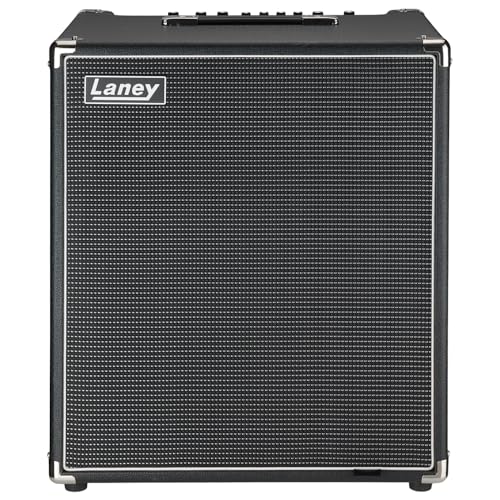
The Laney Digbeth Foundry Bass Combo delivers 200 watts into a 15 inch Laney Audio Blue professional woofer. It is a self contained combo, so the speaker is integral. The Hartke requires separate cabinets and offers far higher total wattage depending on impedance.
For stage volume, the Hartke can drive multiple cabinets and has much greater headroom. The Laney's 200 watts and 15 inch woofer are suited to rehearsals and club gigs. Without knowing the Laney's maximum SPL, the Hartke's higher wattage suggests more clean volume with the right cabs.
Build and Portability
The Hartke LH1000 Bass uses a two rackspace steel chassis. It is designed to mount in a standard equipment rack. The listing does not publish its weight or dimensions. The Laney is a combo amplifier with a 15 inch speaker, and its weight and dimensions are also not published in the listing.
Because both listings omit weight and dimensions, direct portability comparisons cannot be made from the supplied facts. The Hartke is a rack unit that requires a separate rack case and speaker cabinet, which adds to total transport weight. The Laney is an all in one combo that may be heavier than the head alone but eliminates a separate cabinet.
Without measured weights, buyers should confirm physical specifications from other sources before choosing based on portability. The Hartke's steel chassis suggests durability for rack use. The Laney combo likely weighs more due to the 15 inch woofer, but that is not stated.
Connectivity and Apps
The Hartke lists a front XLR balanced direct output. It also has a rear 1/4 inch effects loop, plus 1/4 inch and Speakon output connectors. The listing does not mention a headphone output. There is no Bluetooth or app support published.
The Laney Digbeth Foundry Bass Combo does not publish its inputs and outputs in the listing. The listing does not state a headphone out, line out, Bluetooth, or app support. This makes direct connectivity comparison difficult because Laney's information is missing.
Hartke clearly offers more published connectivity options for live sound and cabling. The XLR direct output is useful for sending a signal to a mixing board. The Laney's connectivity remains unknown from the listing, so buyers who need specific jacks should verify elsewhere.
Setup and Daily Use
Setting up the Hartke requires an external speaker cabinet, proper impedance matching, and a rack or surface. The brite and limiter switches are simple to use once set. There is no headphone output for silent practice. The XLR direct output can feed a mixer for recording or front of house.
The Laney is a combo, so the bass plugs directly into the amp and the speaker is built in. The four mid presets and drive switch provide quick tone adjustments without deep menus. Daily use is straightforward for rehearsals and small gigs. The listing does not mention a headphone output, so silent practice may still require external solutions.
For players who want minimal setup, the Laney combo is more convenient out of the box. The Hartke offers more control over external cabinets and is better suited to a fixed rack system. Both lack a built in tuner, so an external tuner is needed.
Home Practice Versus Stage
The Hartke LH1000 Bass is not a home practice amp as published. It has no built in speaker and no headphone output. To use it at home, you need a cabinet and possibly an attenuator or low volume setting. Its power output is far beyond typical bedroom levels.
The Laney Digbeth Foundry Bass Combo is a better match for home practice because it includes a speaker. However, 200 watts into a 15 inch woofer is loud for home use unless the master volume can be set very low. The listing does not mention a practice-friendly feature like a headphone out or power scaling.
For live stage use, the Hartke shines with its high wattage, multiple output options, and XLR direct out. The Laney is also stage capable for smaller venues as a 200 watt combo. Neither is specifically marketed for silent practice based on the published specs.
The Deciding Question
The central question is whether you already own a bass cabinet and need a high power rack head, or you want an all in one combo. The Hartke demands separate cabinets but rewards you with up to 1100 watts in bridge mode. The Laney includes a 15 inch speaker and 200 watts in a single box.
If portability and simplicity matter most, the Laney avoids the need to transport a head and cabinet separately. If maximum headroom and flexible cabinet pairing matter, the Hartke is the stronger choice on paper. Your existing gear and typical venue size should drive the decision.
Both amplifiers omit practice features like headphone outputs and digital effects. Buyers who need those features may need to look beyond both models or add external devices. The deciding factor is cabinet ownership and volume needs.
Who Should Buy Which
Choose the Hartke LH1000 Bass if you are a live bassist with one or more bass cabinets. You want the flexibility of dual parallel mode for multiple cabs and bridge mode for very high output. The XLR direct out and effects loop add professional connectivity. Avoid it if you do not own a cabinet or need a built in speaker.
Choose the Laney Digbeth Foundry Bass Combo if you want a simple, self contained amp for rehearsals and club gigs. The 200 watts and 15 inch pro woofer provide real stage volume without carrying a separate head and cab. The mid presets and drive switch keep tone shaping quick and in-person.
Avoid the Laney if you need detailed connectivity specs, a headphone output, or app based editing, because those are not published in the listing. Avoid the Hartke if you want a combo with practice features. Both are straightforward analog amps that reward players who already have a clear use case.
Hartke LH1000 Bass
Pros
- High power bridge mode up to 1100 watts at 4 ohms
- Dual parallel mode supports multiple cabinets
- Tube preamp with brite and limiter controls
- XLR direct out and effects loop
- Two-rackspace steel chassis
Cons
- No built-in tuner or digital effects
- No headphone output listed
- Weight and dimensions not published
- Single channel only, no drive channel
Laney Digbeth Foundry Bass Combo
Pros
- 200 watts and 15 inch pro woofer for stage volume
- Four adjustable mid presets offer practical tone shaping
- Tube style drive switch adds warmth and grit without pedals
- Mid range price for professional entry level power
- Straightforward control set with no app complexity
- Laney is an established amplifier brand
Cons
- Inputs, outputs, weight and dimensions not published in listing
- No headphone out or line out specified
- No Bluetooth or app support mentioned
- No built in effects beyond the drive switch
- Removable front fret purpose unclear
Who Should Buy Each
Hartke LH1000 Bass
- Bassists building a rack system
- Players who already own bass cabinets
- Gigging musicians needing high headroom
- Those who prefer tube preamp warmth without full tube power amp
Laney Digbeth Foundry Bass Combo
- Bassists moving from a small practice amp to a first serious gigging combo
- Players who want a tube flavored drive without external pedals
- Musicians who prefer physical controls over app based editing
- Gigging bassists who need 200 watts and a 15 inch speaker for medium venues
Quick Decision Guide
| If you already own a bass cabinet and need up to 1100 watts of clean headroom | Choose Hartke LH1000 Bass |
| If you want a plug and play combo with a built in 15 inch speaker for gigs | Choose Laney Digbeth Foundry Bass Combo |
| If you need a rack mountable amp with XLR direct out and an effects loop | Choose Hartke LH1000 Bass |
| If you prefer simple tone shaping with mid presets and a drive switch instead of a tube preamp | Choose Laney Digbeth Foundry Bass Combo |
| If you want to run multiple speaker cabinets in dual parallel mode | Choose Hartke LH1000 Bass |
FAQ
About This Comparison
Mandrillis Team
The Mandrillis editorial team researches and compares audio and music gear using manufacturer documentation, verified specs and real buyer feedback, so you can make a confident purchase without wading through marketing claims.
Read our full research methodology.
We may earn a commission at no extra cost to you.