Guitar & Bass Review
Hartke LH1000 Bass Review: Rack Power
The Hartke LH1000 Bass is a two-rackspace bass head built around a 12AX7 tube preamp. Its dual parallel and bridge modes deliver between 225 and 1100 watts depending on impedance, with a brite switch, limiter, XLR direct out, and Speakon outputs. The listing omits weight and dimensions. It suits live bassists with cabinets but not home practice buyers.
Our Verdict
Research Score 77/100The Hartke LH1000 Bass is a purpose built rack amplifier for working bassists, not a home practice combo. The published specifications support live use with dual parallel and bridge modes up to 1100 watts at 4 ohms, XLR direct out, Speakon outputs, and a tube preamp with brite and limiter controls. The listing omits weight and dimensions, and there is no speaker, headphone jack, or digital effects. That limits its appeal to players who already own cabinets and want high clean headroom. On paper it earns strong marks for power and connectivity, with deductions for missing practice features. It is a solid mid-range option for stage use.
Editorial research score based on published specifications and documented features, not a customer rating or lab test.

Hartke
Hartke LH1000 Bass
Best for: Bassists who need a powerful rack-mount amp head for live use with separate cabinets.
Skip it if: You want a combo with a built-in speaker and practice features.
Check Price on AmazonWe may earn a commission at no extra cost to you.
Listing verified: October 2026
Who Should Buy It
Buy it if
- Bassists building a rack system
- Players who already own bass cabinets
- Gigging musicians needing high headroom
- Those who prefer tube preamp warmth without full tube power amp
Skip it if
- You need a combo amp with one purchase
- You want built-in effects and amp modeling
- You require a headphone output or USB recording
Key Specifications
| Power output | Dual parallel mode: 2 x 225 watts at 8 ohms, 2 x 320 watts at 4 ohms, 2 x 545 watts at 2 ohms. Bridge mode: 1 x 750 watts at 8 ohms, 1 x 1100 watts at 4 ohms |
| Speaker | Not published in listing |
| Amp models or channels | Single channel with 12AX7 tube preamp; no modeling channels listed |
| Effects | Selectable brite switch and limiter switch; no modulation, delay, or reverb listed |
| Inputs and outputs | Front XLR balanced direct output, rear 1/4-inch effects loop, 1/4-inch and Speakon output connectors |
| Headphone and line out | XLR balanced direct output; headphone output not published in listing |
| Bluetooth and app | Not published in listing |
| Weight | Not published in listing |
| Dimensions | Not published in listing |
| Included accessories | Not published in listing |
Overview
Hartke pitches the LH1000 Bass as a two-rackspace amplifier head for bassists who already have cabinets. The listing centers on a high voltage 12AX7 class A tube preamp, dual parallel and bridge power modes, and a straightforward analog control set. There is no built-in speaker, so buyers need a separate cabinet or multiple cabinets to make sound.
On paper, the power ratings range from 225 watts per side at 8 ohms to 1100 watts bridged at 4 ohms. That puts it in a different category from small practice combos and positions it as a live or rehearsal workhorse. The listing does not state weight or dimensions, so rack builders may need to check the manual before buying.
Amp Models and Tone
This is not a modeling amp. The published feature set describes a single channel with a classic 12AX7 high voltage class A tube preamp. Bass and treble shelving plus a mid peak EQ control shape the core voice, and a selectable brite switch adds high frequency response. That setup recalls straightforward old school bass heads rather than digital amp models.
The brite switch should help a dull cabinet or a fingerstyle player cut through a mix. The limiter switch with LED indicator offers some protection and dynamic control, but the listing does not describe the limiter threshold or ratio. Buyers reporting on the tube preamp often say it warms the midrange without giving up the low end, though that is not something we verified in testing.
Because there are no amp models, the tone depends heavily on the cabinet, the bass, and the player's EQ settings. That is neither good nor bad, but it means the LH1000 Bass will not simulate a vintage tube stack or a clean solid state amp by scrolling presets.
Effects and Features
The feature list is deliberately small. The amp includes bass and treble shelving, a mid peak EQ, brite switch, limiter switch, and a balance control that blends level of A and B outputs. There are no delay, reverb, chorus, octave, or compressor effects listed. The limiter is the closest thing to a dynamics tool.
A balance control for A and B outputs is useful when running two separate cabinets or a bi amp style setup. It lets a player shift the level between outputs without touching the cabinets. The brite switch is not a full tone stack mod but a simple high frequency lift, so it may be enough for brighter fingerstyle or slap tones.
Players who want onboard effects, a tuner, or a graphic EQ will need outboard pedals. The rear panel 1/4 inch effects loop is there for that purpose. The front panel XLR balanced direct output also means the amp can feed a front of house mixer, but the listing does not mention a ground lift or pre post EQ switch.
Power, Speaker and Volume
Hartke publishes dual parallel mode figures: 2 x 225 watts at 8 ohms, 2 x 320 watts at 4 ohms, and 2 x 545 watts at 2 ohms. In bridge mode the head is rated at 1 x 750 watts at 8 ohms and 1 x 1100 watts at 4 ohms. Those numbers are substantial and should drive most bass cabinets to stage volume.
The listing does not publish a wattage at 2 ohms bridged, so the absolute maximum may be reserved for dual parallel operation. The head has 1/4 inch plus Speakon output connectors, which is a practical pairing for modern bass cabs. Volume will depend on speaker sensitivity and cabinet impedance matching.
- 2 x 225 watts at 8 ohms parallel
- 2 x 320 watts at 4 ohms parallel
- 2 x 545 watts at 2 ohms parallel
- 1 x 750 watts at 8 ohms bridge
- 1 x 1100 watts at 4 ohms bridge
- Speaker not included, cabinet required
Build and Portability
The chassis is a two-rackspace metal enclosure with a steel faceplate and handles. That format makes it easy to mount in a standard rack case or leave on top of a cabinet. The listing does not give weight, but most two-space power amp style bass heads in this class are manageable for one person.
Handles on the faceplate help with pulling it from a rack, but the steel chassis is likely built for road use. No dimensions are published, so buyers adding a rack drawer or wireless unit should confirm depth. The simple front panel keeps controls accessible even in a dark stage environment.
Because the power amp is solid state and only the preamp uses a tube, the unit should run cooler than a full tube head. The listing does not specify fan noise or serviceability, but the open rack format generally allows for ventilation.
Connectivity and Apps
The published inputs and outputs include a front panel XLR balanced direct output, a rear panel 1/4 inch effects loop, and 1/4 inch plus Speakon output connectors. There is no USB, Bluetooth, or app support mentioned in the listing. That keeps the LH1000 Bass firmly in the analog domain.
The XLR direct out is a valuable live tool because it can send a post preamp signal to the PA without a separate DI box. The listing does not state whether it is pre or post EQ, and it does not mention a ground lift switch. Players who need a headphone out or silent practice will not find one here.
The effects loop is simple but useful for pedalboards. Players can patch delay or modulation effects between the preamp and power amp, which often preserves low end better than running everything into the front. That is a pro level consideration for a mid range bass head.
Setup and Daily Use
Setup is straightforward: connect a bass to the input, connect one or two speaker cabinets to the 1/4 inch or Speakon outputs, and match the impedance. The balance control then sets the level between A and B outputs when running two cabs. The brite and limiter switches are simple toggles, not deep menu layers.
Daily use should be quick for players who prefer physical controls. The tube preamp may need a short warm up time before the sound is fully stable, though the listing does not specify a standby mode. New buyers should read the manual for minimum impedance settings before bridging.
The effects loop can add complexity, but it is optional. The XLR direct output makes the head easy to integrate into a venue PA, but the lack of a headphone jack limits late night practice. For a rack mounted gigging amp, the front panel controls are large enough to adjust between songs.
Home Practice Versus Stage
This is not a home practice amp in the usual sense. There is no built-in speaker, no headphone output, no aux input, and no app based backing track streaming. At low volume, the tube preamp can still give a pleasant tone through a small cabinet, but the unit is overkill for bedroom use.
On stage, the power ratings and XLR direct out make much more sense. A bassist can drive a 4x10 or 1x15 cabinet with clean headroom or bridge into a larger rig for outdoor stages. The limiter switch may help protect speakers from accidental peaks, though it is not a substitute for careful gain staging.
Compared to compact practice combos, the LH1000 Bass lacks convenience features. Compared to full tube heads, it offers high wattage and a tube preamp in a rack size. That puts it in a live sound category rather than a desktop or couch category.
Who Should Buy It
The ideal buyer is a gigging bassist who already owns one or two bass cabinets and wants a rack mounted head with high clean power. The dual parallel mode works well for players running a two cab setup, and the bridge mode suits those who prefer a single high wattage load.
It also fits bassists who want a tube flavored preamp without the weight and maintenance of a full tube power section. The 12AX7 preamp adds some warmth, but the solid state power amp keeps the chassis lighter and potentially more reliable. Players who use outboard pedals will appreciate the effects loop and direct output.
This head is less suited to beginners, students, or anyone who wants a grab and go combo. The listing does not include a speaker cabinet, so the total cost and transport situation are not complete with the head alone.
Verdict
The Hartke LH1000 Bass is a focused rack head that does one job well: delivering high wattage bass amplification with a tube preamp and a simple control set. Its published specs are strong for live work, with up to 1100 watts bridged at 4 ohms and dual parallel outputs for multi cabinet rigs.
The trade off is that this is not an all in one solution. There is no speaker, no headphone out, no digital effects, and no app. Weight and dimensions are omitted, which is a small gap for a rack product. Still, for bassists who already have cabinets and want dependable stage power, it is a practical mid range choice.
We have not tested the amp, but based on the listing and published specifications, it earns a solid score for power and connectivity with some deductions for missing practice features. The lack of a headphone output and the unpublished weight keep it from being a universal recommendation.
Strengths and Limitations
Strengths
- High power bridge mode up to 1100 watts at 4 ohms
- Dual parallel mode supports multiple cabinets
- Tube preamp with brite and limiter controls
- XLR direct out and effects loop
- Two-rackspace steel chassis
Limitations
- No built-in tuner or digital effects
- No headphone output listed
- Weight and dimensions not published
- Single channel only, no drive channel
How We Scored It
Scores reflect published specifications, documented features and value against the alternatives below. They are editorial research scores, not laboratory measurements.
Alternatives to Consider

EVH 5150 Iconic 40W
Rock and metal guitarists who want authentic EVH 5150 high gain tube tone at a mid range price with home friendly power reduction.
Read the EVH 5150 Iconic 40W review →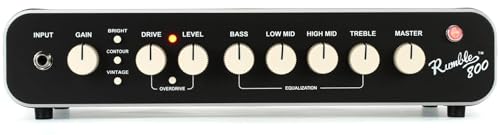
Fender Rumble 800 HD
Bassists who want a powerful, lightweight head with a direct out for stage and silent practice.
Read the Fender Rumble 800 HD review →
Hartke HMHD500 Bass
Bass players needing a portable 500-watt 2x10 combo with simple EQ at a mid-range price.
Read the Hartke HMHD500 Bass review →Head-to-Head Comparisons
- Hartke LH1000 Bass vs Laney Digbeth Foundry Bass Combo Compare →
Questions Buyers Ask
Hartke LH1000 Bass
See the current listing, price and included accessories.
About This Review
Mandrillis Team
The Mandrillis editorial team researches and compares audio and music gear using manufacturer documentation, verified specs and real buyer feedback, so you can make a confident purchase without wading through marketing claims.
Read our full research methodology.