Kawai CA401 vs Casio Celviano AP-750
Quick Verdict
Choose the Kawai CA401 for true wooden Grand Feel Compact keys, SK-EX sampling, an OLED display and documented 192-note polyphony. Choose the Casio AP-750 for counterweighted hybrid keys, the AiR Grand engine with lid resonance, a 40 watt eight-speaker Grandphonic system and an adjustable bench. The Kawai is the pianist's choice for touch; the Casio is the more immersive piano in a room.

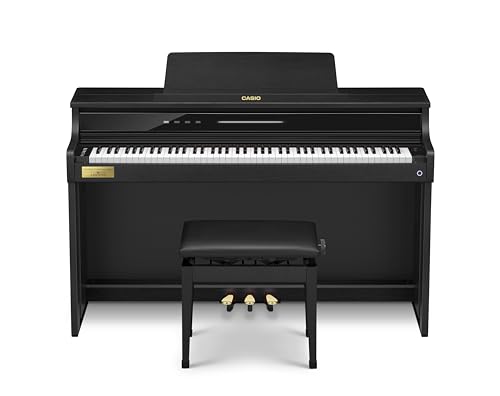
| Spec | Kawai CA401 | Casio Celviano AP-750 |
|---|---|---|
| Key Action | Grand Feel Compact wooden-key action | Smart Hybrid Hammer Action with internal counterweights |
| Sound Engine | Progressive Harmonic Imaging with 88-key sampling | Casio AiR Grand with damper, string and lid resonance |
| Voices | 19 | 39 |
| Polyphony | 192 notes | Not published in listing |
| Speakers | Built-in stereo | 40 W, 8 speakers, Grandphonic |
| Bluetooth | Not published in listing; Kawai specifies Bluetooth MIDI and audio | Audio and MIDI via app |
| USB | USB to Host | USB to Host |
| Pedals | 3 pedals, Grand Feel Pedal System | 3 pedals built in |
| Weight | Not published in listing | Not published in listing |
| Form Factor | Console with OLED display | Flagship cabinet console with adjustable bench |
Two Upper Consoles
Both are flagship-tier home consoles below the soundboard and Grand Hybrid models. The Kawai's listing documents its wooden action, engine, display and polyphony; the Casio's documents its hybrid action with counterweights, AiR Grand engine, eight-speaker system and bench, without polyphony. Prices are in the same region.
Action
Grand Feel Compact uses full-length wooden keys with a long pivot, triple sensors, let-off and counterweights. The Casio's Smart Hybrid action uses spruce-and-resin keys with internal counterweights on a longer pivot than its slim actions. The Kawai's wooden keys have more mass and leverage; the Casio's hybrid keys are firm and well damped. Pianists who practice on acoustic grands tend to prefer the Kawai.
Sound and Speakers
The Kawai samples the SK-EX on every key with Progressive Harmonic Imaging resonance; the Casio's AiR Grand models damper, string and lid resonance with multiple grands. The Casio's 40 watt eight-speaker Grandphonic system with Hall Simulation is the more immersive in a room; the Kawai's speakers are not described on its listing. The Kawai documents 192-note polyphony; the Casio does not publish a figure.
Display, Panel and Apps
The Kawai's OLED display shows sounds, the Virtual Technician and the Alfred lesson library on the panel; the Casio uses vanishing touch controls with the Casio Music Space app over Bluetooth. The Kawai is the easier instrument to operate without a tablet.
Connectivity and Bench
Kawai specifies Bluetooth MIDI and audio for the CA401, which the listing does not state; the Casio confirms Bluetooth through its app. The Casio includes an adjustable bench; the Kawai's listing does not mention one. Both have two headphone jacks and USB to Host.
Daily Use
The Kawai is a piano played on wooden keys with a display that makes practice tidy; the Casio is a piano played through eight speakers with a hall around it. Both serve advanced study. The Casio's included bench and the Kawai's Alfred library are each practical touches.
Value
At similar prices the Kawai gives wooden keys and documented polyphony; the Casio gives the speaker system, lid resonance and a bench. Value depends on whether the keys or the room lead.
Assembly, Placement and Finish
Both are full consoles in the hundred-pound class that two adults assemble in about an hour. The Kawai's cabinet is a conventional upright shape with a sliding key cover and a music rest with sheet holders; the Casio's cabinet has a lower, flatter profile, a folding cover and the adjustable bench in the shipment. Both come in black satin; the Kawai also offers rosewood and white finishes. The Casio's eight speakers fire from the top, front and underside, so it needs a little more room around it than the Kawai and sounds different against a wall than in the open. The Kawai's speaker ports face the player and it is less sensitive to placement.
Practice Tools and Learning
The Kawai's OLED display shows the Alfred lesson library, Burgmuller and Czerny studies and the Virtual Technician without a tablet, and PianoRemote adds a score view and recorder over Bluetooth. The Casio's Music Space app over Bluetooth gives a score display, a lesson function with hand separation and the Scene memory for saving setups, and the piano's touch controls vanish into the panel when not in use. Both record performances internally and both export audio over USB. Both have Duo modes, metronomes and two headphone jacks, and both support half-pedaling on all three pedals.
Long-Term Ownership
These are pianos bought to last. The Kawai's Grand Feel Compact wooden action carries a player through advanced repertoire and the upgrade within Kawai is the CA501 or CA701 for a soundboard speaker system and the full Grand Feel III action. The Casio's hybrid action and Grandphonic system likewise serve advanced study, and the step up within Casio is the Grand Hybrid GP-310 with a Bechstein-designed mechanical action. Both hold resale value well. Owners of the Kawai tend to keep it for the keys; owners of the Casio tend to keep it for the sound in the room. Neither is a piano a family outgrows.
The Deciding Question
Ask what you will notice first each time you sit down. If it is the keys under your fingers, the Kawai's full-length wooden action with its long pivot and let-off is the closer grand substitute, and its display and documented 192-note polyphony reassure a buyer who reads spec sheets. If it is the sound filling the room, the Casio's eight speakers, Hall Simulation and lid resonance give a sense of a grand around you that the Kawai's conventional speakers do not try to match. Both are priced in the same region and both include three half-pedal capable pedals. The Casio's bench in the box saves a purchase; the Kawai's rosewood and white finishes suit more rooms. An advanced student is well served by either, and a teacher's studio would choose the Kawai for the keys.
Who Should Buy Which
Buy the Kawai CA401 for wooden keys and documented specifications. Buy the Casio AP-750 for the most immersive sound through speakers and the bench. Audition both; they are two different ideas of a flagship console.
Kawai CA401
Pros
- Grand Feel Compact wooden keys, the entry to Kawai's wooden-action consoles
- Progressive Harmonic Imaging with SK-EX sampling
- OLED display and built-in Alfred lessons
- 192-note polyphony
Cons
- Bluetooth and speaker power not stated on the listing
- Priced above the CN301
- No bench on the listing
Casio Celviano AP-750
Pros
- Hybrid action with internal counterweights, the most refined Casio keyboard below the Grand Hybrids
- AiR Grand engine with damper, string and lid resonance
- 40 watt eight-speaker Grandphonic system with Hall Simulation
- Adjustable bench included
Cons
- Polyphony not published on the listing
- Flagship price against Kawai CA and Yamaha Clavinova consoles
- Touch controls
Who Should Buy Each
Kawai CA401
- Wooden keys and a long pivot are what you want
- You want an OLED display and Kawai's SK-EX tone
- You practice on acoustic grands and want a console that feels like one
Casio Celviano AP-750
- You want counterweighted hybrid keys and an eight-speaker system
- The piano will be the centerpiece of a living room
- You want the bench included and Bluetooth through the app
Quick Decision Guide
| If true wooden keys matter most | Choose Kawai CA401 |
| If sound through speakers in a room matters most | Choose Casio AP-750 |
| If you want documented polyphony | Choose Kawai CA401 |
| If you want a bench included | Choose Casio AP-750 |
| If you want an on-panel display | Choose Kawai CA401 |
FAQ
About This Comparison
Mandrillis Team
The Mandrillis editorial team researches and compares audio and music gear using manufacturer documentation, verified specs and real buyer feedback, so you can make a confident purchase without wading through marketing claims.
Read our full research methodology.
We may earn a commission at no extra cost to you.