Digital Pianos Review
Kawai CA401 Review: Wooden Keys at the Entry CA Price
The CA401 is the entry to Kawai's CA consoles, which use wooden-key actions. It pairs the Grand Feel Compact action with Progressive Harmonic Imaging, 192-note polyphony, an OLED display and built-in Alfred lessons. This review covers why wooden keys matter, what the listing confirms and leaves open, and how the CA401 compares with the CN301 and the Casio AP-750.
Our Verdict
Research Score 91/100The Kawai CA401 is the console to buy if wooden keys are what you want at the lowest price Kawai offers them. Grand Feel Compact brings a long wooden key with let-off and counterweights, and the SK-EX sampling and OLED display make it a complete pianist's console. The listing does not publish Bluetooth or speaker power, and the CN301's RHIII is close enough in feel that a buyer on a budget should try both.
Editorial research score based on published specifications and documented features, not a customer rating or lab test.

Kawai
Kawai CA401
Best for: Pianists who want wooden keys at the lowest Kawai price
Skip it if: you are happy with RHIII and want to save money on the CN301
Check Price on AmazonWe may earn a commission at no extra cost to you.
Listing verified: October 2026
Who Should Buy It
Buy it if
- Wooden keys and a long pivot are what you want
- You want an OLED display and Kawai's SK-EX tone
- You practice on acoustic grands and want a console that feels like one
Skip it if
- The CN301's RHIII is enough and the budget matters
- You want documented Bluetooth and speaker power
- A bench matters
Key Specifications
| Key Action | Grand Feel Compact wooden-key action |
| Sound Engine | Progressive Harmonic Imaging with 88-key sampling |
| Voices | 19 |
| Polyphony | 192 notes |
| Speakers | Built-in stereo |
| Bluetooth | Not published in listing; Kawai specifies Bluetooth MIDI and audio |
| USB | USB to Host |
| Pedals | 3 pedals, Grand Feel Pedal System |
| Weight | Not published in listing |
| Form Factor | Console with OLED display |
The Entry CA
Kawai's CA series is where its consoles move to wooden keys. The CA401 is the first rung, and the listing confirms the Grand Feel Compact wooden-key action, the Progressive Harmonic Imaging engine, built-in Alfred lessons, an OLED graphic display and 192-note polyphony. Kawai's specification adds 19 sounds, the Grand Feel Pedal System and Bluetooth MIDI and audio; the listing does not state Bluetooth, speaker wattage or weight.
Grand Feel Compact
Grand Feel Compact uses full-length wooden keys with a pivot point far back in the mechanism, graded hammers, triple sensors, let-off and counterweights, with Ivory Touch surfaces. The wood gives mass and a natural return, the long pivot gives leverage near the fallboard, and the counterweights make soft playing controllable. It is a step above the CN301's RHIII in authenticity and competes with the Yamaha GrandTouch-S in the Clavinova CLP-735 and the Roland PHA-50; the full Grand Feel III in the CA701 is the step above.
Sound and Display
Progressive Harmonic Imaging samples the SK-EX concert grand on every key with damper, string and cabinet resonance, and the CA401's grand is warm, detailed and expressive. Nineteen sounds add a second grand, uprights, electric pianos, organs and strings. Polyphony is 192 notes. The OLED display makes sounds, the Virtual Technician and the Alfred library visible operations, which is a real convenience over the CN201's button panel.
The built-in speakers are not described on the listing; Kawai's specification should be checked for wattage.
Connectivity
USB to Host connects a computer. Kawai specifies Bluetooth MIDI and audio for the CA401, which the listing does not state; confirm before relying on it. Two headphone jacks with Spatial Headphone Sound allow silent practice.
Cabinet and Assembly
The CA401 is a full console with a sliding cover in satin black, white or rosewood, assembled in about an hour with two people. Weight is not published; CA consoles are typically well over 100 pounds. No bench is mentioned on the listing.
Daily Use
The OLED display is used constantly: it shows the sound, the metronome, the Virtual Technician parameters and the lesson library with notation, and the PianoRemote app mirrors it on a tablet. The Grand Feel pedals and the wooden keys make practice feel like an acoustic, and the Alfred library gives a student structured content. Through headphones with Spatial Headphone Sound the CA401 is the kind of piano that encourages long sessions.
CA401 Against the Alternatives
Against the CN301, the CN301 has 40 watt speakers, USB recording and documented Bluetooth 5 at a lower price; the CA401 has the wooden action and the OLED. Against the Casio AP-750, the Casio has counterweighted hybrid keys, eight speakers and a bench; the Kawai has true wooden keys and documented polyphony. Against the Yamaha Clavinova CLP-735, which we have not reviewed, both offer wooden actions and flagship samples at similar prices. Against the CA501 and CA701, the step up buys more speaker power and, on the CA701, the Grand Feel III action and 256-note polyphony.
Buy the CA401 for wooden keys at the lowest Kawai price.
Setup, Bench and Headphones
The CA401 is a full console that two people assemble in about an hour, and it needs an adjustable bench, which the listing does not mention, and a pair of good headphones, because a wooden-key action and 88-key sampling reward quiet practice as much as speakers. Kawai's Spatial Headphone Sound widens the image, and the two jacks allow a teacher to listen. The sliding cover and the OLED display make daily use tidy: open the cover, read the display, play.
Long-Term Fit
The CA401 is a decade instrument for a serious pianist; its action does not become a limit and its engine can be revoiced through the Virtual Technician. Owners who move on go to the CA701 or an acoustic. It holds value well as the entry to Kawai's wooden-key line.
Strengths and Limitations
Strengths
- Grand Feel Compact wooden keys, the entry to Kawai's wooden-action consoles
- Progressive Harmonic Imaging with SK-EX sampling
- OLED display and built-in Alfred lessons
- 192-note polyphony
Limitations
- Bluetooth and speaker power not stated on the listing
- Priced above the CN301
- No bench on the listing
How We Scored It
Scores reflect published specifications, documented features and value against the alternatives below. They are editorial research scores, not laboratory measurements.
Alternatives to Consider

Kawai CN301
Pianists who want the CN201's action with more speaker power, a display and USB audio recording
Read the Kawai CN301 review →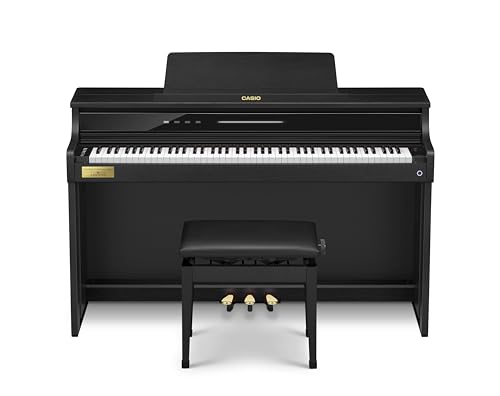
Casio Celviano AP-750
Pianists who want Casio's best console action and sound system without stepping to the Grand Hybrid series
Read the Casio Celviano AP-750 review →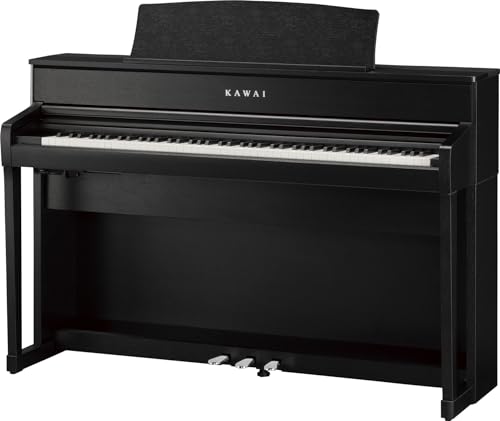
Kawai CA701
Serious pianists who want Kawai's Grand Feel III wooden action and 256-note polyphony in a console
Read the Kawai CA701 review →Head-to-Head Comparisons
- Kawai CA401 vs Casio Celviano AP-750 Compare →
Questions Buyers Ask
Kawai CA401
See the current listing, price and included accessories.
About This Review
Mandrillis Team
The Mandrillis editorial team researches and compares audio and music gear using manufacturer documentation, verified specs and real buyer feedback, so you can make a confident purchase without wading through marketing claims.
Read our full research methodology.