Best Digital Pianos for Beginners: Weighted Keys at Every Budget
This guide is for a first piano, whether for a child starting lessons, an adult returning after years away or a parent who is not sure the interest will last. Every pick has 88 keys with a hammer action, built-in speakers and a sustain pedal input, because those are the three things a teacher will ask for. We compared seven entry models on action, sound, polyphony, connectivity and price, and each has a full review on this site.
Quick Answer
The best digital piano for a beginner is the Roland FP-10, because its PHA-4 Standard action with escapement builds proper technique from the first lesson and connects to apps over Bluetooth MIDI. Choose the Casio CDP-S160 for the lightest, cheapest hammer-action piano with battery power, the Yamaha P-145 for the newer Yamaha with USB audio, the Korg B2+ for the warmest grand sounds with a one-button panel, and the Yamaha YDP-105 for a complete console with a bench.
Why You Can Trust This Guide
We compared products using verified manufacturer specifications, available manuals and documentation, retailer listings, owner feedback, and editorial research.
We focus on measurable differences such as performance, compatibility, usability, build quality, features, and value.
Mandrillis presents editorial research as editorial research, not as laboratory testing, unless physical testing was actually performed.
Read our full research methodology.
Quick Picks
Comparison Table
| Model | Key Action | Polyphony | Speakers | Bluetooth | Best For | Main Advantage | Score |
|---|---|---|---|---|---|---|---|
| Roland FP-10 | PHA-4 Standard with escapement and Ivory Feel | 96 notes | 2 x 6 W | MIDI only | Beginners who want the best key feel available under the entry price ceiling | PHA-4 Standard is the most realistic action at this price, with escapement and textured keys | 83/100 |
| Casio CDP-S160 | Scaled Hammer Action Keyboard II | 64 notes | 2 x 8 W | No | Beginners and casual players who need a light, slim piano that can run anywhere | Runs on six AA batteries as well as mains power | 80/100 |
| Yamaha P-145 | GHC (Graded Hammer Compact) | 64 notes | 2 x 7 W | Audio (this listing) | Beginners who want the current Yamaha entry model with app control and a slim footprint | Slimmer and lighter than the P-45 it replaces | 84/100 |
| Korg B2+ | NH (Natural Weighted Hammer) | 120 notes | Built-in stereo | No | Buyers who want a straightforward weighted piano with Korg's warm grand samples and nothing to configure | Natural Weighted Hammer action with a graded, acoustic-like weight | 81/100 |
| Kawai ES60 | Responsive Hammer Lite (RHL) | Not published in listing | Built-in stereo | Not published in listing | Buyers who want Kawai's piano tone in an entry portable priced against the Yamaha P-145 and Roland FP-10 | Kawai grand piano samples at the brand's lowest price | 79/100 |
| Yamaha Arius YDP-105 | GHS (Graded Hammer Standard) | 64 notes | 2 x 6 W | No | Families who want a proper three-pedal upright for lessons without portable-piano clutter | Furniture-style cabinet with three pedals and a bench in the box | 79/100 |
| Alesis Recital Pro | Hammer action, 88 full-size keys | 128 notes | 2 x 20 W | No | Beginners who want hammer-action keys and loud speakers for the least money | Hammer action at the lowest price in this guide | 76/100 |
#1. Roland FP-10 (Best Overall)

Mandrillis Research Score: 83/100
This is an editorial research score, not a customer rating or laboratory test score.
Who Should Buy It
- Touch is your first priority and you will practice mostly on headphones
- You want wireless app connection for lessons
- You plan to keep the piano for years as a controller even after upgrading
Skip It If
- You want to perform through a PA from a dedicated output
- You layer sounds with heavy pedal and need more polyphony
- You want Bluetooth audio for play-along tracks
Pros
- PHA-4 Standard is the most realistic action at this price, with escapement and textured keys
- SuperNATURAL engine models the piano rather than looping samples
- Bluetooth MIDI connects to apps without a cable
- Compact 1284 mm width fits narrow spaces
Cons
- 96-note polyphony is low for layered playing
- Headphone jack is the only audio output
- Speakers are quiet and the included DP-2 pedal is a simple switch
Key Specs
Key Action: PHA-4 Standard with escapement and Ivory Feel
Sound Engine: Roland SuperNATURAL Piano
Voices: 15
Polyphony: 96 notes
Speakers: 2 x 6 W
Bluetooth: MIDI only
USB: USB MIDI (Type B)
Pedals: DP-2 sustain switch included
Weight: 27.1 lb (12.3 kg)
Form Factor: Portable slab
Why We Picked It
The PHA-4 Standard action with escapement at the entry price builds technique that transfers to an acoustic, and Bluetooth MIDI connects lesson apps without a cable.
Read our full Roland FP-10 review →
Check Price on AmazonWe may earn a commission at no extra cost to you.
Last verified: October 2026
Why This Product Ranks Best Overall
#2. Casio CDP-S160 (Best Value)

Mandrillis Research Score: 80/100
This is an editorial research score, not a customer rating or laboratory test score.
Who Should Buy It
- You need to carry the piano regularly or store it upright
- You want battery operation for busking, school or outdoor use
- A first piano on a tight budget with a real hammer action
Skip It If
- You play pedal-heavy pieces that need more than 64 notes
- You want Bluetooth or app control over a wireless link
- You need quarter-inch outputs for a PA
Pros
- Runs on six AA batteries as well as mains power
- Slimmest and lightest hammer-action piano at this price
- Scaled hammer action with textured key tops
- Optional SP-34 three-pedal unit and CS-46 stand turn it into a console
Cons
- 64-note polyphony
- Headphone output is a 3.5 mm mini-jack
- Piano tone is thinner than the Privia PX-S1100
Key Specs
Key Action: Scaled Hammer Action Keyboard II
Sound Engine: Casio AHL-derived stereo grand
Voices: 10
Polyphony: 64 notes
Speakers: 2 x 8 W
Bluetooth: No
USB: USB to Host (MIDI)
Pedals: Sustain pedal included; SP-34 triple pedal optional
Weight: 23 lb (10.5 kg)
Form Factor: Ultra-slim portable, battery capable
Why We Picked It
A genuine graded hammer action with textured keys in the lightest, slimmest case here, battery power and the cheapest path to three pedals.
Read our full Casio CDP-S160 review →
Check Price on AmazonWe may earn a commission at no extra cost to you.
Last verified: October 2026
Why This Product Ranks Best Value
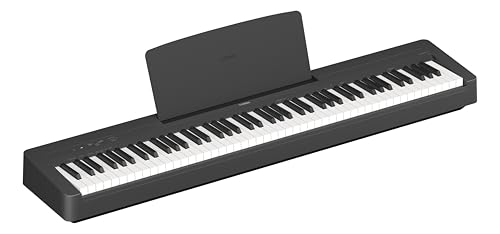
#3. Yamaha P-145 (Best Slim Entry Piano)
Mandrillis Research Score: 84/100
This is an editorial research score, not a customer rating or laboratory test score.
Who Should Buy It
- You are buying a first piano and want the newest entry-level Yamaha
- Space is tight and you need a shallow, light instrument
- You practice with play-along tracks from a phone
Skip It If
- You already play intermediate repertoire with heavy pedaling
- You need line outs for stage or recording use
- You want more than ten sounds
Pros
- Slimmer and lighter than the P-45 it replaces
- GHC action keeps a graded hammer feel in a shallower keybed
- Smart Pianist app turns a phone into the control panel
- Bluetooth audio on this version lets you stream play-along tracks
Cons
- Still 64-note polyphony
- Only ten voices
- Headphone jack doubles as the sole audio output
Key Specs
Key Action: GHC (Graded Hammer Compact)
Sound Engine: Yamaha CFX sample
Voices: 10
Polyphony: 64 notes
Speakers: 2 x 7 W
Bluetooth: Audio (this listing)
USB: USB to Host (MIDI and audio)
Pedals: Sustain footswitch included
Weight: 24.5 lb (11.1 kg)
Form Factor: Portable slab, slim depth
Why We Picked It
Yamaha's current entry formula: GHC action, a CFX-derived sample, USB audio, Smart Pianist and a 268 mm deep case.
Read our full Yamaha P-145 review →
Check Price on AmazonWe may earn a commission at no extra cost to you.
Last verified: October 2026
Why This Product Ranks Best Slim Entry Piano
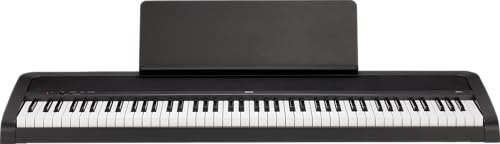
#4. Korg B2+ (Best Sound)
Mandrillis Research Score: 81/100
This is an editorial research score, not a customer rating or laboratory test score.
Who Should Buy It
- You want a no-menu piano where every function is a button
- You like Korg's German and Italian grand samples
- You will mostly practice through the built-in speakers or headphones
Skip It If
- You stream backing tracks wirelessly
- You layer sounds with heavy pedaling and need more polyphony
- You want a three-sensor action with escapement
Pros
- Natural Weighted Hammer action with a graded, acoustic-like weight
- Twelve sounds including three distinct grands
- Simple front panel with one button per function
- Bundled Skoove lessons and the Korg Module app
Cons
- 120-note polyphony is below Roland and Kawai rivals
- No Bluetooth
- Included pedal is a switch rather than a piano-style pedal
Key Specs
Key Action: NH (Natural Weighted Hammer)
Sound Engine: Korg stereo piano samples
Voices: 12
Polyphony: 120 notes
Speakers: Built-in stereo
Bluetooth: No
USB: Yes
Pedals: Damper pedal included
Weight: 25.1 lb (11.4 kg)
Form Factor: Portable slab
Why We Picked It
Two distinct concert grand samples, 120-note polyphony and a one-button panel make it the warmest-sounding and simplest entry piano.
Read our full Korg B2+ review →
Check Price on AmazonWe may earn a commission at no extra cost to you.
Last verified: October 2026
Why This Product Ranks Best Sound
#5. Kawai ES60 (Best Kawai Tone on a Budget)

Mandrillis Research Score: 79/100
This is an editorial research score, not a customer rating or laboratory test score.
Who Should Buy It
- You like Kawai's warm piano sound and want it under the ES120's price
- You want a graded hammer action that is light enough for a child
- You practice mostly on headphones
Skip It If
- You need confirmed polyphony and Bluetooth before buying
- You want line outputs for performing
- Touch is your priority; the Roland FP-10 feels more substantial
Pros
- Kawai grand piano samples at the brand's lowest price
- Responsive Hammer Lite action, graded and quieter than entry rivals
- Seventeen sounds with strong pianos and electric pianos
- Clean, simple panel
Cons
- Polyphony and speaker power not stated on the listing
- RHL is a lighter action than the ES120's RHC
- Newer model with less track record
Key Specs
Key Action: Responsive Hammer Lite (RHL)
Sound Engine: Kawai sampled grands
Voices: 17
Polyphony: Not published in listing
Speakers: Built-in stereo
Bluetooth: Not published in listing
USB: USB MIDI
Pedals: Sustain pedal included
Weight: Not published in listing
Form Factor: Portable slab
Why We Picked It
Kawai's grand piano samples and a graded Responsive Hammer Lite action at the entry price, for players who have heard a Kawai and want that tone.
Read our full Kawai ES60 review →
Check Price on AmazonWe may earn a commission at no extra cost to you.
Last verified: October 2026
Why This Product Ranks Best Kawai Tone on a Budget
#6. Yamaha Arius YDP-105 (Best Beginner Console)

Mandrillis Research Score: 79/100
This is an editorial research score, not a customer rating or laboratory test score.
Who Should Buy It
- You want a piano that looks like furniture and stays in one room
- A student needs all three pedals for exam pieces
- Two people will use headphones at once
Skip It If
- You might move the piano between rooms or to gigs
- You want Bluetooth streaming or app control
- You can stretch to the YDP-146 for CFX sound and Bluetooth
Pros
- Furniture-style cabinet with three pedals and a bench in the box
- GHS graded action at the lowest Arius price
- Dual headphone jacks for teacher and student
- Nothing to assemble beyond the stand and bench
Cons
- Same 64-note polyphony and ten voices as the portable P-45
- No Bluetooth or USB audio
- Speakers are modest for a console
Key Specs
Key Action: GHS (Graded Hammer Standard)
Sound Engine: AWM Stereo Sampling
Voices: 10
Polyphony: 64 notes
Speakers: 2 x 6 W
Bluetooth: No
USB: USB to Host (MIDI)
Pedals: 3 pedals built in
Weight: 82.7 lb (37.5 kg) per listing
Form Factor: Upright console with bench
Why We Picked It
Three pedals, a bench, dual headphone jacks and a furniture cabinet in one box, with the same GHS action and sound as the P-45.
Read our full Yamaha Arius YDP-105 review →
Check Price on AmazonWe may earn a commission at no extra cost to you.
Last verified: October 2026
Why This Product Ranks Best Beginner Console
#7. Alesis Recital Pro (Best Budget Hammer Action)

Mandrillis Research Score: 76/100
This is an editorial research score, not a customer rating or laboratory test score.
Who Should Buy It
- You want weighted keys on a strict budget
- You need speakers loud enough for a living room
- You want a screen rather than hold-and-press settings
Skip It If
- Touch quality matters; the Casio CDP-S160 and Yamaha P-145 feel more refined
- You want Bluetooth or USB audio
- You need a slim, light piano
Pros
- Hammer action at the lowest price in this guide
- Powerful 2 x 20 W speakers
- LCD screen makes settings easy
- Quarter-inch line outputs and battery operation
Cons
- Action is heavier and less refined than Yamaha, Casio or Roland
- Only twelve voices and no Bluetooth
- No pedal in the box
Key Specs
Key Action: Hammer action, 88 full-size keys
Sound Engine: Sampled voices
Voices: 12
Polyphony: 128 notes
Speakers: 2 x 20 W
Bluetooth: No
USB: USB MIDI
Pedals: Sustain input (pedal not included)
Weight: 23.1 lb (10.5 kg) per listing
Form Factor: Portable, battery capable
Why We Picked It
The cheapest hammer action we have researched, with 2 x 20 W speakers, a screen and line outputs; a sound choice when the budget will not stretch.
Read our full Alesis Recital Pro review →
Check Price on AmazonWe may earn a commission at no extra cost to you.
Last verified: October 2026
Why This Product Ranks Best Budget Hammer Action
Which One Should You Buy?
For a beginner who will take lessons, the Roland FP-10 is the pick because its action is the one a teacher will approve of and it will still feel right in three years. If the budget is tighter, the Casio CDP-S160 gives a genuine hammer action in the lightest, slimmest case with battery power. The Yamaha P-145 and Korg B2+ are both sound alternatives that lead with sound and app support rather than touch, the Kawai ES60 brings Kawai's tone to the entry price, and the Yamaha YDP-105 is the complete console with a bench for a family that wants a piano, not a keyboard.
Buy the Roland FP-10 if...
lessons are the plan and the action matters most, or you want wireless app connection.
Buy the Casio CDP-S160 if...
you want the lightest, cheapest hammer-action piano, battery power and a cheap route to three pedals.
Buy the Yamaha P-145 if...
you want the newest Yamaha entry piano with a slim case, USB audio recording and Smart Pianist.
Buy the Korg B2+ if...
you want two warm grand pianos and a panel a child can use without instruction.
Buy the Kawai ES60 if...
you have heard a Kawai and want that tone at the entry price for headphone practice.
Buy the Yamaha YDP-105 if...
you want a three-pedal console with a bench in one box and the piano will stay in one room.
Buy the Alesis Recital Pro if...
the budget cannot reach the others and you still want hammer keys and loud speakers.
Buying Guide
Why 88 Weighted Keys
A hammer action teaches the finger strength and control that transfer to an acoustic piano; unweighted and semi-weighted keyboards do not. Eighty-eight keys cover the full repertoire. Teachers and exam boards expect both, which is why every pick here has them.
Compact Actions
Yamaha's GHC and Casio's Scaled Hammer Action use shorter mechanisms to fit slim cases. They are graded and responsive but offer less leverage near the back of the keys than full-depth actions such as Roland's PHA-4 Standard. For the first years the difference is small; for a student who progresses it grows.
Polyphony for Beginners
64 notes, which the Yamaha P-145, Casio CDP-S160 and Yamaha YDP-105 offer, is enough for lesson repertoire. It becomes a limit on pedal-heavy intermediate pieces. The Roland FP-10 has 96, the Korg B2+ 120 and the Alesis Recital Pro 128.
Apps and Lessons
Simply Piano, Flowkey and Skoove work with every piano here. The Roland connects wirelessly over Bluetooth MIDI; the others use a USB cable. Yamaha's Smart Pianist, Casio's Chordana Play and Korg's Module app add manufacturer features. A built-in metronome and a Duo or Twin mode for teacher and student are standard.
Pedals and Stands
Every portable here ships with a basic switch pedal. A piano-style pedal with half-damper response is the first upgrade. A furniture stand with a three-pedal unit turns a portable into a slim console; the Casio's SP-34 unit is the cheapest route, and the Yamaha YDP-105 has three pedals built in.
Speakers and Headphones
Entry portables carry 12 to 16 watts of small speakers, fine for a bedroom. The Alesis Recital Pro's 40 watts fill a living room. All of them mute when headphones are plugged in, and headphones are how most beginners practice in a shared home; the Yamaha YDP-105 has two jacks for parent and child.
When to Spend More
If the student is already past the first year or an adult plays regularly, the mid-range portables in our main digital piano guide, the Roland FP-30X, Kawai ES120 and Yamaha P-225, add 192 or more notes of polyphony, resonance modeling and line outputs. The FP-10 owner who upgrades to the FP-30X keeps the same action.
How We Compared
- Only 88-key pianos with hammer actions, built-in speakers and a pedal input were considered
- Action type, sensors and key surface checked against manufacturer specifications
- Polyphony, voices, speaker power, connectivity and included accessories mapped side by side; unpublished figures marked as such
- Price checked against current Amazon listings; picks are positioned within the entry bracket
- Verified buyer feedback reviewed for reliability and support
- No fake hands-on testing claims; scores are editorial research scores
FAQ
Related Guides


About This Guide
Mandrillis Team
The Mandrillis editorial team researches and compares audio and music gear using manufacturer documentation, verified specs and real buyer feedback, so you can make a confident purchase without wading through marketing claims.
Read our full research methodology.