Digital Pianos Review
Korg B2+ Review: Simple Controls, Warm Grands, Honest Weighted Keys
The B2+ is Korg's entry portable piano, continuing the B2 formula of a Natural Weighted Hammer action, twelve carefully chosen sounds and a panel with no menus at all. This review covers how the action compares with Yamaha and Roland at the price, where the 120-note polyphony and lack of Bluetooth matter, and who should pick it over the FP-10 and P-145.
Our Verdict
Research Score 81/100The Korg B2+ is the entry portable to buy if you want warm, full-bodied grand piano samples and a control panel a child can understand in a minute. The Natural Weighted Hammer action is graded and convincing for the price, if lighter than Roland's PHA-4. The 120-note polyphony and absence of Bluetooth are the compromises; neither matters for early study, both matter for an intermediate player who streams and layers.
Editorial research score based on published specifications and documented features, not a customer rating or lab test.
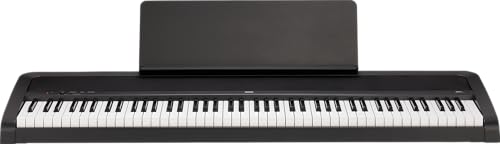
Korg
Korg B2+
Best for: Buyers who want a straightforward weighted piano with Korg's warm grand samples and nothing to configure
Skip it if: you want Bluetooth, 192-note or higher polyphony, or app control
Check Price on AmazonWe may earn a commission at no extra cost to you.
Listing verified: October 2026
Who Should Buy It
Buy it if
- You want a no-menu piano where every function is a button
- You like Korg's German and Italian grand samples
- You will mostly practice through the built-in speakers or headphones
Skip it if
- You stream backing tracks wirelessly
- You layer sounds with heavy pedaling and need more polyphony
- You want a three-sensor action with escapement
Key Specifications
| Key Action | NH (Natural Weighted Hammer) |
| Sound Engine | Korg stereo piano samples |
| Voices | 12 |
| Polyphony | 120 notes |
| Speakers | Built-in stereo |
| Bluetooth | No |
| USB | Yes |
| Pedals | Damper pedal included |
| Weight | 25.1 lb (11.4 kg) |
| Form Factor | Portable slab |
What the B2+ Is
Korg's B-series is the company's answer to the Yamaha P-145 and Roland FP-10: an 88-key weighted portable with built-in speakers, sold on sound and simplicity rather than features. The B2+ listing reviewed here carries the B2's core specification, twelve sounds, the NH action and 120-note polyphony, in a cabinet with a plain black finish and a music rest. A damper pedal switch and a power adapter are in the box, and Korg bundles the Skoove lesson app and its own Korg Module app for iOS.
The design philosophy is obvious the moment you look at the panel. There is a volume knob, a button for each sound group, a metronome button and little else. Deeper settings are reached by holding a button and pressing a key, but most owners never need them.
Natural Weighted Hammer Action
NH is Korg's entry action, graded so the bass keys resist more than the treble, with a slightly lighter overall touch than Roland's PHA-4 Standard and a little more weight than Yamaha's GHC. The key tops are plain matte plastic. Repetition is adequate for lesson repertoire; there is no escapement simulation and no third sensor, so very fast repeated notes are the one area where the Roland FP-10 clearly outplays it.
Where NH does well is in feel for the money. The travel is even across the keyboard, the return is quiet and there is none of the hollow, clacky character that cheaper hammer actions can have. For a student in the first three or four years it is a fully adequate teaching action.
Sound: The Reason to Choose Korg
Korg sampled a German concert grand and an Italian concert grand for the B-series, and both are included alongside a third, more intimate piano. The German grand is full and warm with a long sustain; the Italian is brighter and more percussive. Having two genuinely different grands at this price is unusual, and it is the B2+'s strongest card against the Yamaha P-145's single grand voice.
The remaining sounds cover electric pianos, harpsichord, organs and strings, all usable. Damper resonance is modeled when the pedal is held, which adds realism on sustained chords. Polyphony is 120 notes, enough for most solo playing and more than the P-145's 64, but short of the FP-30X's 256 for layered, pedaled work.
The built-in speakers are clear and reasonably full for practice. Korg quotes a stereo system; they fill a bedroom and strain in a living room, like every portable at this level.
Connectivity
A USB port connects the B2+ to a computer or tablet for MIDI and apps; Korg's B2 series also supports audio over USB so the piano's own sound can be recorded without an interface. There is a headphone output, a line output for a speaker or amplifier, an audio input for a phone, and a pedal jack. What is missing is Bluetooth of any kind, so a cable is needed for both apps and play-along music.
Setup, Stand and Pedals
The B2+ sits happily on any X or Z stand. Korg's matching STB1 stand and PU-2 three-pedal unit convert it into a slim console with soft, sostenuto and half-damper pedals. The included pedal is a switch; a piano-style damper pedal such as Korg's DS-1H, which supports half-pedaling, is the first upgrade most owners make.
At 25 pounds the piano is a one-person carry and fits in a standard soft keyboard bag. The music rest is a simple panel that holds a tablet as readily as sheet music.
B2+ Against the Alternatives
Against the Roland FP-10, the Korg has the warmer, more varied piano sounds and more polyphony, while the Roland has the clearly superior action, escapement and Bluetooth MIDI. Against the Yamaha P-145, the Korg offers two grands and more polyphony, the Yamaha a slimmer cabinet, app control and the newer GHC action. Against the Casio CDP-S160, the Korg is heavier but sounds fuller; the Casio runs on batteries and takes a three-pedal unit for less.
The B2+ is the pick when sound and simplicity rank above features. A buyer who wants wireless streaming, app-based control or the best possible action at this price should look at the Roland or Yamaha instead.
Living With It
Owners describe the B2 series as the piano that gets played because it is never in the way: switch on, choose a grand, play. The lack of menus is a feature for children and for adults returning to the instrument. The limits arrive later, when a student wants to stream a backing track, layer strings under a pedaled piano part, or feel escapement under the fingers. At that stage the Roland FP-30X or Kawai ES120 are the natural upgrades, and the B2+ remains a good second piano or a MIDI keyboard for a tablet.
Strengths and Limitations
Strengths
- Natural Weighted Hammer action with a graded, acoustic-like weight
- Twelve sounds including three distinct grands
- Simple front panel with one button per function
- Bundled Skoove lessons and the Korg Module app
Limitations
- 120-note polyphony is below Roland and Kawai rivals
- No Bluetooth
- Included pedal is a switch rather than a piano-style pedal
How We Scored It
Scores reflect published specifications, documented features and value against the alternatives below. They are editorial research scores, not laboratory measurements.
Alternatives to Consider

Roland FP-10
Beginners who want the best key feel available under the entry price ceiling
Read the Roland FP-10 review →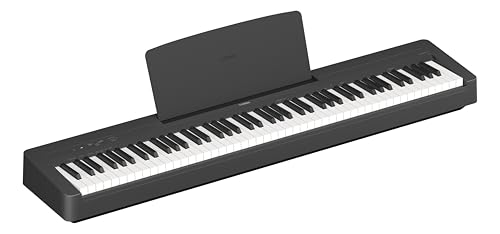
Yamaha P-145
Beginners who want the current Yamaha entry model with app control and a slim footprint
Read the Yamaha P-145 review →
Casio CDP-S160
Beginners and casual players who need a light, slim piano that can run anywhere
Read the Casio CDP-S160 review →Head-to-Head Comparisons
- Korg B2+ vs Roland FP-10 Compare →
Questions Buyers Ask
Korg B2+
See the current listing, price and included accessories.
About This Review
Mandrillis Team
The Mandrillis editorial team researches and compares audio and music gear using manufacturer documentation, verified specs and real buyer feedback, so you can make a confident purchase without wading through marketing claims.
Read our full research methodology.