Digital Pianos Review
Roland FP-10 Review: PHA-4 Action at the Entry Price
The FP-10 takes the PHA-4 Standard keyboard from Roland's FP-30X and more expensive consoles and fits it into the company's cheapest 88-key piano. This review explains why that action matters, where the 96-note polyphony and single output limit it, and whether it beats the Yamaha P-145.
Our Verdict
Research Score 83/100The Roland FP-10 is the entry-level portable to buy if touch matters more than anything else. PHA-4 Standard with escapement and Ivory Feel keys is a class above the Yamaha GHC and Casio slim actions, and the SuperNATURAL engine sounds convincing on headphones. The trade-offs are 96-note polyphony, quiet speakers and a single headphone output, so spend more on the FP-30X if you need outputs or play layered, pedaled music.
Editorial research score based on published specifications and documented features, not a customer rating or lab test.

Roland
Roland FP-10
Best for: Beginners who want the best key feel available under the entry price ceiling
Skip it if: you need line outs, louder speakers or more than 96 notes of polyphony
Check Price on AmazonWe may earn a commission at no extra cost to you.
Listing verified: October 2026
Who Should Buy It
Buy it if
- Touch is your first priority and you will practice mostly on headphones
- You want wireless app connection for lessons
- You plan to keep the piano for years as a controller even after upgrading
Skip it if
- You want to perform through a PA from a dedicated output
- You layer sounds with heavy pedal and need more polyphony
- You want Bluetooth audio for play-along tracks
Key Specifications
| Key Action | PHA-4 Standard with escapement and Ivory Feel |
| Sound Engine | Roland SuperNATURAL Piano |
| Voices | 15 |
| Polyphony | 96 notes |
| Speakers | 2 x 6 W |
| Bluetooth | MIDI only |
| USB | USB MIDI (Type B) |
| Pedals | DP-2 sustain switch included |
| Weight | 27.1 lb (12.3 kg) |
| Form Factor | Portable slab |
Why the Action Is the Headline
Roland uses the same PHA-4 Standard keyboard in the FP-10, the FP-30X, the RP107 console and several models above that. It has a simulated escapement, the slight click a grand piano's action makes as the hammer releases, a three-sensor mechanism for accurate repetition, and Ivory Feel key tops with a moisture-absorbing texture. No other entry-level portable offers that combination.
In hand it is heavier and more deliberate than the Yamaha GHC on the P-145 and the Casio actions on the CDP-S160 and PX-S1100. Beginners sometimes find it stiff for the first weeks; teachers tend to prefer it because it builds technique that transfers to an acoustic.
Sound: SuperNATURAL on a Budget
SuperNATURAL Piano blends sampling with modeling so that tone changes smoothly with velocity instead of switching between layers. The FP-10's grand is bright and detailed, with sympathetic resonance when the pedal is held. Fifteen tones cover grands, electric pianos, organs, strings and a couple of synth pads.
Polyphony is 96 notes. That is more than the Yamaha P-145's 64 but well below the FP-30X's 256, and it is the first limit an improving player will hit when layering a string pad under a pedaled piano part.
The two 6 watt speakers are the quietest in this group. They are fine beside a desk; they will not carry a living room, and with no line output the only way to go louder is through the headphone jack.
Connectivity
Bluetooth MIDI is the FP-10's clever inclusion: it pairs with Roland's Piano App and with third-party lesson apps wirelessly, which no Yamaha or Casio competitor offers at this price. The USB Type B port carries MIDI to a computer. There is no USB audio and no Bluetooth audio, so streaming backing tracks through the piano is not possible.
A single quarter-inch headphone jack is the only audio output. Plugging into a mixer or interface works, but you cannot monitor on headphones at the same time.
FP-10 or FP-30X?
The FP-30X keeps the same action and engine and adds 256-note polyphony, 56 tones, 11 watt speakers, Bluetooth audio, USB audio and proper line outputs. Those are exactly the FP-10's weak points, which is why the FP-30X is the better buy for anyone who can afford the step. The FP-10 makes sense when the budget is fixed and the piano will live on headphones.
Against the Yamaha P-145, the Roland wins on action and loses on simplicity, polyphony parity aside. Against the Casio CDP-S160, the Roland has the better action and sound while the Casio is lighter, slimmer and runs on batteries.
Setting Up and the Pedal Question
The FP-10 comes with a music rest, the DP-2 pedal and a power adapter. Its narrow 1284 mm width makes it the easiest 88-key piano here to fit on a small desk or in a bedroom, and at 27 pounds it is manageable on an X-stand or Roland's matching KSC-FP10 furniture stand. The KPD-70 three-pedal unit fits that stand and adds soft and sostenuto pedals with continuous damper response.
The DP-2 is the one accessory most owners replace quickly. It is a switch with no half-pedal response and it slides on hard floors. Roland's DP-10 is a piano-style pedal with a rubber base and continuous damper control that the FP-10 supports, and the difference in pedaled playing is immediately audible. Budget for it with the piano.
Practice, Apps and Long-Term Value
Bluetooth MIDI is the FP-10's quiet strength in daily practice. Roland's Piano App connects wirelessly and gives you tone selection, metronome, the Piano Designer settings and a recorder on a phone screen, and third-party lesson apps pair the same way. For a piano with no display and a hold-and-press control scheme, that wireless link matters more than it sounds.
The FP-10 holds its value because the action is identical to the FP-30X and to several Roland consoles, so an owner who upgrades often keeps the FP-10 as a second instrument or a MIDI controller. The reasons to upgrade are consistent across owners: they want line outputs to play with others, louder speakers for a living room, or Bluetooth audio for play-along tracks. The FP-30X fixes all three without changing the thing that made the FP-10 worth buying. Against the Yamaha P-145 and Casio CDP-S160, the FP-10 is the pick when the keys matter most, and the one to pass over when weight, batteries or a slim desk footprint matter more.
Strengths and Limitations
Strengths
- PHA-4 Standard is the most realistic action at this price, with escapement and textured keys
- SuperNATURAL engine models the piano rather than looping samples
- Bluetooth MIDI connects to apps without a cable
- Compact 1284 mm width fits narrow spaces
Limitations
- 96-note polyphony is low for layered playing
- Headphone jack is the only audio output
- Speakers are quiet and the included DP-2 pedal is a simple switch
How We Scored It
Scores reflect published specifications, documented features and value against the alternatives below. They are editorial research scores, not laboratory measurements.
Alternatives to Consider

Roland FP-30X
Anyone who wants the complete mid-range portable: realistic action, generous polyphony, every connection
Read the Roland FP-30X review →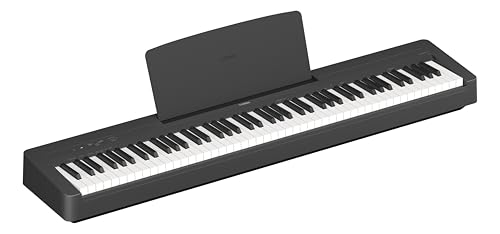
Yamaha P-145
Beginners who want the current Yamaha entry model with app control and a slim footprint
Read the Yamaha P-145 review →
Casio CDP-S160
Beginners and casual players who need a light, slim piano that can run anywhere
Read the Casio CDP-S160 review →Head-to-Head Comparisons
Questions Buyers Ask
Roland FP-10
See the current listing, price and included accessories.
About This Review
Mandrillis Team
The Mandrillis editorial team researches and compares audio and music gear using manufacturer documentation, verified specs and real buyer feedback, so you can make a confident purchase without wading through marketing claims.
Read our full research methodology.