Roland FP-10 vs Yamaha P-145
Quick Verdict
Choose the Roland FP-10 if the feel of the keys matters most: its PHA-4 Standard action with escapement is a class above the Yamaha's GHC, and Bluetooth MIDI connects lesson apps without a cable. Choose the Yamaha P-145 if you want a slimmer, lighter piano with the newer CFX-derived sound, USB audio recording and, on the Bluetooth version, play-along streaming. The Roland is the better instrument to learn technique on; the Yamaha is the easier one to live with.

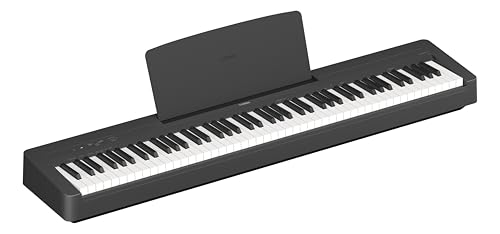
| Spec | Roland FP-10 | Yamaha P-145 |
|---|---|---|
| Key Action | PHA-4 Standard with escapement and Ivory Feel | GHC (Graded Hammer Compact) |
| Sound Engine | Roland SuperNATURAL Piano | Yamaha CFX sample |
| Voices | 15 | 10 |
| Polyphony | 96 notes | 64 notes |
| Speakers | 2 x 6 W | 2 x 7 W |
| Bluetooth | MIDI only | Audio (this listing) |
| USB | USB MIDI (Type B) | USB to Host (MIDI and audio) |
| Pedals | DP-2 sustain switch included | Sustain footswitch included |
| Weight | 27.1 lb (12.3 kg) | 24.5 lb (11.1 kg) |
| Form Factor | Portable slab | Portable slab, slim depth |
The Entry-Level Decision
These two are the default first pianos from the two biggest names, and they sit within a few dollars of each other. The Roland FP-10 puts the company's mid-range action into its cheapest 88. The Yamaha P-145 replaced the P-45 with a compact action, a slimmer case and app support. Both have ten or more voices, built-in speakers and a single headphone jack that doubles as the output. The differences are in the keys, the sound engine and the connections.
Action
The FP-10's PHA-4 Standard is the same three-sensor keyboard with escapement and Ivory Feel tops that Roland uses in the FP-30X and its RP consoles. The P-145's GHC is a graded hammer action designed to be shallow so the piano can be 268 mm deep. Side by side the Roland is heavier, more textured and more like an acoustic; the Yamaha is lighter and quicker.
Teachers tend to recommend the Roland for exactly that reason. Beginners sometimes find it stiff for the first few weeks, and that stiffness is what builds finger strength. The Yamaha is a perfectly good teaching action, just a less demanding one.
Sound and Polyphony
The P-145's grand derives from Yamaha's CFX concert grand sample and is cleaner and more detailed than the P-45's. The FP-10's SuperNATURAL grand is modeled and responds smoothly to touch, with sympathetic resonance when the pedal is held. Through headphones they are close; the Yamaha is slightly warmer, the Roland slightly more responsive.
Polyphony is 96 notes on the Roland and 64 on the Yamaha. Both are enough for the first years of lessons and both become limits on pedal-heavy intermediate pieces. The Roland has fifteen tones to the Yamaha's ten.
Speakers and Outputs
The Yamaha's 2 x 7 W speakers are a little louder and fuller than the Roland's 2 x 6 W, and they fire upward toward the player. Neither fills a living room. Both have a single quarter-inch headphone jack that is also the only line-level output, so neither can feed a speaker and headphones at once.
Connectivity
The Roland has Bluetooth MIDI, which pairs with Roland's Piano App and third-party lesson apps wirelessly, plus USB MIDI by cable. The Yamaha's USB carries both MIDI and audio, so it records its own sound into a DAW, and the Smart Pianist app works over that cable. The Bluetooth version of the P-145 adds Bluetooth audio for streaming backing tracks through the speakers, which the Roland cannot do. Each has one feature the other lacks.
Size and Weight
The P-145 is 268 mm deep and about 24.5 pounds; the FP-10 is 258 mm deep but narrower at 1284 mm wide and about 27 pounds. Both fit a desk. The Yamaha leaves a little more room in front of the keys and is the lighter carry.
Stands and Pedals
Both include a basic switch pedal. Roland's DP-10 and Yamaha's FC3A add half-pedal response and are the first upgrade either owner should make. Roland's KSC-FP10 stand and KPD-70 three-pedal unit, and Yamaha's L-100 stand and LP-5A pedals, convert either into a slim console.
Lesson Apps and Practice
Both work with Simply Piano, Flowkey, Skoove and similar apps: the Roland wirelessly over Bluetooth MIDI, the Yamaha over a USB cable. The Yamaha's Smart Pianist app is the richer manufacturer app, with an on-screen panel, a recorder and Audio to Score chord charts for songs in a phone's library; Roland's Piano App covers tones, metronome and recording. Both have Duo or Twin Piano modes for teacher and student, and both have a built-in metronome and a single headphone jack, so a second listener needs a splitter.
Speakers, Rooms and Volume
The Yamaha's 2 x 7 W upward-firing speakers sound a little louder and fuller at the keys than the Roland's 2 x 6 W, and both are practice speakers that will not carry a living room. Because neither has a dedicated line output, playing through a bigger speaker means a cable from the headphone jack, which mutes the internal speakers. For a bedroom or an office either is fine; for a family room, both benefit from headphones or an external speaker.
Growing Out of Them
Both are first pianos, and most owners move on after two to four years for the same two reasons: polyphony dropping notes on pedaled pieces and the wish for line outputs. The Roland's upgrade path is the FP-30X, which keeps the same action and fixes every omission; the Yamaha's is the P-225, which keeps the GHC action and adds 192-note polyphony, VRM Lite and line outs. An FP-10 owner who upgrades keeps the thing they liked; a P-145 owner who upgrades keeps the thing they tolerated. That is the quiet case for the Roland.
Who Should Buy Which
Buy the Roland FP-10 if you or your student will take lessons seriously and the action matters, or if wireless app connection appeals. Buy the Yamaha P-145 if space and weight matter, you want USB audio recording or Bluetooth streaming, or you prefer a lighter touch. Both are sound first pianos; the Roland is the one a teacher is more likely to suggest.
Roland FP-10
Pros
- PHA-4 Standard is the most realistic action at this price, with escapement and textured keys
- SuperNATURAL engine models the piano rather than looping samples
- Bluetooth MIDI connects to apps without a cable
- Compact 1284 mm width fits narrow spaces
Cons
- 96-note polyphony is low for layered playing
- Headphone jack is the only audio output
- Speakers are quiet and the included DP-2 pedal is a simple switch
Yamaha P-145
Pros
- Slimmer and lighter than the P-45 it replaces
- GHC action keeps a graded hammer feel in a shallower keybed
- Smart Pianist app turns a phone into the control panel
- Bluetooth audio on this version lets you stream play-along tracks
Cons
- Still 64-note polyphony
- Only ten voices
- Headphone jack doubles as the sole audio output
Who Should Buy Each
Roland FP-10
- Touch is your first priority and you will practice mostly on headphones
- You want wireless app connection for lessons
- You plan to keep the piano for years as a controller even after upgrading
Yamaha P-145
- You are buying a first piano and want the newest entry-level Yamaha
- Space is tight and you need a shallow, light instrument
- You practice with play-along tracks from a phone
Quick Decision Guide
| If the action matters most for lessons | Choose Roland FP-10 |
| If you want the slimmest, lightest piano | Choose Yamaha P-145 |
| If you want wireless app connection | Choose Roland FP-10 |
| If you want to record directly over USB audio | Choose Yamaha P-145 |
| If you want to stream backing tracks through the piano | Choose Yamaha P-145 (Bluetooth version) |
FAQ
About This Comparison
Mandrillis Team
The Mandrillis editorial team researches and compares audio and music gear using manufacturer documentation, verified specs and real buyer feedback, so you can make a confident purchase without wading through marketing claims.
Read our full research methodology.
We may earn a commission at no extra cost to you.