Digital Pianos Review
Yamaha P-145 Review: The P-45 Successor, Slimmer and App-Ready
Yamaha replaced its best-selling P-45 with the P-145, trimming the depth, dropping the weight and moving to the GHC action and a CFX-derived piano sample. This review covers what changed, what stayed the same, and who should still look at the P-225.
Our Verdict
Research Score 84/100The Yamaha P-145 is the better buy over the P-45 for almost everyone. It keeps the graded hammer feel and one-button simplicity but adds a shallower cabinet, a cleaner piano sample, USB audio and, on this Bluetooth version, wireless play-along. The 64-note polyphony and ten voices are the trade-offs; if either matters, the P-225 is the next step.
Editorial research score based on published specifications and documented features, not a customer rating or lab test.
Yamaha
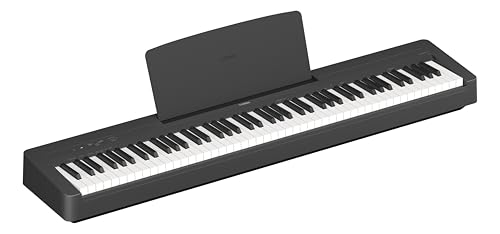
Yamaha P-145
Best for: Beginners who want the current Yamaha entry model with app control and a slim footprint
Skip it if: you want 192-note polyphony, line outputs or a richer voice set
Check Price on AmazonWe may earn a commission at no extra cost to you.
Listing verified: October 2026
Who Should Buy It
Buy it if
- You are buying a first piano and want the newest entry-level Yamaha
- Space is tight and you need a shallow, light instrument
- You practice with play-along tracks from a phone
Skip it if
- You already play intermediate repertoire with heavy pedaling
- You need line outs for stage or recording use
- You want more than ten sounds
Key Specifications
| Key Action | GHC (Graded Hammer Compact) |
| Sound Engine | Yamaha CFX sample |
| Voices | 10 |
| Polyphony | 64 notes |
| Speakers | 2 x 7 W |
| Bluetooth | Audio (this listing) |
| USB | USB to Host (MIDI and audio) |
| Pedals | Sustain footswitch included |
| Weight | 24.5 lb (11.1 kg) |
| Form Factor | Portable slab, slim depth |
What Changed From the P-45
Three things. The action moved from GHS to GHC, Graded Hammer Compact, which shortens the key mechanism so the cabinet can be about an inch shallower. The piano voice now derives from Yamaha's CFX concert grand rather than the older AWM sample. And the P-145 supports the Smart Pianist app over USB, which gives it a touchscreen control panel the P-45 never had.
Weight drops to roughly 24.5 pounds and the slimmer depth makes it easier to fit on a desk or a narrow stand. The listing reviewed here is the Bluetooth-equipped P-145, which adds Bluetooth audio streaming on top of the standard model.
GHC Action in Practice
GHC is the same action Yamaha uses in the P-225, so you get the current entry-level feel rather than the decade-old GHS. The grading from bass to treble is clear, the key return is quick, and the shallower mechanism does not feel cheaper than GHS in normal playing. Pianists used to a full-length action will notice slightly less leverage at the back of the keys.
Against the Roland FP-10's PHA-4 Standard, GHC is lighter and lacks the escapement click and textured key tops. Against the Casio CDP-S160's Scaled Hammer Action II, it feels more consistent across the range. For a first instrument, all three are credible.
Sound and Polyphony
The CFX-derived grand voice is noticeably more detailed than the P-45's AWM sample, with a warmer bass and clearer top octave. The two 7 watt speakers fire upward through the top panel and sound a little fuller than the P-45's 6 watt pair, though both are practice speakers rather than performance speakers.
Polyphony stays at 64 notes. Yamaha reserves 192 notes for the P-225, and that is the clearest reason to spend more: sustained passages with layered voices will drop notes on the P-145 sooner than on its bigger sibling.
Ten voices cover grand, electric pianos, organs, harpsichord, vibraphone and strings. It is enough for lessons, not enough for anyone who wants to explore sounds.
Connectivity and the App
USB to Host carries MIDI and audio, so you can record directly into a DAW or run apps without an interface. Smart Pianist on iOS or Android shows voices, metronome, Duo mode and transpose on screen instead of the hold-and-press key map. The Bluetooth audio version streams music from a phone through the piano's speakers for play-along practice.
Audio out remains a single quarter-inch PHONES/OUTPUT jack, so using headphones and sending sound to a speaker at the same time is not possible. There is no three-pedal unit in the box; Yamaha's LP-5A fits the matching L-100 stand.
Where It Sits in the Range
The P-145 is the right pick when the budget stops at the entry level and you want the newest version of Yamaha's beginner formula. The P-225 costs more and adds 192-note polyphony, 24 voices, Virtual Resonance Modeling Lite and dedicated line outputs, which is the better instrument for anyone past their first year.
Among competitors, the Roland FP-10 trades polyphony and app convenience for a heavier, more detailed action, while the Casio CDP-S160 undercuts on price with battery operation and a similar feature set.
Setup, Stand and Pedal Options
The box holds the piano, a music rest, the footswitch and the power adapter. On a desk the slim 268 mm depth is the P-145's practical advantage: it leaves room for a laptop or sheet music in front of the keys, which the deeper P-45 and Roland FP-10 do not. The matching L-100 stand and LP-5A three-pedal unit convert it into a slim console with soft and sostenuto pedals and half-damper control.
The Smart Pianist app is worth installing on day one. Over a USB cable it shows voices, metronome, transpose, Duo mode and recording on a phone screen, and its Audio to Score feature writes a chord chart for songs in your music library so you can play along. Without the app, settings are changed by holding a button and pressing a labeled key, which works but takes memorizing.
Living With the P-145
In daily use the GHC action proves consistent and quiet, and the piano is light enough that a single adult moves it between rooms without help. The upward-firing speakers project toward the player, which makes them sound louder at the keys than they do across a room, a trait worth remembering if family members will be listening.
The honest limit is musical growth. Ten voices and 64-note polyphony are fine for the first couple of years, and USB audio means recording practice is simple, but a student working on Chopin or playing in a band will want the P-225's engine, line outputs and 192-note polyphony. For most buyers that moment is far enough away that the P-145's lower price is the right call, and its resale value stays strong because it is the current model.
Strengths and Limitations
Strengths
- Slimmer and lighter than the P-45 it replaces
- GHC action keeps a graded hammer feel in a shallower keybed
- Smart Pianist app turns a phone into the control panel
- Bluetooth audio on this version lets you stream play-along tracks
Limitations
- Still 64-note polyphony
- Only ten voices
- Headphone jack doubles as the sole audio output
How We Scored It
Scores reflect published specifications, documented features and value against the alternatives below. They are editorial research scores, not laboratory measurements.
Alternatives to Consider

Yamaha P-225
Players who want Yamaha's flagship CFX tone in a slim portable with proper outputs
Read the Yamaha P-225 review →
Roland FP-10
Beginners who want the best key feel available under the entry price ceiling
Read the Roland FP-10 review →
Casio CDP-S160
Beginners and casual players who need a light, slim piano that can run anywhere
Read the Casio CDP-S160 review →Head-to-Head Comparisons
Questions Buyers Ask
Yamaha P-145
See the current listing, price and included accessories.
About This Review
Mandrillis Team
The Mandrillis editorial team researches and compares audio and music gear using manufacturer documentation, verified specs and real buyer feedback, so you can make a confident purchase without wading through marketing claims.
Read our full research methodology.