Digital Pianos Review
Yamaha P-225 Review: CFX Grand Sound in a Slim Portable
The P-225 is the mid-point of Yamaha's portable range, taking the CFX concert grand sample and Virtual Resonance Modeling Lite from the P-525 and pairing them with the compact GHC action. This review weighs that tone against the lighter action and the small speakers.
Our Verdict
Research Score 88/100The Yamaha P-225 is the portable to buy when piano sound is the priority. The CFX sample with VRM Lite is the most convincing grand tone in this price bracket, 192-note polyphony removes the beginner ceiling, and the dedicated line outputs make it stage-ready. The compact GHC action is its weak spot next to the Roland FP-30X and Kawai ES120, so try all three if touch matters most to you.
Editorial research score based on published specifications and documented features, not a customer rating or lab test.

Yamaha
Yamaha P-225
Best for: Players who want Yamaha's flagship CFX tone in a slim portable with proper outputs
Skip it if: you prioritize the heaviest, most realistic action at this price
Check Price on AmazonWe may earn a commission at no extra cost to you.
Listing verified: October 2026
Who Should Buy It
Buy it if
- You want the best piano sound in Yamaha's portable range below the P-525
- You need line outs for a stand mixer, PA or interface
- You play layered or pedal-heavy pieces that exhaust 64-note pianos
Skip it if
- Key feel matters more to you than tone; try the FP-30X or ES120 first
- You want built-in speakers that can fill a room
- You are a complete beginner on a tight budget; the P-145 covers you
Key Specifications
| Key Action | GHC (Graded Hammer Compact) |
| Sound Engine | Yamaha CFX sample with VRM Lite |
| Voices | 24 |
| Polyphony | 192 notes |
| Speakers | 2 x 7 W, two-way |
| Bluetooth | Audio |
| USB | USB to Host (MIDI and audio) |
| Pedals | Sustain footswitch included; LP-1 triple pedal optional |
| Weight | 25.4 lb (11.5 kg) |
| Form Factor | Portable slab, slim depth |
The Short Version
Yamaha built the P-225 around one idea: put its flagship CFX concert grand sample into the slimmest portable cabinet it could. Everything else follows from that. The GHC compact action keeps the depth under 11 inches, the speakers are small two-way units, and the extras that matter to players, line outs, USB audio, Bluetooth audio and 192-note polyphony, are all present.
The result is a piano that sounds a class above its price through headphones or a good external speaker and plays like a competent, slightly light-touch entry action.
Sound: Why the CFX Sample Matters
The CFX is Yamaha's current concert grand, and the sample on the P-225 captures its bright, focused character with a long natural decay. VRM Lite adds damper resonance and string resonance when the sustain pedal is down, so held chords bloom rather than simply ringing. Compared with the P-145's plain CFX-derived voice, the difference is obvious on any slow piece.
Twenty-four voices include two grands, several electric pianos, organs, strings, harpsichord and a usable bass for split playing. Yamaha's Sound Boost and the Intelligent Acoustic Control keep the balance sensible at low volume.
The two 7 watt amplifiers drive a two-way speaker system with separate tweeters, which gives more clarity than the P-145 but not more power. For a living room you will want headphones or external speakers connected through the line outs.
GHC Action: Competent, Not Class-Leading
Graded Hammer Compact exists so the cabinet can be slim. It is graded from bass to treble, repeats reliably and has a quick return, but the pivot point sits closer to the front than on a full-length action, which means less leverage when you play near the fallboard. There is no escapement simulation and the key tops are plain matte plastic.
Against the Roland FP-30X's PHA-4 Standard, GHC feels lighter and less textured. Against the Kawai ES120's Responsive Hammer Compact, it feels a touch springier. None of this stops it being a good teaching action, but if you spend an hour trying all three, the P-225 is the one you buy for tone rather than touch.
Connectivity and Expansion
Connections are the most complete in Yamaha's entry-to-mid range: a quarter-inch headphone jack, separate left and right line outputs, USB to Host with audio and MIDI, Bluetooth audio for streaming, a sustain jack for the included footswitch and a pedal unit jack for the optional LP-1 triple pedal.
Smart Pianist on a phone or tablet replaces the hold-a-key control method with an on-screen panel and adds a chord chart feature for audio files. Yamaha's Rec'n'Share app records video with the piano's direct audio.
Who Should Buy the P-225
Intermediate students who outgrew a 64-note piano, singers and worship players who need line outs and a convincing grand, and anyone who practices mostly on headphones will get the most from it. The CFX sample rewards good headphones more than any other feature.
If your budget is the same but your priority is the feel under your fingers, the Roland FP-30X and Kawai ES120 both have more substantial actions. If you need louder onboard speakers, look at a console such as the Casio PX-870 or Yamaha YDP-105 instead.
Setup and Accessories
Out of the box the P-225 comes with a music rest, a footswitch and the power adapter. Its 272 mm depth means it fits where the Roland FP-30X and Kawai ES120 feel bulky, and at 25 pounds it is an easy one-person carry. Yamaha's L-200 stand and LP-1 three-pedal unit are the furniture option; the pedal unit supports half-damper, which the included footswitch does not.
For players who perform, the left and right quarter-inch line outputs are the headline accessory-free feature. They send a clean stereo signal to a keyboard amp, mixer or audio interface while the headphone jack stays free for monitoring. The P-145 and P-45 cannot do this, which is one of the clearest reasons to spend the extra on the P-225 if you ever play outside the house.
Everyday Use and Long-Term Fit
The CFX sample rewards headphones, and most owners end up practicing that way at night and through the line outs into a small monitor during the day. The internal speakers are the one part of the P-225 that feels built to a price: they are clear and balanced but modest in volume, and they cannot carry a room the way a console's larger drivers do.
Over time the P-225's 192-note polyphony, VRM Lite resonance and 24 voices mean it keeps up with an improving player far longer than the entry models. The GHC action is the thing you will either accept or not. Students who go on to play acoustic pianos regularly sometimes find it light; players who want a slim, portable instrument with a beautiful piano tone rarely regret it. If touch is your deciding factor, the Roland FP-30X and Kawai ES120 are the two to try side by side.
Strengths and Limitations
Strengths
- CFX concert grand sample with damper and string resonance from VRM Lite
- 192-note polyphony handles layered, pedaled playing
- Dedicated line outputs plus a headphone jack
- Bluetooth audio and USB audio built in
Limitations
- GHC action is lighter than the actions on the Roland FP-30X and Kawai ES120
- Speakers are small for the sound quality on offer
- Three-pedal unit and stand sold separately
How We Scored It
Scores reflect published specifications, documented features and value against the alternatives below. They are editorial research scores, not laboratory measurements.
Alternatives to Consider

Roland FP-30X
Anyone who wants the complete mid-range portable: realistic action, generous polyphony, every connection
Read the Roland FP-30X review →
Kawai ES120
Players who prize a warm, acoustic-like piano tone and a light, well-connected portable
Read the Kawai ES120 review →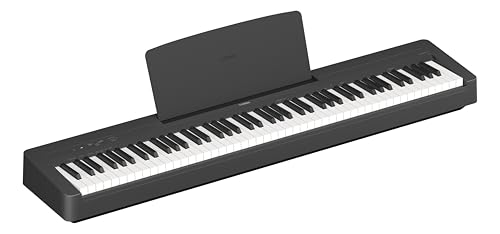
Yamaha P-145
Beginners who want the current Yamaha entry model with app control and a slim footprint
Read the Yamaha P-145 review →Head-to-Head Comparisons
Questions Buyers Ask
Yamaha P-225
See the current listing, price and included accessories.
About This Review
Mandrillis Team
The Mandrillis editorial team researches and compares audio and music gear using manufacturer documentation, verified specs and real buyer feedback, so you can make a confident purchase without wading through marketing claims.
Read our full research methodology.