Digital Pianos Review
Kawai CN201 Review: Let-Off, Counterweights and the SK-EX at Entry Console Prices
The CN201 is the first rung of Kawai's CN console line: the Responsive Hammer III action with let-off and counterweights, the SK-EX concert grand sampled on every key, 192-note polyphony, 2 x 20 W speakers, Bluetooth audio and MIDI and Kawai's Grand Feel pedals. This review explains why pianists rate it above rivals from Yamaha and Roland on touch and tone, and where its feature list is thinner.
Our Verdict
Research Score 89/100The Kawai CN201 is the entry console to buy if playing feel and piano tone matter more than features. RHIII with let-off and counterweights is a step above the Roland PHA-4 Standard and well above Yamaha's GHS, the SK-EX sample is warm and detailed, and the 20 watt speakers and Bluetooth are competitive. Nineteen sounds, no display and no USB audio recording are the trade-offs; the Roland RP701 and Yamaha YDP-184 offer more features for a similar outlay.
Editorial research score based on published specifications and documented features, not a customer rating or lab test.

Kawai
Kawai CN201
Best for: Pianists who want the most authentic action and tone in an entry Kawai console
Skip it if: you want a large sound library, a display or USB audio recording
Check Price on AmazonWe may earn a commission at no extra cost to you.
Listing verified: October 2026
Who Should Buy It
Buy it if
- You want let-off and counterweights in a home console
- Kawai's warm SK-EX tone is the sound you prefer
- You want three pedals that feel like a grand's
Skip it if
- You want hundreds of tones and a screen; look at the Roland RP701
- Recording audio to USB matters; look at the Casio PX-870 or Yamaha YDP-184
- The cabinet finish matters as much as the playing
Key Specifications
| Key Action | Responsive Hammer III with let-off and counterweights |
| Sound Engine | Harmonic Imaging with 88-key sampling |
| Voices | 19 |
| Polyphony | 192 notes |
| Speakers | 2 x 20 W |
| Bluetooth | Audio and MIDI |
| USB | USB MIDI |
| Pedals | 3 pedals, Grand Feel Pedal System |
| Weight | Not published in listing |
| Form Factor | Console with sliding key cover |
Where the CN201 Sits
Kawai's home consoles run from the KDP series through the CN series to the wooden-key CA series. The CN201 is the entry CN, and it inherits the same RHIII action and Harmonic Imaging engine as the ES920 portable, in a cabinet with three pedals, a sliding key cover and 20 watt speakers each side. Finishes are satin black, white and rosewood.
Against the Yamaha YDP-184, Roland RP701 and Casio AP-550 it competes on the two things Kawai is known for: the feel of the keys and the warmth of the grand piano sample. It does not compete on tone count or on-screen convenience.
Responsive Hammer III With Counterweights
RHIII is a three-sensor graded hammer action with a let-off simulation, a long key pivot and counterweights fitted in the bass keys. The counterweights lighten the touch for soft playing without reducing the hammer mass that gives a key its return, which makes pianissimo control noticeably easier than on actions without them. Key tops use Kawai's Ivory Touch texture.
Compared with the Roland PHA-4 Standard in the RP107 and RP701, RHIII is heavier, more even and more controllable at the quiet end, with a more convincing let-off. Compared with the Yamaha GH3 in the YDP-184, it adds the let-off and the counterweights the Yamaha lacks. Only the wooden-key actions in Kawai's CA series and Yamaha's Clavinova CLP-735 and above clearly surpass it.
Sound and Speakers
The main voice is the Shigeru Kawai SK-EX concert grand, sampled individually at all 88 keys with damper, string and cabinet resonance added by the Harmonic Imaging engine. It is warm, round and detailed, with a long natural decay, and it rewards headphones as much as speakers. Eighteen further sounds cover a second grand, uprights, electric pianos, organs, strings, harpsichord and bass. Polyphony is 192 notes.
The two 20 watt amplifiers drive a speaker system that is clear and full in a living room, stronger than the Roland RP701's 2 x 12 W and behind the Yamaha YDP-184's 2 x 30 W. The Virtual Technician, from the panel or the PianoRemote app, adjusts voicing, resonance depth, touch curve and temperament.
Connectivity and Features
Bluetooth audio streams play-along music through the speakers; Bluetooth MIDI connects to apps without a cable. USB MIDI links to a computer. Two headphone jacks sit under the keyboard with Spatial Headphone Sound. An internal recorder stores MIDI performances. What is missing is USB audio, flash-drive audio recording and a display, which the Roland RP701, Casio PX-870 and Yamaha YDP-184 variously provide.
Assembly and Cabinet
The CN201 assembles in about an hour with two people and sits on a slim console base with a sliding key cover and a fixed music rest. The listing does not state the weight; Kawai's CN consoles are typically in the 90 to 100 pound range. The satin finishes are understated and the cabinet is shallower than the Yamaha YDP-184's. A bench is included with many US listings; check the listing before assuming.
CN201 Against the Alternatives
Against the Yamaha YDP-184, the Kawai has the more refined action and warmer tone, Bluetooth and a lighter cabinet; the Yamaha has full VRM resonance, 256-note polyphony, 60 watts of speakers, a display and USB audio. Against the Roland RP701, the Kawai wins on action, tone and speakers and loses on tone count, display and USB recording. Against the Casio AP-550, the Casio's hybrid action with wooden elements and 256-note polyphony are competitive, and the Kawai's RHIII with counterweights is the more mature keyboard.
Buy the CN201 when you would rather spend on the keys and the piano sound than on features you may not use.
Long-Term Fit
The CN201 serves a student through advanced repertoire without the action becoming a limit. Owners who move on usually want the wooden Grand Feel actions of the CA series or the SK-EX Rendering engine in Kawai's higher models, both of which are refinements rather than fixes. For a family that wants a console a serious pianist will respect, the CN201 is one of the best-judged instruments at its price.
Strengths and Limitations
Strengths
- RHIII action with let-off, triple sensors and counterweights
- SK-EX concert grand sampled across all 88 keys
- 2 x 20 W speakers and Bluetooth audio and MIDI
- Grand Feel pedal system with weighted, graded pedal resistance
Limitations
- Nineteen sounds is modest for the price
- No USB audio recording
- Satin cabinet is plain next to Yamaha's gloss options
How We Scored It
Scores reflect published specifications, documented features and value against the alternatives below. They are editorial research scores, not laboratory measurements.
Alternatives to Consider

Yamaha Arius YDP-184
Serious students and returning adults who want the most capable Arius without stepping up to Clavinova
Read the Yamaha Arius YDP-184 review →
Roland RP701
Families who want a complete home piano with a display, recording and a huge sound library around Roland's PHA-4 action
Read the Roland RP701 review →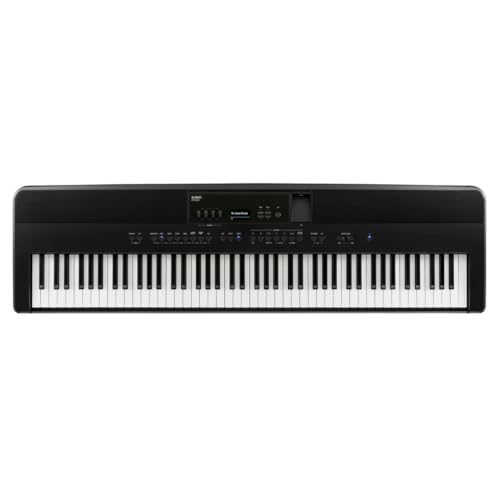
Kawai ES920
Serious pianists who want the best action and sound in a portable before the price of a Kawai console
Read the Kawai ES920 review →Head-to-Head Comparisons
- Kawai CN201 vs Yamaha Arius YDP-184 Compare →
Questions Buyers Ask
Kawai CN201
See the current listing, price and included accessories.
About This Review
Mandrillis Team
The Mandrillis editorial team researches and compares audio and music gear using manufacturer documentation, verified specs and real buyer feedback, so you can make a confident purchase without wading through marketing claims.
Read our full research methodology.