Digital Pianos Review
Kawai ES920 Review: Console Action in a Portable Case
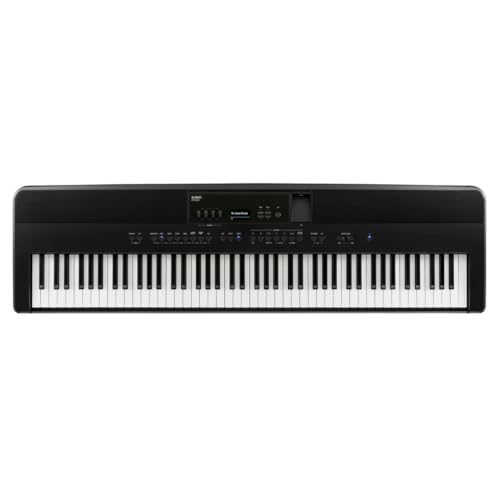
The ES920 is Kawai's flagship portable: the Responsive Hammer III action with let-off and counterweights, the Harmonic Imaging XL engine with 88-key sampling of the SK-EX and EX grands, 256-note polyphony, 2 x 20 W speakers, Bluetooth and USB audio. This review explains why it is the portable serious pianists choose, what the weight and price buy, and how it compares with the ES120 below it.
Our Verdict
Research Score 92/100The Kawai ES920 is the best portable piano for a serious pianist short of a stage flagship. The RHIII action with let-off and counterweights is a console-grade keyboard, the SK-EX and EX grands are sampled across every key, and the 20 watt speakers, OLED display, USB audio and Bluetooth leave nothing missing. It weighs 37.5 pounds and costs about twice the ES120, which is the only reason to look elsewhere.
Editorial research score based on published specifications and documented features, not a customer rating or lab test.
Kawai
Kawai ES920
Best for: Serious pianists who want the best action and sound in a portable before the price of a Kawai console
Skip it if: you need a light instrument or your budget stops at the mid-range
Check Price on AmazonWe may earn a commission at no extra cost to you.
Listing verified: October 2026
Who Should Buy It
Buy it if
- You want let-off, counterweights and a long pivot in a portable
- You perform and need strong onboard speakers and line outs
- You record over USB audio and use the Virtual Technician
Skip it if
- Weight matters; the ES120 and P-225 are far lighter
- You practice only on headphones and will not use the speakers
- You want a console with three pedals built in
Key Specifications
| Key Action | Responsive Hammer III with let-off and counterweights |
| Sound Engine | Harmonic Imaging XL with 88-key sampling |
| Voices | 38 |
| Polyphony | 256 notes |
| Speakers | 2 x 20 W |
| Bluetooth | Audio and MIDI |
| USB | USB audio and MIDI |
| Pedals | F-10H pedal included; GFP-3 triple pedal optional |
| Weight | 37.5 lb (17 kg) |
| Form Factor | Portable with OLED display |
What Separates the ES920 From the Mid-Range
The ES120, Roland FP-30X and Yamaha P-225 are excellent mid-range portables with compact actions and small speakers. The ES920 is built differently. Its RHIII action is the same keyboard Kawai fits to its CN201 console, with three sensors, a let-off simulation and counterweights in the bass keys. Its engine samples both the Shigeru Kawai SK-EX and the Kawai EX concert grands at every one of the 88 keys. Its speakers are 20 watts a side. And it has an OLED display, USB audio, Bluetooth audio and MIDI and balanced-quality line outputs.
The cost is weight and price: 37.5 pounds and roughly twice the ES120. The ES920 is a portable in the sense that it has no legs, not in the sense that you will enjoy carrying it every day.
Responsive Hammer III
RHIII is a graded hammer action with a longer key pivot than the compact actions in mid-range portables, which gives more leverage and a more natural feel when playing toward the back of the keys. Triple sensors register fast repetition accurately, let-off adds the slight notch a grand's escapement produces at pianissimo, and counterweights in the lower keys lighten the touch for soft playing without losing the hammer's mass. Key tops are Kawai's Ivory Touch textured surface.
Against the Roland PHA-4 Standard, RHIII is a step up in authenticity: heavier, more even and more controllable at the quiet end. Against the Korg RH3 on the D1, it is lighter and more refined with let-off the Korg lacks. For a pianist who practices on an acoustic and wants a portable that does not feel like a compromise, this is the action to try.
Harmonic Imaging XL and the Grands
Kawai's engine samples each key individually rather than stretching samples across octaves, and on the ES920 it does so for two concert grands: the SK-EX, Kawai's handmade flagship, and the EX. The SK-EX is warm, rich and detailed; the EX is more direct and brighter. Both respond to the full range of touch and both bloom with damper and string resonance when the pedal is down. Thirty-eight sounds add uprights, electric pianos, organs, strings, harpsichord, bass and pads.
The Virtual Technician, reachable from the panel or the PianoRemote app, adjusts voicing, resonance depth, hammer delay, touch curve, temperament and more. Polyphony is 256 notes. The 2 x 20 W speakers are the most powerful in any portable we have researched at this price and fill a living room or a small venue without an amplifier.
Connectivity
Left and right quarter-inch line outputs, two headphone jacks, USB with audio and MIDI, Bluetooth audio and Bluetooth MIDI, a line input and the pedal ports cover every home, studio and stage use. USB audio means the ES920 records its own sound into a DAW without an interface, which the ES120 cannot do. An internal recorder captures MIDI and audio to a USB flash drive.
Setup, Stand and Pedals
The box contains the piano, a music rest, the F-10H sustain pedal and a power adapter. Kawai's HM-5 stand and GFP-3 triple pedal turn the ES920 into a console with soft, sostenuto and half-damper pedals and a proper pedal feel. On an X-stand it needs a sturdy double-braced model because of the weight, and on stage it fits a heavy-duty 88-key case.
ES920 Against the Alternatives
Against the ES120, the ES920 has the far better action, both grands sampled rather than one, double the speaker power, USB audio and a display, for double the price and ten more pounds. Against the Roland FP-30X, it has a more authentic action, richer sound and stronger speakers at a much higher price; the FP-60X is the closer Roland rival. Against the Yamaha P-525, which we have not reviewed here, both are flagship portables and the choice usually comes down to the Kawai's warmth against the Yamaha's CFX brightness.
Buy the ES920 when you want console-grade playing in a case without legs and you are prepared to pay for it.
Long-Term Fit
Owners of the ES920 rarely upgrade to another portable because nothing above it in weight makes sense; they move to a Kawai CA console with wooden keys when they want more. For a working pianist who teaches, gigs and practices on one instrument, it is the kind of piano that lasts a decade, and Kawai's Virtual Technician means it can be revoiced as tastes change rather than replaced.
Strengths and Limitations
Strengths
- RHIII action with let-off, triple sensors and counterweights
- Harmonic Imaging XL with SK-EX and EX grands sampled across all 88 keys
- 2 x 20 W speakers, the most powerful in a portable at this price
- Bluetooth audio and MIDI plus USB audio and an OLED display
Limitations
- Heavy at 37.5 pounds
- Costs roughly double the ES120
- Plain, utilitarian styling
How We Scored It
Scores reflect published specifications, documented features and value against the alternatives below. They are editorial research scores, not laboratory measurements.
Alternatives to Consider

Kawai ES120
Players who prize a warm, acoustic-like piano tone and a light, well-connected portable
Read the Kawai ES120 review →
Roland FP-30X
Anyone who wants the complete mid-range portable: realistic action, generous polyphony, every connection
Read the Roland FP-30X review →
Yamaha P-225
Players who want Yamaha's flagship CFX tone in a slim portable with proper outputs
Read the Yamaha P-225 review →Head-to-Head Comparisons
- Kawai ES920 vs Casio Privia PX-S7000 Compare →
Questions Buyers Ask
Kawai ES920
See the current listing, price and included accessories.
About This Review
Mandrillis Team
The Mandrillis editorial team researches and compares audio and music gear using manufacturer documentation, verified specs and real buyer feedback, so you can make a confident purchase without wading through marketing claims.
Read our full research methodology.