Kawai ES920 vs Casio Privia PX-S7000
Quick Verdict
Choose the Kawai ES920 for the more refined action, the richer piano engine with two grands sampled on every key, USB audio, an OLED display and a lower price before accessories. Choose the Casio PX-S7000 for a designer cabinet with the stand and three pedals included, a four-speaker system and three concert grands in a slimmer body. The Kawai plays better per dollar; the Casio is the one you buy for the room.
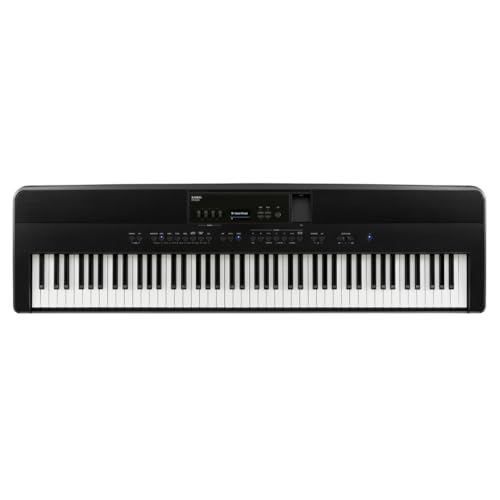

| Spec | Kawai ES920 | Casio Privia PX-S7000 |
|---|---|---|
| Key Action | Responsive Hammer III with let-off and counterweights | Smart Hybrid Hammer Action with spruce-blended keys |
| Sound Engine | Harmonic Imaging XL with 88-key sampling | Casio AiR with three concert grands |
| Voices | 38 | 400 |
| Polyphony | 256 notes | 256 notes |
| Speakers | 2 x 20 W | Four-speaker Spatial Sound System |
| Bluetooth | Audio and MIDI | Audio and MIDI via included adapter |
| USB | USB audio and MIDI | USB to Host audio and MIDI |
| Pedals | F-10H pedal included; GFP-3 triple pedal optional | 3-pedal unit and stand included |
| Weight | 37.5 lb (17 kg) | Not published in listing |
| Form Factor | Portable with OLED display | Slim designer piano with matching stand |
Two Flagship Portables
Both sit at the top of their makers' portable ranges with 256-note polyphony, hybrid or console-grade actions, Bluetooth audio and MIDI and strong speakers. The Kawai is a conventional slab with Responsive Hammer III and Harmonic Imaging XL. The Casio is a design object with the Smart Hybrid Hammer Action, three grands, 400 tones and a matching stand and pedal unit in the box. Priced with a stand and pedals added, the Kawai is still the cheaper package.
Action
The Kawai's RHIII has three sensors, let-off, counterweights and a long pivot; it is the same action as the CN201 console. The Casio's Smart Hybrid action uses spruce-blended keys on a longer pivot than its slim actions, with textured tops and a firm return. Both are serious keyboards. The Kawai is slightly more refined at the quietest dynamics thanks to its counterweights and let-off; the Casio's wooden elements give it a solid, substantial feel. Most pianists call it close, with the Kawai ahead.
Sound
The Kawai samples the SK-EX and EX concert grands at every key, with Harmonic Imaging XL resonance and the Virtual Technician for deep adjustment. The Casio offers three concert grands with distinct characters through the AiR engine with resonance, plus a large library of other tones and hall simulations. The Kawai's grands are the more natural; the Casio's offer more variety. Both have 256-note polyphony.
Speakers
The Casio's four-speaker Spatial Sound System fires forward and upward and sounds wider and fuller than the Kawai's 2 x 20 W pair, which is itself strong for a portable. In a living room the Casio has the edge; on headphones or through monitors the difference disappears.
Connectivity
Both have USB audio and MIDI, Bluetooth audio and MIDI, line outputs, two headphone jacks and audio recording to a USB flash drive. The Kawai has an OLED display on the panel; the Casio uses illuminated touch controls and the Casio Music Space app. The Kawai's PianoRemote app and Virtual Technician are the deeper adjustment tools.
Stand, Pedals and Design
The Casio includes its matching stand and three-pedal unit and comes in finishes designed for a living room, including the Harmonious Mustard of the listing reviewed. The Kawai includes a sustain pedal; its HM-5 stand and GFP-3 pedals are extra. The Casio lifts off its stand for transport; the Kawai at 37.5 pounds is a conventional stage carry.
Value
Add a stand and three pedals to the Kawai and it is still cheaper than the Casio at the listings we checked, with the better action and engine. The Casio's premium buys the design, the speaker system and the included furniture. Both are instruments you keep for a decade.
On Stage and in the Studio
The Kawai is the more conventional professional tool: an OLED display, physical buttons, balanced-quality quarter-inch outputs, USB audio and 37.5 pounds in a standard 88-key case. The Casio performs just as well on paper but its touch panel is harder to operate in stage light and its designer body is less at home on an X-stand. In a studio both record over USB audio; the Kawai's Virtual Technician gives more control over the recorded tone, the Casio's three grands give more variety of character.
Headphones and Home Practice
At home both are superb through headphones, with two jacks each and spatial processing to reduce fatigue. The Kawai's SK-EX is the warmer reference; the Casio's three grands let you choose a brighter or darker instrument for the piece. Through speakers in a living room the Casio's four-speaker system is the more immersive, which is part of what the design premium buys.
Ownership and Resale
Both are flagship instruments that owners keep for a decade. The Kawai's resale follows the ES series' strong reputation; the Casio's follows its design, which dates less than a specification because it is a furniture choice. Neither is likely to be outgrown by any home pianist, and both can be revoiced through their apps. The practical difference over ten years is weight: the Casio lifts off its stand and the Kawai is carried whole, which matters only if the piano moves.
Pedals and Stands in Detail
The Casio's included three-pedal unit gives soft, sostenuto and half-damper pedals from day one, mounted to the included stand so the geometry is fixed and correct. The Kawai ships with the F-10H, a switch-type pedal, and its GFP-3 triple pedal unit with half-damper support requires the HM-5 stand; together they add a meaningful sum. A Kawai owner who gigs can instead use the F-350 free-standing triple pedal with an X-stand. The practical result is that the Casio is a console the moment it is assembled, while the Kawai is a stage piano that becomes a console only with extra purchases.
Who Should Buy Which
Buy the Kawai ES920 if you want the most playing per dollar in a flagship portable, or if you gig and want a display and conventional panel. Buy the Casio PX-S7000 if the piano will be on show in a living room and you want the stand, pedals and the best speakers in a slim body included. Both are excellent; the choice is between the player's priorities and the room's.
Kawai ES920
Pros
- RHIII action with let-off, triple sensors and counterweights
- Harmonic Imaging XL with SK-EX and EX grands sampled across all 88 keys
- 2 x 20 W speakers, the most powerful in a portable at this price
- Bluetooth audio and MIDI plus USB audio and an OLED display
Cons
- Heavy at 37.5 pounds
- Costs roughly double the ES120
- Plain, utilitarian styling
Casio Privia PX-S7000
Pros
- Designer cabinet with matching stand and three pedals included
- Smart Hybrid Hammer Action with spruce-blended keys
- Three concert grand samples and 256-note polyphony
- Four-speaker system and full connectivity
Cons
- Priced well above most portables
- Touch panel and minimalist design over physical controls
- Colors are a matter of taste
Who Should Buy Each
Kawai ES920
- You want let-off, counterweights and a long pivot in a portable
- You perform and need strong onboard speakers and line outs
- You record over USB audio and use the Virtual Technician
Casio Privia PX-S7000
- The piano will stand in a living room as a design object
- You want hybrid keys, three grands and 256-note polyphony in a slim case
- You want the stand and pedals in the box
Quick Decision Guide
| If you want the most refined action and engine per dollar | Choose Kawai ES920 |
| If the piano is on show in a living room | Choose Casio PX-S7000 |
| If you want the stand and pedals included | Choose Casio PX-S7000 |
| If you gig and want a panel display | Choose Kawai ES920 |
| If you want the fullest built-in speakers | Choose Casio PX-S7000 |
FAQ
About This Comparison
Mandrillis Team
The Mandrillis editorial team researches and compares audio and music gear using manufacturer documentation, verified specs and real buyer feedback, so you can make a confident purchase without wading through marketing claims.
Read our full research methodology.
We may earn a commission at no extra cost to you.