Yamaha P-45 vs Yamaha P-145
Quick Verdict
Choose the Yamaha P-145 unless the P-45 is on a clear discount. The P-145 replaced the P-45 with a newer GHC action, a CFX-derived piano sample, a slimmer and lighter case, USB audio and Smart Pianist support, and the Bluetooth version adds audio streaming. The P-45 keeps the older GHS action and AWM sample. Both have ten voices and 64-note polyphony, so the P-45 makes sense only when the price gap is large.

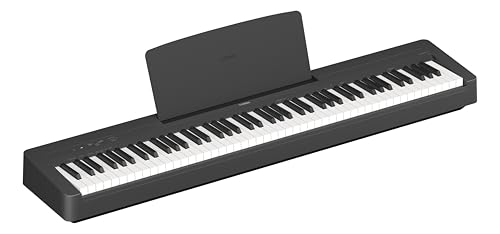
| Spec | Yamaha P-45 | Yamaha P-145 |
|---|---|---|
| Key Action | GHS (Graded Hammer Standard) | GHC (Graded Hammer Compact) |
| Sound Engine | AWM Stereo Sampling | Yamaha CFX sample |
| Voices | 10 | 10 |
| Polyphony | 64 notes | 64 notes |
| Speakers | 2 x 6 W | 2 x 7 W |
| Bluetooth | No | Audio (this listing) |
| USB | USB to Host (MIDI) | USB to Host (MIDI and audio) |
| Pedals | Sustain footswitch included | Sustain footswitch included |
| Weight | 25.4 lb (11.5 kg) | 24.5 lb (11.1 kg) |
| Form Factor | Portable slab | Portable slab, slim depth |
Old Favorite, New Replacement
The P-45 was Yamaha's entry portable for a decade and remains on sale alongside the P71, its Amazon-exclusive twin. The P-145 is its official successor. Because both are still sold, buyers face a real choice, and the answer depends on price more than on anything else.
What Stayed the Same
Ten voices, 64-note polyphony, one quarter-inch PHONES/OUTPUT jack, a sustain footswitch in the box, hold-and-press settings on the panel, and the matching stand and three-pedal options. Both are graded hammer-action pianos designed for the first years of lessons, and both are mains-only with no battery option.
Action: GHS to GHC
The P-45's GHS is a full-depth graded hammer action, heavier in the bass and lighter in the treble, with smooth keys. The P-145's GHC is a compact version with a shorter mechanism, which is what lets the P-145 be 268 mm deep instead of 295. In hand the GHC is slightly lighter and quicker; the GHS has a little more leverage at the back of the keys. Neither has escapement. Most beginners will not notice the difference; some experienced players prefer the older, deeper action.
Sound: AWM to CFX
The P-145's grand derives from Yamaha's CFX concert grand sample and is clearly more detailed than the P-45's AWM Stereo Sampling, with a warmer bass and cleaner top. Neither has resonance modeling. The P-145's 2 x 7 W speakers are a little stronger than the P-45's 2 x 6 W and both fire upward toward the player.
Connectivity and Apps
The P-45's USB carries MIDI only. The P-145's USB carries MIDI and audio, so it records its own sound into a computer, and it supports the Smart Pianist app, which puts voices, metronome and recording on a phone screen. The Bluetooth version of the P-145 adds audio streaming from a phone through the speakers. The P-45 has none of this.
Size and Weight
The P-145 is about an inch shallower and a pound lighter: 268 mm and 24.5 pounds against 295 mm and 25.4 pounds. On a desk the extra inch matters more than it sounds.
Price and Availability
At the listings we checked the P-45 and P71 were cheaper than the Bluetooth P-145 by a modest margin. Clearance pricing on the P-45 varies widely. If the gap is small, the P-145's improvements are worth it; if the P-45 is substantially cheaper, it remains a good first piano and the saving funds a proper pedal and stand.
Setup and Accessories
Both ship with a music rest, a footswitch and a power adapter, and both take the same approach to accessories: a matching Yamaha stand and the LP-5A three-pedal unit. The P-45 uses the L-85 stand; the P-145 uses the L-100. An FC3A half-damper pedal improves either. Because the P-145 is slimmer, it also fits a wider range of desks and third-party stands with a tablet in front of the keys, which is the practical difference most owners notice first.
Lessons, Apps and Recording
Both connect to lesson apps over USB MIDI. Only the P-145 carries audio over USB, which means Rec'n'Share can record practice videos with the piano's direct sound and a DAW can capture it without an interface. Only the P-145 works with Smart Pianist, whose on-screen panel replaces the hold-and-press key chart both pianos otherwise rely on. The Bluetooth P-145 adds streaming of backing tracks through the speakers. For a student practicing with apps, those three features are the day-to-day reasons to pay the difference.
Which Lasts Longer
Neither lasts a serious student beyond the intermediate years, because both have 64-note polyphony and ten voices, and both are usually sold on when the player wants a P-225 or an FP-30X. The P-145 holds its value better as the current model. The P-45 and P71 remain reliable, widely serviced instruments with strong used demand, so buying one at a discount and selling it later costs very little. The decision is simply about how much the newer action, sound and connectivity are worth to you today.
Speakers and Polyphony in Daily Practice
Both pianos fire their speakers upward through the top panel toward the player. The P-145's 2 x 7 W pair is a little fuller than the P-45's 2 x 6 W, and the newer sample makes better use of them, but neither fills a living room and both mute as soon as headphones are plugged in. The shared 64-note polyphony behaves the same on both: fine for lesson pieces, audibly dropping notes when a Chopin nocturne is pedaled through. In other words, the daily experience of the two is closer than the spec sheet suggests, which is why the price gap decides it.
Who Should Buy Which
Buy the P-145 as the default. Buy the P-45 or P71 only at a clear discount, or if you specifically prefer the older full-depth GHS action and do not care about apps, USB audio or Bluetooth.
Yamaha P-45
Pros
- Graded hammer action that feels heavier in the bass like an acoustic
- Simple one-button operation with nothing to configure
- Light enough to carry to lessons or gigs
- Sold for years, so stands, pedals and cases are easy to find
Cons
- 64-note polyphony runs out on dense pedaled passages
- Single headphone jack doubles as the only audio output
- Older sound engine than the P-145 that replaces it
Yamaha P-145
Pros
- Slimmer and lighter than the P-45 it replaces
- GHC action keeps a graded hammer feel in a shallower keybed
- Smart Pianist app turns a phone into the control panel
- Bluetooth audio on this version lets you stream play-along tracks
Cons
- Still 64-note polyphony
- Only ten voices
- Headphone jack doubles as the sole audio output
Who Should Buy Each
Yamaha P-45
- You are starting lessons and your teacher asked for 88 weighted keys
- You want the simplest possible piano with no menus to learn
- You plan to connect to a computer or tablet over USB for apps
Yamaha P-145
- You are buying a first piano and want the newest entry-level Yamaha
- Space is tight and you need a shallow, light instrument
- You practice with play-along tracks from a phone
Quick Decision Guide
| If prices are close | Choose Yamaha P-145 |
| If the P-45 is on a large clearance discount | Choose Yamaha P-45 |
| If you want USB audio recording and app control | Choose Yamaha P-145 |
| If you want the slimmer, lighter case | Choose Yamaha P-145 |
| If you prefer the older full-depth GHS action | Choose Yamaha P-45 |
FAQ
About This Comparison
Mandrillis Team
The Mandrillis editorial team researches and compares audio and music gear using manufacturer documentation, verified specs and real buyer feedback, so you can make a confident purchase without wading through marketing claims.
Read our full research methodology.
We may earn a commission at no extra cost to you.