Digital Pianos Review
Yamaha P-45 Review: Is the Classic Beginner Piano Still Worth It?
The P-45 has been the default first digital piano for a decade. This review looks at what the GHS action and AWM engine still do well, where the 64-note polyphony and single output hold it back, and whether the newer P-145 makes it redundant.
Our Verdict
Research Score 80/100The Yamaha P-45 is still a sound choice for a first digital piano if you find it at a clear discount to the P-145. The GHS graded hammer action teaches proper finger strength, the piano tone is clean, and there is nothing to configure. Pay the same money for the P-145 instead if you can, because it is slimmer, lighter and uses a newer action and engine.
Editorial research score based on published specifications and documented features, not a customer rating or lab test.

Yamaha
Yamaha P-45
Best for: First-year students who want a proven weighted 88-key piano at the lowest Yamaha price
Skip it if: you want Bluetooth, app control or more than 64 notes of polyphony
Check Price on AmazonWe may earn a commission at no extra cost to you.
Listing verified: October 2026
Who Should Buy It
Buy it if
- You are starting lessons and your teacher asked for 88 weighted keys
- You want the simplest possible piano with no menus to learn
- You plan to connect to a computer or tablet over USB for apps
Skip it if
- You play advanced repertoire with heavy sustain pedal use
- You want to stream backing tracks to the piano over Bluetooth
- You need a line output for a PA or recording interface
Key Specifications
| Key Action | GHS (Graded Hammer Standard) |
| Sound Engine | AWM Stereo Sampling |
| Voices | 10 |
| Polyphony | 64 notes |
| Speakers | 2 x 6 W |
| Bluetooth | No |
| USB | USB to Host (MIDI) |
| Pedals | Sustain footswitch included |
| Weight | 25.4 lb (11.5 kg) |
| Form Factor | Portable slab |
What the P-45 Actually Is
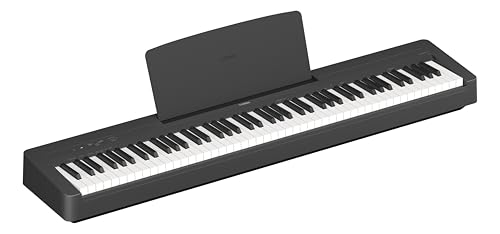
The P-45 is Yamaha's longest-running entry-level portable: 88 keys with Graded Hammer Standard action, ten voices, two 6 watt speakers and a single USB to Host port. The Amazon-exclusive P71 is the same instrument with a different model number and a sustain pedal in the box, so everything in this review applies to both.
It launched as the replacement for the P-35 and has since been succeeded by the P-145, but Yamaha and retailers still sell it. That matters because the P-45 now competes mainly on price rather than features.
Key Action: GHS Does the Important Job
GHS is Yamaha's basic graded hammer mechanism. The low keys resist more than the high keys, which is the single most important thing a beginner piano can do, because it builds the finger strength that an unweighted keyboard never will. The keys are plastic with a matte black finish and no simulated ivory texture.
Compared with the PHA-4 Standard action on the Roland FP-10 at a similar price, GHS feels lighter and a little springier on the return. Compared with the GHC action in the P-145, it is slightly heavier in hand and the keybed is deeper front to back. Neither difference is a deal-breaker for the first two or three years of lessons.
Sound: Clean Piano, Dated Engine
The main grand piano voice comes from AWM Stereo Sampling, which is an older engine than the CFX-based sound in the P-225. It is clear and even across the keyboard but lacks the string and damper resonance that newer models add when you hold the pedal.
The real constraint is 64-note polyphony. Play a slow piece with the sustain pedal down and layer a voice in Dual mode, and notes start dropping out. Most beginners will never hit that ceiling, but intermediate students working on Romantic repertoire will.
The two 6 watt speakers are fine for a bedroom or practice room. They distort at full volume on dense chords, so plan on headphones or an external speaker for anything louder than home practice.
Features and Everyday Use
Operation is deliberately minimal: hold the Function button and press a key to change voices, transpose, set the metronome or enable Duo mode, which splits the keyboard into two identical halves for teacher and student. There is no screen, so you learn the key map or keep the chart handy.
USB to Host carries MIDI only, so the P-45 works with learning apps on a laptop or tablet through a cable. There is no Bluetooth and no audio over USB, which are the two features that date it most against the P-145 and P-225.
P-45 or P-145?
The P-145 replaces the P-45 with a newer GHC action, a slimmer and lighter cabinet, slightly more powerful 7 watt speakers and Smart Pianist app support. The Bluetooth-equipped P-145 version adds audio streaming for play-along tracks. Both keep 64-note polyphony and ten voices.
If the price gap is small, the P-145 is the better buy. If the P-45 or P71 is on clearance at a meaningful discount, it remains a perfectly good first piano, and the money saved covers a proper stand and a three-pedal unit.
Setting It Up at Home
The P-45 arrives with a music rest, a footswitch and the PA-150 power adapter, and that is everything you need to play the same evening on a desk or an X-stand. The footswitch is a small plastic box; it works, but the first upgrade most owners make is a piano-style pedal such as the Yamaha FC3A, because the switch slides on hard floors and feels nothing like a real damper pedal.
If the piano will live in one place, Yamaha's L-85 stand bolts to the underside and the LP-5A three-pedal unit bolts to the stand, giving you soft, sostenuto and half-pedal damper. Together they turn the P-45 into a slim console for roughly the cost of a single lesson a month over a year. On an X-stand the keys sit slightly high for most chairs, so check the height before buying a bench.
Headphone users should budget for a quarter-inch adapter if their headphones end in a 3.5 mm plug. The speakers mute as soon as a plug goes in, which is what you want for late practice.
What Owning One Is Like After a Year
The P-45 is the piano students sell after two or three years, not because it breaks but because they outgrow it. The GHS action holds up well to daily practice and the plastic keys do not develop the clicking that cheaper actions sometimes do. The two things that push people to upgrade are polyphony dropping notes on pedaled pieces and the wish for a richer, more resonant tone once their ear improves.
Resale is easy because the model is so widely known, which lowers the real cost of starting here. If you want to avoid the second purchase altogether, the P-225 covers the next several years of study for a moderate premium, and the Roland FP-10 gives a more substantial action at close to the same price as the P-45 today.
Strengths and Limitations
Strengths
- Graded hammer action that feels heavier in the bass like an acoustic
- Simple one-button operation with nothing to configure
- Light enough to carry to lessons or gigs
- Sold for years, so stands, pedals and cases are easy to find
Limitations
- 64-note polyphony runs out on dense pedaled passages
- Single headphone jack doubles as the only audio output
- Older sound engine than the P-145 that replaces it
How We Scored It
Scores reflect published specifications, documented features and value against the alternatives below. They are editorial research scores, not laboratory measurements.
Alternatives to Consider
Yamaha P-145
Beginners who want the current Yamaha entry model with app control and a slim footprint
Read the Yamaha P-145 review →
Roland FP-10
Beginners who want the best key feel available under the entry price ceiling
Read the Roland FP-10 review →
Casio CDP-S160
Beginners and casual players who need a light, slim piano that can run anywhere
Read the Casio CDP-S160 review →Head-to-Head Comparisons
- Yamaha P-45 vs Yamaha P-145 Compare →
Questions Buyers Ask
Yamaha P-45
See the current listing, price and included accessories.
About This Review
Mandrillis Team
The Mandrillis editorial team researches and compares audio and music gear using manufacturer documentation, verified specs and real buyer feedback, so you can make a confident purchase without wading through marketing claims.
Read our full research methodology.