Yamaha P-145 vs Casio CDP-S160
Quick Verdict
Choose the Yamaha P-145 if you want the newer CFX-derived piano sound, USB audio recording and Yamaha's Smart Pianist app, in a slim case. Choose the Casio CDP-S160 if you want the lightest, slimmest hammer-action piano, battery power, textured keys and the option of a three-pedal unit, at a lower price. The Yamaha sounds a little better; the Casio is more practical and costs less.
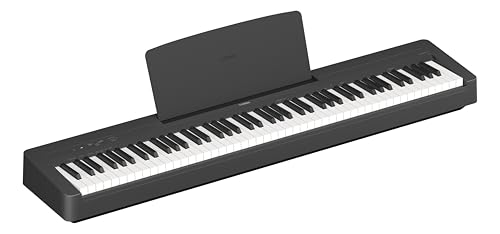

| Spec | Yamaha P-145 | Casio CDP-S160 |
|---|---|---|
| Key Action | GHC (Graded Hammer Compact) | Scaled Hammer Action Keyboard II |
| Sound Engine | Yamaha CFX sample | Casio AHL-derived stereo grand |
| Voices | 10 | 10 |
| Polyphony | 64 notes | 64 notes |
| Speakers | 2 x 7 W | 2 x 8 W |
| Bluetooth | Audio (this listing) | No |
| USB | USB to Host (MIDI and audio) | USB to Host (MIDI) |
| Pedals | Sustain footswitch included | Sustain pedal included; SP-34 triple pedal optional |
| Weight | 24.5 lb (11.1 kg) | 23 lb (10.5 kg) |
| Form Factor | Portable slab, slim depth | Ultra-slim portable, battery capable |
Two Slim Entry Pianos
Both are compact 88-key pianos with graded hammer actions, ten voices and 64-note polyphony. Casio has sold the CDP-S160 for several years; the P-145 is Yamaha's newer answer to it. They are close in size, with the Casio slightly slimmer and about two pounds lighter, and the Casio was cheaper at the listings we checked.
Action
The Yamaha's GHC and the Casio's Scaled Hammer Action Keyboard II are both short-mechanism graded actions designed for slim cases. The Yamaha feels slightly more consistent across the range; the Casio has simulated ebony and ivory textures on the key tops, which give better grip than the Yamaha's smooth keys. Neither has escapement. For a first instrument both are credible, and the choice between them is closer than the choice against the Roland FP-10, which has a heavier, full-depth action.
Sound
The P-145's grand comes from Yamaha's CFX sample and has a warmer bass and clearer top than the CDP-S160's grand, which is clean but plainer. Both have 64-note polyphony and ten voices. Through the speakers the Casio's 2 x 8 W pair is marginally louder than the Yamaha's 2 x 7 W; through headphones the Yamaha is the better listen.
Connectivity
The Yamaha's USB carries audio and MIDI and works with Smart Pianist over a cable; the Bluetooth version adds audio streaming. The Casio's USB is class-compliant MIDI only, with the Chordana Play app over the cable. The Yamaha has a quarter-inch headphone jack; the Casio's is a 3.5 mm mini-jack, which needs an adapter for most studio headphones. Neither has a dedicated line output.
Power and Portability
The Casio runs on six AA batteries as well as mains power, which the Yamaha cannot do, and at 23 pounds it is about two pounds lighter. For busking, school or a piano that travels, the Casio is the obvious choice. At home the difference disappears.
Pedals and Stands
Both include a basic sustain pedal. Casio's SP-34 three-pedal unit and CS-46 stand turn the CDP-S160 into a slim console with soft, sostenuto and half-damper pedals at a modest cost. Yamaha's L-100 stand and LP-5A pedals do the same for the P-145 at a higher combined price.
Apps and Learning
Smart Pianist gives the Yamaha an on-screen panel, a Piano Room and chord charts for audio files. Chordana Play for Piano gives the Casio on-screen control, a score display and lesson functions. Both work with third-party lesson apps over USB.
Speakers and Headphones in Daily Use
Both pianos fire their speakers upward toward the player, which makes them sound louder at the keys than across a room. The Casio's 2 x 8 W pair is a touch fuller; the Yamaha's 2 x 7 W pair is a touch clearer. In a bedroom either is enough. On headphones the Yamaha's CFX-derived grand pulls ahead, and the Casio's 3.5 mm jack means an adapter for most studio headphones, a small daily annoyance the Yamaha's quarter-inch socket avoids.
Apps, Lessons and Recording
Both connect to lesson apps over USB. Yamaha's Smart Pianist gives the P-145 a full on-screen panel and the Rec'n'Share app records video with the piano's own audio over the same cable, because the P-145 carries audio over USB. Casio's Chordana Play for Piano gives the CDP-S160 a score display and a lesson function; recording the Casio's sound needs a cable from the headphone jack into an interface. Both have Duo modes for teacher and student and a built-in metronome.
Which One You Grow Out Of First
Both have 64-note polyphony and compact actions, so both reach the same ceiling at the same time: pedal-heavy intermediate pieces and the wish for resonance in the sound. The Casio's upgrade path is the PX-S1100, which keeps the slim case and battery power and adds the AiR engine, 192-note polyphony and Bluetooth MIDI. The Yamaha's is the P-225, which keeps the GHC action and adds the CFX sample with VRM Lite, 192 notes and line outputs. Both paths are sensible, and both entry models hold their value as current designs.
Build Quality and Key Noise
Both are plastic-bodied portables built to a price, and both have held up well in the hands of students. The Casio's case is the slimmer and feels a little less rigid when lifted by one end; the Yamaha's deeper body is stiffer and its music rest is sturdier. Key noise matters in a shared home: the Casio's action is slightly quieter on the return, the Yamaha's slightly quieter on the strike. Neither clatters the way cheaper hammer actions do, and neither has developed a reputation for keys loosening with use.
Who Should Buy Which
Buy the Yamaha P-145 if sound quality, USB audio recording or the Yamaha app matter and the piano will stay at home. Buy the Casio CDP-S160 if you want the lightest slim hammer-action piano, battery power, textured keys and a cheaper route to three pedals. For a student who will progress quickly, consider skipping both for the Roland FP-10's action or the Casio PX-S1100's engine.
Yamaha P-145
Pros
- Slimmer and lighter than the P-45 it replaces
- GHC action keeps a graded hammer feel in a shallower keybed
- Smart Pianist app turns a phone into the control panel
- Bluetooth audio on this version lets you stream play-along tracks
Cons
- Still 64-note polyphony
- Only ten voices
- Headphone jack doubles as the sole audio output
Casio CDP-S160
Pros
- Runs on six AA batteries as well as mains power
- Slimmest and lightest hammer-action piano at this price
- Scaled hammer action with textured key tops
- Optional SP-34 three-pedal unit and CS-46 stand turn it into a console
Cons
- 64-note polyphony
- Headphone output is a 3.5 mm mini-jack
- Piano tone is thinner than the Privia PX-S1100
Who Should Buy Each
Yamaha P-145
- You are buying a first piano and want the newest entry-level Yamaha
- Space is tight and you need a shallow, light instrument
- You practice with play-along tracks from a phone
Casio CDP-S160
- You need to carry the piano regularly or store it upright
- You want battery operation for busking, school or outdoor use
- A first piano on a tight budget with a real hammer action
Quick Decision Guide
| If you want the better piano sound | Choose Yamaha P-145 |
| If you want battery power and the lightest piano | Choose Casio CDP-S160 |
| If you want USB audio recording | Choose Yamaha P-145 |
| If you want textured keys and a cheap three-pedal option | Choose Casio CDP-S160 |
| If price is the deciding factor | Choose Casio CDP-S160 |
FAQ
About This Comparison
Mandrillis Team
The Mandrillis editorial team researches and compares audio and music gear using manufacturer documentation, verified specs and real buyer feedback, so you can make a confident purchase without wading through marketing claims.
Read our full research methodology.
We may earn a commission at no extra cost to you.