Digital Pianos Review
Yamaha Arius YDP-105 Review: The Entry Console With Everything in the Box
The YDP-105 is the least expensive way into Yamaha's Arius console range. It packages the GHS action and AWM engine from the portable P-45 into a furniture cabinet with three pedals, a sliding stand and a matching bench. This review explains what that buys you and what it does not.
Our Verdict
Research Score 79/100The Yamaha Arius YDP-105 is the right choice when you want a real three-pedal upright for a child or adult beginner and do not want to assemble a portable piano, a stand and a pedal unit from separate boxes. The limits are inherited from the P-45: 64-note polyphony, ten voices and no Bluetooth. If the budget allows, the YDP-146 adds the CFX sample and Bluetooth for a worthwhile step up.
Editorial research score based on published specifications and documented features, not a customer rating or lab test.

Yamaha
Yamaha Arius YDP-105
Best for: Families who want a proper three-pedal upright for lessons without portable-piano clutter
Skip it if: you want a richer sound engine or app features for the same money
Check Price on AmazonWe may earn a commission at no extra cost to you.
Listing verified: October 2026
Who Should Buy It
Buy it if
- You want a piano that looks like furniture and stays in one room
- A student needs all three pedals for exam pieces
- Two people will use headphones at once
Skip it if
- You might move the piano between rooms or to gigs
- You want Bluetooth streaming or app control
- You can stretch to the YDP-146 for CFX sound and Bluetooth
Key Specifications
| Key Action | GHS (Graded Hammer Standard) |
| Sound Engine | AWM Stereo Sampling |
| Voices | 10 |
| Polyphony | 64 notes |
| Speakers | 2 x 6 W |
| Bluetooth | No |
| USB | USB to Host (MIDI) |
| Pedals | 3 pedals built in |
| Weight | 82.7 lb (37.5 kg) per listing |
| Form Factor | Upright console with bench |
What You Get for the Money
A complete console piano: the keyboard with its three-pedal base, a wood-grain cabinet in rosewood or black, a bench and a music rest. Assembly is four side panels and a pedal board. Nothing else is needed on day one, which is the whole case for buying a console over a portable at this level.
Inside it is essentially a P-45. The GHS action, AWM Stereo Sampling engine, ten voices, 64-note polyphony and twin 6 watt speakers are shared, so if you have played the P-45 you already know how the YDP-105 feels and sounds.
Action and Pedals
GHS gives a graded weight from bass to treble with a plastic, matte key surface. It is a lighter touch than the GH3 action on the YDP-184 and the Roland PHA-4 on the RP107, but it is a true hammer action and the right starting point for lessons.
The three built-in pedals are the practical upgrade over any portable at this price. The damper pedal supports half-pedaling, and the soft and sostenuto pedals are there when exam pieces or more advanced repertoire call for them.
Sound Through Speakers and Headphones
The grand piano voice is clean and well balanced but belongs to the previous generation of Yamaha sampling. There is no string or damper resonance, so pedaled chords sound slightly flat compared with the CFX-based YDP-146 and YDP-184. Through the dual headphone jacks it is perfectly pleasant for practice.
The 6 watt speakers point downward from the underside of the keyboard, which gives a softer, more diffuse sound than a portable's top-firing speakers. For a bedroom or a small living room they are adequate; they will not fill a larger space.
Connectivity
A single USB to Host port sends MIDI to a computer or tablet, so learning apps work with a cable. There is no Bluetooth, no USB audio and no line output. For a piano that lives in one room and connects to nothing, that is acceptable; for anyone who records or streams, it is the first thing to check.
YDP-105 or YDP-146?
The YDP-146 sits one step up with the CFX concert grand sample, damper and string resonance, Bluetooth audio and MIDI, and a larger lesson library. It keeps the GHS action. If you can afford the gap, the sound and connectivity improvements will outlast the YDP-105 by several years of progress.
If the budget is fixed, the YDP-105 is still a good console for lessons, and it is a better long-term setup than a P-45 on an X-stand for a child learning pedal technique.
Assembly and Placement
The YDP-105 arrives in one large carton: the keyboard unit, two side panels, a back board, the pedal board with its cable and the bench. Two people assemble it in about half an hour with the included screws and a Phillips screwdriver. The pedal cable plugs into the underside of the keyboard before the final panel goes on, and the whole piano then stands around 32 inches tall and 54 inches wide.
Because the cabinet is shallow for a console, it fits against a hallway or bedroom wall without dominating the room. The key cover is a folding lid rather than a sliding one, which keeps dust off the keys and gives children a clear signal that practice time is over. Headphone jacks are on the front left underside, where they are easy to reach from the bench.
Practice, Lessons and Growing Out of It
For a child's first few years of lessons the YDP-105 does the job a teacher wants: 88 graded keys, a working damper pedal with half-pedal response, and the two other pedals ready for when the repertoire needs them. Duo mode splits the keyboard into two identical ranges so a parent or teacher can sit alongside, and the dual headphone jacks let both listen in silence.
The 64-note polyphony and ten voices will eventually feel limiting, typically when a student reaches intermediate pieces with long sustained passages. At that point the YDP-105 is still a sound, saleable instrument, but a family planning for five or more years of study is better served stretching to the YDP-146 or YDP-184 now, both of which carry the CFX sample and higher polyphony. Alternatively, the Casio PX-770 delivers a three-sensor action and 128-note polyphony at a similar price, without the bench.
Strengths and Limitations
Strengths
- Furniture-style cabinet with three pedals and a bench in the box
- GHS graded action at the lowest Arius price
- Dual headphone jacks for teacher and student
- Nothing to assemble beyond the stand and bench
Limitations
- Same 64-note polyphony and ten voices as the portable P-45
- No Bluetooth or USB audio
- Speakers are modest for a console
How We Scored It
Scores reflect published specifications, documented features and value against the alternatives below. They are editorial research scores, not laboratory measurements.
Alternatives to Consider

Yamaha Arius YDP-184
Serious students and returning adults who want the most capable Arius without stepping up to Clavinova
Read the Yamaha Arius YDP-184 review →
Casio Privia PX-770
Students who want a three-pedal console with a three-sensor action at the lowest Privia price
Read the Casio Privia PX-770 review →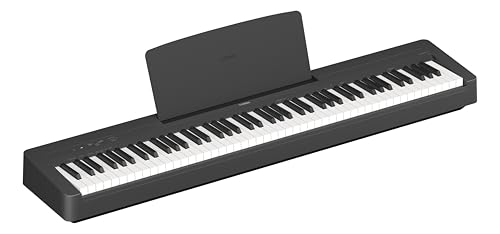
Yamaha P-145
Beginners who want the current Yamaha entry model with app control and a slim footprint
Read the Yamaha P-145 review →Head-to-Head Comparisons
- Casio Privia PX-770 vs Yamaha Arius YDP-105 Compare →
Questions Buyers Ask
Yamaha Arius YDP-105
See the current listing, price and included accessories.
About This Review
Mandrillis Team
The Mandrillis editorial team researches and compares audio and music gear using manufacturer documentation, verified specs and real buyer feedback, so you can make a confident purchase without wading through marketing claims.
Read our full research methodology.