Shure SM7B vs Audio-Technica AT4040
Quick Verdict
The Shure SM7B and Audio-Technica AT4040 both land near the top of this group, with the SM7B scoring 87 and the AT4040 scoring 86. The SM7B is a dynamic cardioid microphone built for close up vocals, podcasting and streaming, and this listing includes a 20 ft XLR cable, a detachable windscreen and a switch cover plate. The AT4040 is a large diaphragm true condenser aimed at home and project studios that want one microphone for vocals, acoustic instruments and louder sources. Choose the SM7B if you want the broadcast standard dynamic sound and already have a strong preamp. Choose the AT4040 if you want condenser detail and high SPL handling and do not mind supplying your own cable and phantom power.

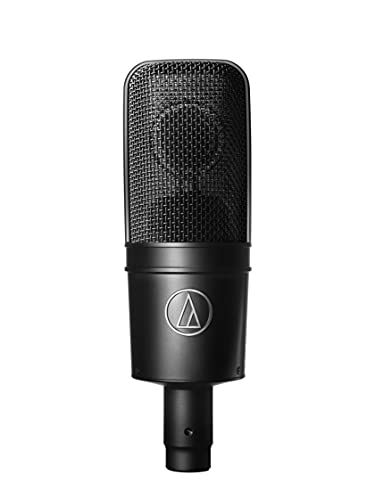
| Spec | Shure SM7B | Audio-Technica AT4040 |
|---|---|---|
| Type | Dynamic (XLR) | Large-diaphragm true condenser, externally polarized (DC bias) |
| Connectivity | XLR, needs a strong preamp | N/A |
| Pattern | Cardioid | N/A |
| Polar pattern | N/A | Cardioid |
| Frequency response | N/A | Not published in listing |
| Connection | N/A | Not published in listing |
| Phantom power | N/A | Required for an externally polarized condenser; voltage not published in listing |
| Max SPL or sensitivity | N/A | Not published in listing; described as high-SPL capable with exceptionally low noise |
| Controls | N/A | Not published in listing |
| Mount and stand | N/A | Not published in listing |
| Weight | N/A | Not published in listing |
| Included accessories | N/A | Not published in listing |
Sound Quality
The Shure SM7B scores 27 out of 30 for sound quality, while the Audio-Technica AT4040 scores 28 out of 30. Both are cardioid microphones, but they use different technologies. The SM7B is a dynamic microphone, and the AT4040 is a large diaphragm true condenser with an externally polarized, DC biased capsule.
The SM7B listing describes a smooth, flat, wide range character suited to speech and music, without publishing exact frequency figures. The AT4040 listing calls its sound smooth and natural, aided by transformerless circuitry that keeps low frequencies clean and transients fast. Neither listing publishes a numeric frequency response chart.
The practical difference comes down to sensitivity and detail. The dynamic SM7B needs close mic technique and more gain, but it naturally rejects more room sound. The condenser AT4040 is more sensitive and detailed, and the listing notes it stays exceptionally low noise even at high SPL, which suits vocals and louder instruments alike.
Pickup Pattern and Noise Handling
Both microphones use a cardioid pickup pattern, which rejects sound from the rear while focusing on what sits directly in front of the capsule. The SM7B scores 13 out of 15 in this category, and the AT4040 scores 12 out of 15 on the same scale.
The SM7B listing highlights air suspension shock isolation, a built in pop filter, and electromagnetic shielding against monitor hum, all aimed at keeping unwanted noise out of the signal. The AT4040 listing does not mention shock isolation or an internal pop filter, but it does describe exceptionally low self noise and a wide dynamic range.
For noisy rooms, the dynamic SM7B has a real advantage because its lower sensitivity picks up less ambient sound when used close to the mouth. The condenser AT4040, being more sensitive, will capture more of an untreated room unless you add external shock mounting and acoustic treatment.
Build Quality
Build quality is close between the two, with the SM7B at 14 out of 15 and the AT4040 also at 14 out of 15. Neither listing publishes a specific weight figure, though the SM7B is widely known to need a sturdy boom arm in daily use.
The SM7B listing emphasizes its internal shock isolation and electromagnetic shielding as core build features rather than describing the housing material directly. The AT4040 listing calls out a nickel plated brass baffle that helps keep the capsule element stable under handling and vibration.
Neither listing provides a mount, a stand, or exact dimensions, so buyers should budget for a boom arm or stand and a shock mount separately. Both microphones come from manufacturers with a long track record in professional and broadcast audio, which supports confidence in long term durability even without every spec published.
Connectivity and Setup
The SM7B connects only by XLR, and this listing includes a 20 ft XLR cable, which covers setup without an extra purchase. The AT4040 listing does not state its connector type or whether a cable is included, though XLR is standard for this class of condenser microphone.
Setup differs mainly by power requirement. The SM7B is dynamic and does not need phantom power, so it works with any basic XLR input. The AT4040 is a true condenser with an externally polarized capsule, so it requires phantom power from an interface or mixer, though the listing does not state the exact voltage.
In scoring, the SM7B earns 12 out of 15 for connectivity and setup, and the AT4040 also earns 12 out of 15. Both require an outboard interface or mixer rather than a direct computer connection, since neither is described as a USB microphone in its listing.
Features, Controls and Extras
The SM7B includes onboard controls, a bass rolloff switch and a presence boost switch, both with a graphic display showing the current setting. The AT4040 listing does not mention any onboard switches or controls, suggesting a simpler, set and forget design focused purely on capture.
For extras, the SM7B listing includes an A7WS detachable windscreen, an RPM602 switch cover plate, the 20 ft XLR cable, and a 2 year warranty. The AT4040 listing does not state any included accessories, so a shock mount, cable, and pop filter would likely be separate purchases.
Scoring reflects this gap. The SM7B earns 12 out of 15 for features and extras, while the AT4040 earns 11 out of 15. Buyers who want a microphone that arrives ready to use with tone shaping switches may lean toward the SM7B, while those who want a simpler condenser may prefer the AT4040.
Use Cases: Vocals, Streaming, Podcasting and Instruments
For vocals, the SM7B is built for close up spoken and sung performance, and the listing's description of a smooth, flat, wide range dynamic sound reflects decades of use on broadcast and podcast vocals. The AT4040 is also suited to vocals, but it captures more room detail because of its condenser sensitivity.
For streaming and podcasting, the SM7B needs a solid preamp or booster since its output is low, but it rewards that investment with a tolerant, broadcast ready sound in untreated rooms. The AT4040 can work for streaming too, though an untreated room will be more audible through its more sensitive capsule.
For instruments, the AT4040 listing specifically calls out high SPL handling, suggesting it can sit in front of a loud cabinet or acoustic instrument without distortion, something the SM7B listing does not address directly. For anyone who wants one microphone for vocals, acoustic guitar, and occasional loud sources, the AT4040 is the more flexible studio tool based on what is published.
Who Should Buy It
The Shure SM7B is best for podcasters, streamers, and vocalists who already have, or are willing to add, a capable preamp. It suits anyone who wants the broadcast standard dynamic sound, with a cable and windscreen included in this listing.
The Audio-Technica AT4040 is best for home and project studios that want one serious large diaphragm condenser for vocals, acoustic instruments, and louder sources. It fits best where phantom power and a reasonably quiet room are already available.
Buyers torn between the two should consider their room and interface first. A capable preamp plus an untreated room favors the SM7B, while a treated room plus the need for condenser detail across many sources favors the AT4040.
The Deciding Question
The deciding question is whether your room and interface suit a dynamic or a condenser microphone. If your room has noise you cannot control and your interface has strong clean gain, the SM7B's dynamic design and included cable make it the safer, more forgiving choice.
If your room is reasonably quiet or treated, the AT4040 becomes a strong option. Its condenser design and high SPL handling make it the more versatile choice for acoustic instruments or louder sources with low noise, at least on paper.
Cost also plays a role, since both sit close together in price tier according to their scores. The SM7B listing bundles a cable, a windscreen, and a cover plate, while the AT4040 listing leaves accessories unstated and likely separate.
Who Should Buy Which
Buy the Shure SM7B if you want the broadcast standard dynamic microphone for podcasting, streaming, or vocals. It works best when you have, or will add, a strong preamp, and you want a cable, a windscreen, and a cover plate included in the box.
Buy the Audio-Technica AT4040 if you want a large diaphragm true condenser. The listing describes it as exceptionally low noise and high SPL capable, suited to vocals, acoustic instruments, and louder sources in a reasonably controlled room.
Both microphones score within a single point of each other, 87 for the SM7B and 86 for the AT4040. The real decision comes down to dynamic versus condenser behavior in your specific room and signal chain, rather than which one is simply better.
Shure SM7B
Pros
- Rejects room noise exceptionally well
- Smooth, broadcast-ready sound
- Built-in pop filter
- Industry standard for podcasting and streaming
Cons
- Needs a lot of clean gain, most interfaces need a boost like a Cloudlifter
- More expensive than entry mics
Audio-Technica AT4040
Pros
- True externally polarized condenser with a large diaphragm
- Transformerless circuitry for low-frequency clarity and fast transients
- Described as exceptionally low noise with wide dynamic range
- High-SPL capability suits loud sources as well as vocals
- Nickel-plated brass baffle for element stability
- Long-established studio reputation at a lower mid-range price
Cons
- Frequency response, self-noise and max SPL figures not published in listing
- Accessories, mount and connector not stated
- Cardioid only, no multi-pattern option
- Requires phantom power and a quiet room to shine
Who Should Buy Each
Shure SM7B
- You want a broadcast-quality voice for podcasting or streaming
- You record in an untreated room and need strong noise rejection
- You have or plan to add a clean-gain boost like a Cloudlifter
Audio-Technica AT4040
- Vocalists and voice-over artists recording in a treated or quiet room
- Project studios upgrading from an entry-level condenser
- Engineers who need one microphone for vocals, guitar amps and overheads
- Buyers who value published design detail over marketing gloss
Quick Decision Guide
| If you already have a strong preamp and want the broadcast standard dynamic sound | Choose Shure SM7B |
| If you want one condenser microphone for vocals, acoustic instruments, and loud sources | Choose Audio-Technica AT4040 |
| If you do not want to deal with phantom power or extra room treatment | Choose Shure SM7B |
| If you want more top end detail in a treated or otherwise quiet room | Choose Audio-Technica AT4040 |
| If you want a bundle that includes a cable, windscreen, and cover plate | Choose Shure SM7B |
FAQ
About This Comparison
Mandrillis Team
The Mandrillis editorial team researches and compares audio and music gear using manufacturer documentation, verified specs and real buyer feedback, so you can make a confident purchase without wading through marketing claims.
Read our full research methodology.
We may earn a commission at no extra cost to you.