Studio Gear Review
Audio-Technica AT4040 Review: The Studio Workhorse Condenser
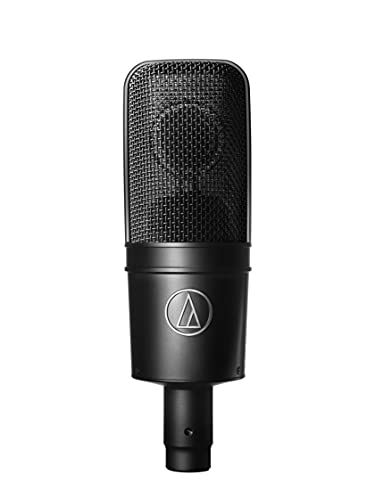
The Audio-Technica AT4040 is a cardioid large-diaphragm true condenser with externally polarized DC bias design, transformerless circuitry and a nickel-plated brass element baffle. The listing promises exceptionally low noise, wide dynamic range and high-SPL capability, positioning it as a versatile studio microphone for vocals, instruments and amplifiers in the lower mid-range tier.
Our Verdict
Research Score 86/100The Audio-Technica AT4040 has earned its reputation as a do-everything studio condenser, and the listing explains why: a large diaphragm tensioned for smooth, natural sound, a true externally polarized capsule, transformerless electronics that keep low frequencies clean and transients fast, and a precision-machined brass baffle for stability. Low noise, wide dynamic range and high-SPL capability mean it handles a whisper and a guitar cabinet with the same microphone. The listing publishes no numbers for frequency response, self-noise or maximum SPL, and it is cardioid only. For a lower mid-range studio microphone with a long professional track record, it scores near the top of its class.
Editorial research score based on published specifications and documented features, not a customer rating or lab test.
Audio-Technica
Audio-Technica AT4040
Best for: Home and project studios that want one serious large-diaphragm condenser for vocals, acoustic instruments and loud sources alike.
Skip it if: You need a plug-and-play USB microphone, a multi-pattern condenser, or a stage microphone that tolerates noisy rooms.
Check Price on AmazonWe may earn a commission at no extra cost to you.
Listing verified: October 2026
Who Should Buy It
Buy it if
- Vocalists and voice-over artists recording in a treated or quiet room
- Project studios upgrading from an entry-level condenser
- Engineers who need one microphone for vocals, guitar amps and overheads
- Buyers who value published design detail over marketing gloss
Skip it if
- You record in an untreated, noisy space where a dynamic would be more forgiving
- You need figure-eight or omnidirectional patterns
- You want a USB connection without an audio interface
Key Specifications
| Type | Large-diaphragm true condenser, externally polarized (DC bias) |
| Polar pattern | Cardioid |
| Frequency response | Not published in listing |
| Connection | Not published in listing |
| Phantom power | Required for an externally polarized condenser; voltage not published in listing |
| Max SPL or sensitivity | Not published in listing; described as high-SPL capable with exceptionally low noise |
| Controls | Not published in listing |
| Mount and stand | Not published in listing |
| Weight | Not published in listing |
| Included accessories | Not published in listing |
Overview
The Audio-Technica AT4040 is a cardioid large-diaphragm condenser microphone from the company's 40 series, the line it reserves for studio work. The listing describes a technically advanced large diaphragm tensioned specifically for smooth, natural sonic character, an externally polarized true condenser design, transformerless circuitry and surface-mount electronics. It sits in the lower mid-range price tier for a studio condenser.
This is a microphone that has been in production for a long time and has become a default recommendation for project studios that want one serious condenser. Audio-Technica positions it as versatile, with exceptionally low noise, wide dynamic range and high-SPL capability all called out in the listing. That combination is what lets a single microphone cover vocals, acoustic guitar, drum overheads and guitar amplifiers.
The product data is specific about design but silent on numbers. No frequency response, sensitivity, self-noise, maximum SPL, weight or included accessories are published in the listing, so this review describes what the design choices mean rather than quoting figures.
Sound Quality
Audio-Technica states that the diaphragm is tensioned to provide smooth, natural sonic characteristics, and that description matches the AT4040's long-standing reputation: a balanced, slightly forward sound without the harsh top end that affects many inexpensive condensers. Buyers report it flatters a wide range of voices rather than imposing a strong color. On paper it is closer to a neutral studio tool than a character microphone.
The transformerless circuitry is the detail most responsible for its clarity. The listing says it virtually eliminates low-frequency distortion and provides superior correlation of high-speed transients, which in plain language means a tighter low end and faster, more accurate attack on percussive sources such as acoustic guitar and drums. Externally polarized true condenser capsules also tend to deliver more detail than the electret designs common at lower tiers.
Compared with an Audio-Technica AT2020 or a Rode NT1, the AT4040 is the step up in refinement and dynamic range that a serious home studio notices. Compared with a dynamic broadcast microphone such as the Shure SM7B, it captures far more air and detail but is less forgiving of a poor room. That trade is the essential choice between the two categories.
Pickup Pattern and Noise Handling
The AT4040 is a fixed cardioid design, picking up primarily from the front and rejecting sound from the rear. That is the right pattern for the typical vocal booth or home studio, where the goal is to capture a source and minimize reflections from the wall behind the microphone. There is no pattern switch, so engineers who want figure-eight or omni for stereo techniques need a different microphone.
Self-noise is where the listing makes its strongest claim, describing the microphone as exceptionally low noise with wide dynamic range. For quiet sources such as a soft vocal, a fingerpicked guitar or a distant room capture, low self-noise is what keeps hiss out of the recording. The exact figure is not published in the listing, but the design elements described support a low noise floor.
High-SPL capability is the other end of the range. The listing says the microphone handles loud sources, which opens it to guitar cabinets, brass and close drum work that would overload a more delicate condenser. Whether a pad switch is included is not stated in the listing, so buyers should consult the manual for the precise SPL handling.
Build Quality
Construction detail is unusually specific in this listing. A precision-machined, nickel-plated brass acoustic element baffle provides enhanced element stability and optimal sensitivity, according to Audio-Technica. In practice that means the capsule is mounted in a rigid, corrosion-resistant assembly that holds its alignment over years of studio use.
The listing also highlights state-of-the-art surface-mount electronics built to comply with Audio-Technica's consistency and reliability standards. For a buyer that translates to unit-to-unit consistency, which matters when a studio owns two for stereo pairs, and to electronics that are less prone to drift than hand-wired boards. The housing material and weight are not published in the listing.
The 40 series has a reputation among buyers for feeling substantial on the stand and surviving decades of sessions. Whether a shock mount, a dust cover or a case is included is not stated in the listing, so budget for a shock mount if the box does not contain one.
- Externally polarized true condenser capsule with large diaphragm
- Precision-machined, nickel-plated brass acoustic element baffle
- Transformerless circuitry with surface-mount electronics
- Housing material and weight not published in listing
- Included accessories not published in listing
Connectivity and Setup
As an externally polarized condenser, the AT4040 requires phantom power from an audio interface, mixer or preamp. The listing does not publish the voltage or current draw, nor does it name the output connector, though studio condensers of this type are built around balanced analog connections. Buyers with a USB interface that provides phantom power are covered; anyone with a plain USB microphone setup will need an interface.
Setup follows the standard studio pattern: mount on a stand, ideally in a shock mount, engage phantom power, and set gain on the preamp. A pop filter is advisable for close vocal work, as with any large-diaphragm condenser. The listing does not mention a pop filter or a windscreen.
Because of its low noise and wide dynamic range, the AT4040 is forgiving of modest preamps. It does not need the very high gain that a Shure SM7B demands, so the built-in preamps on a lower mid-range interface are usually enough. That makes it a practical upgrade path for a home studio.
Features, Controls and Extras
The listing does not describe any switches, so the presence of a pad or a high-pass filter cannot be confirmed from the data. Buyers who need those controls should check the manual before purchase. What the listing does emphasize is the engineering inside: the DC bias true condenser, the transformerless output and the brass baffle.
Those design features are the real extras. A true condenser capsule and transformerless electronics are what separate this microphone from the entry-level electret condensers that dominate the price tiers below it. The surface-mount construction is a reliability feature rather than a user-facing control.
Accessories are not published in the listing. Many studio condensers at this tier ship with a shock mount and a dust cover, and buyers report that is typical for the 40 series, but this review cannot confirm it from the data. Treat any included accessory as a bonus rather than a certainty.
Use Cases: Vocals, Streaming, Podcasting and Instruments
Vocals are the primary application, from pop and rock lead vocals to voice-over and narration. The smooth, natural tuning the listing describes suits voices that do not want extra sizzle, and the low noise keeps quiet passages clean. In a treated room it delivers the kind of detail that makes editing and mixing easier.
Instruments are the second strength and the reason the microphone is called versatile. Acoustic guitar, piano, strings and drum overheads benefit from the fast transient response the listing credits to the transformerless design, while the high-SPL capability lets it sit in front of a guitar cabinet or a brass section. Many engineers use a pair as overheads or a single unit as a room microphone.
Streaming and podcasting are possible but demand a quiet space. A large-diaphragm condenser picks up keyboard clicks, fans and room reflections that a dynamic such as the Shure MV7 or Rode PodMic would ignore. For a treated home studio it produces a richer voice than any dynamic; for a bedroom with a loud computer, a dynamic is the safer choice.
Who Should Buy It
Project studio owners who have outgrown an entry-level condenser and want one microphone that handles vocals and instruments with equal competence are the core audience. Voice-over artists working in a booth will value the low noise and natural tuning.
Engineers building a small locker who need a reliable, consistent condenser for sessions with varied sources should also consider it. Its high-SPL capability makes it useful on sources that would normally call for a dynamic, which reduces the number of microphones a small studio needs.
It is not the right pick for someone recording in an untreated room with a noisy computer, nor for a buyer who wants USB simplicity, nor for stereo techniques that need switchable patterns. Those buyers should look at a dynamic, a USB microphone or a multi-pattern condenser respectively.
Alternatives Worth Considering
The Rode NT1 is the closest rival in reputation and purpose, another cardioid large-diaphragm condenser known for very low noise. Buyers often choose between them on tonal preference, with the AT4040 typically described as slightly more forward and the NT1 as slightly darker, though neither is characterized by published figures in this listing.
The Audio-Technica AT2020 is the budget sibling for buyers who want the brand at a lower tier and can accept less refinement and dynamic range. Stepping up within the 40 series brings multi-pattern options for those who need figure-eight or omni for stereo recording.
For podcasting and streaming in imperfect rooms, the Shure SM7B and Shure MV7 remain the practical alternatives because dynamics reject room noise. The AT4040 is the better choice when the space is treated and the goal is studio detail.
Verdict
The Audio-Technica AT4040 remains one of the most sensible studio condenser purchases in the lower mid-range tier. The listing's emphasis on a smooth, natural diaphragm, a true externally polarized capsule, transformerless electronics and a brass element baffle describes a microphone engineered for accuracy and longevity rather than hype.
The missing numbers in the listing and the fixed cardioid pattern are its only real limitations. For vocals, acoustic instruments and loud sources in a quiet room, it earns a score at the studio-standard end of the scale.
Strengths and Limitations
Strengths
- True externally polarized condenser with a large diaphragm
- Transformerless circuitry for low-frequency clarity and fast transients
- Described as exceptionally low noise with wide dynamic range
- High-SPL capability suits loud sources as well as vocals
- Nickel-plated brass baffle for element stability
- Long-established studio reputation at a lower mid-range price
Limitations
- Frequency response, self-noise and max SPL figures not published in listing
- Accessories, mount and connector not stated
- Cardioid only, no multi-pattern option
- Requires phantom power and a quiet room to shine
How We Scored It
Scores reflect published specifications, documented features and value against the alternatives below. They are editorial research scores, not laboratory measurements.
Alternatives to Consider

Sennheiser 835
Bands, worship teams and small venues that need three matching dynamic vocal microphones with stands and cables in a single purchase.
Read the Sennheiser 835 review →
Shure Nexadyne 8/S
Touring and club vocalists who want a modern supercardioid dynamic that cuts through a loud mix without heavy processing.
Read the Shure Nexadyne 8/S review →
Audio-Technica AT897
Videographers, documentary crews and broadcast field teams who need a compact shotgun microphone that runs on phantom power or batteries.
Read the Audio-Technica AT897 review →Questions Buyers Ask
Audio-Technica AT4040
See the current listing, price and included accessories.
About This Review
Mandrillis Team
The Mandrillis editorial team researches and compares audio and music gear using manufacturer documentation, verified specs and real buyer feedback, so you can make a confident purchase without wading through marketing claims.
Read our full research methodology.