Studio Gear Review
Focal Alpha 80 Review: High Output 8 Inch Reference Monitor
The Focal Alpha 80 is an 8 inch Slatefiber nearfield monitor with a 1 inch aluminum tweeter, 115 W RMS Class D bi-amplification, a 38 Hz to 22 kHz response and three inputs, sold individually. This review examines the published specification, the room it suits and what the listing leaves unstated.
Our Verdict
Research Score 85/100The Focal Alpha 80 is a high output 8 inch nearfield monitor with one of the most complete listings at the mid-range tier. It publishes the Slatefiber woofer, the 1 inch aluminum tweeter, 115 W RMS of Class D bi-amplification split 80 W and 35 W, a 38 Hz to 22 kHz response, a 106 dB SPL peak, TRS, XLR and RCA inputs that can stay connected at once, LF and HF shelving with a sensitivity control and an MDF cabinet with grills and wall-mount inserts. Dimensions and weight are the only gaps. In a medium room it offers deep bass, clean headroom and unusual flexibility. Sold individually, it scores 85.
Editorial research score based on published specifications and documented features, not a customer rating or lab test.

Focal
Focal Alpha 80
Best for: Producers and engineers in a medium room who want a high output 8 inch monitor with a deep floor, three inputs and room shelving, bought one cabinet at a time.
Skip it if: You work in a small room where an 8 inch woofer will overload the space or you want a pair in a single purchase.
Check Price on AmazonWe may earn a commission at no extra cost to you.
Listing verified: October 2026
Who Should Buy It
Buy it if
- Electronic and hip hop producers who need bass reach and high output
- Engineers who switch between an interface, a console and a consumer source
- Studios that want wall-mount inserts for a fixed install
- Buyers building a pair or adding a matching third monitor
Skip it if
- Your desk is small or your room is untreated and small
- You want the quietest possible bedroom setup rather than high SPL
- You need a pair with cables and pads in one box
Key Specifications
| Type | Active two-way Class D bi-amplified nearfield studio monitor, sold individually |
| Woofer | 8 inch Slatefiber woofer |
| Tweeter | 1 inch aluminum tweeter |
| Power | 115 W RMS bi-amp, 80 W low frequency plus 35 W high frequency Class D; 106 dB SPL peak at 1 m |
| Frequency response | 38 Hz to 22 kHz |
| Inputs | TRS, XLR and RCA, up to three sources connected at once |
| Room controls | Adjustable LF and HF shelving plus sensitivity control |
| Dimensions | Not published in listing |
| Weight | Not published in listing |
| Included accessories | Protective grills per the listing; no cables or pads listed; sold as a single monitor |
Overview
The Focal Alpha 80 is the largest model in Focal's Alpha Evo series of active nearfield monitors, built around an 8 inch Slatefiber woofer and a 1 inch aluminum tweeter. This listing sells it individually, so a stereo pair means two purchases, and it describes the speaker as a high SPL nearfield reference.
Focal is a French loudspeaker maker with a long history in both hi-fi and professional monitoring, and the Alpha series is its entry into the studio market. The Evo generation brought the Slatefiber cone, a material Focal developed from recycled carbon fibers, and a redesigned amplifier section rated here at 115 W RMS.
The listing is thorough. It publishes the driver sizes and materials, the split power figures, the 38 Hz to 22 kHz response, the 106 dB SPL peak, the three input types and the room shelving. Dimensions and weight are the only specifications it leaves out, so the review can work from published facts almost throughout.
Accuracy and Sound Signature
A published 38 Hz low limit from an 8 inch woofer puts the Focal Alpha 80 among the deeper reaching nearfield monitors. That covers the full range of a bass guitar, the body of a kick drum and most of the sub bass content in electronic music, which is why the listing emphasizes deep low end.
The 1 inch aluminum tweeter takes the response to 22 kHz. Aluminum domes are stiff and light, and they are associated with a clear, detailed top end that can sound forward if the waveguide and crossover are not carefully handled. Buyers describe the Evo generation as more refined than the original Alpha, with a top end that reveals detail without becoming harsh.
The 106 dB SPL peak at 1 m is the figure that justifies the high SPL label. It means the Alpha 80 can reproduce loud transients cleanly at nearfield distance, which matters for drum heavy and electronic material. The sensitivity control and the LF and HF shelving allow the balance to be adjusted to the room, so the published response is a starting point rather than a fixed character.
Drivers, Amplification and Power
The woofer is an 8 inch Slatefiber cone. Slatefiber is Focal's name for a composite of recycled, non woven carbon fibers in a thermoplastic polymer, chosen for a balance of stiffness, damping and low mass. The listing credits it with balanced, detailed monitoring and deep low end.
The 1 inch aluminum tweeter is driven by its own 35 W Class D amplifier, while the woofer receives 80 W from a separate Class D stage, for 115 W RMS in total. Bi-amplification with an active crossover means each driver gets a signal already filtered to its range, which improves control and reduces distortion compared with a passive design.
Class D amplification runs cool and efficient, which is why a 115 W monitor can live in a compact MDF cabinet without a large heat sink. The 106 dB SPL peak figure confirms there is real headroom. For nearfield use, that headroom means transients stay clean rather than that the monitor needs to be played loud.
Room Fit, Placement and Controls
An 8 inch monitor with a 38 Hz floor is a medium room speaker. In a small bedroom the deep bass excites room modes and the low end becomes uneven, and the Alpha 80's output capability makes that worse rather than better. A medium project room with some absorption is the natural home.
Adjustable LF and HF shelving plus a sensitivity control are listed. The LF shelf cuts or lifts the bass region to compensate for walls and corners, the HF shelf adjusts the treble for bright or heavily damped rooms, and the sensitivity control matches the monitor's input level to the source. Together they cover the common placement compromises.
Wall-mount inserts are built into the cabinet, which is unusual at this tier and useful for a fixed installation where desk space is limited. The laminar port is designed to reduce turbulence noise at high output. For desk placement, use stands or pads and keep the cabinet a reasonable distance from the rear wall.
- Best in medium and larger rooms; small rooms will exaggerate the deep bass
- LF shelving compensates for walls and corners
- HF shelving adjusts treble for bright or dead rooms
- Sensitivity control matches input level to the source
- Wall-mount inserts allow a fixed installation
Build, Design and Finish
The cabinet is MDF with a laminar port, protective grills and wall-mount inserts, all stated in the listing. MDF is the standard choice for monitor enclosures because it is dense and acoustically dead, and the inclusion of grills protects the Slatefiber cone and aluminum dome in busy rooms.
Protective grills are a practical detail that most nearfield monitors omit. They matter in a shared studio, a teaching space or a home where children or pets are around, and they can be removed for critical listening if preferred. The wall-mount inserts extend the same practical thinking to installation.
Dimensions and weight are not published in this listing. An 8 inch bi-amped MDF cabinet is a substantial object, and the mass matters both for stand ratings and for the wall-mount hardware the inserts are designed for. Confirm the figures from the manufacturer before planning a wall installation.
Connectivity and Inputs
The Focal Alpha 80 carries three inputs: TRS, XLR and RCA. The listing states they support up to three audio sources at once, which means an interface, a console and a consumer source can all stay connected without re-plugging. That is a rare convenience at the mid-range tier.
The XLR and TRS inputs handle balanced professional signals and the RCA input handles unbalanced consumer sources. Because the sensitivity control sits on the monitor, the level from each type of source can be brought into a sensible range, though it is wise to keep only one source playing at a time to avoid summing confusion.
Cables are not listed as included. As a single unit, each Alpha 80 needs its own mains outlet and its own signal cable, and a pair should use identical cable types and lengths. The three input approach also makes it simple to add a second interface or a hardware synth later.
Setup and Daily Use
Setting up a pair of Alpha 80 monitors starts with placement at nearfield distance in a symmetrical triangle, then matching the sensitivity control on both cabinets. Leave the LF and HF shelving flat for the first sessions and adjust only once the position is settled.
The high output capability tempts loud listening. Resist it. Pick a moderate working level, return to it every session and use the headroom for clean transients rather than volume. Mixes judged at consistent moderate levels translate far better than mixes judged loud.
In daily use, the three inputs make the Alpha 80 a flexible hub for a producer who moves between a computer interface and hardware. The grills can stay on for production work and come off for final mixing. The deep low end means a subwoofer is unnecessary for most genres in a medium room.
Who Should Buy It
The Focal Alpha 80 suits producers and engineers with a medium room who want deep bass, high output and a detailed top end from a nearfield monitor. Electronic, hip hop and film sound work benefit most from the 38 Hz floor and the 106 dB SPL headroom.
It also fits studios with mixed sources, since the three inputs can stay connected simultaneously, and installations that want wall mounting without aftermarket brackets. Buying individually suits anyone building a pair over time or adding a matched center monitor.
It is not the right choice for a small bedroom room, where a smaller monitor would behave better, nor for a buyer who wants a pair with pads and cables in a single order. Engineers who prefer a softer tweeter than aluminum may also want to compare alternatives.
Alternatives Worth Considering
Within the Focal range, the smaller Alpha Evo models offer the same Slatefiber cone and aluminum tweeter in sizes suited to smaller rooms, which is the first place to look if the 8 inch format is too much.
Among other brands, the KRK Rokit 5 G5 and the Kali Audio LP-6 provide onboard room tuning in smaller cabinets, while the Yamaha HS5 offers the plainest reference balance for engineers who want no character at all. The JBL 305P MkII is the value option with a wide sweet spot.
The Adam Audio T5V is the clearest tonal alternative, with a ribbon tweeter that presents the top end more delicately than an aluminum dome. Choose the Focal Alpha 80 for output, bass reach, three inputs and the install friendly cabinet. Choose a smaller or ribbon based alternative if your room or your ears call for it.
Verdict
The Focal Alpha 80 is a well specified, high output 8 inch nearfield monitor. The listing documents the Slatefiber woofer, the aluminum tweeter, 115 W RMS of Class D bi-amplification, a 38 Hz to 22 kHz response, 106 dB SPL peak, three simultaneous inputs, room shelving and an MDF cabinet with grills and wall-mount inserts.
It scores 85. Buy it for a medium room where its bass reach and headroom can breathe, buy two for stereo, and confirm the unpublished dimensions and weight before planning a wall mount.
Strengths and Limitations
Strengths
- 8 inch Slatefiber woofer with a published 38 Hz floor
- 115 W RMS Class D bi-amp, 80 W low and 35 W high
- 106 dB SPL peak at 1 m for high output nearfield work
- TRS, XLR and RCA inputs usable with three sources at once
- LF and HF shelving plus sensitivity control
- MDF cabinet with laminar port, wall-mount inserts and protective grills
Limitations
- Sold individually, so a pair costs two purchases
- Dimensions and weight are not published
- An 8 inch monitor needs a medium or larger room
- Top end stated to 22 kHz, lower than some rivals
How We Scored It
Scores reflect published specifications, documented features and value against the alternatives below. They are editorial research scores, not laboratory measurements.
Alternatives to Consider
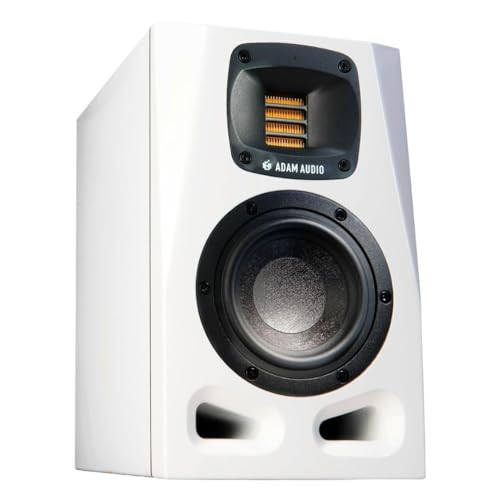
ADAM Audio A4V
Producers in small or untreated rooms who want ADAM Audio detail with genuine room tuning in a compact white cabinet.
Read the ADAM Audio A4V review →
Behringer TRUTH B2031A
Producers and mix engineers with a medium sized room who want full range, high power monitoring from a pair without buying a subwoofer.
Read the Behringer TRUTH B2031A review →
Focal Alpha 80 EVO
A producer who already knows the Focal Alpha 80 EVO and wants to buy one cabinet at a time for a medium sized room.
Read the Focal Alpha 80 EVO review →Questions Buyers Ask
Focal Alpha 80
See the current listing, price and included accessories.
About This Review
Mandrillis Team
The Mandrillis editorial team researches and compares audio and music gear using manufacturer documentation, verified specs and real buyer feedback, so you can make a confident purchase without wading through marketing claims.
Read our full research methodology.