Vox VT100X vs Fender Pro Junior IV
Quick Verdict
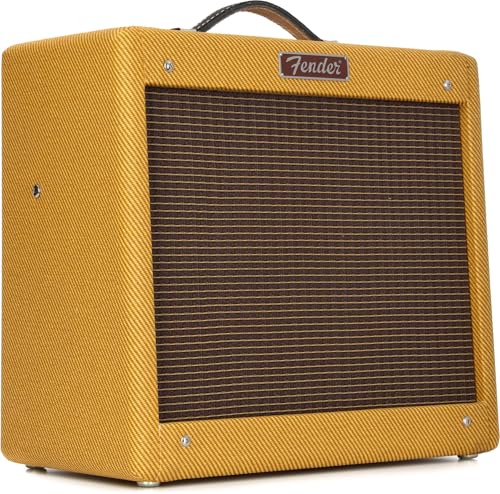
For players who need stage-capable volume and modeling flexibility, the Vox VT100X is the better choice. It offers 100 watts through a 12-inch speaker, 11 onboard amp models and up to 20 with Tone Room software, plus headphone and aux inputs. The Fender Pro Junior IV is the simpler option for those who want a low-wattage 15-watt tube-style amp with a Jensen P10R speaker and classic tweed looks. The Fender has no built-in effects or headphone output. The Vox scores 81 overall and the Fender scores 76. Choose the Vox for features and volume, and the Fender for vintage simplicity. The Fender earns higher tone and build subscores, while the Vox earns higher power and connectivity subscores.

| Spec | Vox VT100X | Fender Pro Junior IV |
|---|---|---|
| Power output | 100 watts | 15 Watts |
| Speaker | 1 x 12-inch | Jensen 10" P10R speaker |
| Amp models or channels | 11 amp models; 20 available with Vox Tone Room software | Not published in listing |
| Effects | Not published in listing | Not published in listing |
| Inputs and outputs | Aux input, headphone jack, footswitch input for optional VFS2/VFS5 | Not published in listing |
| Headphone and line out | Headphone jack; line out not published in listing | Not published in listing |
| Bluetooth and app | Tone Room software; Bluetooth not published in listing | Not published in listing |
| Weight | Not published in listing | Not published in listing |
| Dimensions | Not published in listing | Not published in listing |
| Included accessories | Not published in listing | Not published in listing |
Amp Models and Tone
The Vox VT100X uses a hybrid Valvetronix tube preamp with digital modeling and VET technology for amp realism. The listing states it has 11 onboard amp models and up to 20 available with the Vox Tone Room software. This gives the player a broad range of voices without needing external pedals. The Fender Pro Junior IV does not publish a count of amp models or channels in its listing. Its strengths are a Jensen 10 inch P10R speaker and a modified volume circuit for gradual breakup.
The tone subscores from the listings are 25 out of 30 for the Vox and 28 out of 30 for the Fender. The Fender's higher tone score suggests a focused, touch-sensitive platform built around a single voice. The Vox trades some tonal purity for flexibility with multiple models. The Fender's classic American tone comes from the Jensen P10R speaker, while the Vox relies on its preamp and modeling technologies.
For players who want to explore different amp types, the Vox is more versatile. For players who prefer a straightforward vintage tone, the Fender's simpler design may feel more immediate. Neither listing publishes detailed tone measurements, so these are based on the provided descriptions and subscore breakdowns.
Effects and Features
The Vox VT100X includes a built-in tuner and supports optional VFS2 and VFS5 footswitches for hands-free control. The listing does not publish an effects list or effect count for the Vox. The Fender Pro Junior IV has no built-in effects or reverb according to its cons. This means the Fender relies entirely on external pedals for time-based and modulation effects.
Both amplifiers score relatively low in the effects and features category. The Vox earns 15 out of 20 and the Fender earns 9 out of 20. The Vox has a slight advantage because of the built-in tuner and footswitch support. The Fender's minimal feature set may appeal to players who already own a full pedalboard and want nothing extra.
For everyday practice, the Vox's headphone output and aux input add convenience beyond effects. The Fender offers no headphone output or aux input based on the listing. The absence of published effects details for both models makes a direct effects comparison difficult, but the pros and cons provide some context.
Power, Speaker and Volume
The Vox VT100X delivers 100 watts through a 1 x 12-inch speaker. The Fender Pro Junior IV delivers 15 watts through a Jensen 10 inch P10R speaker. The 100-watt rating makes the Vox suitable for stage volume and larger rooms. The Fender's 15-watt output suits home, studio, and small gig use as described in the listing.
The power and speaker subscores are close, with the Vox at 14 out of 15 and the Fender at 13 out of 15. The Vox's larger speaker and higher wattage move more air. The Fender's smaller 10 inch speaker and lower wattage produce a more compressed, vintage character at lower volumes. Neither listing states maximum SPL or exact volume levels.
Players who need clean headroom at band volumes should consider the Vox. Players who want natural power tube style breakup at manageable volumes may prefer the Fender. Both amps leave weight and dimensions unpublished, which makes physical size and transport harder to evaluate.
Build and Portability
The Vox VT100X scores 7 out of 10 for build and portability. The Fender Pro Junior IV scores 9 out of 10. The Fender's classic lacquered tweed and 50s grille cloth look contribute to its higher build score in the listing. The Vox's build materials are not described in the listing.
Both listings omit weight and dimensions, so portability cannot be directly compared with published numbers. The Fender is a lower wattage amp and likely lighter in practice, but the listing does not state its weight. The Vox is a 100-watt amp with a 12-inch speaker and may be heavier, but again the listing does not state its weight.
Until the manufacturers publish weight and dimensions, buyers should verify these details before purchase. The Fender's simple cabinet design may be easier to carry for some players. The Vox's extra features and larger speaker likely add weight, but this is not confirmed in the listing.
Connectivity and Apps
The Vox VT100X has a published aux input, headphone jack, and footswitch input for the optional VFS2 and VFS5. It supports the Vox Tone Room software for editing amp models, though the listing does not state Bluetooth connectivity. Line out is not published for the Vox. The Fender Pro Junior IV does not publish any inputs, outputs, headphone jack, line out, Bluetooth, or app details.
The Vox scores 12 out of 15 for connectivity, while the Fender scores 7 out of 15. The Vox's headphone output and aux input make it more versatile for silent practice and playing along with tracks. The Fender's connectivity appears limited to a standard guitar input based on the lack of published details, but this is not confirmed.
Players who want to connect headphones or a music player should look at the Vox. The Fender may require an external attenuator or load box for headphone use, but the listing does not state this. The Vox Tone Room software expands amp models from 11 to 20, which adds connectivity value.
Setup and Daily Use
The Vox VT100X includes a built-in tuner and optional footswitch support, which simplifies setup for stage and practice. The Fender Pro Junior IV relies on a simple control layout with no published channel switching or effects. The Fender's single channel may require manual adjustments to move between clean and dirty sounds.
Daily use with the Vox benefits from headphone output and aux input for silent practice. The Fender offers no headphone output, so late night practice requires another solution. The Vox Tone Room software allows deep editing, but the amp can be used without it. The Fender is more plug and play because there is no software or menu diving.
Both amps have unpublished weight and dimensions, so moving them around a room or to a gig is harder to plan. The Vox's optional footswitch adds hands-free control, while the Fender requires a separate pedal for any channel or effects changes. The listing does not state what footswitches are included with either amp.
Home Practice Versus Stage
For home practice, the Fender Pro Junior IV's 15 watts is more appropriate for low volume playing. The Vox VT100X's 100 watts is far more power than most homes need, but its headphone output and aux input make silent practice possible. The Vox's built-in tuner also helps at home.
For stage use, the Vox VT100X has 100 watts and a 12-inch speaker, which can hold its own in a live band. The Fender Pro Junior IV's 15 watts may work for small gigs, but larger stages may require a microphone or PA support. The Fender's best for description includes small gigs.
The Vox's modeling amp models and footswitch support make it more flexible for different stage needs. The Fender's simple tone may require pedals for drive and effects on stage. Neither listing states a line out for direct connection to a PA, which is a limitation for both.
The Deciding Question
The deciding question is whether you want a feature rich modeling amp or a minimalist tube style amplifier. The Vox VT100X scores 81 overall, with strengths in power and connectivity. The Fender Pro Junior IV scores 76 overall, with strengths in tone and build subscores.
The Vox offers 100 watts, 11 to 20 amp models, headphone practice, and a built-in tuner. The Fender offers 15 watts, a Jensen P10R speaker, classic tweed looks, and gradual breakup. The Vox requires an optional footswitch for full control, while the Fender requires external pedals for any effects.
Players who already own pedals and want a simple foundation should consider the Fender. Players who want many sounds from one amp should consider the Vox. The incomplete listings for weight, dimensions, and effects make the decision harder, but the provided scores help.
Who Should Buy Which
Buy the Vox VT100X if you need stage volume, a wide range of amp models, headphone output, and aux input for practice. It is best for guitarists who want a hybrid tube-solid state modeling combo. The listing's avoid if section warns against it for those needing a lightweight, fully specified practice amp.
Buy the Fender Pro Junior IV if you want a straightforward 15-watt tube-style combo with a classic American look for home, studio, or small gigs. It is best for players who already own pedals and do not need built-in effects or headphone practice. The listing's avoid if section warns against it for those needing built-in effects or detailed connectivity specs.
Both amps have unpublished weight and dimensions, so verify those before buying. The Vox wins for features and flexibility, while the Fender wins for tone focus and simplicity. Your choice depends on whether you value modern convenience or vintage minimalism.
Vox VT100X
Pros
- 100 watts through a 1 x 12 speaker
- Hybrid Valvetronix tube preamp with digital modeling
- VET technology for amp realism
- 11 onboard models, 20 with Tone Room
- Headphone and aux input for practice
- Built-in tuner and optional footswitch support
Cons
- Listing omits weight and dimensions
- No published effects list or effect count
- Bluetooth and line out not mentioned
- Requires optional footswitch for hands-free control
- Mid-range price may be high for beginners who only need a basic practice amp
Fender Pro Junior IV
Pros
- Published 15-watt output suits home and studio use
- Jensen P10R speaker is a familiar vintage voice
- Modified volume circuit aims for gradual breakup
- Classic lacquered tweed and 50s grille cloth look
- Simple single-purpose design without menu diving
- 2-year warranty mentioned in listing title
Cons
- Weight and dimensions are not published
- No built-in effects or reverb
- No headphone out or line out listed
- Single channel may limit clean and dirty switching
- Mid-range price without full connectivity details
Who Should Buy Each
Vox VT100X
- Players seeking a 100-watt amp for gigs and rehearsals
- Guitarists who want tube preamp feel without a full tube amp
- Users who like the Vox Valvetronix modeling approach
- Buyers willing to use Tone Room software for expanded models
Fender Pro Junior IV
- Fender tweed enthusiasts
- Recording guitarists who mic small combos
- Players wanting gradual volume-driven breakup
- Those who prefer a simple single-channel amp
Quick Decision Guide
| If you need stage volume and 100 watts of power | Choose Vox VT100X |
| If you want a simple 15 watt tube style amp with classic tweed looks | Choose Fender Pro Junior IV |
| If you need headphone output and aux input for silent practice | Choose Vox VT100X |
| If you have a pedalboard and do not need built-in effects | Choose Fender Pro Junior IV |
| If you want built-in tuner, multiple amp models, and footswitch support | Choose Vox VT100X |
FAQ
About This Comparison
Mandrillis Team
The Mandrillis editorial team researches and compares audio and music gear using manufacturer documentation, verified specs and real buyer feedback, so you can make a confident purchase without wading through marketing claims.
Read our full research methodology.
We may earn a commission at no extra cost to you.