Vox VT20X vs NUX PA-50
Quick Verdict
The Vox VT20X is the better choice for home guitarists who want a self-contained practice amp with built-in amp models, effects, and silent practice features. The NUX PA-50 is the better choice for players who already use a modeler, IR loader, or multi-effects unit and need a flat, full-range powered monitor with dual channel flexibility. The Vox offers USB recording and a headphone jack, while the NUX provides 50 watts, independent EQ per channel, and a link output. Choose the Vox for traditional amp tone at home; choose the NUX for monitoring an existing rig at practice or small stage use.
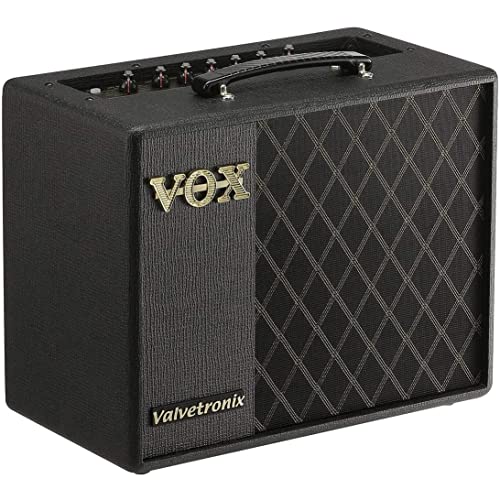

| Spec | Vox VT20X | NUX PA-50 |
|---|---|---|
| Power output | 20 watts | 50 watts |
| Speaker | 8-inch Vox speaker | 6.5 inch woofer and 1 inch tweeter |
| Amp models or channels | Multiple amp models via VET; exact count not published in listing | Two channels, Channel 1 for instruments, Channel 2 for mic/line or IR loaded rigs |
| Effects | Extensive range of effects; exact types and count not published in listing | No built in effects, but independent 3 band EQ per channel |
| Inputs and outputs | Instrument input, USB, headphone jack; no other I/O published in listing | Auxiliary input for backing tracks and output for linking multiple monitors; exact channel input types not fully specified |
| Headphone and line out | Headphone jack included; dedicated line out not published | Not published in listing |
| Bluetooth and app | No Bluetooth or companion app listed; USB connectivity with PC, Mac, iOS, Android | Not published in listing |
| Weight | Not published in listing | Not published in listing |
| Dimensions | Not published in listing | Not published in listing |
| Included accessories | Built-in tuner included; other accessories not published in listing | Power cable and user manual |
Amp Models and Tone
The Vox VT20X uses its VET modeling system to provide multiple amp models, but the listing does not publish the exact number of models available. The NUX PA-50 takes a different approach by offering no built-in amp models at all. Instead, the NUX is described as a true-to-tone FRFR flat response monitor, which is designed to reproduce tones from external modelers or IR loaders without adding its own coloration. This means the Vox gives you ready-made amp tones, while the NUX expects you to bring your own tone shaping.
The Vox VT20X includes a hybrid tube preamp, and the listing says this adds analog tube character to the digital VET modeling. The NUX PA-50 has no tube preamp or amp voicing controls beyond its independent three-band EQ per channel. For a player who wants the feel and response of a traditional guitar amp, the Vox is the more direct choice. For a player who has already invested in high-quality amp models within a floor unit, the NUX will reproduce those models accurately rather than adding another layer of tone.
Neither listing publishes a complete list of exact amp models for the Vox, so buyers who want specific classic amp tones should confirm the model list before purchase. The NUX does not need an amp model list because it has none. The score breakdown for tone and amp models is tied at 24 out of 30 for both units, which reflects different strengths rather than a clear winner. The Vox offers built-in tones, and the NUX offers a blank slate for external tones.
Effects and Features
The Vox VT20X lists an extensive range of effects, but the exact effect types and total count are not published in the listing. The NUX PA-50 has no built-in effects of any kind according to the listing. Instead, the NUX gives each of its two channels an independent three-band EQ, which is useful for shaping the overall tone of an instrument or microphone without adding time-based or modulation effects.
The Vox includes a built-in tuner, which is a practical feature for daily practice and quick tuning between songs. The NUX PA-50 does not list a tuner among its included accessories, which are only a power cable and user manual. The Vox also supports an optional footswitch, sold separately, which can expand control over its features, although the exact footswitch functions are not detailed in the listing.
In terms of onboard effects, the Vox is the clear choice because the NUX has none. However, the NUX provides more per-channel tone control with its dual three-band EQs, while the Vox has a single channel with amp models and effects. If you already use external effects pedals or a multi-effects unit, the NUX flat EQ will not fight with your pedals. If you want a grab-and-go amp with effects included, the Vox is more convenient.
Power, Speaker and Volume
The Vox VT20X is rated at 20 watts into an 8-inch Vox speaker. The NUX PA-50 is rated at 50 watts into a 6.5-inch woofer and a 1-inch tweeter. The NUX has more than double the power rating of the Vox, which suggests it can produce more overall volume in many situations. However, the NUX uses a smaller woofer than the Vox speaker, and the two units have very different speaker designs.
The Vox speaker is a traditional guitar speaker, which is optimized for guitar frequencies and may have a more familiar midrange response. The NUX uses a full-range speaker system with a dedicated tweeter, which is designed to reproduce the entire frequency range of a modeler, keyboard, or backing track. The NUX is not meant to add guitar speaker coloration, while the Vox speaker will color the sound as part of the guitar amp experience.
Neither listing publishes a maximum sound pressure level or sensitivity specification, so a direct volume comparison cannot be made from published data alone. The Vox cons note that it is not built for unamplified stage use with a band, and the NUX cons note that 50 watts may be limited for large stages. For home practice and recording, the Vox 20 watts is likely enough for most rooms. For small stage monitoring or louder practice with a modeler, the NUX 50 watt rating gives more headroom on paper.
Build and Portability
Both listings omit weight and dimensions, so no direct portability comparison can be made from the provided specifications. The Vox is described as a compact 1x8 design for practice, and the NUX uses a 6.5-inch woofer and tweeter in what is likely a compact enclosure, but without published measurements this remains uncertain. Buyers who need to carry the amp to rehearsals or gigs should request exact dimensions and weight before purchase.
The Vox includes a built-in tuner as part of the unit, but other accessories are not published in the listing. Footswitches are sold separately for the Vox, so the total cost of full control is higher than the base price alone. The NUX includes only a power cable and user manual, which means there are no extra included accessories that add value beyond the monitor itself.
Both units fall into a lower mid-range price tier according to the listings. Build quality cannot be assessed from the published information because neither listing describes the cabinet material, tolex, grill cloth, or chassis construction. The score for build and portability is tied at 8 out of 10 for both products, which suggests the listings present them as similarly positioned in this category. Without physical measurements or material details, both are equally hard to evaluate for ruggedness and travel use.
Connectivity and Apps
The Vox VT20X includes an instrument input, a USB port, and a headphone jack. The listing states that the USB port works with PC, Mac, iOS, and Android devices, which allows for recording or connecting to compatible software. The NUX PA-50 lists an auxiliary input for backing tracks and an output for linking multiple monitors, but the exact channel input types are not fully specified. It is unclear from the listing whether the NUX has a headphone output or a dedicated line out.
Neither the Vox VT20X nor the NUX PA-50 lists Bluetooth or a companion app in the provided specifications. The Vox has USB connectivity, which may enable some computer or mobile device interaction, but the listing does not mention a specific app for editing amp models or effects. The NUX does not list any Bluetooth or USB connectivity, relying instead on analog inputs and outputs for its connections.
For recording, the Vox has a clear advantage because of its USB output. For expanding a monitoring setup, the NUX has a link output that lets you connect multiple monitors together, a feature the Vox does not list. The Vox headphone jack supports silent practice, while the NUX does not confirm a headphone out in the listing. If headphone practice is essential, the Vox is the safer published option.
Setup and Daily Use
The Vox VT20X is a self-contained guitar amplifier. You plug in a guitar, select an amp model and effects, and play. The built-in tuner helps with tuning, and the headphone jack allows silent practice. The USB connection adds recording capability without an additional interface, as long as the user has compatible recording software on a computer or mobile device.
The NUX PA-50 is not a self-contained tone generator. It is a flat-response powered monitor with two channels. Typical daily use involves connecting a modeler, multi-effects unit, keyboard, or microphone to one or both channels, then using the independent three-band EQ to adjust each source. The auxiliary input can play backing tracks from a phone or music player, and the link output can send the mix to another monitor.
For players who want a simple plug-and-play practice amp, the Vox requires less setup because it includes amp models and effects. For players who already have a pedalboard or modeler that they prefer, the NUX setup is still straightforward but depends on the quality of the external device. Both units lack published weight and dimensions, so moving them around a room or to a rehearsal space involves an unknown factor.
Home Practice Versus Stage
The Vox VT20X is clearly aimed at home practice and recording. Its 20 watt rating and 8-inch speaker are typical of a bedroom or living room amp, and the headphone jack supports silent practice. The listing states that the Vox is not built for unamplified stage use with a band, so players who need to compete with a drummer or perform without PA support should look at higher wattage options.
The NUX PA-50 sits between home practice and small stage use. Its 50 watt rating and full-range speaker can work as a personal monitor for modeler users at rehearsals or on small stages. The listing notes that 50 watts may be limited for large stages, so it is not a replacement for a full PA or high wattage stage monitor. For home use, the NUX can serve as a compact powered speaker for playing along with tracks.
If your playing is exclusively at home through headphones or at low volume, the Vox is the more practical choice because it includes everything you need for tone and silent practice. If you occasionally play with others at moderate volume or need to hear your modeler on stage, the NUX gives more power and a full-range response. The Vox scores slightly higher overall, but the NUX is more flexible for non-guitar sources like keyboards or vocals.
The Deciding Question
The deciding question between these two units is whether you need built-in amp models and effects or whether you already have an external source of amp tone. The Vox VT20X gives you VET modeling, a hybrid tube preamp, effects, and a tuner in one amp. The NUX PA-50 gives you a flat-response monitor with two channels, each with its own EQ, but no amp models or effects.
If you are a guitarist who wants to turn on, select a sound, and play without building a separate rig, the Vox is the obvious answer. If you already use a high-quality modeler, IR loader, or multi-effects pedal and you are tired of running it into a colored guitar amp, the NUX PA-50 will let you hear those tones more accurately. The choice also depends on whether you need USB recording and headphone practice, which the Vox provides and the NUX does not confirm.
The overall scores are very close, with the Vox at 80 and the NUX at 79. The Vox wins on effects and connectivity because of its built-in effects and USB options. The NUX wins on power and speaker configuration with 50 watts and a full-range design. The final decision comes down to tone source and connectivity needs, not a clear quality difference.
Who Should Buy Which
Buy the Vox VT20X if you are a home player or recording hobbyist who wants a compact practice amp with built-in amp models, effects, and a tube-flavored preamp. It is a good match if you need a headphone jack for silent practice, a built-in tuner for convenience, and USB recording to a computer or mobile device. It is not the right choice if you need stage volume, deep low-end from a larger speaker, or app-based editing.
Buy the NUX PA-50 if you already use a modeler, IR loader, keyboard, or multi-effects unit and need a flat, full-range powered monitor for practice, rehearsal, or small stage monitoring. It works well if you need two channels with independent EQ, an aux input for backing tracks, or a link output to chain multiple monitors. It is not the right choice if you want a traditional guitar amp with built-in overdrive and effects.
If you are deciding between these two and you only play guitar at home, the Vox gives you a more complete guitar amp experience in one box. If you play multiple instruments, use a modeler, or need a compact monitor for a band mix, the NUX PA-50 is the more flexible platform. Both are lower mid-range in price, so the decision should be based on your existing gear and your main use case.
Vox VT20X
Pros
- Hybrid tube preamp with VET modeling
- Built-in tuner and headphone jack
- USB connectivity for PC, Mac, iOS, Android
- Compact 1x8 design for practice
- Optional footswitch support
- Lower mid-range price tier
Cons
- Exact amp model and effect count not published
- No Bluetooth or app
- No dedicated line out
- Weight and dimensions not provided
- Footswitches sold separately
NUX PA-50
Pros
- True-to-tone FRFR flat response suits modelers and IRs
- Dual channel flexibility for instrument and mic/line
- Independent 3-band EQ per channel
- Aux input for backing tracks and link output for multiple monitors
- 50 watts with full-range 6.5 inch woofer and 1 inch tweeter
- Lower mid-range price tier
Cons
- No built-in amp models or effects
- Listing does not publish weight, dimensions, or exact input types
- No Bluetooth or app support listed
- Unclear if headphone out exists
- 50 watts may be limited for large stages
Who Should Buy Each
Vox VT20X
- Bedroom and apartment players seeking headphone practice
- Guitarists who want Vox-style tube preamp character in a budget-friendly combo
- Recording beginners who value USB connectivity
- Players who prefer a simple all in one practice solution with built-in tuner
NUX PA-50
- Players using modeling pedals, multi-effects, or amp sims who need flat full-range playback
- Musicians who need a dual-channel personal monitor for instrument and mic/line
- Small gigging performers or rehearsal spaces needing a clear 50 watt monitor
- Home players who want to run backing tracks through an aux input
Quick Decision Guide
| If you want a self-contained practice amp with built-in amp models and effects | Choose Vox VT20X |
| If you already use a modeler or IR loader and need flat, full-range monitoring | Choose NUX PA-50 |
| If you need silent practice via a headphone jack | Choose Vox VT20X |
| If you need to connect a microphone or line source alongside an instrument | Choose NUX PA-50 |
| If you want to record via USB to a computer or mobile device | Choose Vox VT20X |
FAQ
About This Comparison
Mandrillis Team
The Mandrillis editorial team researches and compares audio and music gear using manufacturer documentation, verified specs and real buyer feedback, so you can make a confident purchase without wading through marketing claims.
Read our full research methodology.
We may earn a commission at no extra cost to you.