Guitar & Bass Review
NUX PA-50 Review: A Flexible FRFR Personal Monitor
The NUX PA-50 is a 50 watt dual-channel personal monitor with a 6.5 inch woofer and 1 inch tweeter, designed for flat full-range reproduction. It suits modeler and IR users, offers independent 3 band EQ per channel, aux input, and a link output, but the listing omits weight, dimensions, and some connectivity details.
Our Verdict
Research Score 79/100The NUX PA-50 is a focused personal monitor that delivers what the listing promises: a flat, full-range 50 watt platform for modelers and dual-channel monitoring. Its independent EQ per channel and aux input are practical, and the link output is a thoughtful addition. The omission of weight, dimensions, exact input types, and headphone out is a drawback for buyers who need complete specifications. At a lower mid-range price, the PA-50 competes with other FRFR monitors and small PA speakers. It is not a replacement for a traditional guitar amp with built-in overdrive or effects. The neutral tone will please players who have already invested in external tone shaping. For those willing to accept the unknown specs, it is a sensible choice for home practice and small stage use.
Editorial research score based on published specifications and documented features, not a customer rating or lab test.

NUX
NUX PA-50
Best for: Guitarists, keyboard players, and modeler users who need a compact FRFR personal monitor for practice, rehearsal, or small stage monitoring.
Skip it if: You want a traditional guitar amp with built-in drive tones and effects, or need a high wattage stage monitor for large venues.
Check Price on AmazonWe may earn a commission at no extra cost to you.
Listing verified: October 2026
Who Should Buy It
Buy it if
- Players using modeling pedals, multi-effects, or amp sims who need flat full-range playback
- Musicians who need a dual-channel personal monitor for instrument and mic/line
- Small gigging performers or rehearsal spaces needing a clear 50 watt monitor
- Home players who want to run backing tracks through an aux input
Skip it if
- You expect built-in amp models, reverb, or delay
- You need a loud stage amp for large rooms without PA support
- You require app control or Bluetooth streaming
Key Specifications
| Power output | 50 watts |
| Speaker | 6.5 inch woofer and 1 inch tweeter |
| Amp models or channels | Two channels, Channel 1 for instruments, Channel 2 for mic/line or IR loaded rigs |
| Effects | No built in effects, but independent 3 band EQ per channel |
| Inputs and outputs | Auxiliary input for backing tracks and output for linking multiple monitors; exact channel input types not fully specified |
| Headphone and line out | Not published in listing |
| Bluetooth and app | Not published in listing |
| Weight | Not published in listing |
| Dimensions | Not published in listing |
| Included accessories | Power cable and user manual |
Overview
The NUX PA-50 is a personal monitor amplifier built around a full-range flat-response design. The listing positions it as a true-to-tone FRFR solution for guitar, keyboard, and modeling rigs. It delivers 50 watts through a 6.5 inch woofer and 1 inch tweeter, providing clear full-range sound. This sets it apart from traditional guitar amps that use voiced speakers and power sections to color the tone.
The product listing describes two channels: Channel 1 for instruments and Channel 2 for mic/line or IR-loaded rigs. Each channel has its own independent 3-band EQ for tone shaping. An auxiliary input handles backing tracks, and an output can link multiple monitors. The unit arrives with a power cable and user manual, but weight and dimensions are not published.
At a lower mid-range price point, the NUX PA-50 targets players who already use amp modelers, multi-effects, or impulse responses. It is not a modeling amp itself and does not claim to include amp models or built-in effects. The value proposition centers on faithful reproduction of external tones. Buyers looking for a traditional combo with overdrive and reverb should look elsewhere.
Amp Models and Tone
The NUX PA-50 does not include any amp models or built-in cabinet simulation. The listing instead emphasizes a flat frequency response that reproduces whatever is fed into it without adding its own voicing. For guitarists using a modeler, multi-effects unit, or IR loader, this means the tones are shaped by the source device, not the monitor. The monitor's job is to present those tones accurately.
Tone shaping on the PA-50 comes from the independent 3-band EQ on each channel. This allows players to adjust low, mid, and high frequencies to compensate for room acoustics or personal taste. Channel 2 specifically supports mic/line or IR-loaded rigs, which suggests the monitor is intended to handle full-range signals like acoustic guitar, vocals, or pre-recorded IR cabinets. However, the listing does not specify the center frequencies or range of the EQ bands.
Because the PA-50 is designed as a flat response monitor, it will not sound like a traditional tube amp with its characteristic midrange push and speaker breakup. Players who want amp-like drive and compression directly from the unit will likely be disappointed. On paper, the PA-50's tone is neutral and clean, letting the external gear define the character. This is a common approach for modern modeling setups and is useful for consistency across different patches.
Effects and Features
The NUX PA-50 does not include built-in effects such as reverb, delay, chorus, or drive. The listing only mentions customizable EQ, which is not an effect but a tone control. There is no effects loop described. This is an important distinction for buyers expecting an all-in-one practice or performance amp.
The main features are its dual-channel flexibility and independent EQ. Channel 1 is intended for instruments, while Channel 2 handles mic/line or IR-loaded signals. This allows a guitarist to run a modeler into Channel 1 and a microphone into Channel 2 for a compact personal monitor setup. The auxiliary input adds a convenient way to play backing tracks from a phone or music player.
The output for linking multiple monitors is another practical feature for expanding a monitoring setup. The listing does not specify whether this output is a line-level pass-through or a powered output, so its exact use is somewhat ambiguous. It is best to treat it as a way to daisy-chain additional PA-50 units for wider coverage. Overall, the feature set is focused on monitoring and tone shaping rather than effects.
Power, Speaker and Volume
The published specification states 50 watts of output from the NUX PA-50. This is delivered through a 6.5 inch woofer and 1 inch tweeter, a full-range two-way speaker configuration. For personal monitoring, this is adequate for hearing yourself on a stage or in a rehearsal room. The flat response design helps ensure vocal and instrument frequencies remain clear.
The listing describes the PA-50 as loud and clear for personal monitoring or small gigs. However, 50 watts is modest for larger venues, and the 6.5 inch woofer will not produce deep low end on its own. It is better suited to nearfield monitoring or small stages where the PA system handles the main front-of-house mix. The monitor provides stage volume without being a powerful backline.
Volume and clarity will depend on the source signal and the room. The independent 3-band EQ per channel can help reduce mud or harshness. Because the listing does not publish sensitivity or maximum SPL, it is hard to compare directly to other monitors. On paper, the combination of 50 watts and a 6.5 inch driver suggests adequate headroom for practice and small gigs but not for competing with a loud drummer at close range.
- 50 watt personal monitor with flat full-range response
- 6.5 inch woofer and 1 inch tweeter for full-range sound
- Dual channel design with Channel 1 instrument and Channel 2 mic/line or IR
- Independent 3 band EQ on each channel
- Auxiliary input for backing tracks
- Output for linking multiple monitors
Build and Portability
The listing does not publish the weight or dimensions of the NUX PA-50, so portability cannot be confirmed from the specification. The presence of a 6.5 inch woofer and 1 inch tweeter suggests a compact enclosure, but the exact size and cabinet material are not stated. Buyers should check the physical dimensions before purchasing if they need to fit it into a specific space.
The package includes a power cable and user manual, but no carry bag or protective cover is mentioned. The cabinet material is also not published in the listing. This lack of information makes it difficult to assess durability or how well the monitor will hold up to transport. The lower mid-range price point often corresponds to a plastic or lightweight MDF cabinet, but that is speculation.
In daily use, a personal monitor of this type is typically placed on the floor as a wedge or on a stand. The listing does not specify whether the PA-50 has a wedge shape or a pole mount. If portability is a priority, buyers may need to investigate this separately. Without weight and dimensions, the PA-50's portability remains an open question.
Connectivity and Apps
The NUX PA-50 does not list Bluetooth or app support in its published features. The listing mentions an auxiliary input for backing tracks and an output for linking multiple monitors, but no wireless connectivity or USB audio interface. Players who want to control settings from a phone will not find that here.
The input types for the two channels are not fully specified in the listing. Channel 1 is described as for instruments, which implies a 1/4 inch jack, but the connector type is not stated. Channel 2 supports mic/line or IR-loaded rigs, which suggests either an XLR or 1/4 inch input, but again the listing does not clarify. The auxiliary input is likely a 3.5 mm stereo jack for consumer devices.
The output for linking multiple monitors is a useful connectivity feature for expanding a personal monitoring setup. However, the listing does not specify whether it is line level or speaker level, so compatibility with other gear is uncertain. Without a published headphone out, the PA-50 may not suit silent practice. These gaps are notable for a product that otherwise emphasizes flexibility.
Setup and Daily Use
Setting up the NUX PA-50 appears straightforward based on the listing. Plug an instrument into Channel 1 or a mic/line source into Channel 2, then adjust the independent 3-band EQ to taste. There is no app to install or deep menu to navigate. The auxiliary input lets you add a backing track without a separate mixer.
For guitarist using a modeler, the typical signal chain would be guitar into a modeling pedal or multi-effects unit, then into the PA-50. The flat response means you can build your patches on headphones or a studio monitor and expect similar results on stage. The Channel 2 option for IR-loaded rigs suggests the unit can also accept a pre-recorded cabinet impulse response with a preamp, but the exact input level requirements are not published.
Daily use as a personal monitor is convenient because it combines amplification for two sources in one box. The lack of built-in effects means you must provide your own tone shaping and ambience. If you use an external modeler, the monitor itself becomes a simple, predictable output device. This can reduce setup time compared to dialing in a traditional amp's gain and EQ each session.
Home Practice Versus Stage
For home practice, the NUX PA-50 offers a clean and accurate way to hear a modeling rig at reasonable volumes. The auxiliary input is handy for playing along with tracks. Because it is a full-range monitor, it can also serve as a general speaker for keyboards or electronic drums in a small room. The 50 watt output may be more than enough for bedroom levels, though the lack of a headphone out limits late-night silent practice.
On stage, the PA-50 works as a personal monitor for hearing yourself without relying on the main PA mix. The listing explicitly mentions small gigs and personal monitoring. Its dual-channel design allows an instrument and a vocal or click track to be monitored simultaneously. For small venues, it could even function as a compact main speaker for a solo performer, provided the room is not too large.
The main limitation on stage is the 50 watt power rating. It is adequate for a personal wedge at moderate stage volumes, but it will not fill a large room as a backline. Players in loud bands with a heavy drummer may push the monitor into distortion. The listing does not state a maximum SPL, so that remains unknown. For home and small stage use, the PA-50 seems well matched to its intended role.
Who Should Buy It
The NUX PA-50 is a good fit for guitarists and bassists who use amp modelers, multi-effects, or IR loaders and want a compact full-range playback system. Keyboard players and electronic musicians can also use it as a personal monitor. Vocalists who need a small wedge for practice or acoustic gigs may appreciate the mic/line channel. The independent EQ per channel makes it versatile for multiple sources.
It is also suitable for small gigging performers who need a dual-channel monitor for both instrument and backing tracks. The lower mid-range price makes it an accessible option for someone building a first modeling or personal monitoring setup. Players who already own a modeler and want a neutral speaker to hear their patches will find the FRFR design appealing. The output for linking monitors adds value for expanding a monitoring system.
If you are primarily a traditional amp player who relies on the amp's built-in preamp and power amp for tone, the PA-50 will not satisfy that need. It does not color the sound like a tube combo or solid-state amp with a voiced speaker. Instead, it is a utility tool for accurate reproduction. That clarity is a strength for modeling users and a weakness for those expecting character.
Verdict
The NUX PA-50 is a focused personal monitor that delivers what the listing promises: a flat, full-range 50 watt platform for modelers and dual-channel monitoring. Its independent EQ per channel and aux input are practical, and the link output is a thoughtful addition. The omission of weight, dimensions, exact input types, and headphone out is a drawback for buyers who need complete specifications.
At a lower mid-range price, the PA-50 competes with other FRFR monitors and small PA speakers. It is not a replacement for a traditional guitar amp with built-in overdrive or effects. The neutral tone will please players who have already invested in external tone shaping. For those willing to accept the unknown specs, it is a sensible choice for home practice and small stage use.
Strengths and Limitations
Strengths
- True-to-tone FRFR flat response suits modelers and IRs
- Dual channel flexibility for instrument and mic/line
- Independent 3-band EQ per channel
- Aux input for backing tracks and link output for multiple monitors
- 50 watts with full-range 6.5 inch woofer and 1 inch tweeter
- Lower mid-range price tier
Limitations
- No built-in amp models or effects
- Listing does not publish weight, dimensions, or exact input types
- No Bluetooth or app support listed
- Unclear if headphone out exists
- 50 watts may be limited for large stages
How We Scored It
Scores reflect published specifications, documented features and value against the alternatives below. They are editorial research scores, not laboratory measurements.
Alternatives to Consider

Blackstar Debut 50R
Players wanting an affordable 50-watt analog combo with two channels, ISF voicing, and silent practice options for home and small gigs.
Read the Blackstar Debut 50R review →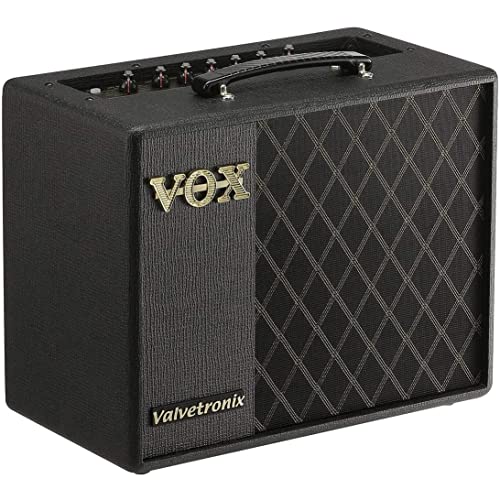
Vox VT20X
Home players and recording hobbyists who want compact modeling tones with a tube-flavored preamp and silent practice options.
Read the Vox VT20X review →
NUX Mighty 40 MkII
Guitarists who want a versatile lower mid-range modeling combo with built-in practice tools and wireless app control.
Read the NUX Mighty 40 MkII review →Questions Buyers Ask
NUX PA-50
See the current listing, price and included accessories.
About This Review
Mandrillis Team
The Mandrillis editorial team researches and compares audio and music gear using manufacturer documentation, verified specs and real buyer feedback, so you can make a confident purchase without wading through marketing claims.
Read our full research methodology.