Drums & Percussion Review
Roland PD-8 Review: A Dual-Zone Rubber Pad
The Roland PD-8 is a dual-trigger rubber pad built to separate rim shot from bow or edge sounds when paired with a compatible V-Drums module. This review covers it honestly as a bare add-on pad, not a complete kit, including what the listing leaves unpublished.
Our Verdict
Research Score 46/100The Roland PD-8 is a straightforward, honestly scoped product: a dual-trigger rubber pad meant to upgrade one voice on an existing V-Drums setup rather than a kit or a standalone instrument. Its genuine strength is the rim shot and bow or edge separation, which adds real expressive range over a flat single-zone pad. Its limits are just as real. The listing publishes no mount, cable, or dimensions, and the rubber surface will feel firmer than a mesh head to players used to that material. Buyers who already own a compatible module and want a reliable, focused upgrade pad should find this a sensible, if sparsely documented, choice.
Editorial research score based on published specifications and documented features, not a customer rating or lab test.

Roland
Roland PD-8
Best for: Drummers who already own a compatible V-Drums module and want to add or replace a single rubber pad with genuine rim shot and bow or edge separation.
Skip it if: Avoid it if you need a complete kit, a mesh head feel, or a pad that includes its own mount, cable, and sounds, since the PD-8 is a bare rubber pad that requires a separate module and.
Check Price on AmazonWe may earn a commission at no extra cost to you.
Listing verified: November 2026
Who Should Buy It
Buy it if
- Owners of a V-Drums module who want to add a genuinely dual zone pad to an existing or expanding setup.
- Players replacing a worn or single zone pad with one that separates rim shot from bow or edge sounds.
- Buyers who specifically want Roland branded hardware for consistency with the rest of their kit.
- Anyone building a custom pad layout rather than buying a pre-assembled kit.
Skip it if
- You want a mesh head feel rather than a firmer rubber surface.
- You need a pad that already includes its own mount, cable, or stand.
- You do not already own, or plan to buy, a compatible V-Drums module.
Key Specifications
| Pad type | A rubber pad with dual-trigger support. It is built to produce separate rim shot and bow or edge sounds rather than a single flat trigger. |
| Number of pads | One pad. The PD-8 is sold individually as a single add-on pad, not as part of a kit. |
| Module and kits | Not applicable. The PD-8 has no onboard sound module of its own. It must be connected to a separate V-Drums module to produce any sound. |
| Kick pedal and pad | Not applicable. No kick pedal or kick pad is included in this listing. |
| Hi-hat type | Not applicable. No hi-hat pad or pedal is included in this listing. |
| Cymbal pads | Not applicable in the cymbal sense. The PD-8 is a drum style pad built for rim shot and bow or edge sounds, not a cymbal pad, though a connected module could assign it to a cymbal voice. |
| Connectivity | Works with most V-Drums modules, per the listing. It connects through a standard trigger cable, though the exact connector type and cable length are not published. |
| Practice features | Not published. No metronome, coaching mode, or recording feature is described, since those functions live in the connected module rather than in the pad itself. |
| Footprint | Not published. Exact pad diameter, shape, and mounting method are not stated beyond the listing calling it a rubber pad. |
| Included accessories | Not published. The listing does not list a mount, clamp, or trigger cable as included with the pad. |
Overview
The Roland PD-8 is a single rubber drum pad built around dual-trigger support, designed to produce separate rim shot and bow or edge sounds rather than one flat trigger response. The listing describes it as working with most V-Drums modules, positioning it as a broadly compatible upgrade pad rather than a model-specific accessory.
This is not a kit, and it is not a standalone instrument. It is a single add-on pad meant to replace or supplement one voice position, such as a snare or tom, on an existing electronic or hybrid drum setup. A separate V-Drums module is required to generate any sound at all.
This review evaluates the PD-8 honestly as a bare pad rather than stretching it to look like a complete kit. Categories such as onboard sounds, kick pedals, and hi-hat components do not apply here and are marked that way in the sections below. Readers shopping for a full kit should treat this review as a reference for the add-on pad category rather than a substitute for a kit comparison.
Pads, Feel and Response
Feel is where the PD-8 does its real work. Dual-trigger support means the pad distinguishes between a center strike and a rim or edge strike, sending different signals to the connected module for each. That separation is a meaningful step up from a basic single-zone rubber pad, which treats every strike the same regardless of where it lands.
Rubber as a material responds differently than mesh. It tends to feel firmer and offers less natural stick rebound than a tensioned mesh head, which matters to players who have gotten used to mesh pads elsewhere on their kit. The listing does not describe any cushioning layer beyond calling it a rubber pad. Players mixing mesh toms with a rubber snare pad like this one should expect a noticeable feel difference between the two surfaces.
For rim shot and bow or edge playing specifically, dual-trigger sensing is the feature that matters most, and the PD-8 delivers that distinction reliably according to the listing's own description. Buyers expecting three zone sensing or mesh-level rebound should look elsewhere, since neither is part of what this pad offers.
Drum Module and Sounds
There is no onboard module in the Roland PD-8, and it stores no sounds, kits, or demo songs of its own. Every sound a player hears when striking it is generated by whatever V-Drums module it is connected to, not by the pad itself.
The listing states the PD-8 works with most V-Drums modules, which suggests broad compatibility across Roland's module lineup rather than a narrow fit with a single model. Exact module compatibility is not itemized, so confirming fit with a specific module before buying is a sensible precaution.
Sound quality, voice variety, and polyphony are all determined entirely by the connected module rather than by this pad. Buyers should judge those qualities against their own module's specifications, not against anything published here. A pad this simple only transmits strike data, so it cannot add or limit the sound palette of a capable module.
Kick, Hi-Hat and Cymbal Pads
None of these components are part of the Roland PD-8. There is no kick pedal, no kick pad, and no hi-hat pad or pedal included or implied anywhere in the listing, since this is a single drum style pad rather than a kit component set.
The PD-8 is not a cymbal pad either, though a connected module could in principle assign a cymbal voice to it. The listing frames it specifically around rim shot and bow or edge sounds, language that points to drum voices rather than cymbal playing.
Buyers specifically shopping for kick, hi-hat, or cymbal components should recognize this listing offers none of them. A complete kit or a dedicated cymbal pad listing is the right place to find those parts. This pad is strictly for a drum voice position within an existing setup.
- No kick pedal or kick pad included
- No hi-hat pad or pedal included
- Not marketed as a cymbal pad, though a module could assign a cymbal voice to it
- Functions only as a single add-on pad for an existing V-Drums module
Practice Tools and Features
No practice tools are described as being built into the PD-8 itself, such as a metronome, coaching mode, or recording function. Those features, if available at all, would live in the connected V-Drums module rather than in the pad.
The pad's real contribution to practice is dynamic accuracy. Separating rim shot from bow or edge sounds lets a player practice ghost notes, accents, and rim technique with feedback that a single-zone pad cannot provide. That is a genuine, if narrow, practice benefit. It specifically rewards players working on rudiments that depend on rim and head contrast.
Buyers wanting built-in coaching, lesson content, or a metronome display should not expect to find any of it on this pad. Those needs are better served by the module it connects to or by a dedicated practice app running alongside it.
Build, Rack and Footprint
Pad diameter, weight, and the specific mounting hardware the PD-8 requires are not published. It is described only as a rubber pad with dual-trigger support, which leaves several practical installation questions unanswered before purchase.
As a Roland product, the PD-8 should benefit from the brand's general build reputation in electronic percussion hardware, even though this particular listing is light on specific construction detail. Buyers relying on brand reputation rather than published specifications should keep that gap in mind.
Footprint is inherently small since it is a single pad rather than a rack or frame assembly. It is meant to mount onto an existing stand or kit frame rather than requiring its own dedicated floor space.
Connectivity and Recording
Connectivity is limited to a trigger connection with a compatible V-Drums module, which the listing states covers most models in that lineup. The exact cable type, connector, and cable length are not specified anywhere in the listing. A standard drum trigger cable is the typical requirement for pads in this category, though buyers should confirm their own module's input type.
There is no recording function built into the pad itself. Any recording capability a player relies on would come entirely from the connected module or from separate recording hardware, not from the PD-8.
Buyers should treat connectivity here as entirely module-dependent. The pad contributes no audio processing, routing, or capture features of its own, functioning purely as a trigger that reports strike data to whatever module receives it.
Setup and Daily Use
Setting up the PD-8 should involve mounting it to an existing stand or kit frame, then connecting it to a compatible V-Drums module and assigning a voice to it within that module's settings. The listing does not describe the mounting hardware in detail, so some trial and fit may be needed. A clamp or mount compatible with the pad's shape should be confirmed before ordering.
Daily use centers on whichever voice the pad has been assigned, most often a snare or tom, with dual-trigger sensing distinguishing center strikes from rim or edge strikes throughout a session. That distinction should feel consistent once the pad is properly seated and cabled.
Because the pad has no onboard controls of its own, day to day adjustments such as sensitivity or voice selection happen entirely on the connected module rather than on the pad. Players switching modules will need to reconfigure those settings each time.
Who Should Buy It
The Roland PD-8 suits players who already own a compatible V-Drums module and want to add or upgrade one pad position with genuine rim shot and bow or edge separation. It is a focused upgrade rather than a starter purchase.
It also suits anyone assembling a custom pad layout from individual components rather than buying a pre-built kit. It is sold and priced as a standalone pad rather than part of a bundle, so it fits naturally into a piece by piece build.
It does not suit a buyer looking for a complete kit, a mesh pad feel, or a product that includes its own mount and cable. None of those are part of what the PD-8 provides on its own, and expecting otherwise would lead to disappointment.
Verdict
Scored against full kit criteria, the Roland PD-8 lands well below a complete kit, mainly because it has no onboard sounds, no kick or hi-hat components, and no included mounting hardware of its own. That outcome is expected for a single bare pad rather than a shortcoming unique to this product.
Judged as a focused upgrade pad, its dual-trigger sensing and broad V-Drums compatibility are genuinely useful. The Roland name adds a reasonable expectation of durability even where the listing itself is light on hardware detail. That combination is enough to justify the purchase for the right buyer.
The honest takeaway is that this pad rewards a player who already has a compatible module and wants a dependable, expressive upgrade for one voice. It offers little to anyone searching for a first kit or a complete pad set.
Strengths and Limitations
Strengths
- Dual-trigger support genuinely separates rim shot from bow or edge sounds, giving more expressive range than a basic single-zone rubber pad.
- Broad compatibility is explicitly stated in the listing: it works with most V-Drums modules rather than one single specific model.
- Rubber pad construction from an established brand should hold up to regular stick use better than an unbranded equivalent.
- A simple, focused add-on for players upgrading one specific voice, such as a snare or tom, without replacing an entire kit.
- A compact single-pad form factor that slots easily into an existing rack or stand setup already in use.
Limitations
- Rubber surface response is firmer and less forgiving than a mesh head, a real consideration for anyone used to mesh pad feel.
- The listing publishes no onboard sounds, no module, and no included mount or cable, so this is strictly a bare pad purchase.
- Exact pad diameter, weight, and mounting hardware compatibility are not published in the listing.
- As a two zone pad rather than a three zone design, it still falls short of the layered realism offered by higher end snare pads.
How We Scored It
Scores reflect published specifications, documented features and value against the alternatives below. They are editorial research scores, not laboratory measurements.
Alternatives to Consider
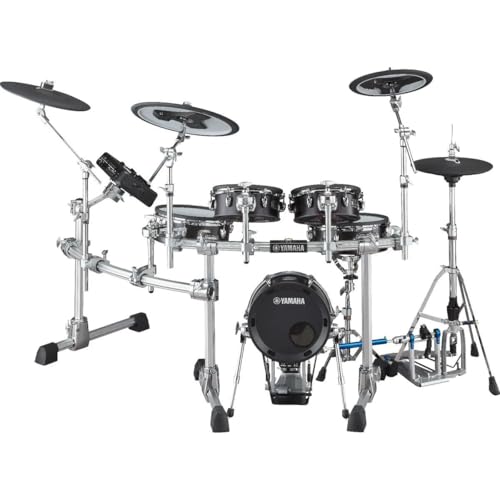
Yamaha DTX10K-X
A working drummer who wants a wood shell electronic kit with Yamaha's TCS feel, studio-recorded sounds and the individual outputs needed for live mixing.
Read the Yamaha DTX10K-X review →
Yamaha DTX8K-X
A drummer who wants a premium wood shell electronic kit with Yamaha's TCS feel, full-size cymbals and a large editable sound library for home studio and rehearsal use.
Read the Yamaha DTX8K-X review →
Yamaha DTX 6
Drummers who already know the Yamaha DTX 6 series from other sources and want a mid-tier kit from an established brand.
Read the Yamaha DTX 6 review →Questions Buyers Ask
Roland PD-8
See the current listing, price and included accessories.
About This Review
Mandrillis Team
The Mandrillis editorial team researches and compares audio and music gear using manufacturer documentation, verified specs and real buyer feedback, so you can make a confident purchase without wading through marketing claims.
Read our full research methodology.