Drums & Percussion Review
Roland PDX-100 Review: A Mesh Pad, Not a Kit
The Roland PDX-100 is a single 10 inch mesh head V-Pad with a dual-trigger sensor, metal rim hoop, and tensionable head, built for use as a snare or floor tom pad with named V-Drums modules. This review treats it honestly as the standalone pad component it is.
Our Verdict
Research Score 49/100The Roland PDX-100 earns credit for being a genuinely well specified single pad rather than a complete kit. Its mesh head construction, advanced dual-trigger sensor, metal rim hoop, and tensionable head all point to a pad built for real expressive playing rather than a bare bones trigger surface, and its named compatibility with the TD-30K, TD-25KV, and TD-15KV modules gives buyers a clear reference point for fit. The honest limitation is scope, this listing includes no module, no sound library, and no confirmed mounting dimensions, so it only makes sense as an addition to or replacement within an existing V-Drums setup. Buyers shopping for a complete kit should look elsewhere, while existing V-Drums owners needing a snare or floor tom pad should find real value in what this listing actually confirms.
Editorial research score based on published specifications and documented features, not a customer rating or lab test.
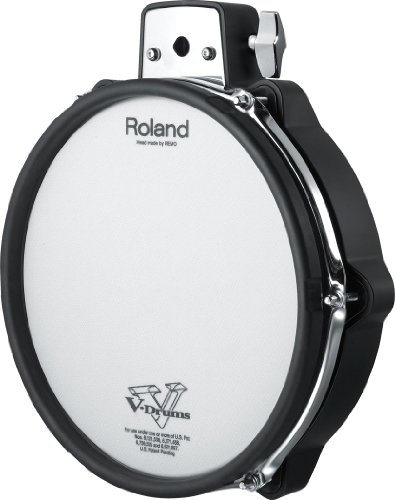
Roland
Roland PDX-100
Best for: Owners of a TD-30K, TD-25KV, TD-15KV, or similar V-Drums module who want a mesh head snare or floor tom pad with dual-trigger sensing.
Skip it if: Avoid this listing if you need a complete electronic drum kit, since this is a single pad that requires a separate, compatible module to function.
Check Price on AmazonWe may earn a commission at no extra cost to you.
Listing verified: November 2026
Who Should Buy It
Buy it if
- Existing V-Drums owners replacing or adding a snare or floor tom pad position
- Players who specifically want mesh head feel over a rubber pad surface
- Buyers who value a tensionable head for adjustable rebound and feel
- Anyone needing dual-mounting flexibility for an unusual rack configuration
Skip it if
- You need a complete electronic drum kit rather than a single pad
- You own a module not named among the TD-30K, TD-25KV, or TD-15KV compatibility list
- You require exact mounting dimensions confirmed before ordering
Key Specifications
| Pad type | A lightweight 10 inch mesh head V-Pad built with a tensionable head, a metal rim hoop, and a compact casing, designed for use with Roland V-Drums modules |
| Number of pads | This is a single 10 inch pad, not a multi pad kit. The listing states it is ideal for use as a snare and or floor tom pad within a larger setup |
| Module and kits | Not applicable. This pad includes no drum module or sound library of its own. It requires a separate, compatible V-Drums module to produce any sound |
| Kick pedal and pad | Not applicable. This listing is for a single stick struck pad, not a kick pad or pedal |
| Hi-hat type | Not applicable. This listing is for a single stick struck pad, not a hi-hat pad or controller |
| Cymbal pads | Not applicable. This listing is for a single drum pad, not a cymbal pad |
| Connectivity | Not published in listing beyond module compatibility. The listing names the TD-30K, TD-25KV, TD-15KV, and other V-Drums modules as compatible, without stating a specific cable type or jack size |
| Practice features | Not applicable. As a passive pad with no module of its own, this product has no built in training functions or practice modes |
| Footprint | A compact casing is stated, and dual-mounting capability is described as increasing setup versatility, though exact dimensions and mounting bracket specifications are not published |
| Included accessories | Not published in listing. No cable, clamp, or additional mounting hardware beyond the pad's own dual-mounting capability is listed as included |
Overview
The Roland PDX-100 is listed as a lightweight 10 inch mesh head V-Pad for V-Drums, and its feature bullets focus entirely on pad construction, sensing, and mounting rather than any module or sound library. That focus makes clear this is a single component purchase meant to fit into an existing setup.
Its core claims are specific and credible, an advanced dual-trigger sensor, a metal rim hoop, a tensionable head, and a compact casing, each pointing to a pad built with real attention to feel and durability rather than being a generic trigger surface. That level of specificity is notable for a single pad listing, where buyers often get far less detail to work from.
This review treats the PDX-100 honestly as a standalone pad, marking module, sound, and kit related fields as not applicable, while giving full attention to what is genuinely published, pad construction, sensing technology, and named module compatibility. Readers comparing this against complete kits elsewhere should keep that difference in scope firmly in mind when weighing the final score.
Pads, Feel and Response
Mesh head construction is the foundation of this pad's feel, and mesh heads generally play and rebound closer to an acoustic drum head than a firmer rubber surface, while also running quieter during practice, a detail that matters for shared living spaces.
The advanced dual-trigger sensor is the more technical claim here, suggesting the pad can distinguish more than one type of strike or intensity, which supports a wider range of expressive playing than a single, uniform trigger point would allow. That kind of dual sensing tends to matter most during ghost notes and accented hits, where subtle dynamic differences are easy to lose on a simpler pad.
A tensionable head adds a further layer of control, letting a player adjust head tightness to personal preference, similar in concept to tuning an acoustic drum head, rather than being stuck with a single fixed feel straight out of the box. Over time, that adjustability lets a player dial in rebound as their technique develops, rather than adapting permanently to a factory default tension.
Drum Module and Sounds
No module or sound library is included with this pad. It is a passive trigger device that relies entirely on a separately owned or compatible V-Drums module to convert its dual-trigger signal into actual drum sounds.
Because sound quality and kit variety are entirely a function of the connected module, this listing has no direct bearing on sound related criteria, and buyers should not expect any voice count or kit list to apply here. Two players with identical pads could hear very different results purely based on which module each one is running.
For an owner of a module like the TD-30K or TD-25KV, this pad's role is simply delivering clean, accurate dual-trigger data for that module's own sound engine to interpret, nothing more and nothing less. A well built pad like this one is often what lets an already capable module's sound engine actually shine during real playing.
Kick, Hi-Hat and Cymbal Pads
This listing describes a single stick struck pad intended for snare or floor tom use, so kick pads, hi-hat controllers, and cymbal pads are all not applicable to this particular product.
A buyer completing a full kit around this pad would need to separately source those remaining components, kick pedal, hi-hat, and cymbal pads, none of which this listing addresses in any way. That is a normal expectation for a single pad purchase, but it is worth stating clearly rather than leaving it implied.
This section stays marked not applicable throughout, keeping this review focused honestly on what the PDX-100 actually is rather than implying coverage of components outside its stated scope. Treating these fields as not applicable is more useful to a buyer than guessing at specifications the listing never provides.
- Not applicable: no kick pad or pedal included
- Not applicable: no hi-hat pad or controller included
- Not applicable: no cymbal pads included
- Stated use is as a snare and or floor tom pad position
Practice Tools and Features
As a passive pad with no attached module, this product has no built in training functions, metronome, or coaching features of its own, those capabilities depend entirely on whichever module it is connected to.
The closest thing to a feature claim here is the dual-trigger sensor itself, which functionally broadens what a player can practice and refine, even without any dedicated coaching mode built around that capability.
Buyers should not expect app connectivity, play along tools, or guided practice modes from this listing, since a standalone pad simply does not carry those kinds of features on its own.
Build, Rack and Footprint
Build quality is well documented for a single pad listing, with a metal rim hoop adding durability over an all plastic rim, and a compact casing suggesting a design focused on fitting into tighter rack spaces without unnecessary bulk.
Dual-mounting capability is specifically called out as increasing setup versatility, implying the pad can be positioned or oriented in more than one way depending on a player's rack layout or preference. That flexibility can matter in a tight practice space where a standard single mount position does not quite fit the available rack geometry.
Exact dimensions and mounting bracket specifications are not published, so a buyer planning a very specific rack configuration should confirm fit directly rather than relying on the compact and dual-mounting descriptions alone. The general implication, however, is a pad designed to adapt to more than one typical mounting arrangement.
Connectivity and Recording
The clearest connectivity related detail in this listing is module compatibility, with the TD-30K, TD-25KV, TD-15KV, and other V-Drums modules specifically named as suitable pairings for this pad.
No specific cable type or jack size is published, so a buyer should confirm their own module's input compatibility directly, especially if their module falls outside the specifically named list. Most Roland V-Drums modules of a similar generation tend to share compatible trigger inputs, but this listing does not confirm that explicitly for every possible pairing.
Recording capability is not relevant to this pad directly, since any MIDI, USB, or audio recording path would come entirely from the connected module rather than from a passive trigger pad like this one. The pad's sole contribution to a recording setup is accurate, reliable trigger data for the module to capture and process.
Setup and Daily Use
Setup would involve mounting this pad using its dual-mounting capability into an existing rack position and connecting it to a compatible module such as the TD-30K, TD-25KV, or TD-15KV named in the listing.
Daily use centers on snare or floor tom practice, with the tensionable head allowing a player to fine tune feel over time rather than accepting a single fixed factory setting. Periodically retensioning the head is a small maintenance habit that can keep response consistent as the mesh wears in with regular use.
Because there is no training feature attached to the pad itself, daily practice structure would come entirely from whatever module and training tools a player already uses alongside this pad. The pad's job is simply to make sure every strike is captured accurately, leaving the structured practice side entirely to the connected module.
Who Should Buy It
This pad suits an existing V-Drums owner, particularly one with a TD-30K, TD-25KV, or TD-15KV module, who wants to add or replace a snare or floor tom position with a mesh head, dual-trigger pad.
It also suits a player who specifically values mesh head feel, a tensionable head for adjustable rebound, and a metal rim hoop for added durability over a simpler plastic rimmed pad. A player upgrading from an all rubber entry kit would likely notice the difference in both feel and noise level right away.
It does not suit a buyer shopping for a complete kit, or anyone whose module falls well outside the named compatibility list, since fit outside that list is not confirmed by this listing. Those buyers would be better served looking at a listing that bundles a module together with its matching pads.
Verdict
The Roland PDX-100 earns a modest score here because so many of this review's criteria, sound, module, kick, hi-hat, and cymbal pads, are simply not applicable to a single standalone pad, not because the pad itself falls short on what it is actually built to do.
On the specific strengths this listing documents, mesh head feel, a dual-trigger sensor, a metal rim hoop, a tensionable head, and named module compatibility, the PDX-100 presents a genuinely credible upgrade or replacement pad for an existing V-Drums setup.
Buyers should treat this purchase as one piece of a larger system, confirming their own module's compatibility directly, rather than expecting this single pad listing to deliver a complete, ready to play instrument on its own.
Strengths and Limitations
Strengths
- Mesh head construction tends to feel closer to an acoustic drum and run quieter than rubber alternatives
- Advanced dual-trigger sensor supports more expressive playing than a single zone pad
- Metal rim hoop adds durability compared to an all plastic rim
- Tensionable head allows a player to adjust feel and rebound to personal preference
- Dual-mounting capability increases flexibility for fitting the pad into different rack positions
- Named compatibility with the TD-30K, TD-25KV, and TD-15KV gives buyers a clear fit reference
Limitations
- This is a single pad, not a complete kit, and requires an existing or separately purchased module
- Exact dimensions and mounting bracket specifications are not published
- No cable or mounting hardware is confirmed as included beyond the pad's own mounting feature
- Compatibility is confirmed only for named modules, not for every V-Drums generation
How We Scored It
Scores reflect published specifications, documented features and value against the alternatives below. They are editorial research scores, not laboratory measurements.
Alternatives to Consider
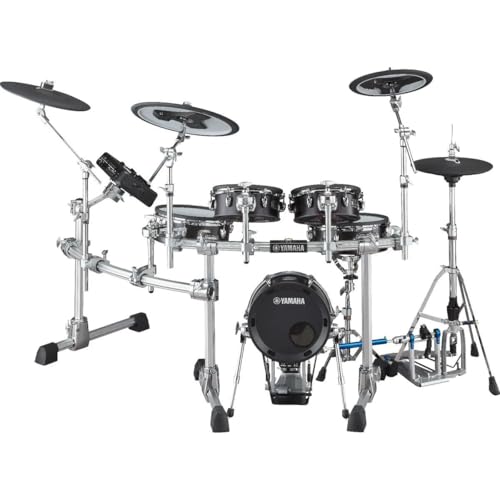
Yamaha DTX10K-X
A working drummer who wants a wood shell electronic kit with Yamaha's TCS feel, studio-recorded sounds and the individual outputs needed for live mixing.
Read the Yamaha DTX10K-X review →
Yamaha DTX8K-X
A drummer who wants a premium wood shell electronic kit with Yamaha's TCS feel, full-size cymbals and a large editable sound library for home studio and rehearsal use.
Read the Yamaha DTX8K-X review →
Yamaha DTX 6
Drummers who already know the Yamaha DTX 6 series from other sources and want a mid-tier kit from an established brand.
Read the Yamaha DTX 6 review →Questions Buyers Ask
Roland PDX-100
See the current listing, price and included accessories.
About This Review
Mandrillis Team
The Mandrillis editorial team researches and compares audio and music gear using manufacturer documentation, verified specs and real buyer feedback, so you can make a confident purchase without wading through marketing claims.
Read our full research methodology.