Drums & Percussion Review
Roland TD-15 Review: Live-Ready Module With USB Audio
The Roland TD-15 is a V-Drums sound module listed without pads. Its published strengths are Behavior Modeling, QUICK EDIT buttons for tuning, muffling and strainer, COACH and QUICK REC practice tools, an assignable CLICK out with illuminated buttons for live use, and USB that carries both MIDI and audio. This review weighs those against the unpublished counts.
Our Verdict
Research Score 74/100The Roland TD-15 reads as the more performance-oriented of Roland's mid-range modules of its generation. The listing confirms USB MIDI and audio to a computer, an assignable CLICK out, illuminated ring and kit buttons for the stage, QUICK EDIT buttons for the parameters drummers touch most, and the same Behavior Modeling and COACH plus QUICK REC tools found elsewhere in the line. What it does not publish is any count of kits, instruments or trigger inputs, nor the analog outputs or accessories. For a V-Drums owner who records over USB or plays live with a click, the documented features justify the tier. For a buyer comparing sound libraries by the numbers, the listing leaves the key figures blank.
Editorial research score based on published specifications and documented features, not a customer rating or lab test.

Roland
Roland TD-15
Best for: V-Drums owners who want a module with USB audio recording, a dedicated click output for live work and fast physical kit editing.
Skip it if: You need a published kit count or trigger input count, or you are shopping for a complete kit rather than a brain.
Check Price on AmazonWe may earn a commission at no extra cost to you.
Listing verified: October 2026
Who Should Buy It
Buy it if
- Gigging drummers who need a separate click feed
- Home recordists who want USB audio without an interface
- V-Drums owners upgrading from an entry module
- Players who edit kits by ear with physical buttons
Skip it if
- You do not own compatible pads
- You want the sound library size confirmed before buying
- You need extensive onboard effects and sample import
Key Specifications
| Pad type | Not included; sound module only |
| Number of pads | None included; trigger input count not published in listing |
| Module and kits | TD-15 module with Behavior Modeling; kit and instrument counts not published in listing |
| Kick pedal and pad | Not included |
| Hi-hat type | Not included; hi-hat controller support not detailed in listing |
| Cymbal pads | Not included |
| Connectivity | USB MIDI and USB audio to computer applications; assignable CLICK out; other outputs not itemized |
| Practice features | COACH and QUICK REC functions; QUICK EDIT buttons for tuning, muffling and strainer |
| Footprint | Not published in listing |
| Included accessories | Not published in listing |
Overview
The Roland TD-15 is a drum sound module from the V-Drums range, sold here as a standalone unit with no pads, rack or pedals. Buyers come to a listing like this to replace a module, to upgrade the brain of an older kit or to build a custom kit around pads they already own.
Its published feature set leans toward the working drummer. Alongside Behavior Modeling and new sensing technology, the listing highlights QUICK EDIT buttons for tuning, muffling and strainer, an assignable CLICK out, illuminated ring and kit buttons for low-light stages and USB that carries both MIDI and audio to computer applications.
The gaps are notable for a module. No kit count, instrument count or trigger input count is given, and the analog outputs and included accessories are not listed, so this review treats the TD-15 as a well-documented set of workflow features attached to a sound library of unknown size.
Pads, Feel and Response
With no pads in the box, the TD-15's influence on feel comes through its trigger engine. The listing credits new sensing technology with Behavior Modeling for a complete and natural drumming experience, which in module terms means reading velocity, position and zone from compatible pads and translating them into sound that changes the way a real drum would.
That matters most on the snare. Behavior Modeling is designed so that a ghost note near the edge, a center hit and a rimshot all behave as distinct articulations rather than the same sample at three volumes, and the quality of that mapping is what separates a convincing electronic snare from a merely loud one.
The listing does not say which pads support positional sensing or how many inputs are available, so the ceiling on feel is set by the pad set in hand. Owners of older single-zone pads will get accurate triggering but not the full expressive range the module is built for.
Drum Module and Sounds
The sound engine is described through its behavior rather than its size. Behavior Modeling, per the listing, delivers a natural drumming experience, and the QUICK EDIT buttons give direct access to tuning, muffling and strainer, the three parameters most drummers reach for when adapting a kit to a song.
The absence of a kit count or an instrument count is the weakest point of the published data. Modules in this tier are routinely compared by library size, and a buyer cannot place the TD-15 against a Roland TD-07KV or Yamaha DTX6K module on that axis from the listing alone.
Effects, ambience and user sample import are also unmentioned. The emphasis on tuning, muffling and strainer suggests an engine built around acoustic realism, and that fits Roland's approach of a smaller set of deeply modeled instruments rather than a long list of static samples.
Kick, Hi-Hat and Cymbal Pads
None of these pads is included, and the listing does not state how many trigger inputs the TD-15 provides or whether a dedicated hi-hat controller jack is among them. Input count decides whether a kit can grow to a second crash, a fourth tom or an auxiliary pad.
Hi-hat articulation is a core test for any module, with open, half-open, closed, foot-chick and splash all needing to be read from a pedal. The natural response claim implies competent hi-hat handling, but the controller types supported are not published, and owners of a specific hi-hat controller should confirm compatibility.
Cymbal zones and choke depend on the connected pads, and the module's role is to interpret bow, edge and bell correctly. The assignable CLICK out is relevant here for live players, since it allows a click to reach the drummer's ears while cymbals and kit go to the house without the click bleeding into the mix.
- No kick, hi-hat or cymbal pads included
- Trigger input count not published
- Hi-hat controller compatibility not published
- Assignable CLICK out for a separate click feed
- Illuminated ring and kit buttons for stage use
Practice Tools and Features
COACH and QUICK REC are the practice tools the listing names, described as helping to build skills at home, school or any place of practice. COACH exercises typically test timing and consistency against a click and report results, which gives measurable targets for a student without a teacher present.
QUICK REC captures a short performance for immediate playback, which is the most honest feedback a drummer can get about whether a groove sits in time. Used after a COACH exercise it closes the loop between drill and application.
The QUICK EDIT buttons double as a learning tool. Being able to retune a snare or change muffling with a physical button, rather than through menus, teaches a developing player how those parameters shape sound, and the illuminated kit buttons make switching between practice kits quick in a dim room.
Build, Rack and Footprint
The listing publishes no dimensions, weight, housing material or mounting hardware for the TD-15. Whether a mounting plate, wing bolts, an AC adaptor or a connection cable are included is not stated, and a replacement-module buyer should ask, because missing hardware turns a quick swap into a parts hunt.
The illuminated ring and kit buttons are the one physical design detail documented, and they are aimed at live use. Being able to find the right kit button on a dark stage without a flashlight is a practical advantage that practice-focused modules rarely offer.
Durability and control quality are unpublished. V-Drums modules have a long record of surviving touring and teaching environments, which is context rather than specification, and the build score here stays in the middle to reflect what the listing does and does not confirm.
Connectivity and Recording
USB is the TD-15's documented strength. The listing states that USB MIDI and audio can connect to computer applications, which means the module can stream its own sounds into a digital audio workstation as audio and simultaneously send MIDI to drive a software drum library, with no separate audio interface required.
The assignable CLICK out is the second notable connection. Routing the metronome to its own output lets a live drummer hear the click in headphones while the kit's main outputs go to the front of house clean, and assignability suggests the output can carry other signals when a click is not needed.
Main analog outputs, headphone jack, mix input and five-pin MIDI are not itemized. A headphone output is a near certainty and main outputs are standard, but a buyer with a specific routing plan should verify the rear panel rather than rely on expectation.
Setup and Daily Use
Installing the TD-15 means mounting it on a rack, connecting the pad set and running the trigger setup so each pad is identified correctly. Since mounting hardware and cables are not confirmed as included, having the previous module's plate and loom on hand is wise.
In daily use the QUICK EDIT buttons change the relationship with the module. Instead of saving a dozen kits for small variations, a player can adjust tuning, muffling or strainer on the fly, which is closer to how an acoustic drummer works with a drum key and a piece of tape.
For recording, the USB audio path removes a whole step. Plug in, select the module as the audio device and record, with the option of capturing MIDI at the same time for later re-voicing. For gigs, the click output and lit buttons do their job without any configuration beyond the first setup.
Who Should Buy It
The TD-15 suits a V-Drums owner who plays live and records at home. The click output, the illuminated buttons and the USB audio and MIDI path are all features that pay off outside the practice room, and they are the ones the listing documents best.
Players upgrading from an entry module gain Behavior Modeling and physical editing, and students benefit from COACH and QUICK REC. Anyone who edits kits by ear rather than by menu will appreciate the QUICK EDIT buttons.
Buyers who want the sound library size confirmed or who need a specific trigger input count for a large kit should request the full specification before committing. Anyone starting without pads should look at a complete kit instead.
Verdict
The Roland TD-15 documents its workflow features well and its library poorly. USB audio and MIDI, an assignable CLICK out, illuminated buttons and QUICK EDIT are concrete advantages, and Behavior Modeling with COACH and QUICK REC rounds out a capable mid-range module.
The sounds score is held to the middle of its band because no kit or instrument count is published. The feel score reflects dependence on pads that are not included, and the build score is capped by the absence of any physical or accessory detail.
For a gigging or recording V-Drums owner, the TD-15 is a sound mid-range purchase once the input count and included hardware are confirmed. For a numbers-driven comparison shopper, the listing does not yet give enough to decide.
Strengths and Limitations
Strengths
- Behavior Modeling with new sensing technology
- USB carries both MIDI and audio to a computer
- QUICK EDIT buttons for tuning, muffling and strainer
- Assignable CLICK out for live monitoring
- Illuminated ring and kit buttons for dark stages
- COACH and QUICK REC practice functions
Limitations
- No pads included; module only
- Kit and instrument counts are not published
- Trigger input count and analog outputs are not stated
- Accessories and mounting hardware are not listed
How We Scored It
Scores reflect published specifications, documented features and value against the alternatives below. They are editorial research scores, not laboratory measurements.
Alternatives to Consider

Yamaha DTX-MULTI 12
Percussionists, drummers and keyboard-curious players who want a large onboard sound library, user sample memory and melodic sounds on a multi-pad surface.
Read the Yamaha DTX-MULTI 12 review →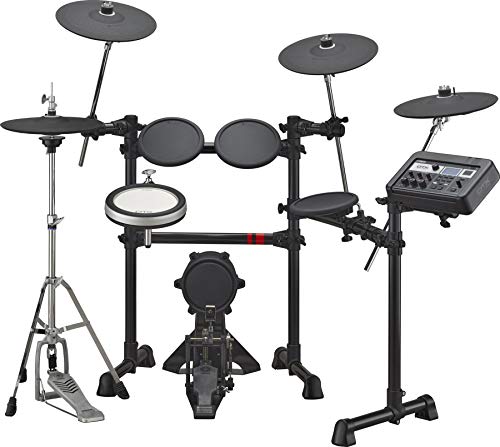
Yamaha DTP62-X
Owners of a DMR6 module or buyers planning a staged DTX6 build who want the pad set, kick tower and hi-hat stand without paying for a module twice.
Read the Yamaha DTP62-X review →
Roland TD-11
Owners of a compatible V-Drums pad set who want a replacement or upgrade module with natural-sounding kits and built-in coaching.
Read the Roland TD-11 review →Questions Buyers Ask
Roland TD-15
See the current listing, price and included accessories.
About This Review
Mandrillis Team
The Mandrillis editorial team researches and compares audio and music gear using manufacturer documentation, verified specs and real buyer feedback, so you can make a confident purchase without wading through marketing claims.
Read our full research methodology.