Drums & Percussion Review
Tama HP910LWLN Review: A Left Footed Double Pedal Option
The Tama HP910LWLN brings the Iron Cobra Coil return spring into Tama's Speed Cobra line with a left footed layout built for left foot lead drummers. Published specifications are thin, covering mainly the coil mechanism and the dual pedal format, so this review weighs what is confirmed against what the listing leaves out.
Our Verdict
Research Score 72/100The Tama HP910LWLN solves a specific problem well. It gives a left foot lead drummer a mirrored double pedal with the Iron Cobra Coil return spring Tama uses across its coil equipped pedals, at a mid range price. The published listing is sparse, leaving weight, chassis material, drive type, and beater specification unconfirmed, so buyers are trusting brand reputation more than hard numbers. For a left footed player who wants double bass on one kick drum without a right footed retrofit, it is a sensible, if thinly documented, choice. Players who do not need the left footed layout, or who want fuller published specifications before buying, should look elsewhere first.
Editorial research score based on published specifications and documented features, not a customer rating or lab test.

Tama
Tama HP910LWLN
Best for: Best for a left foot lead drummer who wants double bass capability on one kick drum without retrofitting a standard right footed pedal.
Skip it if: Avoid if you need confirmed weight, chassis material, or drive type specifications published before you buy.
Check Price on AmazonWe may earn a commission at no extra cost to you.
Listing verified: November 2026
Who Should Buy It
Buy it if
- Left foot lead drummers upgrading from a single pedal to double bass technique
- Gigging drummers who want double kick sound without adding a second bass drum
- Intermediate players comfortable trusting brand reputation over a fully published spec sheet
- Tama Speed Cobra owners who want a matching left footed double pedal
Skip it if
- You need exact weight and chassis material specifications published before purchase
- You are right foot dominant and do not need a mirrored pedal layout
- You want a top tier Iron Cobra 900 series pedal rather than the Speed Cobra line
Key Specifications
| Type | Dual kick, left footed double bass drum pedal, Tama Speed Cobra series |
| Size | Not published in listing |
| Materials | Not published in listing |
| Tuning | Not applicable in the musical sense. Spring tension is adjustable on coil spring pedals of this type, but the listing gives no numeric range |
| Finish | Not published in listing |
| Weight | Not published in listing |
| Included accessories | Not published in listing beyond the dual pedal assembly itself |
| Made in | Not published in listing |
| Skill level | Not published in listing |
| Notes | Left footed version. The master and slave footboard layout is mirrored from the standard right footed Speed Cobra pedal |
Overview
The Tama HP910LWLN is the left footed version of Tama's Speed Cobra dual kick pedal, built for drummers who want double bass capability on a single bass drum without adapting a right handed setup. It carries the Iron Cobra Coil, the return spring mechanism Tama built its pedal reputation on, into a more accessible line positioned below the flagship Iron Cobra family. The product sits at a mid range price tier, aimed at drummers moving up from a single pedal rather than players shopping for a top of the line professional rig.
Because it is a dual kick pedal rather than two unrelated single pedals, one footboard drives a beater that strikes the bass drum directly while a second footboard, linked by a connecting rod, drives a slave beater onto the same head. The left footed configuration reverses the usual right hand dominant layout, putting the primary drive assembly on the left side so a left foot lead drummer is not forced to adapt a standard pedal. The listing itself is thin on hard numbers, so this review leans on what is published and flags what is not.
Sound and Tone
A bass drum pedal does not change the pitch of the drum it strikes, but it does shape the attack, the consistency of the stroke, and the dynamic range a player can pull from a single head. The Iron Cobra Coil built into the HP910LWLN is designed to snap the footboard back to its resting position between strokes, which in practice tends to keep the beater strike consistent even at faster tempos. The published specification does not list a beater material or shape for this specific model, so the exact tonal character the beater produces against a given bass drum head is not something the listing confirms.
Buyers report, in general discussion of double pedals in this bracket, that a consistent spring return matters more for tone than almost any other single part, because an inconsistent return changes how hard the beater strikes on repeated notes. Without a stated beater head material, drummers who care about a sharper click versus a rounder thud will want to test the stock beater against their own bass drum head before assuming a particular tone. The listing does not state whether the beater is interchangeable, so that detail is left for buyers to confirm directly with the pedal in hand.
On paper, the left footed orientation has no bearing on tone itself, since both the master and slave sides strike the same drum through the same coil spring mechanism. The tonal outcome on this pedal is governed far more by head choice and tuning on the connected bass drum than by anything the pedal hardware changes on its own.
Build and Materials
The listing names one specific hardware component, the Iron Cobra Coil, a steel return spring that Tama carried over from its established Iron Cobra platform into the more affordably positioned Speed Cobra series. Beyond that detail, the product page does not publish a chassis material, a drive type such as chain, belt, or direct, a hinge type, or a footboard material. That gap leaves several build questions unanswered, including how the base plate and the connecting linkage between the master and slave pedal are constructed.
What can be said with confidence is that the coil spring design is intended to reduce the heavy, sluggish feel that comes from relying on spring tension alone to return the footboard, a problem coil spring systems in this product family are built specifically to address. Finish, weight, and country of manufacture are all marked as not published in listing, so buyers who care about an exact build weight for travel cases or stage risers will need to look elsewhere for that figure.
The left footed build itself is a meaningful construction detail rather than a cosmetic one, since it means the master pedal housing, the footboard pivot, and the linkage geometry are mirrored from a standard right footed Speed Cobra pedal rather than simply relabeled. That mirrored construction is the main differentiator this specific listing documents compared with a right footed version in the same product family.
Playability and Technique
A dual kick pedal lets one bass drum respond to two footboards, which is the entire point of double bass drumming without a second physical kick drum. The master pedal typically carries the main drive connection to its own beater, while the slave pedal, linked through a rod or cable, drives a second beater onto the same head from the opposite side. On the HP910LWLN this layout is flipped for a left foot lead player, meaning the primary, more direct feeling pedal sits where a left foot naturally lands.
Players who already lead with their left foot, whether because of a preferred drum throne position, an open handed playing style, or simple comfort, often find a mirrored double pedal easier to internalize than retrofitting a standard right handed unit. The Iron Cobra Coil is intended to keep the footboard response even through fast single stroke or double stroke patterns on the bass drum, which matters more for footwork than for any single strike. The listing does not publish a footboard angle range or beater throw distance, so players who rely on very specific setup numbers will need to adjust by feel rather than by spec.
- Left footed master and slave footboard layout
- Iron Cobra Coil return spring mechanism
- Single bass drum, two footboard double kick operation
- Positioned within Tama's Speed Cobra line at a mid range price tier
Versatility and Styles
Double bass pedals exist mainly to serve styles that call for fast, sustained bass drum patterns, including metal, hard rock, and some progressive or fusion playing where a drummer wants rapid low end without a second kick drum taking up stage space. The HP910LWLN fits that same niche, giving a left foot lead drummer the same genre reach as a standard double pedal would give a right foot lead player.
Outside of double bass heavy styles, the second footboard adds less obvious value, since most pop, jazz, country, and general session work does not call for simultaneous or alternating two footed bass drum patterns. A drummer who plays mostly single pedal styles but occasionally wants a double pedal option for specific songs can still use only the master side as a single pedal, though the listing does not confirm whether the slave side detaches cleanly for that purpose.
Portability and Care
Double pedals are inherently bulkier than single pedals because they add a second footboard, a connecting rod or cable, and extra mounting hardware, all of which need to travel together and be reassembled at each gig. The listing does not publish a packaged weight or case dimension for the HP910LWLN, so drummers planning to move it between rehearsal spaces and stages should budget extra room in a hardware bag rather than relying on a listed figure.
Routine care on a coil spring double pedal generally means keeping the hinge and linkage points free of dust and grime, checking that the connecting rod between the master and slave pedal stays properly seated, and avoiding storing the unit under spring tension for long periods. None of this is specific to the HP910LWLN since the listing gives no maintenance schedule, but it follows from how coil return double pedals are built in general.
Setup and Daily Use
Setting up a dual kick pedal means clamping the master pedal to the bass drum hoop as with any single pedal, then positioning the slave pedal to the side and connecting the two with the linking rod or cable so both beaters strike the same head in sync. On the left footed HP910LWLN that setup is mirrored from a standard Speed Cobra, so the master sits where a left foot naturally rests and the slave extends to the opposite side.
Daily use involves checking that the Iron Cobra Coil spring tension still returns the footboard evenly on both sides, since an uneven return between master and slave is one of the most common complaints with any double pedal design. The listing does not state a recommended tension range or a tool size for adjustment, so new owners will want to read any included instructions rather than rely on published numbers from this listing.
Who Should Buy It
This pedal makes the most sense for a drummer who already leads with the left foot and has been working around a standard right footed double pedal, or for a left foot dominant player buying a first double pedal and wanting the ergonomics to match their natural stance from day one. It also suits a gigging or practicing drummer who wants double bass capability without buying a second kick drum, and who is comfortable with a mid range price point from an established hardware brand.
It is a reasonable fit for an intermediate player stepping up from a single pedal into double bass technique, since the Speed Cobra platform is positioned as an accessible entry into Tama's coil spring pedal designs rather than the top of the Iron Cobra range.
Alternatives Worth Considering
Drummers who want a benchmark for what a well regarded double pedal mechanism feels like often reference the DW 5000 pedal, a long standing industry reference point built around a ball bearing hinge design. The HP910LWLN uses its own coil spring mechanism rather than that hinge design, so the feel differs, and the two are not directly interchangeable in action even though both serve the same double bass role.
Within Tama's own catalog, right footed versions of the Speed Cobra and the higher tier Iron Cobra 900 series give a left foot lead player fewer directly compatible stock options, which is part of why a dedicated left footed model like this one has a place in the lineup even with a thin published spec sheet. Buyers who do not specifically need a left footed layout may find more published detail, and potentially more resale liquidity, in a standard right footed double pedal from the same price tier.
Verdict
The Tama HP910LWLN is a narrow but legitimate solution for a specific player, a left foot lead drummer who wants a double kick pedal built around that stance rather than adapted to it. The Iron Cobra Coil gives it a credible mechanical pedigree, and the mid range price tier keeps it within reach of players upgrading from a single pedal into double bass playing.
What holds the listing back from a higher score is how little it publishes. Weight, chassis material, drive type, and beater specification are all absent, so this review can confirm the concept and the one named mechanism but cannot confirm the finer build details that a fully documented listing would include.
Strengths and Limitations
Strengths
- Uses the Iron Cobra Coil return spring from Tama's established coil pedal design
- Left footed layout matches a left foot lead playing style without retrofitting
- Backed by a well known drum hardware brand with a long pedal history
- Mid range price tier keeps it accessible for players upgrading from a single pedal
- Single bass drum double pedal setup avoids the cost and space of a second kick drum
Limitations
- Weight, chassis material, and drive type are not published in the listing
- No stated footboard size or beater specification to compare against other double pedals
- Left footed pedals have a smaller used and resale market than standard right footed models
- No accessory list, such as a case or spare parts, is published with this listing
How We Scored It
Scores reflect published specifications, documented features and value against the alternatives below. They are editorial research scores, not laboratory measurements.
Alternatives to Consider
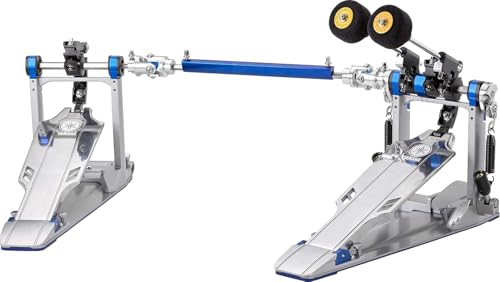
Yamaha Grade Direct Drive Double
Experienced drummers who want a fast, precise double pedal with every adjustment on hand and repeatable settings across kits.
Read the Yamaha Grade Direct Drive Double review →
Roland Mood Pan MN-10
Anyone who wants the sound of a handpan or tongue drum with the freedom to change scales, play quietly through headphones and record over USB.
Read the Roland Mood Pan MN-10 review →
Yamaha Total Percussion 285
A beginning percussion student who needs bells and a practice pad for school band in one portable package.
Read the Yamaha Total Percussion 285 review →Questions Buyers Ask
Tama HP910LWLN
See the current listing, price and included accessories.
About This Review
Mandrillis Team
The Mandrillis editorial team researches and compares audio and music gear using manufacturer documentation, verified specs and real buyer feedback, so you can make a confident purchase without wading through marketing claims.
Read our full research methodology.